What's on this page
- How long appliances last: the short answer
- Typical lifespan by appliance
- How long a water heater lasts, in detail
- What actually fails on a tank water heater
- Signs your water heater is on its way out
- How long a dishwasher lasts
- How long a washing machine lasts
- How long a clothes dryer lasts
- The quick reference table
- Water hardness: the variable that moves everything
- Repair or replace: the 50 percent rule
- When efficiency tips the decision
- A worked example: the eleven-year-old water heater
- The maintenance that actually buys years
- Installation and the first week of ownership
- Buying for longevity
- Warranties and extended service plans
- What to do with the old machine
- The bottom line
Short answer: A conventional tank water heater lasts roughly 8 to 12 years and a tankless unit closer to 20, on commonly cited planning windows rather than guarantees. Alongside them, a dishwasher lasts about 10 years, a washing machine 10 to 12, a dryer about 13, and a refrigerator 10 to 15. Each machine has one expensive failure that ends it, and once a repair quote passes half the price of a new unit, replacement usually wins.
How long does a water heater last? A conventional tank unit is commonly cited at roughly 8 to 12 years, a tankless one at something closer to 20, and the difference between those two numbers is the whole story of why appliance lifespans vary at all. A tank water heater is a steel vessel that sits full of hot water for a decade while a sacrificial anode rod slowly dissolves to protect it. When the rod is gone, the tank starts corroding, and a corroded tank is not a repair. That is the pattern across every machine in the house: one component decides the ending, and everything else is a fixable interruption along the way.
These notes cover the four appliances people ask about most after the refrigerator, the water heater, the dishwasher, the washing machine, and the clothes dryer, as one piece rather than four, because the decision framework is identical and only the failure points change. You get the typical lifespan windows, the part that usually ends each machine, the early warnings, the maintenance that genuinely buys years, and the repair-or-replace math. Where numbers appear they are illustrative planning figures rather than measurements. For the fridge, our refrigerator lifespan breakdown covers that machine in full depth and this piece deliberately does not repeat it, and our eight-point appliance maintenance plan is the task list behind everything below. When a quote lands, put the replacement price and the years you would expect from it into the cost-per-use calculator.
Key takeaways
- Commonly cited planning windows: tank water heater 8 to 12 years, tankless closer to 20, dishwasher about 10, washing machine 10 to 12, dryer about 13.
- Each machine has one expensive failure that ends it: a corroded tank, a dishwasher pump and motor assembly, washer bearings, and on a dryer almost nothing, which is why dryers last.
- The 50 percent rule is the workable starting point, and it tightens with age: past the typical window, most households reasonably drop the threshold well below half.
- Flushing sediment and checking the anode rod is the single highest-value maintenance hour in the house, because it acts on the mechanism that actually kills tank water heaters.
- Water hardness moves water heater and dishwasher life by years, and chronic overloading is the fastest way to shorten a washing machine.
How long appliances last: the short answer
The commonly cited planning windows are worth stating together, because seeing them side by side immediately shows that lifespan tracks mechanical complexity and operating stress rather than price. A tank water heater lands near 8 to 12 years, a tankless unit near 20, a dishwasher near 10, a washing machine near 10 to 12, and a dryer near 13. A refrigerator sits near 10 to 15, which our refrigerator breakdown covers in its own right.
None of those are warranties, medians measured on your model, or cliffs. They are the ranges where most units land, with real examples on both sides, and the useful mental model is a curve rather than a number: failures are rare early, climb through the back half of the window, and past the top of the range every significant repair becomes an economics question rather than an automatic fix. Three forces spread machines across each window, and they are the same three every time. The complexity of the design, the harshness of the operating environment including water quality, and the care the machine receives. Age alone tells you less than those three together, which is why a well-kept twelve-year-old dishwasher can be a better bet than a neglected seven-year-old one.
Typical lifespan by appliance
The chart lays out the illustrative windows as single planning midpoints so the ordering is visible. The ordering matters more than the exact years.
Illustrative typical service life by appliance
Commonly cited planning midpoints in years, scaled to the longest. Individual units vary widely with water quality, load, and maintenance.
Bars scale to the tankless water heater at 100 percent. Years are illustrative midpoints of commonly cited ranges, not measurements of any brand or model.
Read the chart as a complexity and stress ladder. The machines at the top either have very few precision parts, like a gas range, or have removed their own failure mechanism, which is exactly what a tankless unit does by eliminating the tank. The machines at the bottom combine water, heat, and motion in a compact package and run several times a week for a decade. A washing machine spinning a heavy wet load is doing more mechanical work in one minute than a dryer does in an hour, which is the intuitive reason the two sit where they do despite living side by side.
How long a water heater lasts, in detail
The tank water heater deserves the most space because it has the clearest single failure mechanism of any appliance in the house. Inside the tank sits a sacrificial anode rod, a length of magnesium or aluminum designed to corrode instead of the steel tank lining. It works. It also has a finite amount of metal to give, and once it is consumed the corrosion moves on to the tank itself. From that point the countdown is on, and the ending is a leak rather than a repair, because a corroded tank cannot be patched.
That single mechanism explains most of the variation people see. Hard water accelerates it. Very hot temperature settings accelerate it. Sediment left to build on the bottom of the tank insulates the burner or lower element, which forces longer, hotter operation and stresses everything. Conversely, a household that flushes the tank annually and replaces the anode rod when it is spent is directly extending the mechanism’s clock, which is why the same model can reach fifteen years in one house and fail at seven in another. Tankless units sidestep the whole problem by never holding water, but they trade it for scale sensitivity in the heat exchanger, which is why descaling on a schedule is their equivalent obligation. Our breakdown of tank versus tankless replacement cost covers the purchase side of that comparison in full; this section is about the years, not the price.
What actually fails on a tank water heater
Not every water heater problem is fatal, and knowing the order saves people from replacing a machine over a part. The stacked bar below shows an illustrative distribution of where tank water heater service issues concentrate.
Where tank water heater failures concentrate
An illustrative split of common tank water heater service issues by cause. Segments sum to 100 percent. Your unit's mix depends heavily on water quality and maintenance history.
The split is illustrative rather than measured. The point of the ordering is that the largest slice is the one repair cannot address, while everything below it is fixable at moderate cost.
The practical reading is the split between the top slice and everything under it. Elements, burners, thermostats, relief valves, and fittings are all serviceable parts, often at a cost that is a small fraction of a replacement, and a unit that is otherwise sound is usually worth fixing. Sediment problems are a maintenance issue rather than a failure, and flushing frequently resolves the noise and restores efficiency. Tank corrosion is the one that ends the story, and it is also the one the anode rod exists to delay. That is the entire argument for anode maintenance in a single chart: the largest failure category is the only one you cannot fix, and it is the one maintenance actually targets.
Signs your water heater is on its way out
A tank heater usually warns you, and the warnings are worth learning because a planned replacement is dramatically cheaper and less disruptive than an emergency one after a tank lets go. Rust-colored water from hot taps, especially first thing in the morning, commonly points at a spent anode and an attacked tank lining. Rumbling, popping, or crackling during a heating cycle generally means sediment has accumulated on the bottom and the burner or element is heating through it.
The rest of the list is about capacity and moisture. Hot water that runs out noticeably faster than it used to, or that no longer reaches the temperature it once did, suggests sediment, a failing element, or a thermostat issue. Moisture, rust streaks, or corrosion around the base of the tank is the serious one, and it should be treated as urgent rather than monitored, because tank failures tend to go from seep to flood quickly. Anything involving gas, venting, or a relief valve belongs with a licensed plumber immediately rather than on a weekend project list. A unit past its typical window showing two or more of these signs is usually telling you to schedule the replacement rather than chase the symptom.
How long a dishwasher lasts
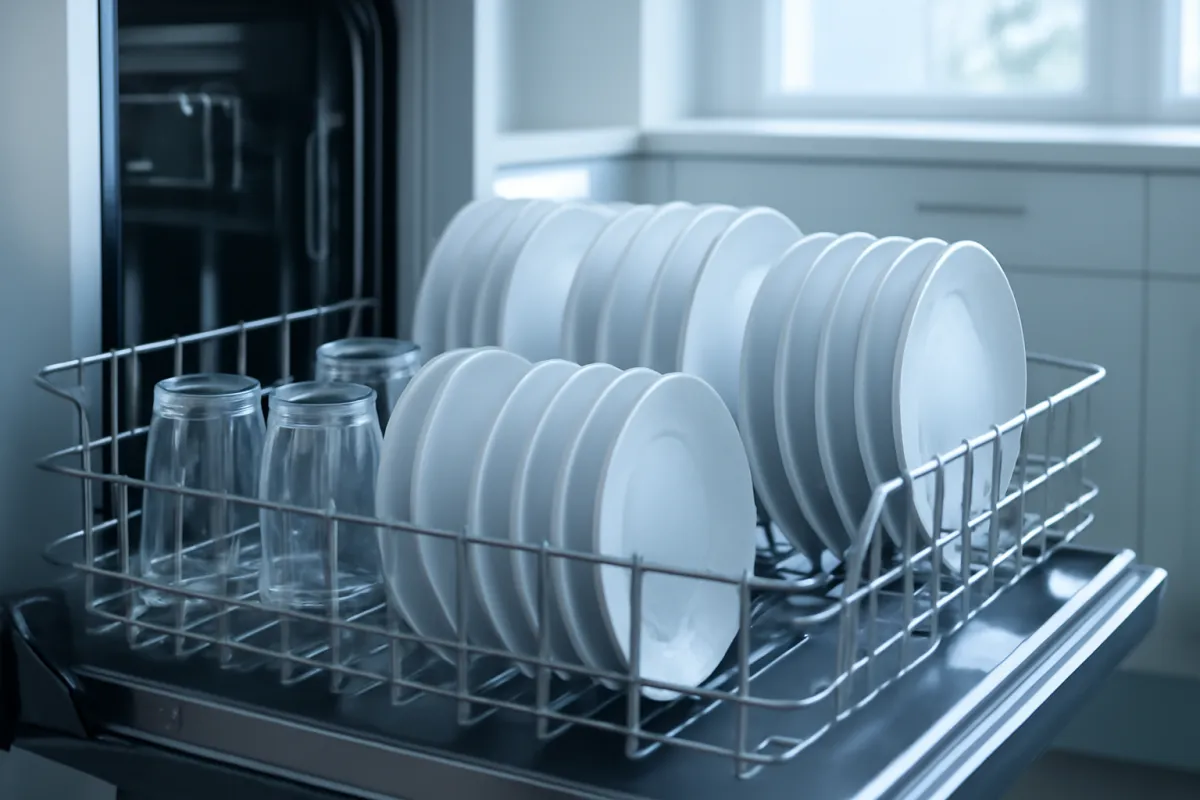
About 10 years is the commonly cited planning figure, and dishwashers are unusually honest about where their life goes. The machine is a pump, a motor, a heating element, a few valves, a control board, a door seal, and a filter, run several times a week through a cycle that combines hot water, detergent, and food debris. Two failures dominate the ending: a pump and motor assembly, and a control board. Both are expensive relative to what a replacement dishwasher costs, which is why the 50 percent rule bites hard on this appliance specifically.
Everything else is cheap. Filters, spray arms, racks and rack rollers, door gaskets, and hinges are all inexpensive and worth replacing well past the ten-year mark. So the practical lifespan strategy for a dishwasher is straightforward: keep the cheap parts fresh and the filter clean, descale periodically if your water is hard, and when the expensive failure arrives, run the arithmetic honestly rather than sinking a major repair into a machine already at its window. Our walkthrough on cleaning a dishwasher is the maintenance half of that plan, and our dishwasher running cost breakdown covers what the machine costs to operate while it lives.
How long a washing machine lasts
Roughly 10 to 12 years is the commonly cited window, and no appliance in the house is more affected by how it is used. A washing machine spends its life accelerating a heavy, unevenly distributed wet mass to high speed and stopping it again, several times a week, for a decade. That work goes through the bearings and the suspension, and bearing failure is the classic end of a washer because on many designs the labor and parts to replace them approach the cost of a new machine.
The behavioral lever is real and large. Chronic overloading, cramming in one more towel because the drum technically has room, is the fastest way to shorten a washer, because an overloaded drum cannot balance and every out-of-balance spin hammers the bearings and suspension. A machine that is not level does the same thing permanently. Detergent choice matters too, since excess detergent and the wrong type for a high-efficiency machine leave residue that fouls seals and sensors. Control boards are the second common ending on feature-heavy models, for the same reason they are on any appliance: they are expensive parts on a machine whose replacement cost is finite. Our walkthrough on cleaning a washing machine covers the seal and drum maintenance that prevents the slow degradation, and our washer running cost breakdown covers the operating side.
How long a clothes dryer lasts
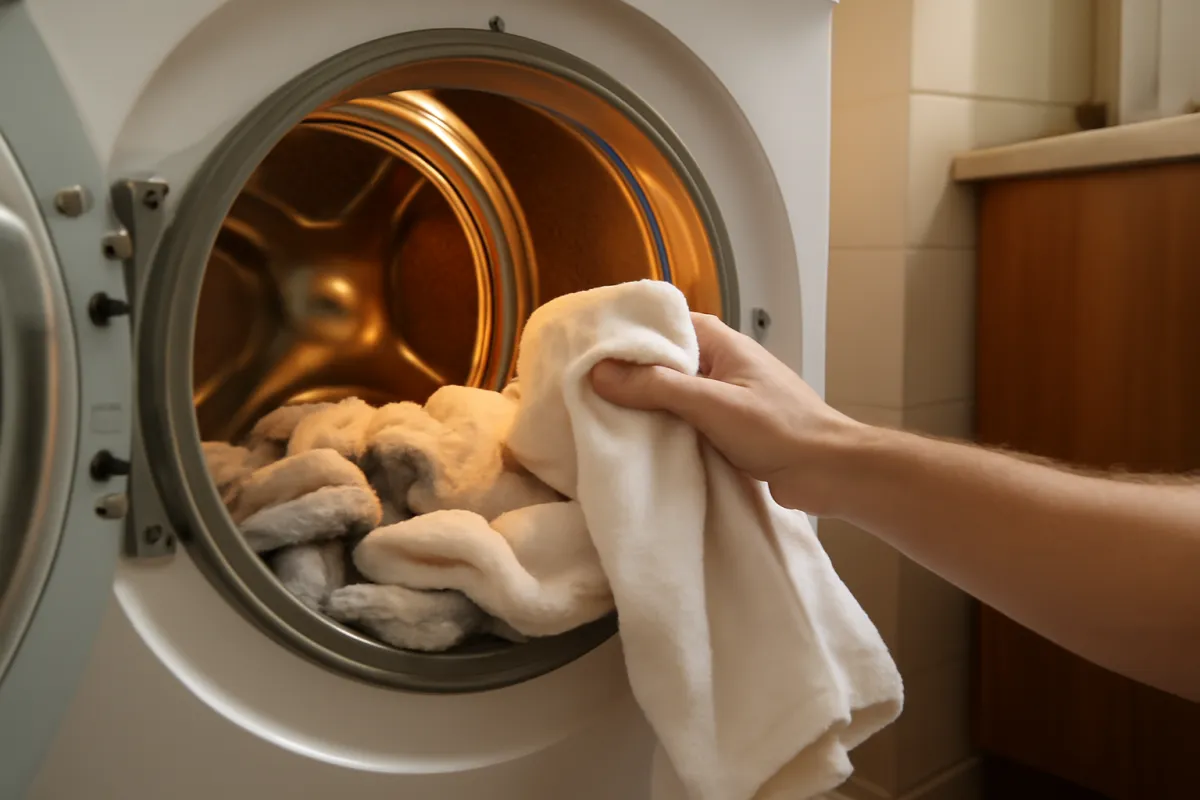
At about 13 years, the dryer is usually the longest-lived of the laundry and kitchen machines, and the reason is almost embarrassingly simple: there is very little in it. A drum turning on rollers, a belt, a motor, a blower, a heat source, and a thermostat or two. No water connections. No pump. No precision seals. Nothing corroding from the inside. When a dryer fails, the failure is usually a belt, a roller, a thermal fuse, a thermostat, or on a gas model an igniter, and every one of those is an inexpensive part that is worth fixing into the machine’s second decade.
The important dryer caveat is not about lifespan at all. A dryer’s lint path, the screen, the housing behind it, and above all the vent duct running to the outside, is a safety system, and a clogged one is both a genuine fire hazard and the most common reason a dryer seems to lose power and take two cycles to dry a load. Most households that think their dryer is dying have a blocked vent. Clearing it is a cheap afternoon, and it usually restores performance and improves running cost at the same time. Our step-by-step on cleaning a dryer vent is the one maintenance task on this page that is about safety first and longevity second, and our dryer running cost breakdown shows what a restricted vent costs every load.
The quick reference table
For fast lookup, the table gathers everything above with the failure that usually ends each machine and the single highest-value maintenance task.
| Appliance | Illustrative typical life | The failure that ends it | Highest-value maintenance |
|---|---|---|---|
| Tank water heater | 8 to 12 years | Tank corrosion after anode depletion | Annual flush, check the anode rod |
| Tankless water heater | Around 20 years | Heat exchanger, usually scale driven | Descale on schedule, clean the inlet filter |
| Dishwasher | Around 10 years | Pump and motor assembly, control board | Clean the filter, descale in hard water |
| Washing machine | 10 to 12 years | Bearings and drum assembly | Level it, stop overloading it |
| Clothes dryer | Around 13 years | Rarely a single expensive part | Clear the entire lint path to the outside |
| Refrigerator | 10 to 15 years | Compressor and sealed system | Clean the condenser coils twice a year |
Two patterns fall out of the table. First, every ending in the third column is expensive relative to the machine, which is exactly why the 50 percent rule works as a decision tool. Second, every task in the fourth column is cheap and takes under an hour, which is the entire argument for maintenance in one column. The refrigerator row is included for completeness and is covered properly in our refrigerator lifespan breakdown rather than repeated here.
Water hardness: the variable that moves everything
If one environmental factor deserves its own section, it is water hardness, because it acts on three of the machines above simultaneously and most households never think about it. Hard water carries dissolved minerals that precipitate out when heated, forming scale. In a tank water heater that scale becomes the sediment layer on the bottom, insulating the heat source and forcing longer, hotter operation. In a tankless unit it coats the heat exchanger, which is the primary reason tankless units need descaling. In a dishwasher it clouds glassware, fouls spray arms, and degrades the heating element.
The practical response is proportional rather than dramatic. In genuinely hard water areas, a more frequent water heater flush, a shorter descaling interval on a tankless unit or dishwasher, and a rinse aid in the dishwasher do most of the work. Whole-house treatment is a larger decision with its own costs and maintenance, and it is worth evaluating on its own merits rather than as an appliance measure, though extending the life of three machines is a legitimate part of the case. Our note on whole house water filters covers how those systems are sized and what they do and do not address. The point for this piece is simply that two identical machines in two houses can have genuinely different life expectancies, and water is usually why.
Repair or replace: the 50 percent rule
When a quote lands, you need a decision rule, and the commonly used one is the 50 percent rule: if the repair costs more than roughly half the price of a comparable new machine, replacement usually wins. The rule works because it quietly encodes the real question, which is price per remaining year. A large repair on an old machine buys expensive years, because the rest of the machine is still old and the next failure is already queued. The same repair on a young machine buys cheap years.
So the threshold tightens with age. In the first few years of a machine’s life, almost any single repair beats replacement. Inside the typical window, half is a fair line. Past the top of the window, most households reasonably drop the threshold well below half, because they are now buying years the design may not have. Layer the failure type on top and the answer usually resolves itself. Cheap failures, gaskets, belts, valves, thermostats, fuses, filters, rollers, elements, are almost always worth doing at any age. The endings in the reference table are the classic replacement triggers on a machine already at its window. Run the replacement price and the years you would expect from it through the cost-per-use calculator and the quote turns from a shock into a comparison.
When efficiency tips the decision
There is a case where replacing a working appliance is the sound move, and it deserves careful statement because it is easy to oversell. Efficiency has improved substantially over the decades, so a genuinely old machine can cost meaningfully more to run than a modern equivalent, and for those units the running-cost saving is a real subsidy toward replacement. A very old top-loading washer moving far more water per load, or a decades-old water heater with no meaningful insulation, are the honest examples.
For a machine from the last decade, year-over-year efficiency gains are modest and replacement rarely pays for itself on running cost alone. The honest framing is that efficiency is a tiebreaker in the repair-or-replace decision, not a reason on its own. Where it bites hardest is the marginal case: an old machine with a mid-size repair quote, where adding a realistic annual saving to the true cost of keeping the old unit is often exactly what tips the 50 percent rule’s answer from patch to replace. Our reference on appliance wattage and running cost is the place to get the numbers for your own arithmetic, and our walkthrough on choosing energy-efficient appliances covers what to look for on the replacement.

A worked example: the eleven-year-old water heater
Run one illustrative scenario end to end, because this is the shape these questions actually arrive in. A household notices rumbling from the water heater during morning showers, and hot water running out sooner than it used to. A plumber’s visit finds heavy sediment and a badly depleted anode rod, with the tank showing early corrosion but no leak yet. The unit is eleven years old. The options on the table are a flush and a new anode rod at a modest cost, or a full replacement at several times that figure.
The framework processes it quickly. Age: at eleven years, a tank unit is at or past the top of its illustrative window, so any spending is buying its last years rather than its middle ones. Failure type: sediment and a depleted anode are both maintenance items rather than fatal failures, but early tank corrosion is the one that cannot be reversed. The 50 percent rule: the maintenance quote is nowhere near half the replacement, so on the rule alone the repair wins easily. The tiebreaker: the corrosion finding means the flush buys an unknown and probably short extension, and an emergency tank failure is far more expensive and disruptive than a planned replacement. Verdict: do the inexpensive maintenance if it buys usable time, but start planning and budgeting the replacement now rather than after water is on the floor. Every figure here is illustrative rather than quoted from any real service call, but the shape of the decision is the one to copy.
The maintenance that actually buys years
Reduced to the shortest useful list, four tasks do most of the work, and none of them takes long. For the water heater, flush sediment from the tank on an annual rhythm and check the anode rod periodically, replacing it when it is substantially consumed. That is the single highest-value maintenance hour in the house, because it acts directly on the mechanism responsible for the largest slice of the failure chart above. Our step-by-step on flushing and draining a water heater covers the procedure, and anything involving gas or a relief valve belongs with a licensed plumber.
For the dishwasher, clean the filter regularly and descale periodically in hard water. For the washing machine, keep it level, stop overloading it, use the right amount of the right detergent, and leave the door ajar between loads on a front loader so the seal dries. For the dryer, clear the entire lint path to the outside on a schedule, which is a safety task first. Add the refrigerator’s condenser coils from our maintenance plan and the whole house is covered in a couple of hours a year. The reason this short list works is that each item targets the specific mechanism that ends that specific machine, rather than being generic cleaning.
Installation and the first week of ownership
Longevity is partly decided before a machine has run a single cycle, and installation errors are a quiet source of early failures. A washing machine that is not level will never balance properly, so it will hammer its bearings from day one; leveling feet exist for exactly this reason and take five minutes to set. A dryer installed with a long, crushed, or ribbed flexible duct will run restricted for its entire life, costing energy on every load and creating a fire risk. A water heater installed without attention to the relief valve discharge, seismic strapping where required, or appropriate expansion control is a code and safety issue as much as a longevity one.
Two general habits pay off. First, follow the manual’s requirements for clearances, connections, and initial setup rather than the fastest route, because these specifications are the design envelope and operating outside it is exactly what shortens life. Second, put the maintenance dates in a calendar the same week the machine arrives, since the reason maintenance does not happen is almost never disagreement about its value. For appliances involving gas, venting, or significant plumbing, professional installation is the right default, both for safety and because a warranty can depend on it.
Buying for longevity
If long service life ranks high for you, most of it is decided at purchase, and the guidance falls out of everything above. Buy the simplest machine that does what your household actually needs. Every added subsystem, a touchscreen, a connected app, a steam cycle you will use twice, an internal dispenser, is another failure candidate and, on the electronics side, a component whose software support rarely matches the mechanical life of the machine. Features are not bad, they are simply purchased failure risk, and the honest question is whether you will use them enough to justify it.
The flip side is where paying more genuinely buys years: the core. On a washer that means the drum, bearing, and suspension design. On a dishwasher it means the pump and motor and the quality of the door seal. On a water heater it means tank construction, insulation, and an anode that is accessible enough that anyone will actually service it, which matters more than most spec sheets suggest. A longer manufacturer warranty on the core component is the maker telling you where their own confidence sits, and parts availability over the following decade is worth a moment’s research too. Our walkthrough on choosing energy-efficient appliances covers the running-cost half of the same shopping trip.
Warranties and extended service plans
Warranty terms interact with lifespan in a way worth understanding before the checkout counter. Manufacturer coverage on major appliances is commonly short for the machine as a whole and longer for specific core components, and that split is informative in itself: a maker offering many years on a water heater tank, a washer drum and motor, or a dishwasher pump is telling you where their own confidence sits, and where it does not. Read the component list rather than the headline number, and check whether coverage is parts only or parts and labor, since labor is frequently the larger half of an appliance repair bill.
Extended service plans are a separate question and deserve a colder eye. The arithmetic that decides whether one is worth buying is the same arithmetic that runs the rest of this piece: the price of the plan against the realistic probability and cost of a covered failure during the covered years. Failures cluster in the back half of a machine’s window, and many plans expire before then, which is the structural reason so many of them look poor on paper. Check the exclusions carefully, since cosmetic parts, consumables like filters and gaskets, damage from hard water or poor installation, and anything traced to missed maintenance are commonly excluded, and those categories cover a meaningful share of what actually goes wrong. If a plan is genuinely cheap relative to a likely repair, it can be reasonable. If it costs a large fraction of what the covered repair would cost anyway, keeping the money and running the 50 percent rule when something breaks is usually the better position.
What to do with the old machine
The end of an appliance’s life has a right answer as well. Many utilities and municipalities run appliance recycling programs, sometimes with pickup, and most retailers will haul the old unit away when delivering its replacement, which is usually the easiest path. Water heaters and washing machines contain substantial recyclable metal, and any unit containing refrigerant, including a refrigerator, is subject to handling rules that make proper decommissioning genuinely important rather than merely tidy.
Two practical notes. Drain a water heater fully before anyone tries to move it, because a full tank is far heavier than it looks and the weight is a real injury risk. And if a machine still works and is genuinely useful to someone, passing it on works best when it is young enough that its running cost is not a burden dressed as a gift: a five-year-old washer is a favor, a twenty-year-old one is a utility bill with a drum attached. Retire machines honestly and the whole ownership cycle, from delivery to recycling, stays cheap and safe.
The bottom line
A tank water heater typically lasts about 8 to 12 years, a tankless one closer to 20, a dishwasher about 10, a washing machine 10 to 12, and a dryer about 13, and where any individual machine lands in its window is mostly decided by three things you influence: how simple a machine you bought, what your water is like, and whether the one maintenance task that targets its specific failure mechanism actually gets done. Each appliance has a single expensive ending, tank corrosion, a pump and motor assembly, bearings, and each has a long list of cheap failures that are worth fixing well past the typical window. When a quote lands, weigh it against half the price of a comparable new machine, tighten that threshold once the unit is past its window, and let the failure type break the tie. Flush the water heater, clean the dishwasher filter, level the washer, clear the dryer vent, and the whole house spends a couple of hours a year buying years of service. That is the entire discipline, and it is cheaper than any of the alternatives.
A note on scope: these notes summarize commonly cited lifespan patterns, failure orderings, and decision rules for household appliances, and every year, percentage, and cost figure in them is an illustrative planning number rather than a measurement, a statistic, or a promise about any brand, model, or your specific unit. Real service lives vary widely with water chemistry, usage, installation quality, and luck, and a repair-or-replace call always deserves a diagnosis and quote from a qualified technician rather than an estimate from an article. Water heater work involving gas supply, venting, combustion air, or the temperature and pressure relief valve is a job for a licensed plumber or gas fitter, electrical work is a job for a licensed electrician, and dryer venting is a fire-safety matter that should be treated as such rather than deferred. Refrigerant handling and disposal are regulated, so retire old units through proper recycling channels. Nothing here is professional advice; treat it as a framework to bring to the technician’s quote, your own manual, and your own arithmetic.
Frequently asked questions
How long does a water heater last?
A conventional tank water heater is commonly cited at roughly 8 to 12 years, and a tankless unit is commonly credited with something closer to 20 given proper maintenance. The reason for the gap is structural: a tank unit is a steel vessel full of hot water slowly corroding from the inside, and once the sacrificial anode rod is consumed the tank itself starts to go. A tankless unit has no tank to corrode, so its life depends more on heat exchanger condition and scale control. Water hardness, temperature setting, and whether anyone ever flushes the unit or checks the anode all move the number by years in either direction, so treat the range as a planning window rather than a promise.
How long does a dishwasher last?
About 10 years is the commonly cited planning figure for a household dishwasher, with well-kept units running longer and heavily used or neglected ones falling short. Dishwashers are relatively simple machines: a pump, a motor, a heating element, a handful of valves, a control board, and a door seal. The failures that tend to end them are pump and motor assemblies and control boards, because those are the expensive parts on a machine whose replacement cost is not enormous. Cheap failures, filters, spray arms, door gaskets, racks, are worth fixing at almost any age. Regular filter cleaning and periodic descaling are the two habits that most reliably push a dishwasher toward the long end of its range.
How long does a washing machine last?
Roughly 10 to 12 years is the commonly cited window for a household washing machine, and how it is loaded matters as much as how it is built. The failures that end a washer are usually the bearings and the drum assembly, because on many designs replacing them costs a large fraction of a new machine, and control boards on feature-heavy models. Chronic overloading is the fastest way to shorten the life of any washer, because an unbalanced heavy load hammers the bearings and suspension every cycle. Leveling the machine, splitting oversized loads, and using the right amount of the right detergent are the cheap habits that buy years.
How long does a clothes dryer last?
A dryer is commonly cited near 13 years, which makes it one of the longer-lived major appliances in a typical home. The reason is simplicity: a drum, a motor, a belt, a heat source, a blower, and a thermostat, with far fewer water connections and precision parts than a washer or dishwasher. The failures are usually cheap ones, belts, rollers, thermal fuses, thermostats, and igniters on gas models, most of which are worth repairing well into the machine's second decade. The most important dryer maintenance is not about longevity at all, it is about safety: a clogged lint path is both a fire hazard and the reason most dryers seem to lose power.
What are the signs a water heater is about to fail?
The classic warnings are rust-colored water at the hot taps, moisture or corrosion around the base of the tank, popping or rumbling sounds during heating, hot water that runs out much faster than it used to, and a gradual drop in the temperature the unit can reach. Rumbling generally means sediment has built up on the bottom of the tank, which insulates the burner or element and wastes energy. Rust-colored hot water often means the anode rod is spent and the tank lining is being attacked. Any visible water around the base of a tank should be treated as urgent, because tank failures are usually sudden rather than gradual once they begin. A licensed plumber should assess anything on this list.
When is it worth repairing an appliance instead of replacing it?
The commonly used starting rule is the 50 percent rule: if the repair quote exceeds roughly half the cost of a comparable new machine, replacement usually wins. Layer age on top of it, because the same repair buys expensive years on an old machine and cheap years on a young one, so most households reasonably tighten the threshold once a unit is past its typical lifespan. Then layer failure type. Cheap, common failures like gaskets, belts, valves, fuses, and filters are almost always worth doing. The expensive core failures, a corroded water heater tank, washer bearings, a dishwasher pump and motor assembly, are the classic replacement triggers on a machine that is already old.
Does maintenance really make appliances last longer?
It does, within honest limits: maintenance cannot exceed what a design has in it, but neglect reliably takes years off, and the tasks that matter most are unglamorous and cheap. Flushing sediment from a water heater and checking its anode rod are the highest-value hour in the whole house, because they act on the mechanism that actually kills tank heaters. Cleaning a dishwasher filter, keeping a washer level and not overloaded, and clearing a dryer's entire lint path do the same job for those machines. None of this requires tools most households do not already own, and the difference between the machine that dies early and its identically built twin that reaches the far end of the range is usually a list exactly like this one.
Do appliances last as long as they used to?
The forty-year-old machine in somebody's basement is real, but comparing it to a modern average flatters the past, because the units still running are the toughest survivors of their generation while their failed siblings were scrapped decades ago. There are structural reasons modern machines trend shorter too: they carry more electronics, more sensors, more features, and are built to far stricter efficiency targets, which favors lighter components working closer to their limits. The trade is genuine, since a modern unit typically uses a fraction of the water and electricity of an old one, so cost per year of service often favors the newer machine even when the years are fewer. Buying simple remains the closest a shopper gets to old-style longevity.