
What's on this page
- Before you start: what to gather
- Step 1: Work out your peak hot water demand
- Step 2: Start from the fuel you already have
- Step 3: Choose between tank, tankless and heat pump
- Step 4: Size it properly
- Step 5: Check the space, the venting and the supply
- Step 6: Compare running cost, not sticker price
- Step 7: Plan the install, the permit and the warranty
- A worked example: choosing for a four-person household
- Common mistakes when choosing a hot water heater
- What the venting route rules in and out
- Combustion air, backdrafting and the kitchen fan problem
- Living with a heat pump water heater
- Troubleshooting the decision when it will not resolve
- Water quality, anode rods and making it last
- Water temperature, scalding and the mixing valve
- Putting a dollar figure on ten years of energy
- Where the money actually goes over ten years
- Recirculation, wait times and the problem sizing does not solve
- Reading a specification sheet without getting lost
- Choosing for a small home, an apartment or a rental
- What only a licensed professional should do
- Your hot water heater choosing checklist
- The bottom line
Choosing a hot water heater is one of those purchases most people make once or twice in a lifetime, usually in a hurry, because the old one has failed and the house has no hot water. That urgency is why so many replacements are a like-for-like swap of whatever was there before, which is sometimes the right answer and often just the fastest one.
The short version
- Size by your busiest hour, not by household headcount. For a tank the number to compare is the first hour rating.
- The fuel you already have usually decides the shortlist, because switching means new supply and new venting.
- Tank, tankless and heat pump are three different trade-offs, not three grades of the same thing.
- Check the physical space, the venting route and the electrical supply before you fall for a unit.
- Compare running cost over a decade, not sticker price. That is where the categories genuinely separate.
This walkthrough is about the choice itself, and it stops deliberately at the point where the work starts: installation, venting, gas and electrical connections belong to a licensed plumber or electrician and to your local building department, not to anything written here. Our water heater replacement cost review covers what the job runs, and our flushing and draining steps cover keeping whatever you install alive longer than average.
Every gallon figure, rating and dollar amount below is an illustrative planning number rather than a measurement of any particular unit, and electricity is priced throughout at a nominal $0.16 per kilowatt hour so the comparisons stay consistent. Keep the sizing helper open in another tab and feed it your own shower count, shower length and energy rate as you read.
Before you start: what to gather
Ten minutes of preparation changes every quote you receive.
The details of the existing unit: type, fuel, capacity, and the age from the label if it is legible. Photograph the label and the plumbing connections.
The physical measurements of the space it sits in, including the height available, because replacement units are frequently taller than the ones they replace.
Your household’s genuine peak hour. Not the daily total; the worst overlapping hour.
Your utility rates, gas and electricity, from an actual bill rather than memory. Our lowering your electric bill guide covers finding the number that matters.
Whether the space has a floor drain, and whether the unit sits above a finished room. Both change what the installation needs.
Step 1: Work out your peak hot water demand
Everything else follows from this, and almost everyone gets it wrong in the same direction, by thinking about people rather than about simultaneity.
A household of two who both shower at seven in the morning while the dishwasher runs has a sharper peak than a household of four who shower across three hours. Headcount is a poor proxy; overlap is the thing.
So map your worst hour. Count the showers that genuinely happen at once or back to back. Add the dishwasher if it runs in that window, and the washing machine if it draws hot water. A long shower, a bath, or a large soaking tub each move the number substantially.
Two useful reference points while you do this. A shower draws continuously for as long as it runs, so shower duration matters as much as shower count. And a bath is a fixed volume drawn quickly, which is a different kind of demand from a shower and can empty a modest tank on its own.
Put the same numbers into the sizing helper as you go. It turns a shower count and a shower length into a peak-hour volume, then into a first hour rating to shop for and a tankless flow rate to match, so you are comparing units against one figure rather than against a feeling.
Write the peak hour down as a rough volume, and then decide whether your current unit copes with it. If you currently run out of hot water, you have already measured your problem. If you never do, you may be able to install something smaller than you have, which is worth knowing before someone sells you larger.
Step 2: Start from the fuel you already have
For the great majority of replacements, this step is short, because the existing fuel decides the shortlist.
Switching from gas to electric means abandoning a gas line and adding electrical capacity, likely a dedicated high-amperage circuit. Switching from electric to gas means a new gas supply, a new vent through the building envelope, and combustion air provision. Both are real projects rather than line items, and both frequently cost more than the difference in running cost repays within the life of the unit.
That said, there are three situations where the fuel question genuinely reopens.
You are already opening up the space for other work, so the marginal cost of new supply is lower than usual.
Your local energy prices make the gap unusually wide. This varies enormously by region and is worth calculating from your own bill rather than assuming.
You are considering a heat pump unit, which is electric but is a different proposition from electric resistance heating, and is often the reason a household reconsiders fuel at all.
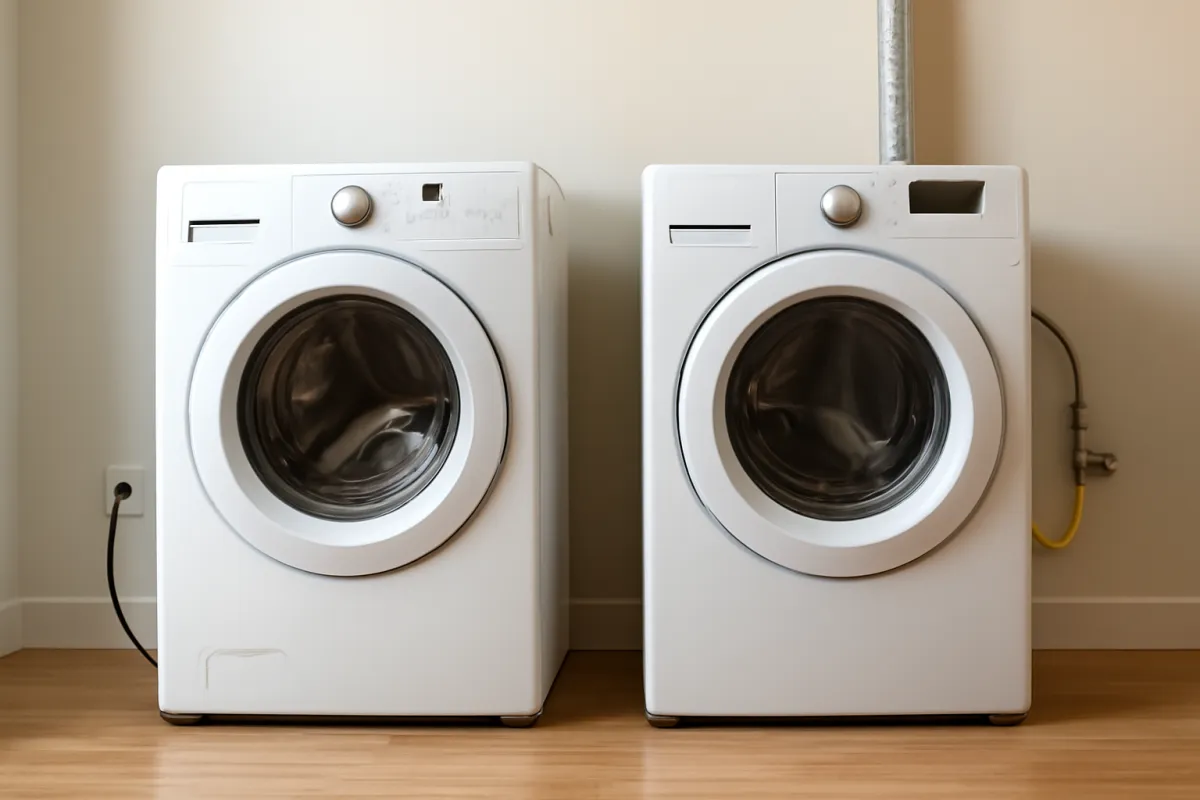
Step 3: Choose between tank, tankless and heat pump
These are three different designs with three different failure modes, and the right one depends on your demand pattern, your space, and your budget shape.
A conventional tank stores heated water and reheats as it is drawn down. It is the cheapest to buy, the simplest to replace, and it handles several fixtures at once well, because it is delivering from a reservoir rather than heating on the fly. Its ceiling is volume: when the tank is exhausted, you wait for recovery. It also spends energy keeping stored water hot around the clock, which is the standby loss the other categories reduce or avoid.
A tankless unit heats water as it flows. There is no reservoir to exhaust, so a long sequence of showers is not a problem, and there is no standby loss. Its ceiling is flow rate: it can only raise so many gallons per minute to your target temperature, and running several fixtures at once can outrun it. It costs more upfront, usually needs different venting, and frequently needs upgraded gas supply or electrical capacity. It typically lasts longer than a tank.
A heat pump unit, sometimes sold as a hybrid, moves heat from the surrounding air into stored water rather than generating heat directly. This makes it by some distance the most efficient category available, with running costs typically well below electric resistance. The trade-offs are specific: it needs a reasonable volume of air around it, it cools and dehumidifies the space it occupies, it is audible, it usually stands taller than a conventional tank, and it costs more upfront.
The three categories, compared on what actually differs
Illustrative comparison. Each bar shows relative standing, not a measured value.
Illustrative only, and local energy prices move the running cost bars considerably. The running cost bars are drawn against the resistance tank at 100, so the heat pump bar at 35 is the same rough one third used in the ten-year arithmetic further down. The shape holds either way: the cheapest unit to buy is the most expensive to run, and the reverse.
A fourth option exists and is worth naming: point-of-use units installed at a single distant fixture, alongside a main heater. These solve the specific problem of a long wait for hot water at a remote sink rather than the whole-house question.
Step 4: Size it properly
Sizing is where the specification sheet earns its keep, and the number to use differs by type.
For a tank, compare first hour ratings. The first hour rating states how much hot water the unit delivers in one hour starting from full, combining stored volume with recovery speed. This is why two 50 gallon tanks are not equivalent: a gas unit that reheats quickly can carry a materially higher rating than an electric resistance unit of the same capacity. Match the rating to the peak hour you calculated in Step 1.
For a tankless, compare flow rate at your temperature rise. A tankless unit’s capacity is stated in gallons per minute, and crucially that figure depends on how much it has to raise the temperature. Cold incoming water in winter means a larger rise and a lower effective flow rate. Ask what the flow rate is at the temperature rise typical for your area in winter, not the headline figure.
For a heat pump, both matter, since it is a tank with a different heating mechanism, plus a note on recovery: some units switch to resistance heating to cope with heavy demand, which restores capacity at the cost of efficiency in that period.
Two sizing errors are common enough to name. Oversizing a tank costs money continuously through standby loss and buys capacity you never use. Undersizing a tankless produces the specific frustration of hot water that goes lukewarm when a second tap opens, which is worse than running out because it happens repeatedly rather than once.
Step 5: Check the space, the venting and the supply
This is the step that turns a chosen unit into an installable one, and skipping it is how people end up with a delivery that will not fit.

Height and footprint. Measure the actual space including anything above the unit that limits access to connections.
Air volume, for a heat pump. These need a reasonable amount of surrounding air to draw heat from. A tight closet is often unsuitable, and the manufacturer states a minimum. A garage or basement usually suits well.
Venting. Combustion units must vent safely, and different types vent differently. A high-efficiency condensing unit typically cannot reuse an existing conventional flue, because it produces cooler, acidic exhaust requiring different materials and often a different route. This is a frequent and unwelcome discovery during quoting rather than after.
Electrical supply. An electric tank, and especially an electric tankless, needs specific circuit capacity. Electric tankless units in particular can require substantial service capacity that many homes do not have spare.
Gas supply capacity. A tankless gas unit typically fires at a much higher rate than a tank, which can require a larger gas line.
Drainage and pans. Where the unit sits above a finished space, a drain pan with a route to drain is normally required and always sensible.
Code-driven extras. Expansion tanks, seismic strapping, temperature and pressure relief discharge routing, and combustion air provision are all commonly required and commonly absent from a mental picture of the job.
Step 6: Compare running cost, not sticker price
The categories separate on running cost, and a decade is the right window to think in.
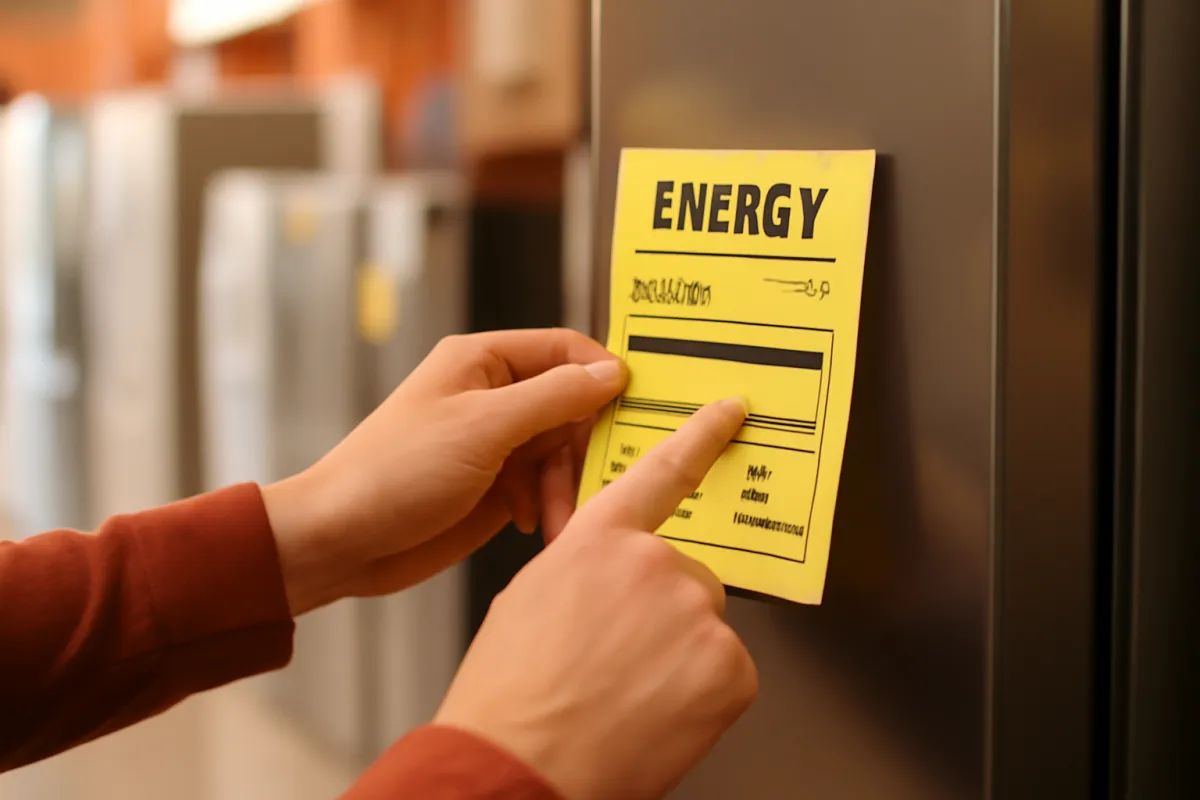
Find the annual energy figure on the efficiency label for each unit on your shortlist, apply your own utility rate to it, and multiply by the years you expect to keep it. That arithmetic is crude but it is the right crude, and it routinely reverses the ranking that sticker prices suggest.
Three factors that change the answer for your household specifically.
Your energy price. The gas against electric comparison flips between regions, and a heat pump’s advantage over resistance heating widens as electricity gets more expensive.
Your usage volume. A high-usage household recovers an efficiency premium faster, because the saving scales with consumption. A low-usage household may not recover it at all.
Available incentives, and a caution about them. Rebates and efficiency programmes exist in many places, frequently aimed at heat pump units specifically, and where one applies it can move the upfront comparison substantially. Nothing here should be read as saying that a particular credit, rebate or tax treatment is available to you. Programme rules, eligibility and the tax side change with legislation and with utility budgets, and they have changed recently enough that a figure quoted in an article older than a season is a liability rather than a help. Check current terms directly with your utility, your state or local energy office and the official tax authority, and ask installers what they have actually seen paid rather than what a brochure promises.
Our lowering your electric bill guide covers the broader picture, and water heating is typically one of the larger single items in it.
Step 7: Plan the install, the permit and the warranty
The unit is perhaps half the decision. The installation is the rest.
Get several quotes on one written scope, exactly as you would for any trade work, and make sure each one prices the same unit type and includes the same extras.
Ask what code upgrades this replacement will trigger. A good installer will tell you at the site visit. This is the single largest source of quote variation and of unwelcome surprises.
Confirm who pulls the permit and whether inspection is included.
Check disposal of the old unit is in the price.
Read the warranty properly, and specifically look for two things: the difference between tank and parts coverage, and whether the warranty depends on professional installation or on documented maintenance. Both conditions are common, and both are frequently discovered at the moment they are being relied upon.
Ask about maintenance requirements before you choose. Tankless units generally need periodic descaling, more so in hard water areas, and a unit whose warranty assumes maintenance you will not do is a false economy.
A worked example: choosing for a four-person household
A family of four in a house with an ageing 50 gallon gas tank in an unfinished basement. Two showers overlap most mornings, the dishwasher runs in the evening, and they occasionally run out of hot water when guests stay.
Step 1. Their peak hour is two showers plus some sink use. Two overlapping showers of about eight minutes, at roughly two gallons a minute each, is about 32 gallons. Add about 10 gallons of sinks and washing up in the same hour and the peak lands near 42 gallons. Allowing around 15 percent of headroom points at a first hour rating of about 50, or roughly 4.5 gallons per minute if they went tankless. Those are illustrative planning figures rather than measurements, and the current unit is marginal rather than badly undersized: they need slightly more capacity than they have, not dramatically more. Run the same sum on your own household in the sizing helper.
Step 2. Gas is present and the vent exists, so gas stays on the shortlist. Electricity is also available and the basement is large and unfinished, which keeps the heat pump option genuinely open.
Step 3. Three candidates: a larger gas tank, a gas tankless unit, or a heat pump tank.
Step 4. The larger gas tank offers a first hour rating comfortably above the 50 they are aiming at. The tankless option would need about 4.5 gallons per minute at winter temperature rise rather than at the flattering headline rise, which requires a mid-to-upper size unit. The heat pump tank matches the gas tank on capacity but recovers more slowly unless it switches to resistance mode.
Step 5. Here the picture sharpens. The tankless option requires a larger gas line and new venting, adding materially to the install. The heat pump fits the basement well, has the air volume it needs, and needs no combustion venting, but requires a new dedicated circuit and stands taller. The larger gas tank is close to a drop-in replacement.
Step 6. Over a decade, the heat pump shows the lowest running cost by a clear margin, the tankless is next, and the gas tank is highest. On the illustrative figures used later in this article, the gap between a resistance tank and a heat pump tank is in the region of $3,700 across ten years at $0.16 per kilowatt hour, and their gas comparison needs the same sum run off their gas bill before the three can be ranked in dollars. The gas tank is much the cheapest to install.
The decision comes down to how long they intend to stay and whether the upfront difference is available. Staying long term, the heat pump makes the strongest case, especially with the basement suiting it and any incentive applying. Moving within a few years, the larger gas tank is the rational choice, and it is not a compromise so much as a different time horizon.
Notice that the winner changed at Step 5 and Step 6, not at Step 3. The category question feels like the decision but is usually settled by the constraints.
Common mistakes when choosing a hot water heater
Sizing by household headcount. Peak simultaneity is what matters, and the two numbers can point in opposite directions.
Comparing tanks by capacity alone. First hour rating is the comparable figure. Two 50 gallon tanks can behave very differently.
Buying a tankless unit without checking supply capacity. Gas line size and electrical service are the two constraints that most often make a chosen tankless unit unworkable or expensive.
Assuming the existing vent can be reused. High-efficiency condensing units generally cannot use a conventional flue.
Putting a heat pump in a closet. They need air. A cramped installation underperforms and the manufacturer’s clearance specification is not decorative.
Shopping on sticker price. The cheapest unit to buy is reliably the most expensive to run, and over a decade that gap is not small.
Replacing in an emergency without asking about upgrades. A same-day swap done under pressure is where code-required extras get skipped and where oversizing gets sold.
Ignoring the maintenance the warranty assumes. A warranty conditional on annual service is worth what your intention to do that service is worth.
Forgetting the water quality question. Hard water shortens tank life and scales tankless heat exchangers. If your water is hard, that fact belongs in the decision rather than being discovered later.
What the venting route rules in and out
Venting decides more shortlists than preference does, and it is the part of the decision that is easiest to skip and most expensive to get wrong. What follows describes the categories so you can ask the right questions. The design, the materials, the route and the termination are the installer’s work and the building department’s call, not a homeowner project.
Natural draft, sometimes called atmospheric. The exhaust is hot, it rises, and a flue or chimney carries it out. It is the simplest arrangement and the one most older gas tanks use. It depends on two things being true: the flue being in serviceable condition and sized for what is connected to it, and the room having enough air coming in to replace what the appliance sends up the chimney.
Power vented. A fan pushes the exhaust, which allows a horizontal run out through a wall and frees the unit from needing a chimney. The detail people miss is that a power vented gas unit needs an electrical outlet nearby. A gas appliance that stops working in a power cut surprises people who assumed gas meant independent of the grid.
Direct vent. Combustion air is drawn from outside through its own pipe rather than from the room, usually as a concentric pipe within a pipe or as a twin pipe pair. This is the arrangement that suits a tight, well sealed house or a location where taking air from the room is a problem.
Condensing, high efficiency. These extract so much heat from the exhaust that it leaves cool and acidic, and it condenses. That has three consequences worth knowing before you fall for the efficiency figure. The vent is normally a plastic material rather than metal, so an existing metal flue usually cannot be reused. The unit produces condensate that needs a drain, sometimes a neutraliser and sometimes a small pump if there is no gravity route. And the vent route has its own length, elbow and termination rules that may not match where the old flue went.
The orphaned water heater. This one catches people out, and it is worth raising with an installer by name. If a furnace and a water heater shared a chimney, and the furnace is later replaced with a high efficiency unit that vents out through a wall, the water heater is left alone on a flue that was sized for two appliances. A flue too large for the load can draft poorly, which is a combustion safety issue rather than an efficiency one. Replacing either appliance is the moment to check what the other one is venting into.
No combustion venting at all. Electric resistance and heat pump units have no flue, which is why they can go in places nothing else can. A heat pump has a different constraint in its place: it needs air volume, or ducting to bring air in and take cooler air away, and it makes condensate that needs a drain.
The practical instruction is short. Ask each installer, at the site visit, what vent type the unit they are proposing requires, whether the existing route can be reused, and what happens to any other appliance sharing that flue. If a quote is materially cheaper than the others, the venting line is the first place to look for the reason.
Combustion air, backdrafting and the kitchen fan problem
A natural draft appliance is not a sealed system. It relies on the house supplying air, and if the house is pulling harder in the other direction, the exhaust can come back down the flue instead of going up it. That reversal is called backdrafting, and the reason it belongs in a choosing article is that it is one of the strongest arguments for a sealed or non-combustion category in a modern, tightly built home.
The pressure comes from ordinary things running at once. A powerful range hood is the usual leader, because kitchen ventilation has grown considerably more capable than it used to be. Add a clothes dryer, bathroom fans, and a house closed up in winter, and a small basement utility room can end up at a lower pressure than the outdoors.
What comes back down is combustion exhaust, which includes carbon monoxide. That is the reason this is a professional question rather than a judgement call. An installer can run a draft test on a natural draft appliance under worst-case conditions, with the exhaust fans running and the house closed, and it is a reasonable thing to ask for when a unit is being replaced. Carbon monoxide alarms are the household backstop, positioned and maintained according to your local requirements.
If your kitchen ventilation is on the powerful side, say so during quoting. Makeup air provision may be required, it changes the scope, and it is far better raised before the unit is chosen than discovered at inspection. A hood that is thick with grease also moves less air than its rating suggests, which is a separate problem with a straightforward remedy: our range hood cleaning steps cover it.
Two categories sidestep the whole question. A direct vent unit takes its combustion air from outside, so house pressure matters far less to it. An electric or heat pump unit burns nothing at all. In a tight house with strong kitchen ventilation, that is not a footnote; it is a real point in the column of the units that do not have a flue.
Living with a heat pump water heater
A heat pump water heater is a refrigeration cycle pointed at a tank. It takes heat out of the surrounding air and puts it into the water, which is why it uses so much less electricity than a resistance element that makes heat from scratch. Everything people like and dislike about these units follows from that one sentence.
It cools and dries the room it sits in. That is a bonus in a humid basement, where it works as a modest dehumidifier alongside its main job, and in a warm garage, where the heat it takes is heat you did not want. It is a nuisance next to a living space, or in a room that already struggles to stay warm in winter, and in a heated space it is quietly taking back some of what your heating system just supplied.
It makes noise. There is a compressor and a fan, so it is in the sound class of a refrigerator or a window air conditioner rather than the silence of a tank. Whether that matters depends entirely on what is on the other side of the wall. A basement or a detached garage rarely cares. A closet next to a bedroom cares a great deal.
It has an air filter, and the filter matters. Air is drawn across a coil, so there is a filter to protect it, and a clogged one starves the unit in the same way a dirty filter costs a window air conditioner its output. The maintenance rhythm is genuinely similar to the one in our window air conditioner cleaning steps. Put it on the same schedule as your other filters and it stops being a thing you forget.
That filter is not air cleaning. It exists to keep dust off a coil, and treating a heat pump water heater as an air quality appliance is a category error. If indoor air is the actual concern, it is a separate purchase and a separate question, and our review of whether air purifiers are worth it is the honest starting point rather than anything on a water heater spec sheet.
It makes condensate. Pulling heat out of air pulls moisture out of it too, exactly as an air conditioner does, so the unit needs a drain or a condensate pump. That is one more thing the location has to allow.
Cold surroundings slow it down. Output falls as the air it draws from gets colder, and most units respond by bringing resistance elements in to keep up. That restores the hot water at the cost of the efficiency that justified the purchase. An unheated garage in a cold winter is the case to think hardest about.
The mode you leave it in is a running cost decision. Units typically offer an efficiency-only mode, a hybrid mode that adds resistance heat when demand spikes, and a resistance-only mode for emergencies. A unit left permanently in resistance mode is an expensive conventional tank. Ask what the modes are called on the model you are considering and decide which one you will actually live in.
Troubleshooting the decision when it will not resolve
Every quote recommends a different type. Ask each one to justify their recommendation against your peak hour figure and your space constraints specifically. A recommendation that cannot be tied to your numbers is a preference.
The tankless quote is far above the tank quote. That gap is usually supply and venting rather than the unit. Ask for those items itemised, and then decide whether you are buying the unit or the infrastructure.
You cannot establish your peak hour confidently. Then err slightly high on a tank’s first hour rating, which costs a little in standby loss, rather than high on capacity, which costs more. Or note when you currently run out, which is a direct measurement of the shortfall.
The heat pump seems obviously best but the space is marginal. Take the clearance requirement seriously and ask the installer to confirm in writing that the location meets it. A heat pump in too small a space is a noisy, underperforming, expensive tank.
The old unit has failed and there is no time. Install the sensible like-for-like replacement rather than making a rushed category change under pressure. A well-chosen tank now beats a badly specified tankless installed in a hurry, and the category question will come round again in a decade.
You are on a well or have very hard water. Raise it explicitly with every installer, ask what it means for the unit they propose, and consider whether treating the water is the better first purchase.
Water quality, anode rods and making it last
Whatever you choose, service life is decided more by water and maintenance than by the badge on the front.
Sediment accumulates in a tank and insulates the heating surface from the water, which costs efficiency and eventually causes failure. Flushing removes it and is the single most valuable piece of maintenance available. Our flushing walkthrough covers the process.
The anode rod is a sacrificial component that corrodes so the tank does not. It is consumable, it is cheap, and replacing it at the right time can extend tank life considerably. In hard or aggressive water it depletes faster. Very few homeowners check it, which is a substantial part of why tanks fail earlier than their potential.
Tankless units scale rather than silt, and the remedy is periodic descaling. In hard water areas this is not optional, and the interval is shorter.
If your water is genuinely hard, treating it may extend the life of everything downstream of it, including the heater. Our whole house water filter review covers the broader options.
Water temperature, scalding and the mixing valve
Temperature is where a water heater stops being an appliance question and becomes a safety one, and it pulls in two directions at once. Water held too cool is more hospitable to bacterial growth in a stored tank. Water delivered too hot scalds, and it scalds children, older adults and anyone with reduced sensation faster than most people expect.
We are not going to name a setting, and you should be suspicious of any article that does. Manufacturer guidance, health authority guidance and local codes do not all say the same thing, the right answer depends on the household and on whether there are anti-scald devices downstream, and the consequences of getting it wrong run in both directions. The manufacturer’s documentation for your unit, your local code, and a licensed plumber are the authorities here.
What is worth understanding is the mechanism that resolves the tension, because it changes what you shop for. A thermostatic mixing valve sits downstream of the heater and blends cold water into the hot before it reaches the taps. That allows the tank to be stored at one temperature and delivered at a lower one, which is the standard answer to wanting both things at once. Point-of-use anti-scald devices do a similar job at an individual fixture. If either is relevant to your household, raise it while you are choosing rather than after the unit is in, because it is part of the install rather than an accessory.
Two practical notes on the same subject. Storage temperature is also a cost and a maintenance variable: hotter storage accelerates scale and increases standby loss, so the setting is quietly on the running cost side of the ledger too. And changing a thermostat is not a knob-turning job on either fuel. On an electric unit it means opening a panel on a high-amperage circuit, and on a gas unit it sits alongside the burner controls. Route it to a plumber or an electrician.
Finally, the temperature and pressure relief valve. A water heater is a pressure vessel, and that valve is the device that keeps it from becoming a dangerous one. Its discharge pipe has code-governed routing and termination rules for a reason. It should never be capped, plugged or made difficult to reach, and a valve that weeps or discharges is a call to a plumber rather than a nuisance to silence. In a closed plumbing system, thermal expansion has nowhere to go as water heats, which is why an expansion tank is commonly required on a replacement and why its absence is a frequent line on a quote.
Putting a dollar figure on ten years of energy
The method is deliberately crude, and being crude is what makes it usable: take the annual energy figure from the label, multiply it by your own price for that energy, then multiply by the years you expect to own the unit.
Here is the arithmetic on illustrative placeholder numbers, priced throughout at a nominal $0.16 per kilowatt hour so that the comparison holds together. Suppose an electric resistance tank’s label states 3,500 kilowatt hours a year. That is about $560 a year, and roughly $5,600 across ten years.
Now suppose a heat pump unit does the same work for around a third of the electricity, which is the order of difference the technology implies rather than a specification for any product. Call it 1,200 kilowatt hours a year. That is about $192 a year, and roughly $1,920 across ten years. The ten-year difference between those two illustrative units is in the region of $3,700.
Every one of those figures is a placeholder. Substitute the real annual figure from the labels on your own shortlist and your real rate from your own bill, and the answer will move. What will not move is the shape: the gap between categories is measured in thousands over a decade, which is why it routinely outweighs a difference of hundreds in sticker price. Our electric bill guide covers finding your true rate, and the appliance wattage and running cost reference puts water heating alongside everything else in the house.
Gas needs the same sum done in its own units. Gas is billed in therms or in cubic units rather than kilowatt hours, so take the annual figure off the gas unit’s label and multiply by your gas rate. The only fair comparison across fuels is dollars against dollars, because the units on the two bills are not interchangeable and any rule of thumb about which fuel wins flips between regions and between years.
Three things scale the answer, and it is worth knowing which of them applies to you. A higher electricity price widens the gap between an efficient unit and a resistance one. Higher hot water usage widens it again, because the saving is per gallon heated. And a longer intended stay widens it a third time, because the premium is paid once and the saving arrives every month. Reverse all three and the cheap unit is genuinely the right answer. The running cost helper will apply your own rate to these illustrative figures.
Where the money actually goes over ten years
It is worth seeing the shape of a decade of ownership, because the sticker price is the part people weigh and the smallest part of the total. The split below is drawn for the same illustrative electric resistance tank used in the arithmetic above.
Ten years of hot water heater ownership, by category
Illustrative decomposition of total cost of ownership. Shows relative proportions, not amounts, and local energy prices move the split considerably.
Illustrative for a conventional resistance tank, using the same numbers as above. If the energy segment is the $5,600 of ten-year electricity from the previous section and it accounts for 70 percent of the total, the whole decade comes to about $8,000, of which roughly $1,760 is the once-off unit and install and roughly $640 is maintenance. Those are proportions applied to an illustrative figure, not a quote for any job. The efficient categories shrink the pale middle segment, which is exactly why their higher upfront cost can still produce a lower total. A high-usage household shifts the split further toward energy; a low-usage one, less so.
Two conclusions follow from that shape, and they are the reason this walkthrough spends so little time on brands.
The energy segment dominates, so anything that reduces it is worth more than anything that reduces the others. That is the whole argument for paying more upfront for efficiency, and it is also the argument for the unglamorous items: insulating the first few feet of hot pipe, setting the temperature sensibly, and fixing a dripping hot tap, which is a small continuous energy leak rather than merely an annoyance.
The maintenance segment is small and buys disproportionate life. A flush and an anode check cost very little against the sticker price of an early replacement, which is why they are the best-value line on the chart even though they are the smallest.
Recirculation, wait times and the problem sizing does not solve
A complaint that sizing cannot fix, and which people frequently try to fix by buying a bigger unit, is the wait for hot water to arrive at a distant fixture.
That wait is a plumbing distance problem, not a capacity problem. The water sitting in the pipe between the heater and the tap has cooled, and it has to be drawn off before hot water arrives. A larger heater does not shorten that at all.
Three genuine remedies exist, and they suit different situations.
A recirculation system keeps hot water moving through the pipe loop so it is available quickly at the tap. It solves the wait convincingly and it has a cost: continuously circulated water loses heat continuously. Timer-based and demand-based controls reduce that penalty considerably compared with running the pump around the clock, and a demand-controlled system, triggered when you actually want hot water, is the version with the best case.
A point-of-use unit installed at the distant fixture heats water where it is used. This works well for an isolated remote sink and poorly as a whole-house strategy.
Pipe insulation is the cheap partial answer. It does not eliminate the wait but it slows the cooling and reduces the loss, and on accessible runs it is one of the least expensive efficiency measures available.
The reason to raise this during the choosing process rather than afterwards is that a tankless unit interacts with it. Some tankless models require a minimum flow to fire, which affects how they behave with certain recirculation arrangements, and the manufacturer’s guidance on compatible configurations is worth reading before you commit rather than after.
Reading a specification sheet without getting lost
Manufacturer sheets are dense, most of what is on them does not matter to your decision, and knowing which six lines to read makes the comparison quick.
First hour rating, for a tank. Already covered, and the most useful single line on the page.
Recovery rate. How much water the unit can reheat per hour at a given temperature rise. This is the mechanism behind the first hour rating, and it is worth glancing at because it tells you how the unit behaves after the tank has been drawn down, which is the situation you actually complain about.
Flow rate at a stated temperature rise, for a tankless. Insist on the figure at the rise typical for your winter, because headline flow rates are quoted at a smaller rise and are correspondingly flattering.
Annual energy consumption or efficiency metric. The line that decides the running cost, and the one to multiply by your own utility rate.
Dimensions and required clearances. Including the clearance above the unit for connections, and for a heat pump the surrounding air volume.
Electrical or gas input requirements. Amperage and voltage, or gas input rate. This is the line that determines whether your existing supply is adequate, and it is the one most often skipped.
Two things on a specification sheet that matter less than their prominence suggests. Warranty length is a marketing variable as much as a durability signal, and comparing warranty terms across brands tells you less than comparing what the warranty actually covers and what it requires of you. And feature lists, connectivity and app control among them, are genuinely optional; a water heater’s job is thermally simple and the features are not where the difference in outcome lies.
If a sheet is missing any of the six lines above, ask for them. A supplier who cannot supply the flow rate at a realistic temperature rise is not a supplier who has thought about your installation.
Choosing for a small home, an apartment or a rental
The whole-house logic above assumes a house with a basement or a garage. Several common situations do not, and they change the shortlist rather than the method.
A small apartment or condo frequently has the heater in a closet inside the living space, which rules out a heat pump on both air volume and noise, and often rules out venting changes because the building envelope is not yours to alter. That usually narrows the choice to a like-for-like replacement or a compact tankless unit where the supply permits, and it makes the physical measurement step decisive rather than merely important. Check the building’s rules as well as the code; many have their own requirements about unit type, pans and shutoffs.
A very small household may be better served by a smaller unit than the one being replaced, which reduces standby loss and frees space. The instinct to replace like for like is strong here and often costs money quietly for a decade. If you have never run out of hot water, that is evidence.
A rental you own shifts the weighting toward reliability, simplicity and cheap replacement rather than efficiency, because you buy the unit and the tenant usually pays the energy. That is not a reason to install something poor, but it does explain why a straightforward tank is frequently the rational choice for a landlord and a heat pump frequently is not, and understanding that split prevents a lot of pointless argument.
A rental you live in is not your decision at all, and the useful action is different: report a failing unit in writing and early, because a heater that is leaking rather than failed is a much smaller problem for everyone. Keep a copy of what you sent.
A second home used intermittently is the one case where standby loss dominates unusually, because the unit spends most of the year keeping water hot for nobody. A tankless unit, or a tank with a vacation setting actually used, addresses that, and it is worth raising with the installer rather than treating the property as a normal house.
In each of these, the seven steps still apply. What changes is which constraint binds first, and in every one of them it is Step 5.
What only a licensed professional should do
It is worth being explicit about where the line sits, because the honest division of labour on a water heater is unusually clean: the choosing is yours, and essentially all of the doing is not.
Their side of the line. Gas piping, sizing and connections. Combustion vent design, materials, route and termination, and any change to a shared flue. The dedicated circuit and disconnect for an electric or heat pump unit, and any service capacity assessment that goes with it. The permit and the inspection. Relief valve discharge routing, expansion tank provision, condensate handling, drain pans, and seismic strapping where it applies. A draft test on a natural draft appliance. Disposal of the old unit.
Your side of the line, and it is not a small side. Measuring the space, including the height and the clearances. Photographing the existing label and connections. Working out your peak hour honestly. Reading your own bills for the rate that goes into the running cost sum. Building a shortlist of two or three units compared on the same figures. Getting three quotes on one written scope. Asking, at the site visit, which code upgrades the replacement will trigger. And then deciding, which is the part nobody else can do for you.
The reason the line sits where it does is not caution for its own sake. A venting error on a combustion appliance produces carbon monoxide inside a house, and the failure is invisible and odourless. An electric tankless unit can demand service capacity that a house does not have spare, which is an electrical question before it is a plumbing one. A tank is a pressure vessel holding water hot enough to scald. And a gas connection is exactly as serious as it sounds. None of these are ordinary DIY risk profiles.
Your local building department is the authority on what is permitted, what requires inspection, and who is allowed to do it, and its answer overrides any general statement made here. It is also worth knowing that unpermitted work has a way of resurfacing later, at a home sale or in an insurance claim, long after the saving has been forgotten.
Your hot water heater choosing checklist
Peak hour demand written down as a volume, based on genuine overlap.
Existing fuel, vent type and connections photographed.
Space measured, including height and any clearance a heat pump would need.
Electrical capacity and gas line size established, not assumed.
Shortlist of two or three specific units, compared on first hour rating or flow rate at winter temperature rise.
Annual energy figure from each label, multiplied by your own utility rate, over a decade.
Any rebate or programme checked directly with the utility or the official source as it currently stands, rather than assumed from a brochure or from an article.
Three written quotes on the same scope, each naming any code-required upgrades.
Permit responsibility and inspection confirmed in writing.
Warranty read, with tank and parts coverage and any maintenance conditions understood.
Old unit disposal included.
Vent type confirmed, and any appliance sharing the same flue accounted for.
Mixing valve or anti-scald provision raised with the installer if the household needs it.
Maintenance plan decided before purchase, not after.
The bottom line
Choosing a hot water heater comes down to four numbers and one constraint. The numbers are your peak hour demand, the unit’s first hour rating or flow rate, its annual energy figure, and its installed price. The constraint is the space, the venting and the supply you actually have, which is what usually decides between categories after the specification sheets have made their case.
Work through it in that order and the choice tends to make itself. Skip the peak hour and you will be sold on capacity. Skip the running cost and you will buy the cheapest unit to purchase and the most expensive to own. Skip the site constraints and you will choose something that cannot be installed as cheaply as the quote implied.
And if the old unit has already failed and the house is cold, install the sensible replacement rather than making a rushed category change. The efficiency upgrade is worth doing properly next time, on a schedule you chose.
From the test bench: BenchNest publishes this walkthrough as general home gear information. It is not plumbing, gas, electrical or safety advice, and it stops deliberately short of telling anyone how to install, vent, connect or set a water heater. Every gallon, rating, percentage and dollar amount above is an illustrative planning figure, priced at a nominal $0.16 per kilowatt hour, not a measurement of any specific model or any specific home. Sizing, venting, clearance, permit and code requirements differ by jurisdiction, by unit and by installation, so treat the manufacturer’s own documentation, your local building department and a licensed plumber or electrician as the authority for your situation. Gas connections, combustion venting, high-amperage circuits and water hot enough to scald all carry real risk, carbon monoxide exposure among them, so have that work specified, carried out and inspected by qualified people rather than acted on from anything written here.
Frequently asked questions
What size hot water heater do I need?
Size by peak demand rather than by household headcount, because what matters is the busiest hour of the day rather than the daily total. For a tank, the specification to compare is the first hour rating, which states how much hot water the unit can deliver in one hour starting from full. Work out your own peak hour honestly, counting the showers, the dishwasher and the laundry that genuinely overlap, and choose a first hour rating that covers it. For a tankless unit the equivalent question is flow rate: how many gallons per minute it can raise to your target temperature, and whether that covers the fixtures you run at once. As an illustrative worked figure, two overlapping eight minute showers at roughly two gallons a minute is about 32 gallons, and adding around 10 gallons of sink use puts the peak hour near 42 gallons, which points at a first hour rating of about 50 or roughly 4.5 gallons per minute on a tankless unit. Sizing by tank capacity alone is the most common error, because two 50 gallon tanks with different recovery rates do not behave the same at all.
Is a tankless water heater better than a tank?
Neither is better in general; they suit different households. Tankless heats on demand, so it does not run out during a long sequence of showers and it does not spend energy keeping stored water hot, which usually means lower running cost and a longer service life. It costs more upfront, frequently needs upgraded gas supply or electrical capacity and different venting, and it has a flow rate ceiling rather than a volume ceiling, so running several fixtures at once can outrun it. A tank is cheaper to buy and simpler to replace, and it handles simultaneous demand well until it empties, after which you wait for recovery. Households with high but spread-out demand tend to prefer tankless; households replacing a unit on a budget tend to prefer a tank.
Should I get a gas or electric hot water heater?
In most replacements the answer is decided for you by what is already installed, because switching fuel means new supply lines or new electrical capacity and new venting, which is a significant part of the job. Where you genuinely have a choice, the comparison rests on local energy prices, which vary widely, and on the equipment options each fuel opens. Gas units typically recover faster, which matters for a tank. Electric opens the heat pump option, which is by some margin the most efficient category available and which needs no combustion venting at all. The honest answer is to price both against your own utility rates rather than relying on a general rule, because the rule flips depending on where you live. The arithmetic is the same either way: take the annual energy figure off each label and multiply by your own price. At an illustrative 16 cents per kilowatt hour, a label figure of 3,500 kilowatt hours a year works out near $560 a year, and a gas unit is compared by doing the identical sum from your gas rate and reading the two dollar answers side by side.
Are heat pump water heaters worth it?
They are the most efficient type widely available, because they move heat from the surrounding air rather than generating it, which is why their running cost is typically well below a conventional electric resistance unit. The trade-offs are real and worth checking before committing. They cost more upfront, they need a reasonable volume of air around them so a tight closet may not suit, they cool and dehumidify the space they sit in, which is welcome in a warm garage and unwelcome next to a living area, and they are audible in a way a tank is not. They also generally stand taller than the unit they replace. Where the space suits and the upfront cost is manageable, the running cost case is strong.
How long does a hot water heater last?
We are not going to put a number on it, because the figures people quote come from wildly different water conditions and maintenance histories, and the spread around any average is far wider than the average is useful. The honest version is that a conventional tank is generally considered a shorter-lived appliance than a tankless one, and that water quality and maintenance move the outcome more than the badge on the front does. Hard water shortens tank life by accelerating sediment build-up, and a neglected anode rod shortens it considerably. Two practical implications. If your unit is approaching the typical end of its range and needs a repair costing a meaningful share of a replacement, replacing is usually the better decision. And whatever you install, an annual flush and a periodic anode check are the cheapest life extension available. Our flushing guide covers both.
Do I need a permit to replace a hot water heater?
Often yes, and the requirement is local rather than universal, so your own building department is the authority rather than any general answer. Replacements are frequently permitted work because they involve gas, water and sometimes electrical connections, and because current code may require changes the old installation did not have, such as expansion tanks, seismic strapping, drain pans, or different venting. A licensed installer normally pulls the permit as part of the job. It is worth knowing that unpermitted work on a water heater can surface later at resale or on an insurance claim, and that code-required upgrades are a common reason a replacement quote is higher than the sticker price of the unit.
Can I install a hot water heater myself?
Our answer is to route it to a licensed plumber or electrician and to your local building department, and to treat that as the default rather than the cautious option. Water heater work touches a gas line, a combustion vent, a high-amperage circuit, a pressure vessel and water hot enough to scald, and those are four different ways for a mistake to become a serious one. Some jurisdictions permit a homeowner to replace a like-for-like electric unit and many do not, and the building department is the authority on which you are in. The specific risks are not abstract: an incorrectly vented combustion appliance can produce carbon monoxide inside the house, a gas connection error is self-evidently serious, and a badly supported or unstrapped tank is a hazard. The economics also matter less than people expect, because much of the cost of a replacement is code compliance and disposal rather than labour time.
What is a first hour rating on a water heater?
It is the amount of hot water a tank can deliver in the first hour of heavy use, starting from a fully heated tank, and it is the single most useful number on the specification sheet. It combines the stored volume with how fast the unit reheats incoming cold water, which is why two tanks of identical capacity can have quite different ratings. Comparing first hour ratings is how you compare tanks meaningfully. Gas units generally recover faster than electric resistance units of the same size, so a gas tank often carries a higher first hour rating than its capacity alone would suggest. Match the rating to your household's busiest hour and the sizing question is essentially solved.