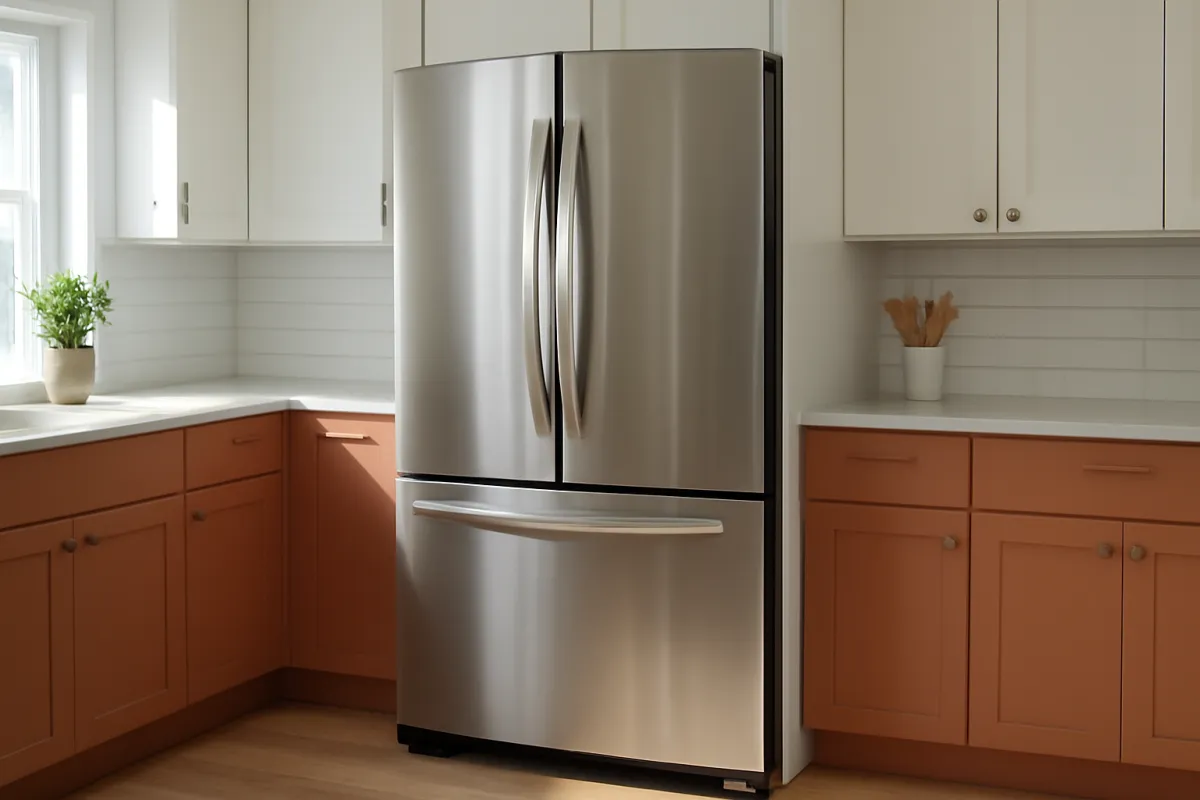
What's on this page
- How long a refrigerator lasts: the short answer
- Refrigerator lifespan by type
- Why modern refrigerators trend shorter than old ones
- The parts that fail first
- Signs your refrigerator is on its way out
- What shortens a refrigerator’s life fastest
- The garage refrigerator problem
- Maintenance that stretches a refrigerator’s life
- Clean the condenser coils twice a year
- Repair or replace: the 50 percent rule
- When replacing early actually saves money
- A worked example: the eleven-year-old French door
- How to make a new refrigerator last from day one
- Buying for longevity: features that last vs features that fail
- What to do with the old refrigerator
- How long refrigerators last: quick reference
- The bottom line
Short answer: A modern full-size refrigerator typically lasts about 10 to 15 years, a commonly cited window rather than a guarantee, with simple top-freezer designs at the long end and feature-heavy French-door and side-by-side units trending shorter. The ice maker is the common first failure and the compressor is the one that usually ends a fridge's life, and once a repair quote passes half the price of a comparable new unit, replacement usually wins.
How long does a refrigerator last? A commonly cited window for a modern full-size unit is roughly 10 to 15 years, and almost everything interesting about that number lives in why some machines finish at the far end of it while others die at eight. The refrigerator is the one appliance that never gets a day off: the compressor cycles around the clock, the door swings dozens of times a day, and the machine is expected to disappear into the kitchen until the milk goes warm. When it falters, the questions arrive all at once, and usually with a repair quote attached: is this normal for its age, is it worth fixing, and would a new one pay for itself in electricity?
These notes work through refrigerator lifespan the way we work through any gear question: what the typical years look like by type, which parts fail first and in what order, the signs a unit is winding down, the maintenance that genuinely stretches the years, and the repair-or-replace math, including the 50 percent rule and the efficiency wrinkle that sometimes tips it. Where numbers appear, they are illustrative planning figures rather than measurements of any one machine. This piece pairs with our breakdown of what a refrigerator costs to run, which covers the electricity side in depth, and the eight-point appliance maintenance plan that keeps the whole kitchen’s machines alive. When a repair quote lands, put the replacement price and the years you would expect from it into the cost-per-use calculator and the decision usually clarifies fast.
Key takeaways
- A modern full-size refrigerator typically lasts about 10 to 15 years, with simple top-freezer designs at the long end and feature-heavy French-door and side-by-side units trending shorter.
- The ice maker and dispenser system is the most common first failure; the compressor and sealed system is the expensive failure that usually ends a refrigerator's life.
- The 50 percent rule is the workable starting point: when a repair quote passes half the price of a comparable new unit, replacement usually wins, and age tightens that logic.
- Cleaning the condenser coils once or twice a year is the single highest-value maintenance task, because dusty coils make the compressor run hot, and heat is what ages compressors.
- Placement matters: hot garages, tight alcoves with no airflow, and blocked interior vents all shorten a refrigerator's life, while a level, ventilated, kitchen-temperature spot protects it.
How long a refrigerator lasts: the short answer
The commonly cited planning window for a modern full-size refrigerator is about 10 to 15 years, and it is worth being clear about what kind of number that is. It is not a warranty, a median measured on your model, or a cliff at which machines stop; it is the range where most units land, with real examples on both sides. Failures are rare in the first five years or so, climb through the back half of the first decade, and past year ten every significant repair becomes an economics question rather than an automatic fix. Compact and dorm-style units run shorter, commonly quoted in the range of five to ten years, because small, cheap, hard-working designs age fast.
Three forces spread machines across that window, and the rest of these notes walk through each. Design complexity is the first: every extra motor, valve, water line, and circuit board is another candidate for failure, which is why the simplest fridges are the longest-lived as a class. Environment is the second: a level, ventilated spot at kitchen temperatures is what the machine was engineered for, and hot garages or zero-clearance alcoves work it harder every hour. Care is the third: coils, gaskets, and sensible settings decide whether the compressor loafs or labors. Age alone tells you less than those three together, which is why an 8-year-old neglected unit can be a worse bet than a cared-for 12-year-old one.
Refrigerator lifespan by type
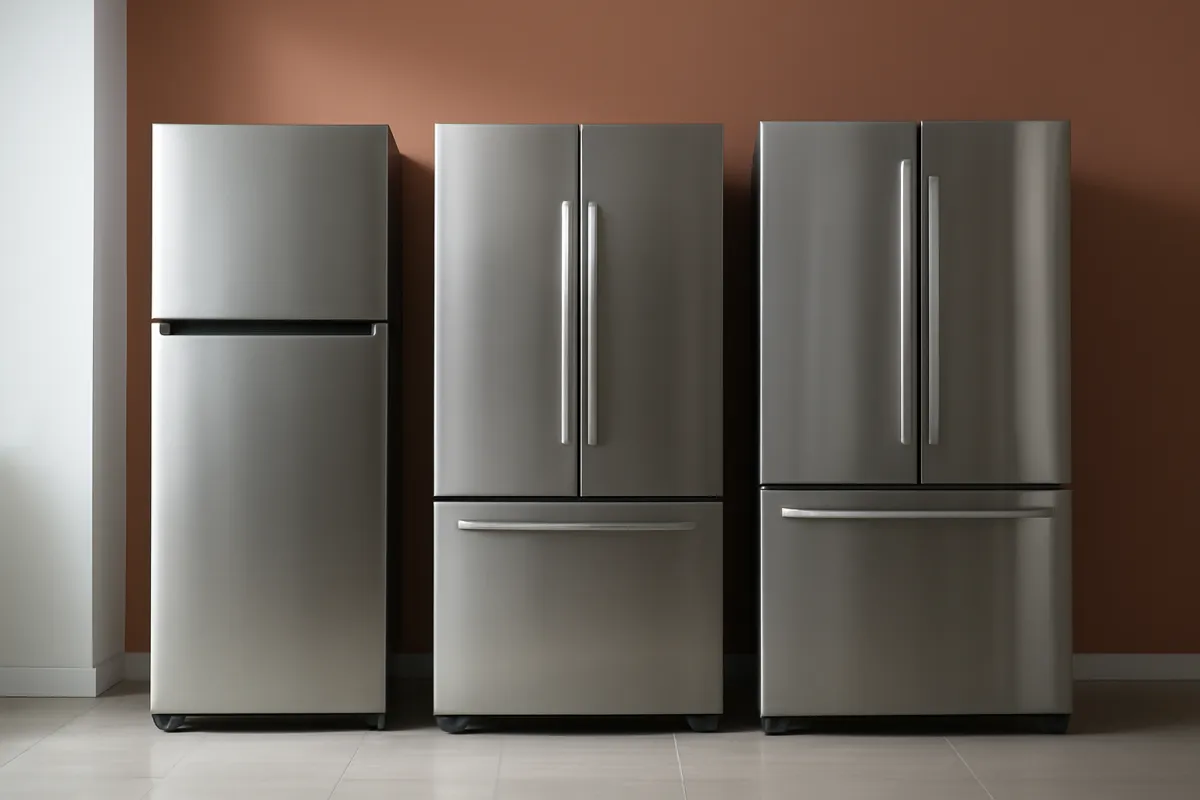
Type is the best single predictor of longevity, mostly because type is a proxy for complexity. The pattern that shows up over and over is that the machines with the fewest extras last longest. A top-freezer unit is a box, a compressor, a couple of fans, and two doors; there is simply less to break. A French-door flagship adds an in-door ice system, a water dispenser, extra fans and dampers for multi-zone cooling, and a control board orchestrating it all, and each addition is useful right up until it is the reason for a service call. The chart below lays out illustrative typical lifespans by type, and the ordering matters more than the exact years.
Illustrative typical lifespan by refrigerator type
Commonly cited typical service life for each configuration, in years. Bars scale with the years. Individual units vary widely with care and placement.
The ranking tracks complexity: fewer motors, doors, and water lines mean fewer failure points. Years are illustrative midpoints of commonly cited ranges, not measurements of any brand or model.
Two honest caveats keep that chart useful. First, the years are illustrative midpoints of commonly cited ranges, and the spread within any type is wide: build quality, luck, and care move individual units several years either way, so a specific French door outlasting a specific top freezer is unremarkable. Second, the ranking is about configuration, not quality tier: a premium French door is not badly made, it is heavily equipped, and its extra systems fail at their own pace regardless of how good the cooling core is. The practical use of the chart is at buying time, covered later in these notes: every feature you skip is statistical lifespan you keep.
Why modern refrigerators trend shorter than old ones
Everyone knows a forty-year-old fridge still humming in somebody’s basement, and it deserves a straight explanation rather than nostalgia. Part of the story is survivorship: the old units still running are the toughest few of their generation, while their failed siblings went to scrap decades ago and are not around to be counted. Comparing today’s average to yesterday’s survivors flatters the past. But part of the story is structural, and it is worth understanding because it shapes what you should buy.
Old refrigerators were mechanically simple and thermodynamically lazy: heavy cabinets, oversized compressors running well inside their limits, no ice maker, no dispenser, no electronics beyond a thermostat. Lightly stressed parts last, and they paid for that durability every month in electricity. Modern units carry strict efficiency targets and long feature lists, which pushes design toward lighter components working closer to their limits and adds whole subsystems, water valves, fan motors, sensor arrays, control boards, that old machines never had. More systems mean more possible failures even when each system is individually well made. The consolation is real: a modern unit can use a fraction of the electricity of a decades-old one, as our running-cost breakdown lays out, so cost per year of service often favors the newer machine even when its years are fewer. The lesson to carry to the showroom is that simplicity, not age of design, is what bought those old machines their decades.
The parts that fail first
Refrigerators rarely die all at once; they fail in a fairly predictable order, and knowing the order turns a scary symptom into a priced decision. The stacked bar below shows an illustrative distribution of where refrigerator service calls concentrate. The headline is that the scary component, the compressor, is not the most common failure: the convenience systems are.
Where refrigerator failures concentrate
An illustrative split of common refrigerator service issues by system. Segments sum to 100 percent. Your model's mix depends heavily on which features it has.
The ice and water system leads because it packs moving parts, water lines, and freezing conditions into one assembly. The split is illustrative; a fridge with no ice maker simply removes the biggest slice.
The ordering has a logic. Ice makers and dispensers combine everything that breaks, motors, water valves, tubing that can freeze or leak, and they live at freezing temperatures; they are the most common first failure and usually a moderate repair. Door gaskets are wear items: the magnetic seals stiffen, tear, and stop sealing, which quietly forces longer compressor runtime. Evaporator and condenser fans and the defrost heater and timer are the mid-life failures behind warm zones and frost buildup, each a fixable, moderately priced part. Control boards fail less often but annoyingly, since symptoms mimic other faults. The sealed system, compressor, refrigerant loop, and its start components, fails least often and matters most: it is the expensive, specialist repair, and on an aging unit it is usually the failure that ends the story. Notice what falls out of the chart: skip the ice maker and dispenser at purchase and you have deleted the single biggest slice of failure risk.
Signs your refrigerator is on its way out
A refrigerator winding down usually says so months before it quits, and the signals are worth learning because early ones are often cheap fixes while ignored ones cascade. Temperature is the first family: food spoiling noticeably faster, milk turning early, warm spots on some shelves while others freeze lettuce, or a freezer that no longer keeps ice cream hard. Those symptoms can be as small as a blocked vent or a torn gasket, but they mean the machine is no longer holding its setpoints, and they deserve investigation rather than a colder dial setting that masks the cause with runtime.
Sound and runtime are the second family. A healthy compressor cycles: it runs, satisfies the thermostat, and rests. A compressor that runs nearly constantly, or that has developed a new loudness, buzz, rattle, or clicking at start-up, is working too hard or struggling to start, and both patterns age it fast. The third family is moisture and frost: heavy frost in a frost-free freezer points at the defrost system, water pooling inside or under the unit points at a blocked defrost drain or a leaking line, and condensation between the doors or a hot cabinet exterior signals strain. Any one symptom on a younger fridge is a repair call; several at once on a unit past year ten is the machine telling you how it wants the repair-or-replace math to come out.
What shortens a refrigerator’s life fastest
Knowing the killers matters because most of them are choices, not luck. Heat leads the list. The compressor’s whole job is moving heat out of the box, and everything that makes that harder, dust-caked condenser coils, a cabinet shoved flush against the wall with no airflow gap, direct sun through a window, a kitchen spot beside the oven, raises how long and how hot it runs. Heat is cumulative wear: a compressor that runs 30 percent longer every day of its life ages on the same schedule. The same logic convicts the crammed fridge whose interior vents are blocked by leftovers, forcing long runs to move air that has nowhere to go.
Behavior does its share. Doors held open while a household grazes, gaskets never checked, spills left to gum the gasket until it tears, and a dial cranked to maximum cold all add runtime. So does chronic overfilling, and its opposite: a nearly empty fridge has no thermal mass and cycles more than a reasonably stocked one. Physical placement finishes the list: an unlevel fridge stresses doors and drains, and moving a unit laid flat without letting it stand upright before start-up can damage the compressor with its own oil. None of these fixes cost real money. The difference between the fridge that dies at nine and its twin that retires at sixteen is usually a list exactly like this one, worked or ignored.
The garage refrigerator problem
The second fridge in the garage is common enough to deserve its own honest section, because the garage is close to a worst-case home for a refrigerator. The machine is engineered around a band of room temperatures. A summer garage far above that band forces long, hot compressor runs, which is the fastest normal way to age one, and raises its electricity draw at the same time. A winter garage below the band confuses the design: the thermostat in the fresh-food section sees a cold room and barely calls for cooling, so the freezer compartment, which needs active cooling to stay far colder than any garage, quietly thaws. Add dust and humidity loading the coils faster than any kitchen, and the garage unit lives a hard life on both ends of the year.
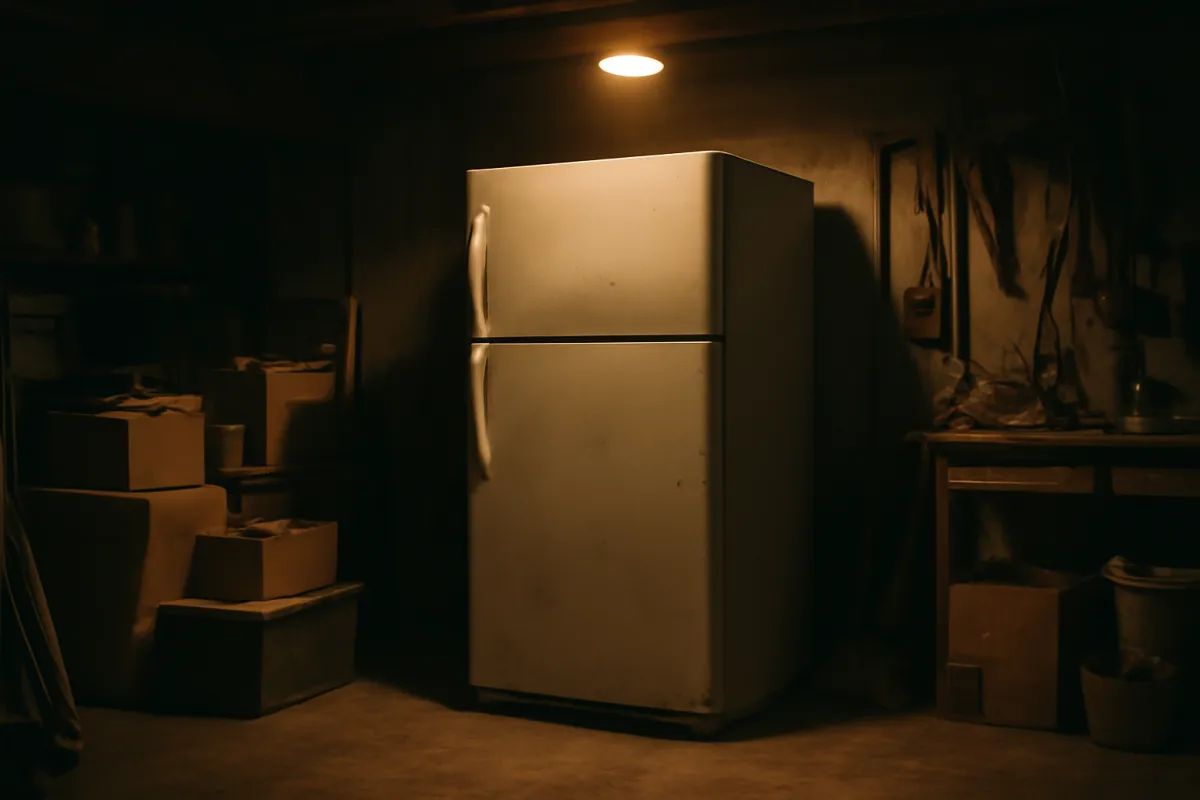
If a garage fridge genuinely earns its keep, do it deliberately: choose a simple, inexpensive unit whose manufacturer rates it for garage temperature ranges, site it out of sun with a real airflow gap, and put its coils on a twice-a-year cleaning schedule since the environment is dirtier. What rarely makes sense is the default path, retiring the old kitchen fridge to the garage to chill drinks: an old, inefficient unit in a hot room is the most expensive possible way to run the least valuable cold storage in the house, a math problem our running-cost breakdown makes uncomfortably specific. Sometimes the kindest end for a long-serving fridge is recycling, not garage exile.
Maintenance that stretches a refrigerator’s life
Maintenance cannot rewrite what a design is, but it decides which end of the lifespan range a unit reaches, and the full routine costs an hour or two a year. It divides into three jobs: keep the heat path clear, keep the seal tight, and keep the settings sensible. The heat path is the coils and clearances covered in the next section, and it is the highest-value work. The seal is the gaskets, wiped clean so grime cannot stiffen and tear them, checked with the simple paper test described below, and replaced when they fail, a cheap part that spares the compressor a permanent leak of cold to fight.
The sensible settings round it out. Keep the fresh-food section and freezer at the manufacturer’s recommended points rather than maximum cold, which mostly buys runtime, not safety. Leave the interior vents clear so air can actually circulate, keep the fridge reasonably stocked but not crammed, and cover liquids, since open moisture makes the machine work harder and frosts the evaporator. Level the cabinet so doors swing shut rather than hanging open, and clear the defrost drain if you ever see water pooling inside. Every one of these tasks appears in our eight-point appliance maintenance plan with the rest of the kitchen’s machines; the refrigerator’s share of that plan is genuinely about an hour a year, repaid in years of service and lower bills.
Clean the condenser coils twice a year
If refrigerator care were reduced to one task, it would be this one. The condenser coils, the radiator where the machine dumps the heat it pulls from the box, live either across the back of the cabinet or behind a grille underneath at the front, and they only work when air can move through them. Dust, pet hair, and kitchen grease blanket them steadily, and a blanketed coil cannot shed heat, so the compressor runs longer and hotter for the same cooling. That is the quiet mechanism behind early compressor death, and it is fully reversible with a brush and a vacuum.

The job takes fifteen minutes. Unplug the fridge, and either walk it forward from the wall for rear coils or pop the front toe grille for underneath coils. Work a coil brush, a long, slim bottle-style brush sold for exactly this, through the coils to loosen the felt of dust, and follow with a vacuum crevice tool to capture what falls, including the floor beneath. While the unit is out, vacuum the condenser fan area if visible and check that the airflow gaps around the cabinet, a couple of inches at the back and above as a common recommendation, have not been lost to a shoved-back cabinet or stacked cereal boxes. Twice a year is the standard rhythm, quarterly in homes with shedding pets. Plug in, walk it back, done. No other quarter hour in the house pays this well.
Repair or replace: the 50 percent rule
When a repair quote lands, you need a decision rule, and the commonly used one is the 50 percent rule: if the repair costs more than about half the price of a comparable new refrigerator, replacement usually wins. The rule works because it quietly encodes the real question, which is price per remaining year. A big repair on an old machine buys expensive years, because the rest of the machine remains old and the next failure is already queued. The same repair on a young machine buys cheap years. So the rule tightens with age: past year ten, many households reasonably drop their threshold below half, and in the first five years almost any single repair beats replacement.
Layer the failure type on top and the picture usually resolves. Gaskets, fan motors, ice maker components, and defrost parts sit in the cheap-to-moderate band and are nearly always worth doing on a machine with years left. Sealed-system work, the compressor and refrigerant loop, is the expensive band, and on a unit near or past year ten it is the classic replacement trigger; the same failure inside a warranty period or on a young machine reads differently. Add the practical multipliers: whether the model’s parts are still available, whether you have already paid for one repair this year, and whether the unit’s efficiency is old enough that a replacement pays part of its own way, which the next section takes up. Run the replacement’s price and expected years through the cost-per-use calculator and the quote turns from a shock into a comparison.
When replacing early actually saves money
There is a case where retiring a working refrigerator is the financially sound move, and it is worth stating carefully because it is easy to oversell. Refrigerator efficiency has improved enormously over the decades, so a unit from the 1990s or earlier can draw several times the electricity of a comparable modern one, and for those museum pieces the running-cost savings from replacement are genuine and large. For a fridge from the last decade, the year-over-year efficiency gains are modest, and replacement rarely pays for itself on electricity alone; the honest framing is that efficiency is a tiebreaker in the repair-or-replace decision, not a reason on its own.

The arithmetic is straightforward and worth doing rather than assuming. Estimate the old unit’s annual cost, our running-cost breakdown shows the meter method and typical figures, and compare it against the yellow-label estimate on the replacement you would buy; the difference is the annual subsidy the new machine contributes toward its own price. For a failing thirty-year-old garage unit, that subsidy can be a meaningful share of a budget replacement. For a ten-year-old kitchen unit facing a cheap gasket, it is small, and the gasket wins. Where the math bites hardest is the marginal case, an old fridge with a mid-size repair quote: adding a realistic efficiency saving to the repair side’s true cost is often exactly what tips the 50 percent rule’s answer from patch to replace.
A worked example: the eleven-year-old French door
Run one illustrative scenario end to end, because this is the situation these questions actually arrive in. A household’s French-door refrigerator, bought new eleven years ago at a mid-range price, stops making ice, and a week later the fresh-food section starts running warm while the compressor hums nearly nonstop. A technician’s visit produces a diagnosis: the ice maker assembly has failed, and separately the unit is losing refrigerant from a corroded section of the sealed system. The combined quote lands, illustratively, in the four-figure neighborhood once parts, refrigerant work, and labor stack up, against a comparable new French door at roughly twice that figure, or a simpler bottom-freezer replacement at less.
The framework processes it quickly. Age: at eleven years, the unit is at or past the illustrative typical lifespan for its type, so any expensive repair is buying its last years, not its middle ones. Failure type: sealed-system work is the classic end-of-life trigger, and the ice maker failure alongside it is a second bill on the same visit. The 50 percent rule: the quote sits around half the like-for-like replacement, borderline on its face, but the age-tightened threshold and the queued risk of the next failure both push one way. Efficiency: eleven years is recent enough that electricity savings are a small tiebreaker, not a driver. Verdict: replace, and if the household is honest about barely using the door dispenser, the simpler configuration buys back both purchase price and statistical years. Every number here is illustrative rather than quoted from any real service call, but the shape of the decision is exactly the one to copy.
How to make a new refrigerator last from day one
Longevity is partly decided in the first week of ownership, which is worth knowing before the delivery truck arrives. Transport and installation come first: if the unit traveled on its side, let it stand upright for the period the manual specifies before plugging in, so the compressor’s oil settles back where it belongs; skipping that wait is a classic self-inflicted early failure. Site it away from the oven, heat vents, and direct sun, level it per the manual so the doors close themselves and the drains run the right way, and leave real airflow clearance behind and above rather than pushing the cabinet flush to the wall for looks.
Then set it up to loaf. Use the recommended temperature setpoints rather than maximum cold, connect the water line carefully if there is one, with a quality line and an accessible shutoff, since slow dispenser-line leaks ruin floors as often as fridges, and give the machine a reasonably stocked interior with clear vents from the start. Register the warranty, and put two recurring dates in the calendar immediately: coil cleaning twice a year, and a gasket wipe-and-check on the same schedule. A machine that starts level, ventilated, cool-sided, and calendar-maintained is set up to spend its whole life inside its design limits, which is the entire secret to reaching the far end of the lifespan chart.
Buying for longevity: features that last vs features that fail
If long service life ranks high for you, the showroom is where most of it is decided, and the guidance falls out of the failure chart from earlier. The features that dominate refrigerator service calls are the ice and water systems: through-door dispensers, dual ice makers, and their valves, lines, and motors. A household that genuinely fills glasses from the door every day may find that worth the risk; a household that would use it occasionally is buying the single most failure-prone system in the machine for a party trick. Ice trays and a pitcher filter cost nothing and never break. The same skeptical eye applies to door-in-door compartments, cameras, and screens: every subsystem is a future service call, and the connected features age fastest of all, since software support rarely matches a compressor’s lifespan.
The flip side is where paying more genuinely buys years: build quality of the core. Solid door hinges and gaskets, a well-reviewed compressor platform, metal rather than brittle plastic shelving and rails, and a brand’s parts availability all age well, and a longer warranty on the sealed system is the manufacturer telling you where their own confidence sits. Configuration remains the biggest lever: the lifespan-by-type chart is, in effect, a menu of how much statistical service life each layout offers. Our walkthrough on choosing energy-efficient appliances covers the efficiency half of the same shopping trip; the durability half is mostly the discipline of buying the simplest machine that fits how you actually live.
What to do with the old refrigerator
The end of a refrigerator’s life has a right answer too, and it is not the curb or the garage. Refrigerants and the insulating foams in older units are potent if released, which is why proper decommissioning matters: many utilities and municipalities run appliance recycling programs, sometimes with a pickup and a small rebate, and most appliance retailers will haul away the old unit when delivering its replacement. Either path beats a scrapyard shortcut, and both beat the fridge’s ghost haunting your electric bill from the garage, the trap covered earlier in these notes.
Two safety notes belong here. If a dead unit waits any length of time for pickup, remove or secure its doors, latching-door antiques especially, so it cannot trap a child; taking the doors off entirely is the traditional and correct move. And if the old fridge still runs and is genuinely useful to someone, passing it on works best when it is young enough that its electricity draw is not a burden dressed as a gift: a five-year-old unit is a favor, a twenty-five-year-old one is a utility bill. Retire machines honestly and the whole ownership cycle, from showroom to recycling truck, stays cheap and safe.
How long refrigerators last: quick reference
For fast lookup, the table gathers the planning numbers these notes have used, with every figure illustrative and every range wide in real life.
| Question | Illustrative planning answer |
|---|---|
| Typical full-size lifespan | About 10 to 15 years |
| Longest-lived type | Top freezer, commonly around 15 years |
| Shortest-lived full-size types | French door and side by side, commonly around 10 to 12 years |
| Compact and mini units | Commonly around 5 to 10 years |
| Most common first failure | Ice maker and dispenser system |
| Failure that usually ends the machine | Compressor or sealed-system fault |
| Highest-value maintenance | Condenser coil cleaning, twice a year |
| Repair-or-replace starting rule | Replace when a quote passes about 50 percent of a comparable new unit’s price |
| Age at which the rule tightens | Around year 10 and beyond |
| Worst common placement | Hot, dusty, or unheated garages |
Used together, the rows compress the whole decision: know your type’s window, watch for the early failures, spend the annual maintenance hour, and when a quote arrives, weigh it against half the replacement price with age and failure type leaning on the scale. The cost-per-use calculator turns any candidate replacement into a price per year of expected service, which is the number the whole question was always about.
The bottom line
A modern refrigerator typically lasts about 10 to 15 years, and where any single machine lands in that window is mostly decided by three things you control: how simple a configuration you bought, where the machine stands, and whether its coils and gaskets get their annual hour of attention. The failure sequence is predictable, convenience systems first, wear items next, the compressor last and most expensively, and it feeds a decision rule that works: repair cheaply and promptly while the machine is young, and once a quote passes about half the price of a comparable new unit, especially past year ten or for sealed-system work, let the old machine go. Check the efficiency arithmetic when the unit is genuinely old, recycle it properly, and buy the next one as simple as your household honestly lives. Do that, and the fridge becomes what it should be: a machine you think about for one hour a year and replace on your schedule rather than its own.
A note on scope: these notes summarize commonly cited lifespan patterns, failure orderings, and decision rules for household refrigerators, and every year, percentage, and cost figure in them is an illustrative planning number rather than a measurement, a statistic, or a promise about any brand, model, or your specific unit. Real lifespans vary widely with build, environment, and luck, and a repair-or-replace call always deserves a diagnosis and quote from a qualified appliance technician rather than an estimate from an article. Electrical work, refrigerant handling, and sealed-system repairs are jobs for licensed professionals, and refrigerant disposal is regulated, so retire old units through proper recycling channels. Nothing here is professional or financial advice; treat it as a framework to bring to the technician’s quote, your manual, and your own arithmetic.
Frequently asked questions
How long does a refrigerator last?
A commonly cited range for a modern full-size refrigerator is roughly 10 to 15 years, with plenty of units falling on either side of it. Simple designs with few extras tend to sit at the long end, feature-heavy models with through-door ice and water tend toward the short end, and how the fridge is treated moves any model years in either direction. The number that matters more than the average is the shape of the curve: failures are rare in the early years, climb through the second half of the first decade, and become routine economics questions past year ten, when each repair has to be weighed against the machine's remaining life. Treat 10 to 15 years as a planning window rather than a promise, and let maintenance, placement, and the signals the fridge gives you refine it.
Which type of refrigerator lasts longest?
As a general pattern, the simpler the design, the longer the service life. Top-freezer models are the classic long-haul units, commonly credited with the longest typical lifespans, in the neighborhood of the mid-teens in years, because they have fewer motors, fewer doors, and usually no ice maker or dispenser plumbing. Bottom-freezer models tend to sit slightly behind them. Side-by-side and French-door refrigerators typically land shorter, often quoted around a decade give or take, not because their cooling systems are worse but because they carry more failure-prone extras: through-door dispensers, dual ice makers, more fans, more electronics. A compact or dorm-style fridge usually has the shortest life of all. These are illustrative patterns rather than guarantees; a well-kept French door can outlast a neglected top freezer.
What usually fails first on a refrigerator?
The ice maker and water dispenser system is the most common first failure on models that have one, because it combines moving parts, water lines, valves, and freezing conditions in one assembly. Door gaskets wear and leak next, which does not stop the fridge but makes it run constantly and strains everything else. Evaporator and condenser fan motors, defrost components, and control boards make up the next tier, each fixable at moderate cost. The failure that usually ends a refrigerator's life is the sealed system: the compressor or a refrigerant leak. Sealed-system work is the most expensive class of refrigerator repair, and on an older unit the quote is often close enough to a replacement that most households reasonably choose the new machine.
Is it worth repairing a 10 year old refrigerator?
Run it through the 50 percent rule as a starting point: if the repair quote exceeds about half the cost of a comparable new unit, replacement usually wins, and the older the fridge, the more that logic tightens. At ten years, a typical unit is in the back third of its expected life, so a cheap fix like a gasket, a fan motor, or an ice maker part can absolutely be worth it, buying years for a fraction of replacement cost. A sealed-system failure, compressor or refrigerant leak, is the usual deal breaker at that age, because the repair is expensive and the rest of the machine is still ten years old. Factor in efficiency too: a much older fridge can cost meaningfully more to run than a new one, which quietly subsidizes the replacement. There is no single right answer, but age, quote, and failure type together nearly always point clearly one way.
What are the signs a refrigerator is dying?
The classic signals cluster around temperature, sound, moisture, and runtime. Food spoiling faster than it should, warm spots, or a freezer that no longer holds things hard frozen point to a cooling problem. A compressor that runs constantly without reaching temperature, or one that has become noticeably loud, buzzy, or clicky, points to strain or a failing start component. Excessive frost buildup in a frost-free freezer suggests a defrost fault, and water pooling under or inside the unit suggests a blocked drain or a leak. A hot exterior between the doors or along the sides beyond the normal warmth of coil heat is another strain sign. One symptom alone is often a cheap fix; several together on an old unit usually mean the sensible money goes toward a replacement rather than a chain of repairs.
Does maintenance really extend a refrigerator's life?
Yes, within honest limits: maintenance cannot rewrite a design's lifespan, but it reliably protects the years the design has in it, and neglect reliably shortens them. The single highest-value task is cleaning the condenser coils once or twice a year, because dust-blanketed coils force the compressor to run hotter and longer for the same cooling, and heat is what ages compressors. Keeping door gaskets clean and sealing means the machine is not fighting a constant leak of cold. Sensible temperatures, clear vents inside, a reasonably full but not crammed interior, and space around the cabinet for airflow all reduce runtime. None of this costs more than an hour or two a year, which is why the maintained fridge reaching the far end of its range while the neglected twin dies early is such a consistent pattern.
Why don't refrigerators last as long as they used to?
The forty-year-old fridge in a grandparent's basement is real, but it is also a survivor being compared to modern averages, which flatters the past. That said, there are structural reasons modern units trend shorter. Older refrigerators were mechanically simple, heavy, and inefficient, with oversized compressors loafing along at low stress. Modern units add ice makers, dispensers, multiple fans, sensors, and control boards, and every added system is another thing that can fail; they are also built to far stricter efficiency targets, which favors lighter, harder-working components. The trade is not all bad: a modern refrigerator can use a fraction of the electricity of an old one, so lifetime cost per year of service is often better even if the years are fewer. Buying simple, with only the features you will use, is the closest a shopper gets to old-style longevity.
Is it bad to put a refrigerator in the garage?
It is harder on the machine than kitchen duty, and in some climates it is a genuinely bad home for one. Refrigerators are designed for a fairly narrow band of room temperatures. In summer heat, a garage unit runs long and hot, aging its compressor faster and raising its running cost. In winter cold, many designs get confused: the thermostat senses a cold room, barely runs, and freezer contents thaw even though the room feels cold. Humidity and dust load the coils faster than a kitchen ever would. If a second fridge earns its keep, an inexpensive, simple model rated by its manufacturer for garage temperature ranges is the honest choice, kept out of sunlight with clean coils. What to avoid is retiring the old kitchen fridge to the garage where it works harder for lower value, an arrangement that often costs more in electricity than the drinks it chills are worth.