What's on this page
- How to read this reference: the short answer
- The one running-cost formula: watts, hours, and your rate
- Running watts vs hours run: why a fridge and a dryer both surprise you
- The master appliance wattage and running-cost reference table
- Heating and cooling: the big-watt appliances
- Laundry: washer and dryer wattage
- Kitchen appliances: dishwasher, microwave, and more
- Refrigeration and always-on loads
- Air quality gear: purifiers and dehumidifiers
- Lighting and small electronics: the low end of the scale
- Water heating: the quiet giant
- Your electricity rate is the biggest variable
- Cost by appliance at a typical rate
- Where a typical home’s electricity goes
- Nameplate, EnergyGuide, and how to find your real wattage
- A worked example: pricing three appliances
- Watts, amps, and volts: the circuit side
- How to use this reference to cut your bill
- Frequently confused: kilowatts, kilowatt-hours, and what you pay for
- The bottom line
Short answer: An appliance's running cost is its watts divided by 1,000, times hours of use per day, times your electricity rate in dollars per kilowatt-hour, with the daily figure times 30 for a rough month. Heating, cooling, and drying appliances sit in the thousands of watts while small electronics sit in single or double digits, but hours run decide the yearly cost as much as watts do. Take the real figure from your nameplate.
Every appliance in your home has a hidden price tag, and it is not the one on the box. The real cost is the electricity the machine eats while it runs, and unlike the sticker price, that number keeps arriving month after month for as long as you own the thing. The trouble is that the two figures live in different places: the purchase price is printed in large type at the store, while the running cost is buried in a nameplate label and a line on your utility bill that most people never connect. This breakdown connects them.
What follows is a citable reference, a single place to look up roughly how many watts a common household appliance draws and what that translates to in running cost. It gives you the one formula that turns any wattage into dollars, a master table covering everything from a 1,500-watt space heater to a 10-watt LED bulb, and the crucial distinction between how much power a machine draws and how many hours it actually runs. Present every wattage here as a starting range, not a guarantee: real appliances vary by model, age, and setting, so check your own nameplate. You can feed any watts, hours, and rate into our appliance running-cost calculator as you read and watch the figures move.
Key takeaways
- The whole formula is watts divided by 1,000, times hours of use per day, times your electricity rate in dollars per kilowatt-hour. Multiply the daily figure by 30 for a rough month.
- Wattage spans a huge range: heating, cooling, and drying appliances sit in the thousands of watts, while small electronics and LED bulbs sit in the single or double digits.
- Running wattage is only half the story. A dryer is high-watt but runs briefly; a refrigerator is low-watt but runs all year. Hours run decide the yearly cost as much as watts do.
- Your electricity rate is the biggest variable, and it varies widely by state and season. Look up your own rate on your bill rather than trusting any single national number.
- Treat every wattage in this reference as a typical range. Your nameplate, EnergyGuide label, or a plug-in meter gives you the real figure for your specific machine.
How to read this reference: the short answer
This article answers two questions for any appliance: how many watts does it draw, and what does that cost to run. The wattage tells you how hard the machine pulls on your electrical system at any instant. The running cost tells you what that pull adds up to on your bill over an hour, a day, or a year. Both numbers matter, and they are not the same thing, which is exactly why a small appliance that runs constantly can cost more per year than a large one you use for a few minutes.
Use the reference like a lookup table. Find your appliance in the master table below, read across for its typical wattage range and an illustrative cost, then, if you want a number tailored to your home, drop your own wattage, hours, and rate into the formula or the running-cost calculator. Everything here is framed as typical rather than exact, because the honest answer to “how many watts does an appliance use” is always a range. Your job is to narrow that range to your machine using the nameplate, and this reference gives you the map to do it.
The one running-cost formula: watts, hours, and your rate
Here is the entire calculation, and it is the same one behind every cost-to-run breakdown we publish. Take the wattage of the appliance, divide by 1,000 to convert watts into kilowatts, multiply by the number of hours you run it, then multiply by your electricity rate expressed in dollars per kilowatt-hour. The result is the cost in dollars.
Written out: kilowatts times hours times rate equals cost. A 1,000-watt appliance is exactly 1 kilowatt. Run it for one hour and it uses 1 kilowatt-hour. At a rate of $0.16 per kilowatt-hour that hour costs 1 times 0.16, or about $0.16. Scale it up: run it three hours and the cost triples, run it half an hour and it halves. For a monthly figure, work out the daily cost and multiply by 30. For a yearly figure, multiply the daily cost by 365. There is no hidden efficiency term, because the formula prices the energy the appliance actually draws.
That linearity is what makes the formula trustworthy across every appliance in this reference. Once you have the hourly cost, every longer period is multiplication. Nail down three numbers, the wattage, the hours, and the rate, and you can price anything from a phone charger to a central air system without further thought. Our appliance running-cost calculator holds all three and does the arithmetic live so you never have to reach for a calculator app.
Running watts vs hours run: why a fridge and a dryer both surprise you
The single most common mistake in appliance cost math is judging a machine by its wattage alone. Wattage tells you the rate of draw, not the total energy used, and total energy is what you pay for. A machine’s yearly cost is its wattage multiplied by the hours it actually runs, and those hours differ enormously from one appliance to the next.
Consider two extremes from opposite ends of the wattage scale. A clothes dryer is a heavy load, often 3,000 watts or more, so it looks alarming on paper. But a typical dryer runs only about 45 minutes per load, a few times a week, so its yearly total is meaningful but not enormous. A refrigerator is the reverse: it draws only 100 to 200 watts while its compressor runs, a fraction of the dryer, yet it never gets switched off and its compressor cycles around the clock all year. The low-watt fridge and the high-watt dryer can land closer together on an annual bill than their wattages suggest.
That is the lesson this whole reference keeps returning to. When you look up an appliance below, read the wattage and the “how long it runs” column together. A high number in the first column matters only if the second column is also high. Watts times hours, always, is what reaches your meter.
The master appliance wattage and running-cost reference table
The table below is the heart of this reference. It lists common household appliances, the typical range of running watts each draws, an illustrative cost per hour at a placeholder rate near the middle of the residential range, and a note on how long each one actually tends to run. Treat every wattage as a range to check against your own nameplate, and treat the costs as illustrative planning figures rather than a claim about your bill.
| Appliance | Typical running watts | Illustrative cost per hour @ 16 cents/kWh | How long it actually runs |
|---|---|---|---|
| Electric water heater | 3,000 to 4,500 W | about $0.48 to $0.72 | cycles on to reheat the tank |
| Central air conditioner | 3,000 to 5,000 W | about $0.48 to $0.80 | cycles for hours in the heat |
| Clothes dryer (electric) | 1,800 to 5,000 W | about $0.29 to $0.80 | roughly 45 min per load |
| Space heater | about 1,500 W | about $0.24 | evenings, in bursts |
| Dishwasher | 1,200 to 1,500 W | about $0.19 to $0.24 | about 1 hour per cycle |
| Microwave | 600 to 1,200 W | about $0.10 to $0.19 | minutes at a time |
| Window air conditioner | 500 to 1,440 W | about $0.08 to $0.23 | cycles in summer |
| Washing machine | 400 to 1,300 W | about $0.06 to $0.21 | about 1 hour per load |
| Dehumidifier | 300 to 700 W | about $0.05 to $0.11 | hours in a damp season |
| Refrigerator | 100 to 200 W (while running) | about $0.02 to $0.03 while running | around the clock, cycling |
| TV (LED) | 50 to 150 W | about $0.01 to $0.02 | hours in the evening |
| Air purifier | 30 to 100 W | under $0.02 | often 24/7 on low |
| Ceiling fan | 15 to 90 W | under $0.02 | hours while occupied |
| LED bulb | 5 to 15 W | under $0.01 | hours while occupied |
Read the table as ranges, not verdicts. The wattage columns come from typical figures for these appliance classes, and any specific model can sit above or below its range depending on size, age, and setting. The cost column assumes a placeholder rate purely to make the numbers concrete; your own rate can push every figure up or down. For the appliances where we have a full breakdown, the sections below link straight to the detailed cost breakdown.
Heating and cooling: the big-watt appliances
Heating and cooling is where the serious wattage lives, and where most of a typical home’s electricity goes. Anything whose job is to move heat into or out of your house tends to draw thousands of watts. A space heater is the classic example at about 1,500 watts, the practical ceiling for a standard outlet. A window air conditioner ranges from roughly 500 watts for a small bedroom unit to about 1,440 watts for a large one. Central air is bigger still, commonly 3,000 to 5,000 watts while the compressor runs, which is why it dominates a summer bill.
The saving grace with cooling is that these machines cycle. An air conditioner does not run flat out all day; it runs until the room hits the thermostat setpoint, then shuts off until the temperature drifts back up. So the real cost depends on how many hours the compressor is actually pulling power, not on the nameplate wattage times 24. That cycling is why our detailed breakdowns matter: see the full math in our air conditioner running-cost report and, for the heating side, our space heater running-cost report. Both start from the same watts-times-hours-times-rate formula and then account for how the machine cycles in real use.
Laundry: washer and dryer wattage
Laundry is a study in contrasts. A washing machine is a relatively modest load, roughly 400 to 1,300 watts, and much of that swing depends on water temperature: most of a washer’s energy goes into heating water, so a cold-water wash sits near the bottom of the range while a hot wash sits near the top. The motor that spins the drum draws surprisingly little on its own. A typical cycle runs about an hour, a few times a week, so the washer is rarely a big line on the bill.
The dryer is the heavyweight of the laundry room. An electric dryer runs from about 1,800 watts on the low end to 5,000 watts for a large, high-heat unit, because it is essentially a big electric heater with a tumbling drum. It runs only about 45 minutes per load, so the per-load cost is contained, but multiply it across a family’s weekly loads and it becomes one of the larger discretionary electricity costs in the house. We work the numbers in full in our dryer running-cost report and the companion washing machine running-cost report, including how cold water and full loads trim the total.
Kitchen appliances: dishwasher, microwave, and more
The kitchen is full of appliances that draw real power for short bursts. A dishwasher pulls about 1,200 to 1,500 watts, most of it to heat water and, if you use it, to run a heated dry cycle. A full cycle runs around an hour, so the cost per run is modest, and skipping heated dry trims it further. Our dishwasher running-cost report breaks down where each cent goes and how a dishwasher compares with washing by hand.
A microwave draws about 600 to 1,200 watts, but it runs for minutes rather than hours, so its cost per use is tiny even though the wattage looks moderate. This is the running-watts-versus-hours point in miniature: a 1,000-watt microwave used for five minutes uses about the same energy as a 10-watt LED bulb left on for over eight hours. Kettles, toasters, coffee makers, and air fryers follow the same pattern, high wattage for a few minutes at a time, which keeps their yearly cost low despite the impressive numbers on their labels.
Refrigeration and always-on loads
A refrigerator is the quiet workhorse of the reference. It draws only 100 to 200 watts while the compressor is running, which is less than a single bright hair dryer setting, yet it runs every hour of every day for its entire life. Because the compressor cycles on and off, the fridge does not consume its full wattage continuously; over a day, a typical modern unit averages out to roughly 1 to 2 kilowatt-hours. That modest daily figure, multiplied by 365 days, is what makes the fridge a steady if unspectacular yearly cost.
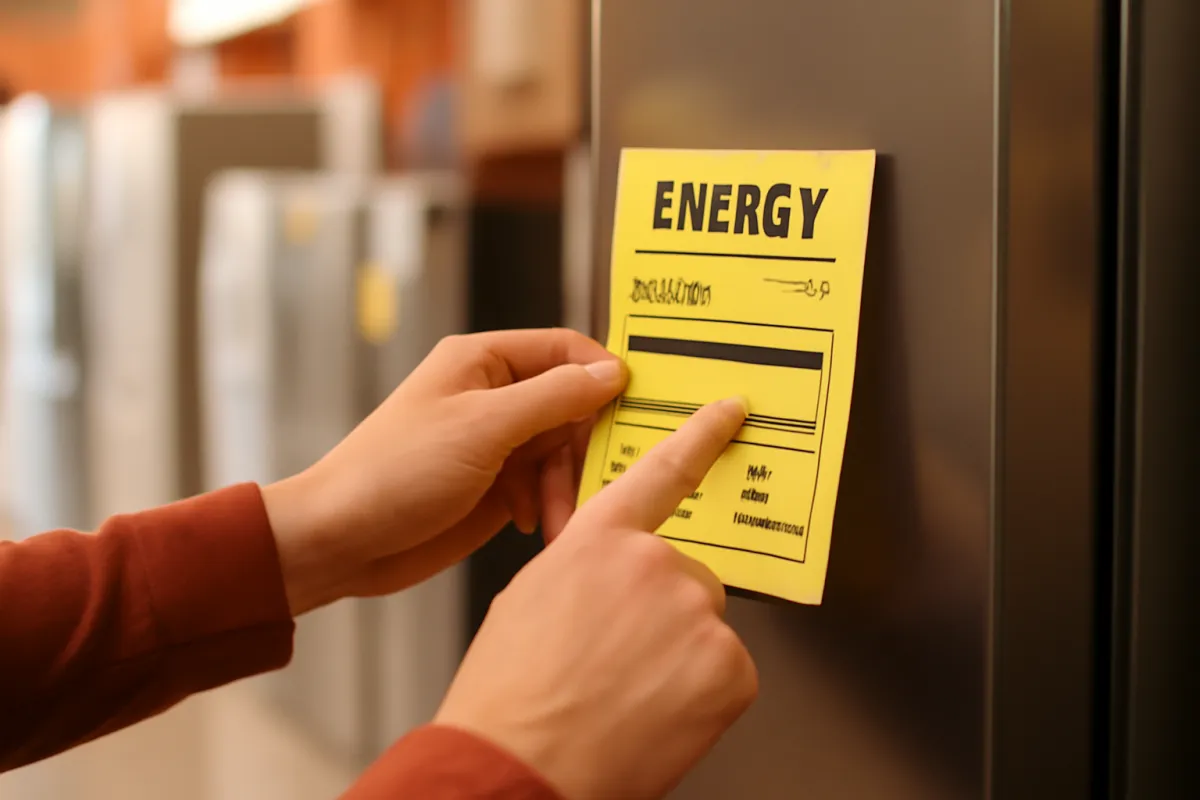
Old or second refrigerators are the exception worth flagging. A fridge from more than a decade ago can use two to three times the electricity of a new efficient model, and a spare unit humming in a hot garage runs harder to fight the ambient heat. Those are the always-on loads that quietly inflate a bill. Our refrigerator running-cost report covers how to read the yellow EnergyGuide label and when replacing an old unit pays for itself. Other always-on devices, like a well pump, a sump pump, or networking gear, follow the same logic: modest wattage matters when the hours never stop.
Air quality gear: purifiers and dehumidifiers
Air quality appliances span the wattage map. An air purifier is one of the lightest loads in the house, about 30 to 100 watts depending on size and fan speed, and it is often left running around the clock. Even at 24 hours a day, a 50-watt purifier costs only cents per day, so the ongoing electricity is rarely the concern; filter replacements usually cost more over a year than the power does. Our air purifier cost report weighs the upfront price, the filters, and the running cost together, and whether that modest spend buys anything you can measure is the question our verdict on are air purifiers worth it answers with the evidence.
A dehumidifier is heavier, roughly 300 to 700 watts, because it runs a compressor much like a small air conditioner to wring moisture from the air. In a damp basement it can run for many hours a day through a humid season, so it lands well above the purifier on a yearly bill despite both being “air” appliances. Sizing it correctly to the space matters, because an undersized unit runs constantly and never catches up. We cover the sizing and cost tradeoff in our dehumidifier size and cost report. The pairing is a clean illustration of the reference’s core theme: two air appliances, one an afterthought on the bill and one a real cost, separated by wattage and hours.
Lighting and small electronics: the low end of the scale
At the bottom of the wattage scale sit the appliances people worry about most and pay for least. An LED bulb draws about 5 to 15 watts, a fraction of the 60 watts an old incandescent used for the same brightness, which is why switching a home to LED lighting is one of the highest-return efficiency moves available. Even left on for hours, an LED bulb costs a fraction of a cent per hour. A ceiling fan is similar, about 15 to 90 watts, and cools people rather than rooms, so it is a cheap companion to an air conditioner set a little higher.
Televisions and electronics round out the low end. An LED television draws about 50 to 150 watts depending on screen size and brightness, phone and laptop chargers draw single-digit to low double-digit watts, and game consoles sit somewhere in between. None of these individually moves a bill much. Where small electronics add up is in standby draw, the few watts many devices consume while apparently off, which a whole home’s worth can turn into a modest ongoing load. Our note on how to lower your electric bill covers trimming those phantom loads alongside the bigger levers.
Water heating: the quiet giant
An electric water heater deserves its own section because it is one of the largest electricity users in many homes and one of the least visible. A standard electric tank uses heating elements rated at about 3,000 to 4,500 watts, and while it does not run continuously, it cycles on throughout the day to keep the tank hot and every time you draw hot water for a shower, a load of laundry, or the dishwasher. Across a year, that adds up to one of the biggest slices of the bill, often second only to heating and cooling.
Because so much of the cost is tied to how much hot water you use and how well the tank holds heat, the levers are different from a simple on-off appliance: lowering the thermostat setting a few degrees, insulating an older tank, and fixing hot-water leaks all help. If you are weighing a replacement, the tank-versus-tankless decision changes both the upfront and the running cost, which we cover in our water heater replacement cost report. For the reference at hand, the point is simple: a machine you never think about, sitting in a closet or basement, is quietly one of the hungriest loads you own.
Your electricity rate is the biggest variable
Wattage is fixed by the appliance and hours are set by how you live, but the electricity rate is the wild card, and it swings every figure in this reference more than anything else. Residential rates vary widely by state, by utility, and by season, and the same appliance on the same schedule can cost dramatically different amounts depending on where the meter sits. The United States average residential rate is often cited as roughly in the mid-teens of cents per kilowatt-hour, which is why this reference uses a placeholder near $0.16, but that average hides a wide spread, and your own number is the only one that prices your bill.
Find your rate on your electricity bill, usually printed as cents per kilowatt-hour, and use it in place of any figure here. To see the leverage, hold a 1,500-watt appliance at eight hours a day for a 30-day month, which is 360 kilowatt-hours, and watch the monthly cost track the rate: about $36 at 10 cents, about $58 at 16 cents, about $86 at 24 cents, and about $115 at 32 cents. That is a better than threefold spread from the same machine, driven entirely by the rate. Before you judge whether any appliance fits your budget, look up your own number and run it through the running-cost calculator.
Cost by appliance at a typical rate
The chart below ranks a selection of appliances by illustrative cost per hour at the placeholder rate, so you can see the spread at a glance. The bars are drawn in proportion to the hourly dollar figure, using the midpoint of each appliance’s wattage range, so the length of the bar is the cost. Remember that this ranks cost per hour of active running, not yearly cost, since hours run differ enormously by appliance.
Illustrative cost per hour of running, by appliance
Midpoint wattage times a placeholder rate near 16 cents per kilowatt-hour. Ranks cost per active hour, not yearly cost. Illustrative figures.
The spread is enormous: a central air system costs hundreds of times more per hour than an LED bulb. That is why the big heating and cooling loads deserve the most attention.
Notice how the top four bars, all heating, cooling, and drying loads, tower over everything else, while lighting sits as a sliver at the bottom. This is the practical takeaway of the whole reference. If you want to move your bill, the appliances at the top of this chart are where the leverage is; fussing over an LED bulb or a phone charger is rarely worth the effort. Use the running-cost calculator to build your own version of this ranking with your appliances and your rate.
Where a typical home’s electricity goes
Zoom out from single appliances to the whole home and a rough pattern appears. The chart below shows an illustrative split of where residential electricity tends to go, expressed as shares that sum to 100. The exact breakdown varies by climate, home size, and whether you heat with electricity or gas, so read these as a general shape rather than a precise budget.
Illustrative split of a home's electricity use
A general shape, not a precise budget. Shares vary by climate and home and sum to 100. Illustrative figures.
Heating, cooling, and water heating together make up well over half of a typical bill, which is why the thousand-watt appliances earn the most scrutiny.
The shares confirm what the per-appliance chart implied. The two big buckets, climate control and water heating, dominate, which is why every serious efficiency effort starts there. Appliances and refrigeration form a meaningful middle slice, driven mostly by the refrigerator’s around-the-clock running and the laundry pair’s periodic heavy loads. Lighting and electronics, despite being the devices you touch most, are the smallest slice thanks to the shift to LED bulbs. If your bill runs high, this chart tells you which door to open first.
Nameplate, EnergyGuide, and how to find your real wattage
Every wattage in this reference is a range, and the whole point of a range is that you narrow it to your own machine. There are three good ways to do that. The first is the nameplate, a small label usually found on the back, base, or inside the door of an appliance, which lists electrical specifications. If it shows watts directly, you are done. If it shows only volts and amps, multiply them, because watts equal volts times amps: a label reading 120 volts and 10 amps means about 1,200 watts.
The second is the yellow EnergyGuide label that ships on large appliances, which estimates yearly energy use in kilowatt-hours. For cost math this is even better than wattage, because it already accounts for typical cycling and usage, so you can multiply the yearly kilowatt-hours straight by your rate. The third, and the most accurate for anything you can plug in, is a cheap plug-in energy meter that sits between the outlet and the appliance and reads real wattage and accumulated kilowatt-hours as the device runs. That last method captures what a machine actually draws in your home, cycling and all, rather than a label’s rated maximum.

A worked example: pricing three appliances
Put the reference to work on three appliances from different ends of the scale, all at the placeholder rate of $0.16 per kilowatt-hour and all illustrative. Watch how running wattage and hours combine.
The space heater. It draws 1,500 watts, which is 1.5 kilowatts, and you run it eight hours a day. That is 1.5 times 8, or 12 kilowatt-hours a day. At $0.16 that is 12 times 0.16, about $1.92 a day, and across a 30-day month roughly $58. A big wattage running many hours produces a real monthly cost.
The refrigerator. It averages about 1.5 kilowatt-hours a day across its cycling, even though it never switches off. At $0.16 that is 1.5 times 0.16, about $0.24 a day, near $7 a month, and roughly $88 a year. Low wattage running all year lands as a steady, modest bill.
The clothes dryer. It draws 3,000 watts, or 3 kilowatts, and runs 45 minutes per load, which is 0.75 hours. Per load that is 3 times 0.75, or 2.25 kilowatt-hours, times $0.16, about $0.36 a load. Run five loads a week and that is about $1.80 a week, near $7.80 a month. High wattage running briefly lands close to the always-on fridge on a monthly basis, from the opposite direction. Feed your own three appliances into the running-cost calculator to see your version.
Watts, amps, and volts: the circuit side
Wattage is not only a cost figure; it is also an electrical-safety figure, because every watt an appliance draws is current flowing through your wiring. The relationship is simple: watts equal volts times amps, so on a standard 120-volt outlet you can find the current an appliance draws by dividing its wattage by 120. A 1,500-watt space heater draws about 12.5 amps, a 1,200-watt microwave about 10 amps, and a small 60-watt device about half an amp.
This matters because household circuits have limits, commonly 15 or 20 amps. A single 1,500-watt heater already uses most of a 15-amp circuit, which is why running two heavy appliances on the same circuit, or through a thin extension cord, can trip a breaker or overheat wiring. The high-wattage appliances at the top of this reference are exactly the ones to keep on their own circuits and plugged straight into a wall outlet rather than a power strip. The running-cost calculator shows the amperage alongside the cost so you can sanity-check the circuit as well as the bill. When in doubt about what a circuit can safely carry, ask a qualified electrician rather than guessing.
How to use this reference to cut your bill
Because cost is watts times hours times rate, every saving comes from lowering one of those three, and this reference tells you where to aim. Start at the top of the cost-per-hour chart, not the bottom. The biggest returns come from the thousand-watt loads: heating and cooling, water heating, and the dryer. Trimming an hour off an air conditioner or washing a load in cold water moves the bill far more than anything you can do to lighting.
- Attack the big loads first. Heating, cooling, and water heating are more than half the bill. A smarter thermostat schedule and a lower water-heater setpoint beat any small-appliance tweak.
- Cut hours, not just wattage. You cannot change an appliance’s wattage, but you can run it fewer hours. Fewer dryer loads, shorter heater sessions, and an air conditioner set a couple of degrees higher all pull the hours lever.
- Replace the oldest energy hogs. A decade-old refrigerator or an inefficient old appliance can use multiples of a modern one. Our note on choosing energy-efficient appliances covers how to read the EnergyGuide label when you buy.
- Switch lighting to LED and forget it. It is a one-time move that permanently shrinks the smallest slice, with no ongoing effort.
- Trim standby loads. A smart power strip cuts phantom draw from idle electronics, a small but free saving.
For a fuller playbook, our report on how to lower your electric bill walks through the highest-return habits in order. The reference above tells you which appliances to point those habits at.
Frequently confused: kilowatts, kilowatt-hours, and what you pay for
One last piece of vocabulary prevents most confusion. A watt measures how fast an appliance draws power at any instant, like a speedometer reading. A kilowatt is just 1,000 watts, a tidier unit for big appliances. A kilowatt-hour measures energy used over time, one kilowatt sustained for one hour, like the total miles a car covered. Your utility bills you for kilowatt-hours, never for watts, which is why the formula converts wattage into kilowatt-hours before applying the rate.
The bridge between them is time. A 1,000-watt appliance is 1 kilowatt, and running it for one hour uses exactly 1 kilowatt-hour. Run the same appliance for two hours and it uses 2 kilowatt-hours; run a 500-watt appliance for two hours and it also uses 1 kilowatt-hour. That is why a low-watt device left on for a long time and a high-watt device used briefly can cost the same: kilowatt-hours are watts and time multiplied together. Keep that straight and every figure in this reference, and on your bill, stops being mysterious. The running-cost calculator shows the kilowatt-hours behind each cost so the connection stays visible.
The bottom line
Every appliance carries two numbers worth knowing: how many watts it draws and how many hours it runs, and their product, priced at your electricity rate, is what lands on your bill. Wattage in this reference runs from thousands of watts for heating, cooling, drying, and water heating down to single digits for an LED bulb, but wattage alone never tells the whole story. A high-watt dryer that runs briefly and a low-watt refrigerator that runs all year can cost about the same over a month, which is why the “how long it runs” column matters as much as the wattage. Treat every figure here as a typical range, narrow it to your own machine with the nameplate or a plug-in meter, and price it with your own rate off your bill rather than any national average. Do that and the hidden price tag on everything you plug in stops being hidden, which is the entire point of a breakdown: numbers you chose on purpose, not surprises that arrive with the bill.
A note on scope: this reference exists to hand you appliance wattages and the running-cost arithmetic, not to steer you toward any particular product or upgrade. Every wattage is a typical range drawn from common figures for that appliance class, not a measurement of your specific model, and every dollar amount is an illustrative planning figure built on a placeholder electricity rate. Your real nameplate, your real hours, and the rate on your own bill will move the results enough to matter, so verify them before relying on any number here. Nothing in this article is professional electrical advice; several appliances above are large loads with real circuit-overload and fire risk, so follow the manufacturer’s instructions and bring in a qualified electrician for any question about your wiring or a circuit’s capacity.
Frequently asked questions
How many watts do common household appliances use?
It varies widely, so treat any single number as a starting point and check your own nameplate. As rough running ranges: a space heater is about 1,500 watts, a window air conditioner about 500 to 1,440 watts, central air about 3,000 to 5,000 watts, a refrigerator about 100 to 200 watts while the compressor runs, a clothes dryer about 1,800 to 5,000 watts, a dishwasher about 1,200 to 1,500 watts, a microwave about 600 to 1,200 watts, and an LED bulb about 5 to 15 watts. Big heating and cooling loads sit at the top, small electronics at the bottom. The reference table in this article lists the full set.
How do I calculate the running cost of an appliance?
Use one formula: watts divided by 1,000, times the hours you run it, times your electricity rate in dollars per kilowatt-hour. A 1,500-watt appliance run for two hours at a rate of $0.16 is 1.5 times 2 times 0.16, or about $0.48. Multiply the daily figure by 30 for a rough month. Your own rate, printed on your bill in cents per kilowatt-hour, and your real hours move the answer more than the appliance's brand ever will. The companion calculator does the arithmetic for any watts, hours, and rate you enter.
Which home appliances use the most electricity?
The biggest electricity users are almost always the ones that make heat or move it: electric water heaters, central air conditioning, electric clothes dryers, space heaters, and electric ovens all sit in the thousands of watts. Refrigerators draw modest wattage but run around the clock, so they still add up over a year. At the small end, LED bulbs, phone chargers, and ceiling fans cost almost nothing per hour. A useful rule is that anything designed to heat, cool, or dry is worth pricing carefully, while low-watt electronics rarely move the bill.
Why does a refrigerator cost so little to run if it is always on?
A refrigerator draws only about 100 to 200 watts while its compressor is running, and the compressor cycles on and off rather than running continuously. Over a full day that averages out to roughly 1 to 2 kilowatt-hours for a typical modern unit, which is a small daily figure even though the fridge never gets unplugged. A high-wattage appliance like a dryer costs more per hour but runs briefly, while the fridge costs little per hour but runs all year. That difference between running wattage and hours run is the whole point of this reference.
What electricity rate should I use for these estimates?
Use your own rate, which you can find on your electricity bill listed as cents per kilowatt-hour. Residential rates vary widely by state and by season, and that single number swings every cost estimate more than anything else. The figures in this reference use a placeholder near the middle of the range, roughly in the mid-teens of cents per kilowatt-hour, purely so the examples have a number to work with. They are illustrative, not a claim about your bill. Swap in your real rate to get a figure that matches your meter.
What is the difference between watts and kilowatt-hours?
Watts measure how fast an appliance draws power at any instant, like the speed on a car's speedometer. A kilowatt-hour measures energy used over time, like the miles the car actually covered. Your utility bills you for kilowatt-hours, not watts. To connect the two, divide watts by 1,000 to get kilowatts, then multiply by the hours of use to get kilowatt-hours. A 1,000-watt appliance run for one hour uses exactly one kilowatt-hour, which is why that round number is a handy anchor.
How do I find the exact wattage of my appliance?
Look for the nameplate, a small metal or printed label usually on the back, base, or inside the door of the appliance, which lists volts, amps, and often watts. If it shows only volts and amps, multiply them to get watts, since watts equal volts times amps. Large appliances also ship with a yellow EnergyGuide label that estimates yearly energy use in kilowatt-hours, which is even more useful for cost math. For anything you want to measure directly, an inexpensive plug-in energy meter reads real wattage as the device runs.
Do appliances use electricity when they are turned off?
Many do, in a small way often called standby or phantom load. Devices with clocks, remotes, standby lights, or instant-on features keep drawing a few watts while apparently off, and a whole home's worth can add up to a modest but real slice of the bill. Individually these loads are tiny compared with a dryer or an air conditioner, so they are a fine-tuning step rather than the main event. A smart power strip that cuts power to idle electronics is the usual fix. The running-cost math in this reference covers active use, where the real money is.