What's on this page
- How much does it cost to run a refrigerator? The short answer
- The running-cost formula: annual kWh times your rate
- Why a refrigerator is different: always on, but it cycles
- Reading the yellow EnergyGuide label
- Illustrative cost by fridge type and age
- Annual cost by fridge type and age
- Size and style: top-freezer vs side-by-side vs French door
- Your electricity rate is the biggest variable
- How age and efficiency change the cost
- The second-fridge trap: the garage money pit
- Where a home’s fridge electricity goes
- Temperature settings and door habits
- Defrost, coils, and the maintenance that cuts cost
- When replacing an old fridge pays for itself
- Mini-fridge vs full-size running cost
- A worked example: one modern fridge and one old fridge
- Ways to cut your refrigerator cost
- How to shop: a running-cost checklist
- The bottom line
Short answer: The cost to run a refrigerator for a modern full-size unit using around 500 kilowatt-hours a year is roughly $80 a year, about $6.67 a month or 22 cents a day, at a typical $0.16 electricity rate, illustratively. The formula is the annual kilowatt-hours on the yellow EnergyGuide label times your rate. Age is the biggest lever after the rate: an old fridge can use two to three times as much and cost $190 or more a year.
A refrigerator is the quietest big spender in the house. It never switches off, never asks for attention, and gives no sign of what it is costing while it hums in the corner keeping your food cold. Every other appliance in this series announces itself: you plug in a space heater when you are cold, switch on an air conditioner when you are hot. The fridge just runs, every hour of every day, all year, and the bill it generates hides inside the total you pay without ever appearing as a line of its own.
This breakdown pulls that hidden number into the open. It gives you the one formula that turns any refrigerator’s energy rating into dollars, explains why a fridge is a different kind of running-cost problem from a heater or an air conditioner, and shows you the easy way to find your own figure on the yellow label rather than guessing. It lines up modern and old fridges so you can see how much age costs, settles the second-fridge-in-the-garage question with real numbers, and works the payback math on whether replacing an old unit pays for itself. It shares its method with our space heater running-cost breakdown and our air conditioner running-cost breakdown, the two running-cost siblings to this one. Feed your own fridge and rate into our cost-per-use calculator as you read and watch the figure move.
Key takeaways
- The whole formula is annual kilowatt-hours from the yellow EnergyGuide label, times your electricity rate in dollars per kilowatt-hour. That is your yearly cost.
- A modern full-size fridge near 500 kilowatt-hours a year costs roughly $80 a year, about $6.67 a month, at a typical $0.16 rate, illustratively.
- Age is the biggest lever after the rate: an old fridge can use two to three times a new one, so the same cold costs $190 or more a year instead of $56.
- The old second fridge in the garage is usually the single most expensive fridge in the house per item it holds. Unplugging a lightly used one is a free saving.
- Unlike a heater, a fridge is always on but cycles: the compressor draws power only part of each hour, which is why the label figure already bakes in that duty cycle.
How much does it cost to run a refrigerator? The short answer
A refrigerator costs its annual kilowatt-hours times your electricity rate, and the annual kilowatt-hour figure is printed on the yellow label. For a typical modern full-size fridge using around 500 kilowatt-hours a year, that works out to roughly $80 a year at a typical electricity rate, which is near $6.67 a month or about 22 cents a day. Those are illustrative figures, and your own rate and the fridge’s age can push them meaningfully up or down, but the shape is right: pennies a day, a few dollars a month, tens of dollars a year for a good modern unit, climbing toward $200 a year or more for an old one.
The reason the number stays hidden is that a fridge never presents you with a moment of decision. You do not switch it on for an evening and think about the cost the way you do with a heater. It draws its power around the clock, cycling its compressor on and off, and the total folds silently into your bill. The rest of this article turns that short answer into a method you can apply to any fridge, at any rate, and points you at the two places where real money is usually hiding: the age of the unit and the second fridge in the garage.
The running-cost formula: annual kWh times your rate
Here is the entire calculation, and it is the same watts-to-dollars logic we use for every appliance in our air conditioner running-cost breakdown: take the energy the fridge uses in a year, expressed in kilowatt-hours, and multiply by your electricity rate expressed in dollars per kilowatt-hour. The result is the cost in dollars for the year.
Written out: annual kilowatt-hours times rate equals yearly cost. A fridge rated at 500 kilowatt-hours a year, at a rate of $0.16 per kilowatt-hour, costs 500 times 0.16, or about $80 for the year. Divide by twelve for a monthly figure near $6.67, or by 365 for a daily figure around 22 cents. Every period is just arithmetic from the annual number. The one thing that makes a fridge easier than a heater is that you do not have to guess the hours: a fridge runs all year, so the annual kilowatt-hour rating already covers a full 8,760 hours of the compressor cycling on and off. The label did the hours for you.
If you would rather work from power draw, the long way is average watts times the hours in a year, divided by 1,000, times your rate. But the average draw of a fridge is not its nameplate wattage, because the compressor is not always running, which is the wrinkle the next section explains. The annual kilowatt-hour figure sidesteps all of that, which is why it is the number to use. Our cost-per-use calculator holds the annual kilowatt-hours and your rate and does the arithmetic live.
Why a refrigerator is different: always on, but it cycles
A space heater or an air conditioner poses a simple hours question: you decide how long to run it, and the cost follows. A refrigerator removes that lever. It is plugged in every hour of the year, so there is no schedule to shorten. But it does not draw full power the whole time, and that is the second half of the story.
Inside the fridge, a thermostat watches the temperature. When the box drifts a degree or two above the setpoint, the compressor kicks on and pulls heat out until the box is cold again, then it shuts off. That on-off pattern is the duty cycle, and for a healthy fridge in a normal kitchen the compressor runs perhaps a third of the time across a day, more in summer, less in winter. So while the compressor might draw 120 to 150 watts while it is actually running, the average power over a full day is far lower, often around 40 to 60 watts once you account for all the hours it sits idle between cycles. That average, multiplied out over 8,760 hours, is what produces a few hundred kilowatt-hours a year rather than the thousands a constant 150-watt draw would imply.
This is why the annual kilowatt-hour figure on the label is so useful and why guessing from the running wattage overstates the cost badly. The label figure already blends the on cycles and the off cycles into a single realistic number. Anything that makes the compressor run more of each hour, a hot room, a bad door seal, dusty coils, a too-cold setting, pushes the duty cycle up and the annual kilowatt-hours with it. The levers you have on a fridge are not hours on the clock; they are the things that decide how much of each hour the compressor spends running.
Reading the yellow EnergyGuide label
The easiest way to price a fridge, new or old, is to read the number someone already calculated for you. Refrigerators sold in the United States carry a yellow EnergyGuide label, and the large figure in the middle is the estimated energy use in kilowatt-hours per year. That single number is the input to the whole formula. Multiply it by your rate and you have the annual cost, no wattage or duty-cycle math required.
The label also prints an estimated yearly operating cost in dollars, but treat that with care: it is calculated at a national average electricity rate that may be nothing like yours. The kilowatt-hour figure is the honest, rate-independent number, because it describes the fridge’s energy use rather than someone else’s price for it. Take the kilowatt-hours, apply your own rate off your own bill, and you get a figure that actually reflects what the fridge will cost in your kitchen. On a modern fridge that number is usually somewhere between 400 and 600 kilowatt-hours; on an efficient ENERGY STAR model it can be nearer 350.
For an old fridge that predates the label, or one whose sticker is long gone, you have two options. You can look up the model’s rating online if the fridge is recent enough, or you can measure it directly with a plug-in energy meter left in place for a few days and scaled up to a year, the same kind of meter used to capture an appliance’s real draw. Either way, the goal is that one annual kilowatt-hour number, because everything else in this report flows from it. Our cost-per-use calculator takes the label figure directly.
Illustrative cost by fridge type and age
Put some realistic numbers to the spread. A new, efficient ENERGY STAR fridge might use around 350 kilowatt-hours a year. A typical modern full-size unit sits near 500. A 10-year-old fridge, worn a little and built to older standards, is often near 750. And an old fridge from fifteen or more years ago, especially a large one, can run 1,400 kilowatt-hours a year or higher. At a typical $0.16 per kilowatt-hour, those turn into very different annual costs, all illustrative.
The new efficient unit lands near $56 a year, about $4.67 a month. The modern typical fridge is near $80 a year, roughly $6.67 a month. The 10-year-old unit climbs to about $120 a year, around $10 a month. And the old fridge reaches roughly $224 a year, near $18.67 a month, which is four times the efficient model for doing the same job. Nothing about the food changed. The old fridge simply spends more of each hour running a thirstier compressor through worse insulation to hold the same temperature. That gap between the top and bottom of the range is where almost all the money in this whole subject lives.
Annual cost by fridge type and age
The chart below makes the age spread visual. It prices each fridge at a typical $0.16 per kilowatt-hour and derives each bar’s length from that unit’s annual dollar cost. The longer the bar, the more the fridge costs to run for a year while doing the same job.
Illustrative annual running cost by fridge type and age
Each fridge priced at $0.16/kWh across a full year. Bars scale with the annual dollar figure. Illustrative.
The old fridge's bar is four times the efficient one for identical cold. Age, not size or style, is the biggest driver on this chart.
Notice that the bars climb steeply with age while the fridges all do the same job: hold a box of food at 38 degrees. The oldest unit is not colder or larger for its extra cost; it is simply less efficient at delivering the same result. That is the whole reason age matters more than almost anything else here. If your fridge sits toward the right end of this chart, the replacement math later in this report is worth running. Our cost-per-use calculator lets you enter any annual kilowatt-hour figure and see the yearly cost for your own rate.
Size and style: top-freezer vs side-by-side vs French door
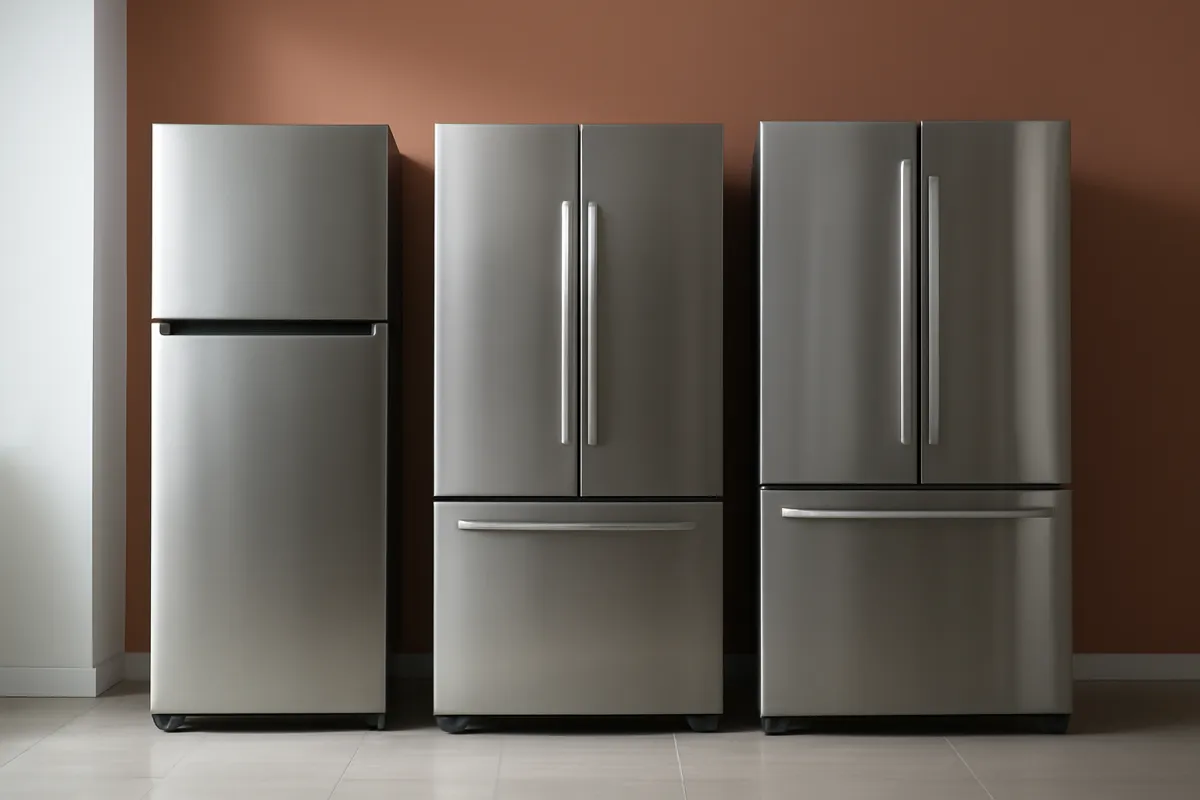
Within the modern fridges, the style and size shift the running cost too, though less than age does. A top-freezer fridge, the plain rectangular design with the freezer on top, is generally the most efficient layout and often the cheapest to run for a given capacity. A bottom-freezer or French-door model, with the fridge at eye level and the freezer below, uses a little more, and adds convenience features that draw power. A side-by-side, with full-height fridge and freezer compartments next to each other, tends to use the most of the common layouts, partly because through-the-door ice and water dispensers add both hardware and a path for cold to leak.
Bigger boxes use more energy than smaller ones of the same generation, simply because there is more volume to keep cold and more surface to lose heat through. But the effect is smaller than people expect, because a bigger fridge also has more insulation and, if it is a good modern unit, an efficient compressor sized to match. The practical lesson is that buying the fridge that fits your kitchen and your food is fine; you do not save much by squeezing into a smaller box than you need, and an underfilled large fridge is not a disaster. The features that reliably add running cost are the powered extras: ice makers, water dispensers, and dual-zone electronics. If low running cost is the priority, a plain top-freezer of the right size is the value play, which is exactly the kind of quiet, unglamorous winner the running-cost math tends to favor.
Your electricity rate is the biggest variable
The fridge’s energy use is fixed by the unit and its age, but the electricity rate is the wild card, and it swings the dollar figure more than anything short of replacing the fridge. Residential rates vary widely by region and by season, so the same fridge on the same shelf can cost dramatically different amounts to run depending on where the meter sits.
Find your rate on your electricity bill, where it is usually printed as cents per kilowatt-hour. Then hold a modern fridge at 500 kilowatt-hours a year and watch how the annual cost tracks the rate:
- At 10 cents per kilowatt-hour: about $50 a year
- At 16 cents per kilowatt-hour: about $80 a year
- At 24 cents per kilowatt-hour: about $120 a year
- At 32 cents per kilowatt-hour: about $160 a year
That is a more than threefold spread from the same appliance, driven entirely by the rate. It is why a blanket claim that a fridge is cheap or expensive to run means nothing without a rate attached. Before you judge whether an old fridge is worth keeping or replacing, look up your own number, because a high rate makes an inefficient fridge much more expensive to keep and tips the replacement math toward acting sooner. Our cost-per-use calculator takes your exact rate in cents and returns the annual figure directly.
How age and efficiency change the cost
The reason age dominates this subject is that refrigerator efficiency has improved enormously over the decades, while an aging fridge also degrades from its own starting point. A fridge built to today’s standards uses a fraction of the electricity of one built in the 1990s or early 2000s for the same cold, because compressors, insulation, and controls have all improved. A unit that used 1,400 kilowatt-hours a year when new was normal for its era; a new equivalent might use 400. That is the two-to-three-times gap you hear quoted, and it is real.

On top of the generational gap, a fridge gets worse with age. Door gaskets harden and stop sealing, so cold leaks out and warm air leaks in, and the compressor runs more to compensate. Condenser coils cake with dust, which insulates them and forces the compressor to work harder to shed heat. The compressor itself wears and can draw more power for the same work. Every one of these pushes the duty cycle up, so the fridge spends more of each hour running, and the annual kilowatt-hours climb above even where the unit started. An ENERGY STAR label on a new fridge certifies it meets a stricter efficiency bar than the federal minimum, which is why it sits at the low end of the cost chart. When you are comparing new fridges, the ENERGY STAR kilowatt-hour figure is the running-cost number that matters, the same spec-over-sticker thinking we bring to every piece of gear we test.
The second-fridge trap: the garage money pit
Here is where the most money hides in the most homes: the second refrigerator. It is usually an old fridge, demoted from the kitchen when a new one arrived, and moved to the garage or basement to hold drinks, overflow, and the occasional party supply. It runs all year to keep a few beverages cold, and because it is old, it is often the single most expensive fridge in the house per item it holds.
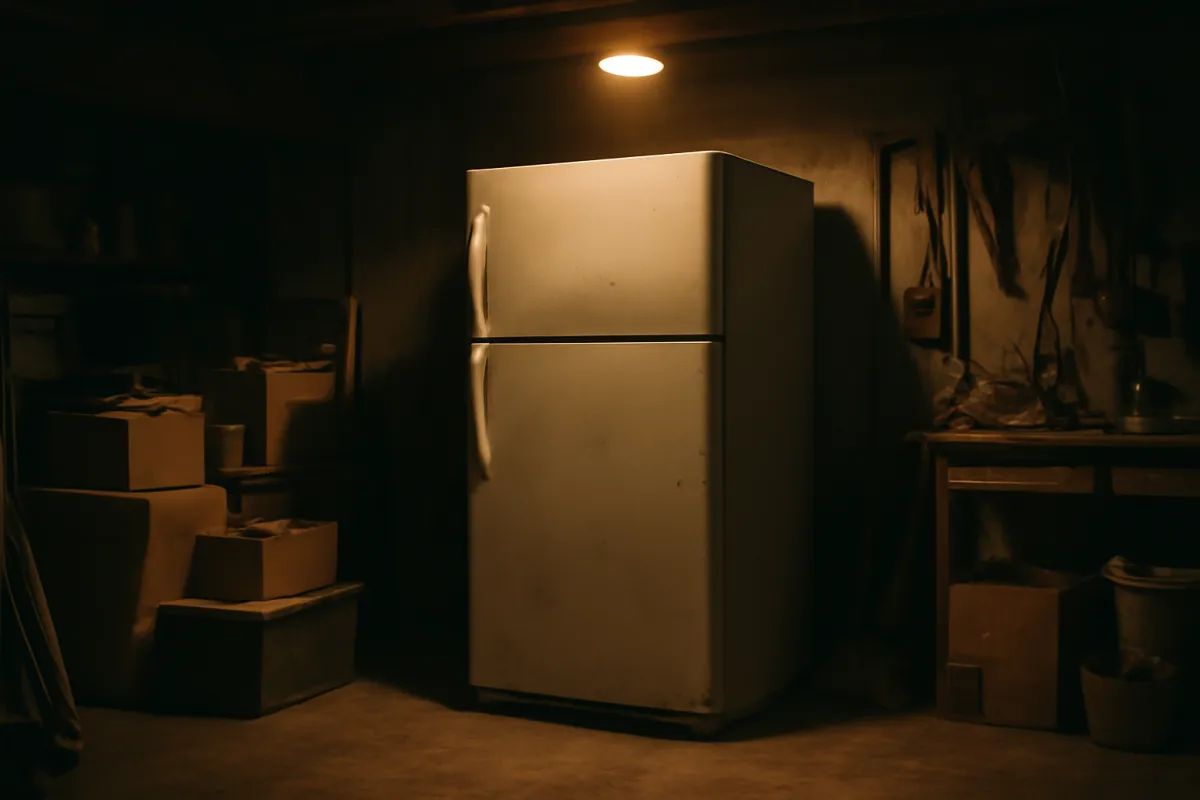
The trap has two teeth. First, the unit is old, so it already uses far more electricity than a modern fridge, often 1,000 to 1,200 kilowatt-hours a year, which is roughly $160 to $192 at a typical rate, illustratively. Second, a garage is not a kitchen: in summer it can be well above room temperature, and the hotter the surroundings, the harder the compressor works to hold the inside cold, pushing the real figure higher than the label ever assumed. So you are running an inefficient fridge in the worst possible spot, all to keep a case of soda cold that you reach for a few times a week. The fix is the rare energy saving that costs nothing and takes seconds: if the second fridge is lightly used, unplug it, and consolidate into the main fridge. If you genuinely need the extra capacity, replacing an ancient second fridge with a modern one, or a right-sized smaller unit, can cut its running cost by more than half. Run its annual kilowatt-hours through the cost-per-use calculator before you decide it earns its corner.
Where a home’s fridge electricity goes
The chart below shows where the fridge electricity goes in a home that runs three cold boxes: a modern main fridge, an old second fridge in the garage, and a mini-fridge. It expresses each as an illustrative share of the home’s total fridge electricity, and the split is telling.
Where a home's fridge electricity goes
Illustrative shares of total fridge electricity for a home running a modern main fridge, an old second fridge, and a mini-fridge. Shares sum to 100.
The old second fridge is the biggest slice despite holding the least, because age and a hot garage make it the thirstiest of the three.
The point of the split is that the fridge you think about least, the old one banished to the garage, is the biggest single slice of the home’s fridge electricity, while the main fridge you use constantly is a smaller share because it is modern and efficient. The mini-fridge, though the smallest slice in total, is the least efficient per cubic foot of the three, which matters if you are weighing whether to add one. The lesson the chart teaches is to look past the fridge you use most and price the ones you barely think about, because that is where the wasted money usually sits.
Temperature settings and door habits
Because a fridge’s cost is set by how much of each hour the compressor runs, the levers you have are the ones that change that duty cycle, and the settings are the first of them. The commonly cited targets are around 37 to 40 degrees Fahrenheit for the fridge compartment and 0 degrees for the freezer, cold enough to keep food safe without overcooling. Setting the fridge colder than that does not preserve food better; it just makes the compressor run more hours to hold the extra cold, adding to the bill for no gain. If your fridge has a numbered dial rather than a temperature, a cheap fridge thermometer tells you where you actually sit.
Door habits and loading matter too, though less than people fear. Every time the door opens, cold air spills out and warm air rushes in, and the compressor runs to recover, so grabbing what you need and closing the door promptly helps, especially with children who like to browse with the door open. A fridge that is reasonably full holds its cold better than an empty one, because the cold mass buffers the temperature between compressor cycles, but an overpacked fridge that blocks the internal vents can run worse, so full but not jammed is the target. Letting hot leftovers cool before they go in, rather than putting a warm pot straight into the box, spares the compressor a burst of extra work. None of these is dramatic on its own, but together they keep the duty cycle honest.
Defrost, coils, and the maintenance that cuts cost
Two pieces of maintenance genuinely move a fridge’s running cost, and both are about helping the compressor shed heat and work less. The first is the condenser coils, the black grille of tubing on the back or underneath the fridge that releases the heat pulled from inside. When those coils cake with dust, pet hair, and kitchen grease, they insulate instead of releasing heat, so the compressor runs longer and hotter to do the same job. Pulling the fridge out a couple of times a year and brushing or vacuuming the coils clean is one of the few maintenance jobs that pays back in electricity, and it is the kind of unglamorous upkeep that separates a fridge that ages well from one that turns into a money pit.
The second is the door seal, the flexible gasket that runs around the door. Over years it hardens, cracks, and stops sealing, so cold leaks out at the edges and the compressor runs to make up the loss. A quick test is to close the door on a slip of paper: if it pulls out with no resistance, the seal is failing. Gaskets are replaceable, and a fresh one on an otherwise good fridge can noticeably cut the duty cycle. On frost-free fridges, the automatic defrost cycle uses a little energy on a heater to keep frost from building on the coils, which is normal and already counted in the label figure; on a manual-defrost unit, letting frost build up thick makes it work harder, so defrosting it when the frost gets deep keeps it efficient. Keep the coils clean, the seal tight, and the frost in check, and an older fridge runs closer to its best rather than its worst.
When replacing an old fridge pays for itself
The replacement question is the one worth doing arithmetic on rather than guessing, because the answer swings from clear yes to clear no depending on how old the fridge is and what electricity costs where you live. The lifespan half of the same decision, which types last longest and when a repair quote means replacement, is covered in our breakdown of how long a refrigerator lasts. The saving is the difference between what the old fridge costs to run and what a new efficient one would cost, and the payback is the new fridge’s purchase price divided by that annual saving.
Work an example. An old fridge using 1,200 kilowatt-hours a year costs about $192 to run at a typical $0.16 rate. A new efficient model using 350 kilowatt-hours, the ENERGY STAR figure from earlier, costs about $56. The annual saving is roughly $136, illustratively. Against a new fridge priced near $900, that is a payback of roughly six and a half years on energy alone. If the fridge is genuinely ancient, using 1,400 kilowatt-hours, or your rate is higher than typical, the saving grows and the payback shortens; a very old unit on an expensive rate can pay back in two or three years. If the fridge is only 5 to 8 years old and reasonably efficient, the saving is small and the payback runs past the point where the new fridge itself is aging, so replacing purely for efficiency does not pencil out. The case for replacement is strongest for the oldest, thirstiest fridges, and strongest of all for an old second fridge you could simply unplug. Run your old fridge’s kilowatt-hours and a candidate new unit’s figure through the cost-per-use calculator to see your own payback before you buy.
Mini-fridge vs full-size running cost
A mini-fridge looks like it should be the cheap option, and in absolute dollars it usually is, but the reason is worth understanding because it changes when a mini actually saves money. A compact fridge typically uses 200 to 350 kilowatt-hours a year, costing roughly $32 to $56 at a typical rate, against $56 to $96 for a modern full-size unit. So the mini costs less to run, simply because it is cooling a much smaller volume.
The catch is efficiency per unit of space. Small fridges tend to use small, less efficient compressors and thinner insulation, so per cubic foot of cold storage a mini-fridge is often less efficient than a full-size one, not more. That means a mini-fridge is only the frugal choice when you genuinely need just a little cold storage, in a dorm room, an office, or a bedroom, where a full-size fridge would be overkill. It is not a clever way to cut the cost of storing a full household’s food; adding a mini-fridge alongside your main fridge adds running cost rather than saving it, the same trap as the second fridge in a smaller package. Judge the mini by whether it replaces a need or adds one, which is the cost-per-use question we ask of any appliance.
A worked example: one modern fridge and one old fridge
Put it all together on a realistic household. You run a modern main fridge in the kitchen using 500 kilowatt-hours a year, and you keep a 15-year-old fridge in the garage using 1,200 kilowatt-hours a year for drinks. You want the annual cost of each at three different electricity rates, low, typical, and high.
The modern main fridge. At 500 kilowatt-hours, it costs about $50 a year on a cheap $0.10 rate, about $80 at a typical $0.16 rate, and about $160 on an expensive $0.32 rate. That is the efficient half of the pair, doing the bulk of the household’s cold storage for the least money.
The old garage fridge. At 1,200 kilowatt-hours, it costs about $120 a year at $0.10, about $192 at $0.16, and about $384 at $0.32, illustratively. It holds a fraction of what the main fridge does, yet it costs well over twice as much to run, because it is old and sitting in a hot garage.
The pair together. Run both and the household spends about $170 a year at the cheap rate, near $272 at the typical rate, and about $544 at the expensive one. Now weigh the decision the numbers set up: unplugging the lightly used garage fridge cuts the total by its whole share, roughly $192 a year at the typical rate, for zero cost. If you truly need the second unit, replacing it with a modern one drops its figure by more than half. The old fridge did not decide it was expensive; its age and its spot in the garage did, and you can decide otherwise. Swap your own kilowatt-hour figures and rate into the cost-per-use calculator to see your version of this example.
Ways to cut your refrigerator cost
Because a fridge’s cost is its annual energy times your rate, and you cannot shorten the hours the way you can with a heater, every saving comes from lowering the energy it uses or the rate you pay. Here are the levers that actually move the number, in rough order of impact.
- Retire or replace an old second fridge. The garage fridge is usually the biggest waste in the house. If it is lightly used, unplug it for a free saving; if you need it, replace an ancient unit with an efficient one.
- Weigh replacing a very old main fridge. If your main fridge is fifteen or more years old and your rate is not cheap, run the payback math; the saving on a genuinely ancient unit can justify a new one over a handful of years.
- Clean the condenser coils twice a year. Dust-caked coils make the compressor work harder for the same cold. A brush and a vacuum are the whole cost, and it is real electricity saved.
- Check and replace the door seal. A gasket that no longer seals leaks cold and runs the compressor extra. The paper-slip test finds a bad one, and a replacement is inexpensive.
- Set sensible temperatures. Around 37 to 40 degrees for the fridge and 0 for the freezer. Colder than that just runs the compressor more for no benefit.
- Give the fridge room and keep it cool. Leave space behind it for airflow, keep it out of direct sun and away from the oven, and it sheds heat more easily and runs less.
- Buy for efficiency when you do buy. Compare the yellow-label kilowatt-hours, favor ENERGY STAR and a plain top-freezer layout, and skip powered extras you will not use.
Notice that none of these is exotic. The savings live in the age of the fridge, the state of its coils and seals, and how many boxes you keep running, which is why the fridge you already own, maintained well, is usually the right tool.
How to shop: a running-cost checklist
Before you buy a refrigerator, or decide what to do with the one you have, run it through these checks. Clear them and the fridge will cost roughly what you expect, and no more.
- Read the yellow-label kilowatt-hours, not the dollar estimate. The kilowatt-hour figure is rate-independent and honest; the printed dollar figure uses a national average rate that may not be yours.
- Apply your own rate. Pull it off your bill in cents per kilowatt-hour and multiply. Without your rate, no cost claim means anything.
- Favor efficiency over size. An ENERGY STAR unit and a plain top-freezer layout run cheaper than a feature-heavy side-by-side of the same capacity. Buy the size you need, not more.
- Count every fridge in the house. The main fridge, the garage fridge, the mini in the den. The ones you forget are usually the expensive ones.
- Price the second fridge honestly. If it is old and lightly used, its running cost probably outweighs its convenience. Unplug it or replace it.
- Do the annual math, not the daily. Twenty-two cents a day sounds like nothing. Multiply it out to a year, across every box you run, before you judge what your cold storage costs.
Clear those and you are buying and running on numbers rather than on the reassuring hum of a fridge that never asks for attention, which is the entire point of a breakdown.
The bottom line
The cost of running a refrigerator is never a mystery, because the formula is fixed: the annual kilowatt-hours on the yellow label, times your electricity rate. For a typical modern fridge that is roughly $80 a year, about $6.67 a month, at a typical rate, with your own rate swinging the figure from about $50 to $160. The wrinkle that makes a fridge different from a heater is that you cannot shorten its hours, because it runs all year; the levers are instead the things that decide how much of each hour the compressor runs, which come down to the fridge’s age, its coils and seals, its settings, and how many boxes you keep cold. Age is the giant among those: an old fridge can cost two to three times a new one for identical cold, and an old second fridge in a hot garage is usually the most expensive box in the house per drink it holds. Read the label, apply your own rate, keep the coils clean and the seal tight, retire the second fridge you do not need, and price a replacement by its payback rather than its sticker, and a refrigerator becomes what it should be: a quiet, predictable cost you chose on purpose rather than one that hides in the total.
A note on scope: this breakdown exists to hand you the running-cost arithmetic for a refrigerator, not to steer you toward any particular fridge or push you to replace a working one. Every kilowatt-hour figure, rate, and dollar amount above is an illustrative planning number, drawn from typical ranges rather than measured on one model, and your real electricity rate, your fridge’s age and condition, your kitchen’s temperature, and how you load and open it will all move the result enough to matter. Nothing here is professional electrical, appliance-repair, or food-safety advice. A refrigerator is a sealed system with a compressor and refrigerant that are not do-it-yourself territory, so keep food at safe temperatures per the manufacturer’s guidance, follow the maker’s instructions for cleaning and defrosting, and bring in a qualified appliance technician or electrician for repairs, wiring, or any doubt about a unit’s condition before you rely on the numbers in this article.
Frequently asked questions
How much does it cost to run a refrigerator per month?
Take the fridge's annual kilowatt-hours from the yellow EnergyGuide label, multiply by your electricity rate, then divide by twelve for a monthly figure. A modern full-size fridge using around 500 kilowatt-hours a year costs roughly $80 a year at a typical $0.16 per kilowatt-hour, which is near $6.67 a month, illustratively. An efficient ENERGY STAR model closer to 350 kilowatt-hours lands nearer $4.67 a month, while a 10-year-old unit around 750 kilowatt-hours runs closer to $10. Your own rate and the age of the fridge move that monthly number more than anything else.
How many kWh does a refrigerator use per year?
A typical modern full-size refrigerator uses somewhere between 400 and 600 kilowatt-hours a year, with efficient ENERGY STAR models often near 350 and larger side-by-side units higher. The single most reliable number is printed on the yellow EnergyGuide label as an estimated annual kilowatt-hour figure, so you do not have to guess. Older fridges use far more: a 10-year-old unit can draw 700 to 900 kilowatt-hours, and a 15-year-old or older model 1,000 to 1,400. Age and efficiency, not just size, drive that spread.
Is it worth replacing an old refrigerator to save electricity?
Sometimes, and the arithmetic decides. A very old fridge using 1,200 to 1,400 kilowatt-hours a year can cost $190 to $224 to run at a typical rate, against roughly $56 to $80 for a new efficient model, an illustrative saving near $130 a year. Against a new fridge's purchase price of several hundred dollars, that saving can pay back over a handful of years if the old unit is genuinely ancient. Replacing a working 5-year-old fridge purely for efficiency rarely pays back before the new one itself ages, so the case is strongest for the oldest units.
How much does a second fridge in the garage cost to run?
A second refrigerator is often the most expensive fridge in the house per drink it holds, because it is frequently an old unit running in a hot garage to keep a few beverages cold. An old second fridge using 1,000 to 1,200 kilowatt-hours a year costs roughly $160 to $192 to run at a typical $0.16 rate, illustratively. Because a garage runs hotter than a kitchen in summer, the compressor works harder and the real figure can climb higher. Unplugging a lightly used second fridge is one of the few energy savings that costs nothing and takes seconds.
Does a mini-fridge use less electricity than a full-size one?
A mini-fridge uses less total electricity than a full-size refrigerator, but often more per cubic foot of space, because small compressors and thin insulation are less efficient. A compact unit typically uses 200 to 350 kilowatt-hours a year, costing roughly $32 to $56 at a typical rate, against $56 to $96 for a full-size modern fridge, illustratively. So a mini-fridge is cheaper to run in absolute terms simply because it cools less volume. It is not a more efficient way to keep a given amount of food cold, which matters if you are tempted to add one alongside a main fridge.
What temperature should I set my fridge to save money?
The commonly cited targets are around 37 to 40 degrees Fahrenheit for the fridge compartment and 0 degrees for the freezer, which keep food safe without overcooling. Setting the fridge colder than it needs to be makes the compressor run more hours and adds to the bill for no benefit, while a full but not overpacked fridge holds its cold better. Keep the unit away from the oven and out of direct sun, leave room behind it for airflow, and let hot leftovers cool before they go in. These habits trim the hours the compressor runs, which is where the cost lives.
Why does an old refrigerator cost so much more to run?
An old refrigerator costs more because efficiency standards have improved dramatically over the decades, and because seals, insulation, and compressors degrade with age. A fridge from the 1990s or early 2000s can use two to three times the electricity of a new equivalent for the same job, so the same cold costs two to three times as much. Worn door gaskets let cold leak out, dust-caked condenser coils make the compressor work harder, and an aging compressor simply draws more power. This is why the running cost, not the purchase price, is the real number on an old fridge.
How do I calculate my own refrigerator running cost?
Read the estimated annual kilowatt-hours off the yellow EnergyGuide label, multiply by your electricity rate in dollars per kilowatt-hour, and you have the annual cost. For a fridge rated at 500 kilowatt-hours a year at $0.16, that is 500 times 0.16, or about $80 a year, near $6.67 a month. If you cannot find the label, you can estimate from the average power draw times the hours in a year, but the label figure already accounts for the compressor cycling on and off. Our companion calculator does the arithmetic for you: enter the annual kilowatt-hours and your rate, and it returns the monthly and annual cost.