What's on this page
- How often to change a furnace filter: the short answer
- The general cadence by filter thickness
- What actually changes the cadence
- Pets and the filter clog rate
- Allergies, asthma, and indoor air
- MERV ratings explained
- Usage: how hard your system runs
- Home size, layout, and system type
- Signs your furnace filter needs changing
- How to change a furnace filter
- The cost of neglecting the filter
- Efficiency and airflow: why a clean filter pays
- A worked example: a two-pet home
- Setting a reminder that actually sticks
- Common mistakes with furnace filters
- How a furnace filter differs from an air purifier
- Where a fresh filter fits in an efficient home
- The bottom line
Short answer: Change a standard 1-inch furnace filter about every one to three months, a 2-inch every two to four, a 4-inch every six to nine, and a 5 to 6-inch media filter every nine to twelve months, then shorten the interval for pets, allergies, a high-MERV filter, a dusty house, or a hard-running system. Check the filter monthly against the light and replace it when it looks grey and loaded, whatever the calendar says.
How often to change a furnace filter comes down to one baseline you can adjust: a thin 1-inch filter roughly every one to three months, and a thicker media filter every six to twelve, then shorter for anything that loads it faster. That single flat panel of pleated material is the cheapest part in your entire heating and cooling system, and it quietly decides how clean your indoor air is, how hard your blower has to work, and whether the expensive parts behind it live a long life or an early death. Ignore it and it clogs, chokes the airflow, and starts costing you money in energy and wear; keep it fresh on a sensible schedule and it does its job almost invisibly.
These notes take the vague advice to “change it regularly” and turn it into a cadence you can actually set, based on the filter you own and the home you run it in. You will get the baseline schedule by filter thickness, the handful of factors that move it (pets, allergies, MERV rating, how hard the system runs, and how dusty the house is), a plain-language explanation of MERV ratings, the signs a filter is overdue, and the brief steps to swap it correctly. A furnace filter is a different job from a standalone air cleaner, so if you are weighing a portable unit as well, our note on choosing an air purifier and the wider picture in improving indoor air quality are the companions to this one, and the cost-per-use calculator puts any pricey filter or unit in perspective.
Key takeaways
- Start from thickness: a 1-inch filter every one to three months, a 2-inch every two to four, a 4-inch every six to nine, and a 5 to 6-inch every nine to twelve, then shorten for load.
- Pets, allergies or asthma, a high-MERV filter, a dusty or high-traffic house, and a hard-running system all clog a filter faster and pull the cadence shorter.
- MERV rates how fine a filter traps; MERV 8 to 13 suits most homes, and higher is not automatically better because a denser filter restricts airflow and loads sooner.
- Do not trust the calendar alone: check the filter monthly by holding it to the light, and replace it when it looks grey and loaded rather than waiting for a date.
- A clogged filter is expensive: it raises energy use, strains the blower and the costly heating and cooling parts, and can trigger repairs that dwarf a fresh filter's price.
How often to change a furnace filter: the short answer
If you want one sentence to act on today, here it is: change a standard 1-inch furnace filter about every one to three months, a thicker media filter every six to twelve months, and check either one monthly so the look of the filter, not the date, makes the final call. That baseline covers the great majority of homes, and everything else in these notes is about nudging it shorter when your household loads the filter faster than average.
The reason the answer starts with a range rather than a fixed number is that a filter does not fail on a schedule, it fails when it fills up, and homes fill filters at wildly different rates. A quiet, pet-free condo with the system idling through a mild season can stretch a 1-inch filter close to the three-month end. A busy house with two shedding dogs, a woodworking hobby, and a furnace running hard through a long winter can pack the same filter grey in three or four weeks. Same filter, same slot, very different life, which is why a calendar reminder is a starting nudge and the flashlight test is the real decision.
So treat the cadence as a two-part habit. Set a recurring reminder at the baseline for your filter thickness so the job never falls off your radar entirely, and then, when the reminder fires, actually pull the filter and look at it against a light before you swap it. Some months it will be obviously spent and you change it; other months it will still look clean and you give it a few more weeks. That combination, a calendar floor plus a monthly eyeball, is what keeps you from both the waste of tossing clean filters and the damage of running clogged ones.
The general cadence by filter thickness
Thickness is the first thing to read off your filter because it sets the whole baseline. A furnace filter’s job is to catch dust across its pleated surface, and a thicker filter simply has far more pleated area folded into the frame, so it can hold much more dust before it clogs. That is why a slim 1-inch panel and a deep 5-inch cabinet filter live on completely different schedules even in the same house.
A 1-inch filter is the most common size in older and mid-range systems, and it is the shortest-lived: plan on every one to three months, with roughly three months as a clean baseline and monthly at the loaded end. A 2-inch filter buys you a little more surface and a little more time, landing around every two to four months. Step up to a 3-inch and you are into every three to six months. The deep media filters, the 4-inch and the 5 to 6-inch cabinet units that sit in a dedicated housing, are the marathon runners: roughly every six to nine months for a 4-inch and every nine to twelve months for a 5 to 6-inch, because their large surface area takes far longer to fill.
Typical months between changes, by filter thickness
Illustrative baseline cadence for an average home with moderate system use. Bars scale with the months figure, out of a twelve-month maximum.
A clean baseline only: pets, allergies, a high MERV, a dusty home, and heavy runtime all pull each bar shorter. Feed your own filter and household into the companion tool for a personalized cadence.
The table below turns the same baseline into ranges you can pin to the wall, with the understanding that the shorter end of each range is where a demanding household lands and the longer end is for the light, clean, pet-free case.
| Filter thickness | Typical replacement cadence (baseline) | Where it clogs faster |
|---|---|---|
| 1 inch (fiberglass or pleated) | Every 1 to 3 months | Pets, allergies, dust, heavy runtime pull toward monthly |
| 2 inch | Every 2 to 4 months | Same factors pull toward the two-month end |
| 3 inch | Every 3 to 6 months | Higher MERV and pet load shorten it |
| 4 inch media | Every 6 to 9 months | Heavy-shedding or hard-running homes near six months |
| 5 to 6 inch cabinet | Every 9 to 12 months | Still check seasonally rather than assuming a full year |
What actually changes the cadence
If thickness sets the baseline, a short list of household factors decides where inside (or below) that baseline you actually land. None of them is exotic, and most homes have two or three working at once, which is why a real-world cadence is almost always shorter than the tidy baseline number. The factors that matter, roughly in order of impact for a typical home, are pets, allergies or asthma in the household, the filter’s MERV rating, how much the system runs, and how dusty or high-traffic the house is.
The useful way to think about it is that the baseline assumes an average dust load, and each factor either adds to that load or makes you want a cleaner filter than “not yet clogged.” Pets add dander and hair directly to the air the filter sees. A dusty or high-traffic home, think unpaved road nearby, ongoing renovation, a busy family tracking in grit, simply puts more particulate into circulation. A hard-running system pushes far more air through the filter per week, so it collects its dust faster even if the air is not especially dirty. And allergies or a high MERV are less about the filter clogging and more about wanting to replace it before it is anywhere near failure, so the capture stays high.
What drives how fast a filter clogs (illustrative weighting)
A rough sense of relative influence for a typical home. Shares are illustrative and sum to 100.
A rough sense of proportion, not a measurement: your own home may weight these differently, which is exactly why the monthly flashlight check beats any fixed rule.
The rest of this article walks each factor in turn, because knowing which ones apply to you is how you translate the baseline into a cadence you can trust. Keep the cost-per-use calculator in mind as you read, because the filter you change more often is still trivially cheap next to the equipment it protects.
Pets and the filter clog rate
Pets are the single biggest reason a real home’s cadence is shorter than the baseline, and it is worth being honest about how much they move it. A dog or cat sheds hair and dander continuously, stirs up settled dust as it moves around, and tracks in outdoor grit on its paws, and every bit of that eventually reaches the return vent and lands on the filter. A filter that a pet-free home changes every three months commonly wants changing every one to two months in a one-pet home, and a multi-pet or heavy-shedding household can pack a 1-inch filter in a matter of weeks during a shedding season.
The load is also uneven through the year, which is why pets in particular reward the monthly check over a fixed date. Most cats and dogs shed harder in spring and fall as their coats turn over, so the same filter that lasts two months in midwinter might be grey in three weeks during a heavy shed. Trying to average that into a single calendar number leaves you either changing too often in the quiet months or running a choked filter in the heavy ones, so the flashlight test earns its keep most in a pet home.
There is an air-quality angle too, not just a clogging one. If anyone in the home is sensitive to pet allergens, a filter that is loading with dander is also a filter whose capture is slowly changing, and a fresher filter at a sensible MERV does more to keep dander out of circulation. A furnace filter is not a substitute for a dedicated air cleaner in a heavy-allergen home, which is the case our note on whether air purifiers are worth it works through, but keeping the furnace filter fresh is the free first step before you buy anything.
Allergies, asthma, and indoor air
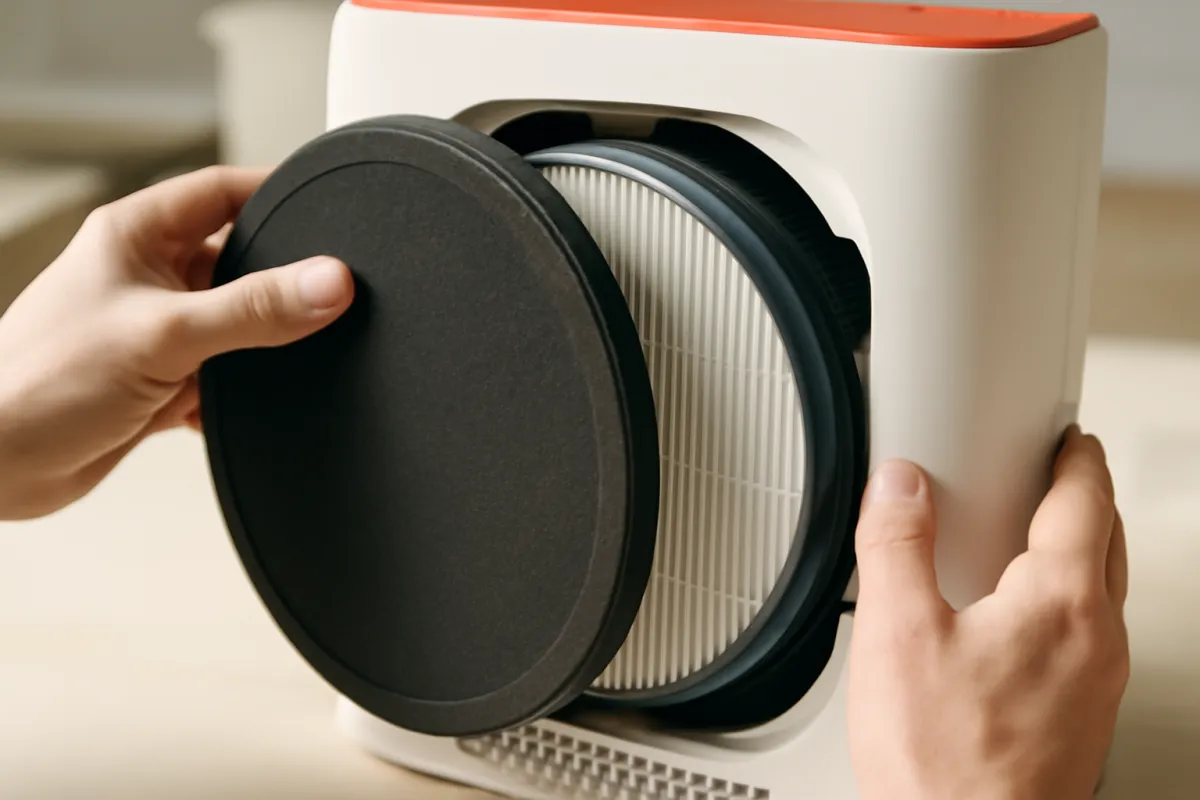
If someone in the house has allergies or asthma, the filter stops being purely a mechanical-protection question and becomes part of the air they breathe, and that changes both which filter you choose and how often you change it. The logic is simple: a filter only captures what it can still hold, and as it loads, you want to be replacing it while it is still working well rather than nursing it to the clogged end. For a sensitive household, that usually means both a somewhat higher MERV (more on that next) and a shorter change interval than the baseline, so capture stays high and airflow stays healthy.
It also means resisting a tempting mistake, which is reaching for the highest-MERV filter you can find and then leaving it in too long. A denser, higher-MERV filter traps finer particles but also loads faster and restricts airflow more, so in an allergy home the right combination is often a moderate-to-high MERV changed on a shorter cadence, not a maximum MERV left to clog. A clogged high-MERV filter is worse than a fresh moderate one on every count that matters: it captures less as it loads, it starves the system of air, and it can push allergens back into the room when the airflow drops.
For the whole-home picture, remember the furnace filter is one lever among several. Source control (keeping dust and dander down), ventilation, and where warranted a dedicated air cleaner all matter alongside it, and our walkthrough on improving indoor air quality sets the filter in that wider context. The furnace filter’s contribution is real but bounded: it cleans the air that happens to pass through the system, which is why a home with serious sensitivities usually pairs a fresh, sensible-MERV furnace filter with other measures rather than asking the filter to do everything.
MERV ratings explained
MERV stands for Minimum Efficiency Reporting Value, and it is the standard scale for how well a filter captures particles: the higher the number, the smaller the particles it traps and the greater the share it catches. For residential filters the numbers you will actually see run from about 1 at the bottom (a basic fiberglass panel that catches lint and the largest debris) up to around 13 or 16 at the top (dense filters that capture fine dust, smoke, and many allergens). Commercial and hospital-grade filtration climbs higher still, but those ratings are not what goes in a home furnace.
The practical band for most homes is the middle: roughly MERV 8 to 13. A MERV 8 to 11 filter handles the everyday job well, catching household dust, lint, pollen, and most pet dander, and it does so without choking airflow. Stepping to MERV 11 to 13 adds meaningful capture of finer particles, including more smoke and fine allergens, which is why an allergy-sensitive home often lives here. The key insight is that higher is not automatically better, because the same density that captures finer particles also resists airflow more and loads faster, so a filter that is too dense for your system can starve it of air and shorten its own life.
The trap to avoid is putting a very high-MERV 1-inch filter into a system designed for a basic panel and assuming more filtration is pure upside. A thin, dense filter is the worst of both worlds: it restricts airflow the most per inch of thickness and it clogs the fastest, so it can strain the blower while needing frequent changes. If you want strong filtration, the better route is usually a thicker media filter at a moderate-to-high MERV, which delivers the capture without the airflow penalty because it spreads the density over far more surface area. Whatever MERV you choose, confirm your system can move air through it comfortably, and expect a higher-MERV filter to want changing a little sooner than a lower one of the same thickness.
Usage: how hard your system runs
A filter only collects dust from the air that passes through it, so the more your system runs, the faster the filter loads, independent of how dirty the air is. This is why the same filter in the same house can live very different lives across the year and across climates. Through a mild shoulder season when the furnace and air conditioner barely cycle, a filter can coast; through the depths of a long, cold winter or a brutal cooling season when the system runs many hours a day, that same filter sees far more air and packs correspondingly faster.
Climate and household habits both feed into this. A home in a punishing climate that heats hard for months and cools hard for months runs its system a large share of the year, so its filters load faster than an identical home in a mild region that barely touches the thermostat. Within a home, choices like running the fan continuously (rather than only when heating or cooling) push a lot more air through the filter, which improves circulation and filtration but also loads the filter sooner. Neither is wrong; they just move the cadence, and knowing that keeps you from being surprised when a filter that lasted all shoulder season needs changing mid-winter.
The takeaway is to expect a seasonal rhythm rather than a flat interval. Many homes find they change filters more often in their peak heating or cooling months and less often in the mild stretches, which again is why a monthly check beats a rigid date. If you want to see how runtime ties into what the system costs to operate, and how a clogged filter quietly inflates that, our note on lowering your electric bill covers the broader energy picture that a fresh filter feeds into.
Home size, layout, and system type
Two more structural factors nudge the cadence: the size and layout of your home, and the type of system moving the air. A larger home with more square footage and more return vents circulates more air and generates more dust to catch, so filters can load faster simply because there is more house feeding them. Layout matters too: an open floor plan with lots of foot traffic and a busy household stirs up more particulate than a compact, low-traffic space, and homes with ongoing projects, renovation, or a nearby source of grit see accelerated loading regardless of anything else.
The system type sets which filter you have and where it lives. Many forced-air furnaces and central air handlers use a 1-inch filter in a slot at the return or in the blower compartment, which is the short-cadence case. Systems fitted with a dedicated media cabinet use the thick 4-inch or 5 to 6-inch filters that last far longer. High-efficiency systems, heat pumps, and setups with a variable-speed blower can be more sensitive to airflow restriction, which is one more reason not to over-MERV a thin filter on those. If you are not sure which you have, the filter slot itself tells you: measure the filter, note the thickness, and read the size printed on the frame.
Knowing the system type also helps you plan the spare-filter habit that makes changes actually happen. Buy filters in the correct size a few at a time so a fresh one is always on the shelf, because the most common reason a filter runs too long is simply that the right replacement was not on hand when the reminder fired. This is the same maintenance-discipline logic that runs through our note on maintaining your appliances: the cheap, scheduled task you actually do beats the perfect one you keep postponing.
Signs your furnace filter needs changing
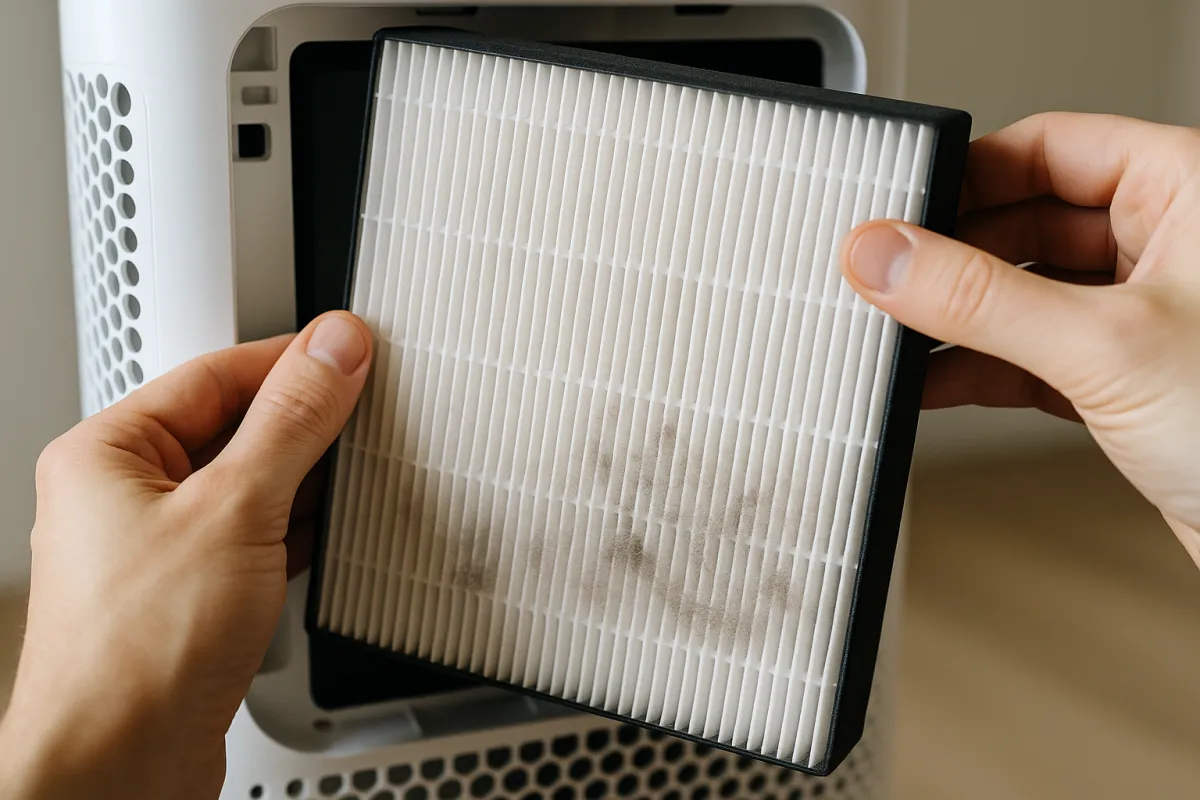
Even with a good baseline, your filter will sometimes need changing before the reminder fires, and it pays to recognize the signals. The most reliable one is visual, and it takes ten seconds. Pull the filter, hold it up to a bright light or a window, and look through the pleats: a fresh filter passes light readily and shows its original color, while a spent one is uniformly grey, matted, and hard to see light through. If it looks packed, it is packed, whatever the calendar says.
Beyond the look, a cluster of performance symptoms points back to a clogged filter. Watch for weaker airflow from the vents, rooms that heat or cool more slowly or unevenly than they used to, and a system that runs noticeably longer to reach the same temperature because it is fighting the restriction. More dust settling on furniture than usual can mean the filter is no longer catching its share, and a musty or dusty smell when the system first kicks on is a classic sign of a loaded, stale filter. A creeping rise in energy use across a season, with no other explanation, can also trace back to the blower straining against a clogged filter.
The right response when several signs show up together is not to wait, but to check and change the filter first, because it is the cheapest and fastest thing to rule out. If a fresh filter restores the airflow and the symptoms ease, you have solved it for the price of a filter. If the symptoms persist with a known-clean filter, then the issue is elsewhere in the system and worth a closer look, but you have cheaply eliminated the most common and most damaging cause first.
How to change a furnace filter
Swapping a furnace filter is a five-minute job that needs no tools, and doing it correctly matters as much as doing it often. Here is the brief version you can run every time.
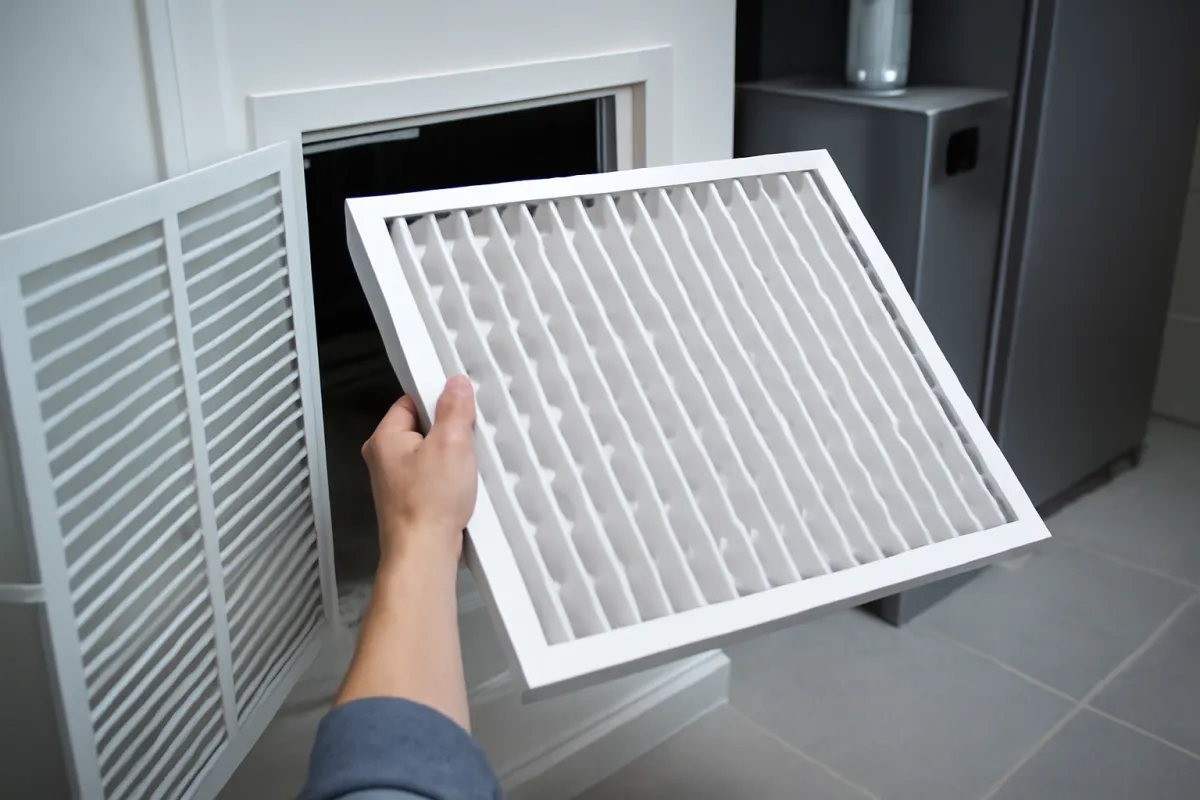
First, turn the system off at the thermostat so the blower is not pulling air (or fighting you) while the filter is out. Second, locate the filter: it sits in a slot at the return-air grille, in a dedicated filter cabinet next to the furnace, or in the blower compartment behind an access panel, depending on your system. Third, slide the old filter out and note two things printed on its frame before you toss it: the size (for example 16x25x1) and the airflow-direction arrow.
Fourth, match the replacement to that size exactly, because a filter that is too small leaves gaps that let unfiltered air (and dust) bypass it, and one that is too large will not seat. Fifth, install the new filter with the airflow arrow pointing in the direction the air moves, which is toward the furnace or blower, away from the return duct. This arrow is the step people get wrong, and a backward filter both works poorly and can sag or collapse. Sixth, seat it fully so there are no gaps around the frame, replace any access panel, and turn the system back on. Note the date somewhere you will see it, on the filter’s edge in marker or in a phone reminder, so the next change is not a guess.
One note on washable filters: most furnace filters are disposable and get replaced, not cleaned, but a minority of systems use a reusable electrostatic filter designed to be rinsed. Read the frame. If it says disposable or gives a replace-by interval, replace it; if it is marked washable or permanent, rinse and dry it fully per the maker’s instructions before reinstalling, because a damp filter breeds mold and restricts airflow.
The cost of neglecting the filter
The reason all of this matters is money and equipment life, not tidiness. A furnace filter is the cheapest component in the system, and it sits directly upstream of the most expensive ones, so a few dollars of neglected filter can translate into real operating cost and, in the worst case, major repairs. Understanding that chain is what turns filter changes from a chore into obvious self-interest.
The first cost is energy. As a filter clogs, the blower has to work harder to pull air through it, and the whole system runs longer to move the same amount of heated or cooled air. A commonly cited figure is that a badly restricted filter can push heating and cooling energy use up by a meaningful percentage compared with a clean one, and while the exact number varies by system and how clogged the filter is, the direction is never in doubt: a choked filter costs more to run every single day it stays in. Because heating and cooling is usually the largest slice of a home’s energy bill, even a modest percentage adds up over a season.
The second, larger cost is wear on the equipment. Starved airflow makes a furnace run hotter than designed, which stresses the heat exchanger and can trip safety limits, and in cooling it can cause the evaporator coil to ice over, which strains the compressor, the most expensive part in the system. A blower motor pushing constantly against restriction runs hotter and wears faster. In the worst cases, a chronically clogged filter contributes to short cycling and premature failure of parts whose replacement costs hundreds or thousands, illustratively, versus a filter that costs a few dollars. That asymmetry is the whole argument: the filter is the cheapest insurance in the system.

There is an air-quality cost too, quieter but real. A clogged filter captures less of what it is supposed to and, as airflow drops, the system circulates and filters the room air less effectively, so dust and allergens linger. A neglected filter can even become a source of odor and, if it gets damp, of worse. So the cost of neglect lands on three fronts at once, the energy bill, the equipment, and the air you breathe, and all three are avoided by the least expensive maintenance task in the house. When you weigh the trivial price of filters against that, the calculus in our cost-per-use calculator is not close.
Efficiency and airflow: why a clean filter pays
It is worth dwelling on the airflow point, because it is the mechanism behind both the energy waste and the equipment strain, and understanding it makes the cadence feel less arbitrary. A forced-air system is designed around a certain volume of air moving through it. The blower, the heat exchanger or coil, and the ducts are all sized for that airflow, and the filter is the one part in that path that steadily gets more restrictive over its life. A fresh filter offers little resistance; a clogged one offers a lot, and the system has to fight that resistance every minute it runs.
When airflow drops below what the system wants, two bad things happen at once. The equipment cannot transfer heat as efficiently, so it runs longer to do the same job, which is the energy penalty. And the components run outside their designed comfort zone, hot in heating, cold and prone to icing in cooling, which is the wear penalty. A clean filter keeps the system in the airflow band it was built for, so it heats and cools efficiently and the parts run in their happy range. That is the entire payoff of the cadence: not a cleaner-looking filter for its own sake, but a system that keeps moving the air it needs to.
This is also why the “highest MERV possible” instinct can backfire. A filter’s whole value depends on the system being able to breathe through it. A moderate-MERV filter that maintains healthy airflow protects your equipment and your bill better than a maximum-MERV filter that chokes it, and a fresh filter of any reasonable rating beats a clogged one of a fancier rating on every measure. Choose a filter your system can breathe through, and then keep it fresh, and you get the capture and the efficiency together.
A worked example: a two-pet home
Put the whole method on one realistic case. Say you have a standard forced-air furnace with a 1-inch filter slot, two shedding dogs, one household member with mild seasonal allergies, and a climate that runs the system a fair amount through both winter and summer. What cadence should you actually run, and what does it cost?
Start from the baseline. A 1-inch filter’s clean baseline is about three months, but almost every modifier here points shorter. Two dogs are a large pet load, allergies mean you want to replace before the filter is anywhere near clogged, and a hard-running system pushes more air through the filter each week. Stack those and a realistic cadence lands around every one to two months, likely monthly in the heavy shedding and heavy-runtime stretches and closer to two months in the mild shoulder weeks. So you set a monthly reminder as the floor and let the flashlight test extend it when the filter still looks clean.
Now the money, illustratively. Say a decent pleated 1-inch filter at a sensible MERV costs on the order of ten to fifteen dollars. Changing it roughly ten times a year (monthly in peak, stretched in the mild months) puts the annual filter spend around a hundred to a hundred and fifty dollars, illustratively, an amount that looks large next to a single filter and trivial next to a compressor or blower motor, or against the energy a chronically clogged filter wastes over that same year. Run your own thickness, pets, allergies, and usage through the companion tool to get the cadence, filters per year, and annual filter cost for your case rather than this example, and you will see the same lopsided math: the filter is cheap, and running it clean is cheaper than running it clogged.
Setting a reminder that actually sticks
The best cadence in the world does nothing if the change never happens, and filter changes are exactly the kind of low-stakes recurring task that slips. Two habits fix that. The first is to keep spare filters on hand in the correct size, bought a few at a time, so the moment you notice a loaded filter you can swap it immediately rather than adding it to a to-do list that outlives the filter. The single most common reason a filter runs months too long is that the right replacement was not in the house when it was needed.
The second habit is to make the reminder physical and dated. Write the install date on the edge of the filter frame in marker as you put it in, so the next time you glance at it you know exactly how long it has been there without trusting your memory. Pair that with a recurring calendar or phone reminder set to your baseline interval, and you have both a floor (the reminder) and a truth (the dated filter plus the flashlight test). Tie the check to something you already do monthly, paying a bill, changing a smoke-detector habit, the first of the month, and it stops being a thing you have to remember and becomes a thing that just happens.
None of this needs to be elaborate. A stack of the right filters in a closet, a date scrawled on the frame, and a monthly nudge cover it. The whole point is to remove the friction and the guesswork so the cheapest, highest-return maintenance in your home actually gets done, instead of being the job you always mean to get to.
Common mistakes with furnace filters
A handful of avoidable errors account for most filter-related trouble, and naming them is the fastest way to sidestep them.
- Trusting the calendar over the filter. A fixed date is a starting nudge, not a verdict. A pet home in shedding season can clog a filter in weeks, so check monthly and let the look of the filter decide.
- Installing the filter backward. The airflow arrow must point toward the furnace or blower, away from the return duct. A backward filter works poorly and can sag or collapse into the system.
- Buying the wrong size. A filter too small for the slot lets unfiltered air bypass it around the gaps, so dust reaches the coil and blower anyway. Match the printed size exactly.
- Over-MERVing a thin filter. A very dense, high-MERV 1-inch filter restricts airflow the most and clogs the fastest, which can strain the system. For strong filtration, prefer a thicker media filter at a moderate-to-high MERV.
- Letting a thick filter run because it “lasts a year.” A 4 or 5-inch filter lasts longer, but a demanding home still loads it faster than the label assumes. Check it seasonally rather than assuming twelve months every time.
- Running out of spares. The filter you cannot replace today is the one that runs two months too long. Keep the right size on the shelf so the change is never blocked.
- Washing a disposable filter. Most furnace filters are not washable; soaking them ruins the media and invites mold. Only rinse filters explicitly marked washable or permanent.
How a furnace filter differs from an air purifier
It is worth clearing up a common source of confusion, because it changes how you think about both devices. A furnace filter and a portable air purifier are not the same tool doing the same job. The furnace filter sits in your central system and cleans (and, importantly, protects) the air that passes through the ductwork whenever the system runs; its first duty is keeping dust off the expensive equipment, with air cleaning as a valuable side effect. A portable air purifier is a standalone appliance that continuously pulls room air through its own filter regardless of whether the heating or cooling is running, and its only job is cleaning the air in the space it sits in.
That difference has practical consequences. Your furnace filter only cleans air when the blower is moving air, so during long stretches when the system is idle it is not filtering anything, whereas a purifier runs on its own schedule. On the other hand, the furnace filter touches all the air the central system moves, which a single portable unit in one room cannot match. For most homes the furnace filter is the baseline everyone should keep fresh, and a purifier is a targeted addition for a specific room or a specific sensitivity. If you are weighing that addition, our notes on choosing an air purifier and whether air purifiers are worth it work through the case, and the point here is only that keeping the furnace filter on schedule is the free, foundational step before any of that.
Where a fresh filter fits in an efficient home
Zoom out and the furnace filter is one thread in the larger fabric of running a home efficiently. The same forces that make a clean filter save energy, keeping the system in its designed airflow band, run through every efficiency decision in the house, from how the equipment is sized to how it is maintained. A fresh filter is the smallest, cheapest, most frequent instance of that principle: a tiny, recurring bit of upkeep that keeps a big, expensive system running the way it was meant to.
That is why the filter belongs in the same conversation as the bigger efficiency moves rather than off in a corner as a nuisance chore. It costs almost nothing, it takes minutes, and it protects both the energy bill and the equipment, which is a rare combination in home maintenance. If you are looking at the whole picture of what your home costs to run and where the easy wins are, the filter is the first and simplest box to tick, and our note on choosing energy-efficient appliances covers the larger decisions that sit alongside it. Get the small, frequent thing right, and the big, expensive things last longer and run cheaper.
The bottom line
How often to change a furnace filter is really a baseline plus a habit. The baseline is thickness: about every one to three months for a 1-inch filter, every two to four for a 2-inch, every six to nine for a 4-inch media filter, and every nine to twelve for a deep 5 to 6-inch cabinet filter. The habit is to shorten that baseline for pets, allergies or asthma, a higher MERV, a dusty or high-traffic home, and a hard-running system, and above all to check the filter monthly by holding it to the light so its actual condition, not the calendar, makes the call.
Do that, and the payoff is quietly large for how little effort it takes. A fresh filter keeps your air cleaner, keeps the system breathing in its designed airflow band so it runs efficiently, and protects the blower, the coil, and the heat exchanger, the parts whose replacement costs hundreds or thousands against a filter that costs a few dollars. Choose a MERV your system can breathe through, keep spares on the shelf, write the date on the frame, and let a monthly glance do the deciding. The filter that costs you a real problem is the one left in too long; the one you will never think twice about is the one you change on a sensible cadence and keep fresh.
A note on scope: these notes are general maintenance guidance, not professional HVAC advice, and every interval, percentage, and dollar figure above is an illustrative planning number drawn from typical ranges rather than a measured result for any specific system. Real filter life, energy impact, and repair costs vary widely with your equipment, your climate, your air quality, and how hard the system runs, so treat the cadences here as a starting point and let the condition of your own filter and your system’s manual have the final word. Confirm the correct filter size, MERV, and change interval for your unit against the manufacturer’s own documentation, and if your system shows persistent airflow problems, odd noises, icing, or short cycling that a fresh filter does not resolve, have it inspected by a qualified heating and cooling professional rather than diagnosing it from a checklist.
Frequently asked questions
How often should I change my furnace filter?
There is no single number that fits every home, but the reliable baseline is thickness driven: a 1-inch filter every one to three months, a 2-inch filter every two to four months, a 4-inch media filter every six to nine months, and a 5 to 6-inch cabinet filter every nine to twelve months. Then you shorten that baseline for anything that loads the filter faster: pets, allergies or asthma in the home, a higher-MERV filter, a dusty or high-traffic house, and a system that runs most of the year. The honest way to use these numbers is to treat the baseline as a starting cadence, check the filter roughly monthly by holding it to the light, and replace it when it looks grey and loaded rather than waiting for a date on the calendar. Our companion tool turns your thickness, pets, allergies, and usage into a personalized cadence so you are not guessing.
How often should I change a 1-inch furnace filter?
A standard 1-inch filter is the thinnest common size and clogs the fastest, so plan on every one to three months, with about three months as a clean baseline for an average home with no pets and moderate system use. Drop toward monthly if you have shedding pets, someone with allergies or asthma, a lot of household dust, or a system that runs hard through a long heating or cooling season. The cheap fiberglass 1-inch panels often need looking at even sooner because they load and sag quickly. The simplest habit is to check a 1-inch filter every month and swap it the moment it looks grey and packed rather than trusting a fixed date.
How often should I change a 4-inch or 5-inch furnace filter?
Thicker media filters hold far more dust than a 1-inch panel because they have more pleated surface area, so they last much longer between changes: roughly every six to nine months for a 4-inch filter and every nine to twelve months for a 5 to 6-inch cabinet filter, as an illustrative baseline. The same modifiers still apply, so a heavy-shedding, allergy-sensitive, hard-running home should land at the shorter end of each range or a little past it. A thicker filter is not a license to forget it exists, so check it seasonally and replace it when it is loaded rather than assuming a full year every time. If your furnace cabinet was built for a 1-inch slot, you cannot simply drop a 4-inch filter in; the housing has to fit the thicker size.
Do pets mean I should change the furnace filter more often?
Yes, and it is one of the single biggest factors in how fast a filter loads. Pet dander, hair, and the extra dust that pets track and stir up all collect on the filter, so a home with one shedding cat or dog typically shortens the cadence noticeably, and a multi-pet or heavy-shedding household shortens it more. As an illustrative rule of thumb, a filter that a pet-free home would change every three months often wants changing every one to two months with active pets. The practical move is to keep checking monthly, because pet load is uneven across the year with shedding seasons, and let the look of the filter set the pace.
What MERV rating should I use for a furnace filter?
MERV, the Minimum Efficiency Reporting Value, rates how well a filter captures particles on a scale that commonly runs from about 1 to 16 for home filters, where higher numbers trap smaller particles. For most homes a middle rating in the MERV 8 to 13 band is the usual sweet spot: MERV 8 to 11 handles everyday dust and dander, and MERV 11 to 13 helps more with fine particles, smoke, and allergens. Going higher is not automatically better, because a denser filter restricts airflow more, and a thin 1-inch filter at a very high MERV can choke a system that was not designed for it. Match the MERV to what your system can handle, confirm the airflow is not being starved, and remember a higher-MERV filter often needs changing a little sooner because it loads faster.
What are the signs a furnace filter needs changing?
The clearest sign is visual: pull the filter and hold it up to a light, and if you can barely see light through the pleats or it looks uniformly grey and matted, it is done. Beyond the look, watch for weaker airflow from the vents, rooms that heat or cool unevenly, more dust settling on surfaces than usual, a musty or dusty smell when the system kicks on, and a system that seems to run longer to hit the same temperature. Rising energy use over a season with no other explanation can also point back to a clogged filter making the blower work harder. When several of these show up together, do not wait for the calendar; change the filter and see if the symptoms ease.
What happens if you do not change your furnace filter?
A neglected filter keeps loading until it chokes the airflow your system depends on, and that starts a chain of avoidable problems. The blower works harder to pull air through the clogged media, which raises energy use, and a commonly cited figure is that a badly restricted filter can push heating and cooling energy use up by a meaningful percentage over a clean filter. Worse, starved airflow makes the system run hot in heating and can freeze the coil in cooling, which strains the blower motor, the heat exchanger, and the compressor, the expensive parts. In the worst cases a clogged filter contributes to short cycling, premature wear, and repair bills that dwarf the few dollars a fresh filter costs, so the filter is the cheapest insurance in the whole system.
Can I clean and reuse a furnace filter instead of replacing it?
It depends entirely on the filter type. The vast majority of furnace filters are disposable pleated or fiberglass panels that are not designed to be washed; soaking them damages the media and pushing water through leaves them less effective and prone to mold, so those get replaced, not cleaned. A smaller number of systems use a washable or reusable electrostatic filter that is specifically built to be rinsed and dried on a schedule, and for those, cleaning is the intended maintenance. Check the frame: if it says disposable or gives a MERV rating with a replace-by interval, replace it, and if it is marked washable or permanent, follow the maker's cleaning steps and let it dry fully before reinstalling.