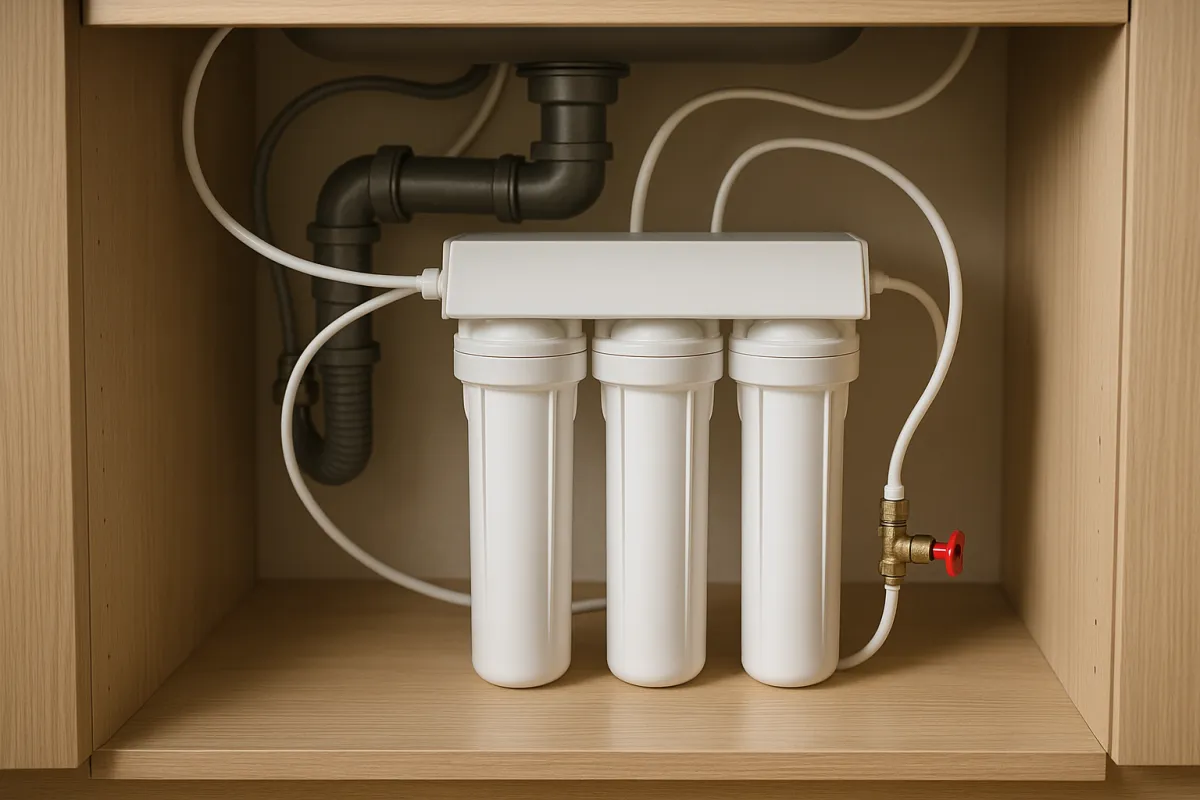
What's on this page
- How much does whole-house filter replacement cost? The short answer
- What replacement actually means for a whole-house system
- The replacement-cost formula: cartridge price times swaps per year
- Sediment filters: change interval and cost per swap
- Carbon filters and tanks: change interval and cost per swap
- KDF and specialty media: what replacement costs
- Softener resin and salt: the recurring cost that is not a cartridge
- Illustrative cost per swap by stage
- Annual replacement cost by system size
- Where a 3-stage system’s replacement dollars go
- Signs your whole-house filter needs changing now
- The exhausted-filter trap: why flow alone will not tell you
- DIY cartridge replacement: what it actually involves
- A DIY replacement walk-through
- When to hire a plumber instead
- What a plumber typically charges for a filter change
- DIY vs plumber: the real cost comparison
- Setting a replacement calendar you will actually follow
- Common mistakes that waste money or shorten a system’s life
- A worked example: a family of four’s five-year budget
- Replacement cost versus buying a whole new system
- A replacement-cost checklist before your next cartridge order
- The bottom line
Short answer: Whole-house water filter replacement cost is mostly cartridge price times how many times a year you swap it, and it scales with system size. A basic sediment-only setup can run near $70 a year, a common two-stage sediment-and-carbon system near $140, a three-stage system with a specialty media near $220, and a filter-softener combo near $290 once salt is counted, all illustrative. Doing the swap yourself saves whatever a plumber would have charged per visit; hiring one adds that fee to every change.
Buying a whole-house water filter is a decision you make once. Paying for it is a decision you make for as long as you own the thing, every time a cartridge runs out and needs to be swapped for a fresh one. That recurring bill rarely gets its own line item anywhere, so households tend to either overpay a plumber for a fifteen-minute job or, worse, let an exhausted cartridge sit in the housing for a year because nobody wrote the date down anywhere.
This breakdown prices exactly that recurring cost. It works through what each stage, sediment, carbon, KDF or specialty media, and softener resin actually costs to keep fresh, how often each one is due, the real signs that tell you a swap is overdue before your water quality slips, and the arithmetic of doing the job yourself against paying a plumber for every visit. If you have not yet bought a system, our whole-house water filter buying guide covers sizing and media selection; this piece picks up exactly where that one leaves off, once the system is installed and the clock on its first cartridge has started running. Run your own cartridge prices and interval through our cost-per-use calculator as you read.
Key takeaways
- Replacement cost is cartridge price times swaps per year, and it climbs with every stage a system has, from roughly $70 a year for sediment-only to $290 or more for a filter-softener combo.
- Sediment cartridges are the fastest-moving cost, often due every one to three months, while carbon, KDF, and softener resin typically run on an annual or multi-year clock.
- A dropping water pressure is the reliable sign of a clogged sediment stage; an exhausted carbon stage often gives no warning at all, which is why a calendar interval beats waiting for a symptom.
- A routine cartridge swap is a fifteen to thirty minute DIY job for most households; a plumber's per-visit fee commonly runs $50 to $150, illustratively, on top of the cartridge.
- Over five years the gap between DIY and paying a plumber for every routine swap is usually the single biggest lever on total ownership cost, bigger than which cartridge brand you buy.
How much does whole-house filter replacement cost? The short answer
The whole calculation is cartridge price times how many times a year that cartridge needs replacing, added up across every stage your system has. A sediment cartridge at an illustrative $18 changed every three months is four swaps a year, about $72. A carbon or specialty stage changed once a year at an illustrative $70 to $80 adds another chunk on top. Stack those together and a basic system lands near $70 a year, a mid-size two or three-stage system somewhere between $140 and $220, and a filter paired with a salt-consuming softener can push toward $290 or beyond.
Every figure in this report is illustrative. Your actual cartridge prices depend on the brand and media your system takes, and your actual interval depends on how dirty your water is and how hard the system works. What this breakdown gives you is the method, so you can plug in your own numbers rather than trust a stranger’s average.
What replacement actually means for a whole-house system
A whole-house filter is not one part; it is a stack of stages, and each one wears out on its own separate clock. A sediment pre-filter catches physical particles and clogs mechanically, so it announces itself with dropping pressure. A carbon stage adsorbs chlorine and taste compounds chemically, and it does not announce anything; it simply stops working while water keeps flowing through it at full rate. A softener’s resin bed exhausts its ion-exchange capacity and needs regeneration, backed by an ongoing supply of salt. Replacement, in the full sense, means tracking all of these separately rather than treating the system as one part that gets serviced once.
That distinction matters for cost because it means your annual bill is really several smaller bills added together, each on its own schedule. Understanding which stage is due, and when, is the difference between a system that keeps performing and one that is quietly filtering nothing while your water pressure and taste both seem fine.
The replacement-cost formula: cartridge price times swaps per year
Here is the entire arithmetic, and it is the same shape as every running-cost formula on this bench: take what a cartridge costs, multiply by how many times a year it gets replaced, and you have that stage’s annual cost. Add every stage together for the system’s total. Written out: cartridge price times swaps per year equals annual cost per stage, and the stages summed equal the system’s annual replacement cost.
A sediment cartridge at $18, changed every three months, is four swaps a year: $18 times 4 equals $72. A carbon cartridge or tank service at an illustrative $70, changed once a year, adds $70 flat. Add those two and a two-stage system runs about $142 a year. Add a KDF or specialty stage at roughly $80 a year and a three-stage system runs near $222. The formula does not care what brand you buy; it only cares about the price on the cartridge and how often the clock resets. Our cost-per-use calculator holds your own prices and interval and totals the system live.
Sediment filters: change interval and cost per swap
Sediment is the fastest-moving cost in the whole system, because it is a purely mechanical filter that clogs with whatever your water carries. A cartridge in dirty or well water can be due every one to three months; a clean municipal supply can sometimes stretch that to four to six. Cartridge prices vary with size and micron rating, but a mid-range replacement commonly sits somewhere in the teens to twenties of dollars, illustratively.
Run that interval and price out over a year and the pattern is clear: a $18 cartridge changed every two months is six swaps, about $108 a year, while the same cartridge stretched to every four months is three swaps, about $54. The interval you actually get depends on your water, not on the box, which is exactly why a pressure gauge or a simple pressure-drop check across the housing is worth more than any printed capacity number.
Carbon filters and tanks: change interval and cost per swap
Carbon runs on a much slower clock than sediment, but it costs more per swap. A cartridge in a compact housing is often rated six to twelve months, while a large carbon tank can be rated for a stated gallon capacity that may stretch several years before a full media change. An illustrative cartridge-style carbon replacement often lands somewhere near $60 to $90, while a full tank media change is a bigger, less frequent expense that is harder to generalize without knowing the tank’s size.
The trap with carbon is that it gives you no obvious warning. It keeps passing water at full flow after it has stopped adsorbing chlorine and taste compounds, and an overdue cartridge can even shed some of what it captured back into the water. That is the single strongest argument for running carbon on a written calendar interval rather than waiting for a taste to come back, because by the time you taste chlorine again, the stage has likely been exhausted for a while.
KDF and specialty media: what replacement costs
Specialty media, KDF for hydrogen sulfide or certain metals, catalytic carbon for chloramine, or any targeted media matched to a specific contaminant on your water report, generally costs more per cartridge than plain sediment or carbon, and it often runs on its own interval separate from the stages around it. An illustrative annual replacement for a specialty stage commonly lands somewhere near $70 to $100, though the specific media and the contaminant load on your water can push that meaningfully in either direction.
Because specialty media targets a named problem, replacing it late is not just an inconvenience; it means the specific contaminant it was installed to handle is no longer being addressed even though the water still looks and tastes fine. If a specialty stage was installed because of a named result on a water test, treat its interval with the same seriousness as the test that justified the purchase in the first place.
Softener resin and salt: the recurring cost that is not a cartridge
A softener is the outlier in this whole discussion, because its consumable is not a cartridge you swap on a calendar; it is salt you keep adding, continuously, plus a resin bed that eventually needs replacing after years of service rather than months. Salt is a small, steady cost that shows up every few weeks rather than a lump sum a few times a year, and it is easy to under-budget because nobody thinks of a bag of salt as part of a “filter replacement” line item.
Add a softener to a filter system and your all-in annual cost typically climbs past what a filter-only system of the same stage count would run, since you are paying for both cartridge changes and an ongoing salt supply. That is not a reason to skip a softener if your water report shows real hardness; it is a reason to budget the salt honestly alongside the cartridges rather than pricing the system by its cartridges alone.
Resin itself is the other half of a softener’s cost that is easy to forget because it happens so rarely. A well-maintained resin bed can last many years of regular regeneration cycles before it needs replacing outright, so it behaves more like an occasional large expense than a recurring one. Treat it the way you would treat a major appliance part: not on the annual budget line, but on a longer watch list you revisit every few years rather than every few months.
Illustrative cost per swap by stage
Put concrete, illustrative numbers next to each stage so the comparison stops being abstract.
- A sediment cartridge at $18, changed every three months, costs about $72 a year in four swaps.
- A carbon cartridge or tank service at roughly $70, changed once a year, costs about $70 a year in one swap.
- A KDF or specialty stage at roughly $80, changed once a year, costs about $80 a year in one swap.
- A softener’s salt, refilled through the year, typically adds a smaller recurring cost that varies with household water use and hardness, on top of an occasional resin service.
Stack sediment, carbon, and a specialty stage together and a three-stage system lands near $222 a year, the anchor figure this report uses throughout. Swap in your own cartridge prices and interval and the number moves accordingly; the shape of the calculation does not.
Annual replacement cost by system size
The chart below lines up four common system configurations at the sediment price and interval used throughout this report, so the bars show how cost climbs purely with stage count.
Illustrative annual replacement cost by system size
Sediment at $18 every 3 months held constant across all four; only the added stages change. Illustrative planning figures.
Sediment is identical across every bar. The whole gap between the shortest and longest bar is what the added stages, and the softener's salt, cost on top of it.
Read the chart as a menu of what capability costs to maintain, not just what it costs to buy. Every stage you add to handle a specific problem on your water report is also a stage you commit to feeding on its own schedule for as long as you own the system.
Where a 3-stage system’s replacement dollars go
Take the anchor three-stage example, $222 a year split across sediment, carbon, and the KDF stage, and see where the money actually goes.
A 3-stage system: where the $222 a year goes
Sediment at four swaps a year against one annual carbon change and one annual KDF change. Shares sum to 100. Illustrative.
Sediment is changed four times as often as the other two stages but still lands near a third of the annual cost, because its individual cartridge is the cheapest of the three.
The lesson in that split is that frequency and cost per swap pull in opposite directions. Sediment is due most often but costs the least each time; the specialty stage is due once a year but costs the most per cartridge. Both matter, and neither alone tells you the system’s real annual bill.
Signs your whole-house filter needs changing now
Some stages tell you when they are due; others do not, and knowing which is which matters more than any printed interval. A dropping water pressure at every fixture in the house, not just one, is the classic sign of a clogged sediment stage doing exactly what it was built to do: catching particles until it physically cannot pass as much water. That symptom is reliable and shows up before the stage stops filtering entirely.
A returning taste or smell of chlorine, particularly noticeable right after a shower, points to an exhausted carbon stage that has stopped adsorbing. Scale returning on fixtures or spotting on glassware after it had cleared up points to a softener running low on capacity, whether from resin that needs recharging or salt that has run out. Any of these symptoms, taken on their own, is a reasonable prompt to check the relevant stage against its calendar interval rather than assuming the system is fine because water is still coming out of the tap.
The exhausted-filter trap: why flow alone will not tell you
The dangerous case is the stage that gives you nothing to notice. A spent carbon cartridge, or an exhausted specialty media bed, keeps passing water at full pressure and full flow because it is not a mechanical barrier the way sediment media is; it is a chemical process that simply stops happening once its capacity is used up. Water still flows through it normally, tastes roughly fine to most people, and gives no visible or audible cue that anything has changed.
That is exactly why a written change calendar, not a wait-and-see approach, is the right way to run carbon, KDF, and any specialty stage. Waiting for a symptom on these stages means running unfiltered water, disguised as filtered water, for however long the overdue period lasts. Set the date when you install a fresh cartridge, and change it on that date rather than on the day the water finally tastes off.
DIY cartridge replacement: what it actually involves
For most sediment and carbon housings on a whole-house system, the swap is a genuinely approachable home task, not a specialist job. It generally involves shutting off the water at the housing’s own inlet valve, opening a downstream faucet briefly to relieve the trapped pressure inside the housing, unscrewing the housing bowl with the wrench that usually ships with the system, lifting out the spent cartridge, checking the O-ring for damage or debris and lightly lubricating it if the manual calls for that, dropping in the fresh cartridge, reassembling, and turning the water back on while you watch the housing and its fittings for any drips.
Most households who have done it once report the whole task taking fifteen to thirty minutes, most of that spent on the housing itself rather than anything complicated. It requires no special tools beyond what usually ships with the system and, in some cases, an adjustable wrench.
A DIY replacement walk-through
Walking through the same task with a bit more detail helps the first attempt go smoothly. Start by confirming which cartridge you need and having it in hand before you shut anything off, since a whole-house system means every fixture loses water pressure while the housing is open. Shut the inlet valve, then open the nearest cold tap to bleed off residual pressure in the housing; skipping this step is the most common reason a housing bowl sprays water when it is unscrewed.
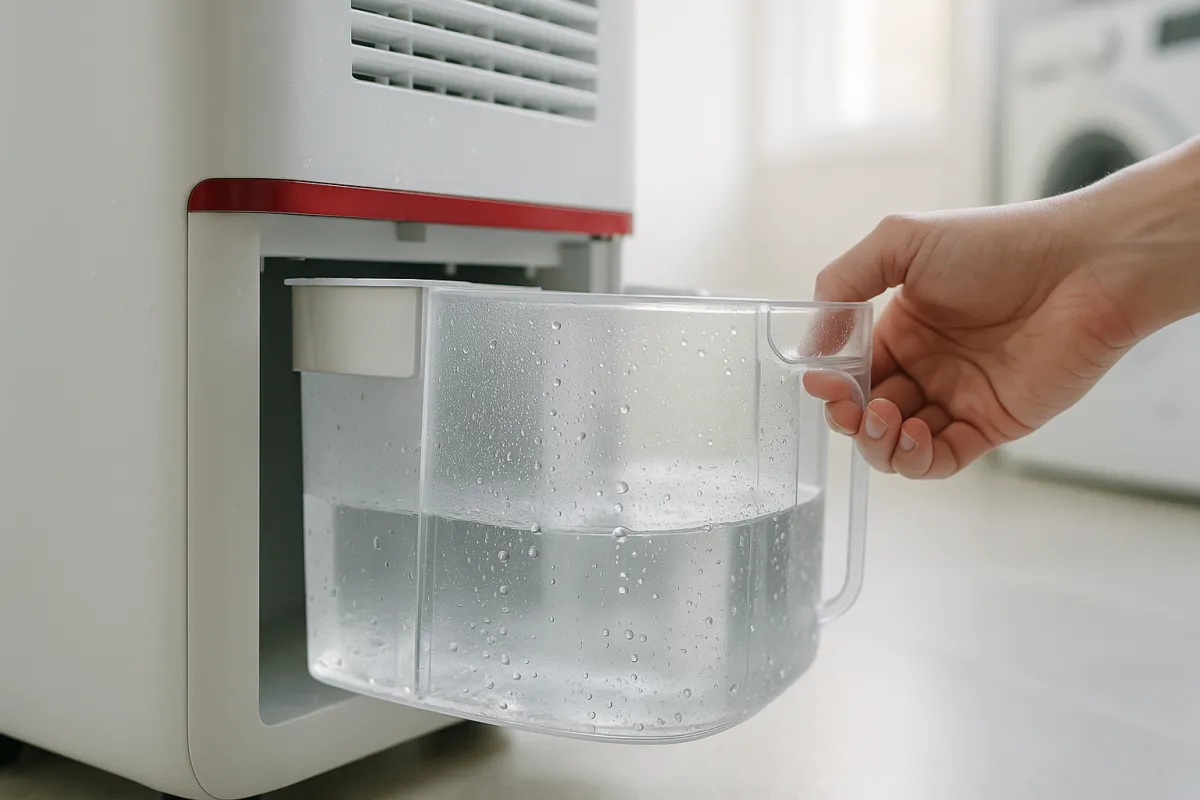
With the pressure relieved, unscrew the housing, usually counterclockwise, and expect some residual water to spill, which is where a towel or a shallow bucket underneath earns its keep. Lift out the old cartridge, wipe the inside of the bowl, inspect the O-ring, seat the new cartridge, and thread the housing back on hand-tight plus a modest quarter turn, since overtightening is a more common cause of a cracked housing than under-tightening is of a leak. Restore water slowly and watch every fitting for a minute before you walk away.
When to hire a plumber instead
DIY stops being the obvious choice once the job moves past a straightforward cartridge swap. A large carbon tank system with its own electronic control valve and a backwash drain line is a different, more involved job than a cartridge housing, and getting the valve’s settings wrong can waste water or under-treat your supply without you knowing it. A softener resin recharge involves handling media and settings specific to that unit’s control head. Any work that touches the main line itself, cutting pipe, adding a bypass, or re-plumbing a connection, crosses into territory that in many places also has code and permitting implications.
A persistent leak you cannot isolate, a housing that will not seal no matter how carefully you reassemble it, or simple discomfort working on a line that feeds your entire home’s water are all reasonable, honest reasons to call a plumber rather than push through. There is no penalty for choosing that option on a job you are not confident about.
What a plumber typically charges for a filter change
Plumber pricing for a routine whole-house cartridge swap commonly falls in a range somewhere near $50 to $150 per visit, illustratively, shaped by your region, whether the visit is dedicated solely to the filter or bundled with other plumbing work already scheduled, and local labor rates. That fee sits on top of whatever the cartridge itself costs, since the cartridge is a parts cost and the visit is a labor cost, two separate line items that are easy to conflate when you are just handed one invoice.
For a stage that is due once a year, a single visit fee is a manageable, occasional expense. For sediment, which can be due every one to three months, paying a per-visit fee that often exceeds the cartridge’s own price, every single time, is the math that turns a modest annual cartridge bill into a genuinely large one. That gap is exactly what the next section prices out directly.
DIY vs plumber: the real cost comparison
Take the anchor three-stage system, six cartridge swaps a year in total across all its stages, and compare the two paths honestly. Doing every swap yourself costs only the cartridges, about $222 a year in this illustrative example. Hiring a plumber for every one of those six visits, at an illustrative $65 per visit for a routine swap, adds roughly $390 a year in labor on top of the same $222 in parts, for a total near $612.
That gap, close to $390 a year in this example, is not a rounding error; it is usually the single largest lever on the system’s total ownership cost, bigger than the difference between cartridge brands or even between a two-stage and three-stage system. A sensible middle path many households land on is doing the frequent, simple sediment swaps themselves and reserving a plumber for the once-a-year carbon or specialty stage, or for a softener recharge, which captures most of the labor savings without asking anyone to take on a job they are not comfortable with. Enter your own cartridge prices, interval, and choice of DIY or hired labor into our cost-per-use calculator to see your version of this comparison.
Setting a replacement calendar you will actually follow
The single habit that prevents both overpaying and running an exhausted filter is a written calendar, because memory alone consistently fails on intervals measured in months rather than days. Write the install date directly on the cartridge housing with a marker, set a recurring reminder on your phone for each stage’s own interval, and keep a simple log, even a sticky note on the utility room wall, of what was changed and when.

Because different stages run on different clocks, the calendar’s real value is keeping them from blurring into one vague sense that “the filter” was changed recently, when in fact only the sediment stage was, three months ago, while the carbon stage has quietly run a year and a half past due. Separate reminders for separate stages is the only version of this system that actually works.
Common mistakes that waste money or shorten a system’s life
A few habits show up repeatedly and cost more than the cartridges themselves. Buying the cheapest available cartridge without confirming it fits your specific housing wastes money on a part that does not seal properly or does not match the micron rating the system was sized for. Waiting for a symptom on carbon or specialty media, rather than running a calendar, means paying for filtration you are not actually getting for however long the stage sits exhausted.
Overtightening a housing bowl in an attempt to guarantee a seal is a common way to crack a plastic housing, turning a fifteen-minute cartridge swap into an emergency housing replacement. Forgetting to relieve pressure before opening a housing turns a dry job into a wet one and risks water damage to whatever sits nearby. And treating a softener’s salt as optional, rather than a recurring line item, is how a household ends up with hard water symptoms returning despite a system that looks, on paper, like it should be handling it.
A subtler mistake is batching every stage onto the same interval out of convenience, changing carbon and KDF early just because the sediment cartridge happens to be due, or stretching sediment to match a slower annual stage. Both waste money in one direction or leave the system underperforming in the other. Each stage earns its own line on the calendar precisely because their clocks do not match, and forcing them into alignment is a false economy that either throws away capacity you paid for or leaves a stage running well past what it was rated to handle.
A worked example: a family of four’s five-year budget
Put the whole method together on one realistic household. A family of four runs a three-stage system: sediment, carbon, and a KDF stage for a mild sulfur smell their water report flagged. Their sediment cartridge costs $18 and is due every three months, four swaps a year, for $72. Their carbon stage costs about $70 a year in one annual change. Their KDF stage costs about $80 a year in one annual change. Add those together and their annual cartridge cost is $222.
They do every swap themselves, so there is no labor cost added on top, and their total annual replacement cost is the same $222. Over five years that is $1,110 in cartridges, spread across roughly six swaps a year, thirty swaps total, most of them the quick sediment change and a couple of the more occasional carbon and KDF swaps. Had they hired a plumber for every one of those thirty visits at an illustrative $65 each, they would have added $1,950 in labor over the same five years, more than the entire cartridge cost itself. Run your own household’s cartridge prices, interval, and DIY-or-hire choice through the cost-per-use calculator to see your own five-year figure.
Replacement cost versus buying a whole new system
It is worth periodically checking replacement cost against the cost of simply buying a new system, because an aging housing with hardened seals, mineral buildup, or a control valve that is starting to fail can make continued cartridge purchases a worse deal than starting over. A new mid-range whole-house system is typically a larger one-time purchase than several years of cartridges, so replacement almost always wins the comparison for a system in good working order.
The calculation tips the other way when a housing itself is cracked, a control valve is failing intermittently, or the system was undersized for the household from the start and has never performed well regardless of how fresh its cartridges are. In those cases, the recurring cartridge spend is propping up a system that was never going to satisfy you, and the honest move is pricing a properly sized replacement rather than continuing to feed the old one. Our whole-house water filter buying guide walks through sizing a new system if that is where you land.
A replacement-cost checklist before your next cartridge order
Before you place your next cartridge order, or decide whether to keep doing the swap yourself, run through these checks.
- Confirm the exact cartridge your housing takes. A mismatched cartridge can leak, underperform, or simply not fit, wasting the purchase entirely.
- Check the actual interval against your water, not just the box. A rated capacity assumes average conditions; your sediment load or water hardness may be well above or below that.
- Price DIY against a plumber’s per-visit fee for your specific stage count. The gap is usually the single biggest lever on your total cost, larger than brand choice.
- Write the install date on the housing every time. A calendar interval only works if you actually know when the clock started.
- Budget softener salt as its own recurring line, not an afterthought. It is a smaller, steadier cost that is easy to undercount against a system’s total.
- Watch for pressure drop and returning taste or smell separately. They flag different stages, and neither one tells you about a stage that fails silently.
- Revisit replacement versus a new system periodically, especially once a housing shows physical wear rather than just an exhausted cartridge.
Clear those and your replacement cost stays predictable, which is the entire point of pricing a maintenance task before it becomes a surprise line on a bill.
The bottom line
Whole-house water filter replacement cost is never a mystery once you break it into its real components: cartridge price times swaps per year, added across every stage the system has, plus labor if you choose to pay for it. A basic sediment-only setup can run near $70 a year, a common two-stage system near $140, a three-stage system with a specialty media near $220, and a filter-softener combo near $290 once salt is counted, all illustrative figures that move with your own cartridge prices and water. Sediment is the fastest-moving cost but the cheapest per swap; carbon and specialty media are due less often but cost more each time and give you no warning when they are spent, which is why a written calendar beats waiting for a symptom. DIY handles most routine sediment and carbon swaps in well under half an hour, and the gap between doing that yourself and paying a plumber’s per-visit fee for every single one of them is usually the largest lever on your total cost over the life of the system. Price your own stages, set your own calendar, and choose DIY or a plumber deliberately rather than by default.
A note on scope: this breakdown exists to hand you the replacement-cost arithmetic for a whole-house filter, not to talk you into any particular cartridge brand or service provider. Every cartridge price, change interval, labor fee, and dollar total above is an illustrative planning figure built from typical ranges rather than quoted from any specific manufacturer or plumber, and your real cartridge cost, your water’s actual sediment and chlorine load, and your local labor rates will each move the answer enough to matter. None of this is professional plumbing advice. A whole-house filter sits on the main line feeding your entire home, so follow your system’s own manual for valve operation and cartridge specification, and bring in a licensed plumber for any control valve programming, softener resin recharge, main-line modification, or leak you cannot confidently isolate yourself.
Frequently asked questions
How much does it cost to replace a whole-house water filter?
It depends entirely on how many stages your system has and how often each one needs a fresh cartridge, so treat any single figure as illustrative. A basic sediment-only setup can run somewhere near $70 a year in cartridges. A common sediment-plus-carbon two-stage system lands closer to $140. A three-stage system that adds KDF or a specialty media can reach $220 or more. A filter paired with a salt-based softener, where you are buying both cartridges and bags of salt, can push past $290 a year. None of that includes labor if you hire someone to do the swap.
How often should I change a whole-house water filter?
Each stage runs on its own clock, and the honest answer is to follow the cartridge's rated capacity or the manufacturer's stated interval rather than a single network-wide number. A sediment pre-filter on dirty or well water often needs changing every one to three months, while a cleaner municipal supply can stretch that. A carbon cartridge in a housing typically runs six to twelve months, and a larger carbon tank can be rated for a stated number of gallons or several years. Specialty media and softener resin each carry their own service interval. Write the date on the housing when you change it, because guessing is how systems run past due.
What are the signs a whole-house water filter needs changing?
A dropping water pressure at every fixture in the house is the most reliable sign, and it usually means a clogged sediment stage. A returning taste or smell of chlorine, especially right after a shower, points to an exhausted carbon stage. A softener that stops helping with scale or spotting has usually run out of resin capacity or salt. The dangerous case is the one with no symptom at all: a spent carbon cartridge keeps passing water at full flow while it has stopped adsorbing anything, which is exactly why a calendar interval matters more than waiting to notice a problem.
Can I replace a whole-house water filter cartridge myself?
For most sediment and carbon cartridge housings, yes. The job is generally shutting off the water at the housing's own valve, relieving pressure at a downstream faucet, unscrewing the housing with the supplied wrench, swapping the cartridge and checking the O-ring, and turning the water back on while you check for leaks. It typically takes fifteen to thirty minutes once you have done it once. Where DIY gets riskier is a large carbon tank system with its own control valve and drain line, a resin recharge on a softener, or any job that involves cutting or re-soldering the main line itself, which is where a plumber earns the call.
How much does a plumber charge to change a whole-house filter?
Plumber pricing for a straightforward cartridge swap commonly falls somewhere in a $50 to $150 per-visit range, illustratively, depending on your region and whether the visit is a dedicated stop or bundled with other work. That is on top of the cartridge itself. For a system you change every one to three months, paying a per-visit fee that often is a large multiple of the cartridge's own price adds up fast, which is the arithmetic worth doing before you commit to professional service for every routine swap.
Does a 3-stage or softener system cost more to maintain than a basic filter?
Yes, and the gap is not small. Every added stage is another cartridge or another consumable on its own schedule, and a softener adds a recurring salt cost on top of its resin. In illustrative terms, a basic sediment-only setup might run near $70 a year while a three-stage system with specialty media can sit closer to $220, and a filter-softener combo can push toward $290 or more once salt is included. That gap is the ongoing price of the extra capability, and it is worth pricing before you buy the bigger system, not after.
How much does whole-house filter replacement cost over five years?
Multiply your best estimate of the annual figure by five and the number gets large enough to matter. A basic sediment-only system near $70 a year is roughly $350 over five years. A three-stage system near $220 a year is closer to $1,100. Add professional labor for every swap rather than doing it yourself and the five-year total can climb well past that, since a $50 to $150 per-visit fee repeated several times a year compounds quickly. Running your own numbers through a calculator before you buy is the only way to see your real five-year figure rather than a generic one.
Is DIY filter replacement safe, or should I always hire a plumber?
A standard cartridge swap on a sediment or carbon housing is routine home maintenance for most households, similar in difficulty to changing a furnace filter, and does not require a license to do safely. Hire a plumber when the system involves a control valve you have not worked with before, a softener resin recharge, any modification to the main line itself, a leak you cannot isolate, or when your municipality's plumbing code requires licensed work for the specific task. When in doubt about a specific system, the manufacturer's manual or a licensed plumber is the right call rather than guessing on a whole-house line that feeds every fixture.