What's on this page
- Why is my furnace not turning on? Start with what it is actually doing
- Do these three things before you touch anything
- Total silence: when nothing happens at all
- Partial activity: the blower runs but no heat follows
- Cause one: a clogged filter tripping the limit switch
- Cause two: a dirty or failing flame sensor
- Cause three: the igniter is not lighting the burner at all
- Cause four: the condensate line, on high-efficiency furnaces specifically
- What a safety lockout actually means
- Is it safe to keep resetting a furnace that will not start?
- Repair or replace: the honest math
- Common mistakes when diagnosing a no-start furnace
- Electric furnaces and heat pumps: does this apply to them too?
- A worked example: one cold morning, three checks in order
- A second worked example: the flame sensor fix
- Pilot light furnaces: an older design with its own short list
- What a technician actually checks during a diagnostic visit
- Which fixes are genuinely DIY
- Carbon monoxide: the one risk worth knowing about
- When to call an HVAC technician
- Sounds during a failed start attempt, and what they tell you
- Preventing the next no-start call
- The bottom line
Short answer: A furnace that will not turn on is usually a power, thermostat, or airflow problem, not a dead furnace. Check the furnace's own power switch, the breaker, and the thermostat first. A clogged filter tripping a safety limit switch is the single most common cause beyond that. A furnace that tries to start and then shuts off points at the flame sensor; total silence points at power.
A furnace that will not turn on arrives at the worst possible moment, on the coldest morning of the season, and it feels like a major failure, the kind of thing that ends with a large bill and a cold house for days. Most of the time it genuinely is not that at all. A furnace is wired with several layers of safety devices specifically designed to shut it down rather than risk a fire or a gas leak, and a no-start call is very often one of those devices doing exactly its job in response to something simple: a clogged filter, a thermostat setting, or a switch someone bumped without noticing.
This report works through a no-start furnace the way it actually gets diagnosed, starting with the simplest and most common causes and working toward the ones that genuinely need a technician, because a cold house does not mean an expensive one. It covers the difference between total silence and a blower that runs with no heat, what a limit switch and a flame sensor are actually protecting against, the condensate issue specific to high-efficiency furnaces, and the honest math on repairing versus replacing an aging unit. Our furnace filter guide and our HVAC system cost guide go deeper on two subjects this piece touches, so this one points at them rather than repeating them.
Key takeaways
- Total silence, no blower at all, is almost always power or the thermostat: check the furnace's own switch, the breaker, and the thermostat's mode and batteries before anything else.
- A clogged filter is the single most common cause of a furnace that will not start, because restricted airflow trips the limit switch, a safety device, before any real damage happens.
- A furnace that tries to start and then shuts off, sometimes repeatedly, usually points at the flame sensor, which needs a light cleaning and is a common and inexpensive fix.
- High-efficiency furnaces add a condensate drain. A clogged or frozen condensate line, or a tripped float switch, stops the furnace from starting at all on these models specifically.
- Resetting a breaker once after fixing an obvious cause is fine. Repeatedly resetting a furnace that keeps shutting down on its own is not; call a technician instead.
Why is my furnace not turning on? Start with what it is actually doing
A furnace that will not start falls into one of two broad categories, and which one you have changes everything about where to look next. The first is total silence: no blower, no clicking, no sound of any kind when the thermostat calls for heat. The second is partial activity: the blower runs, or you hear the furnace attempt to ignite, but no heat ultimately follows, sometimes with the furnace shutting itself back off after a few seconds.
Total silence points toward power not reaching the furnace or its controls at all. Partial activity, a furnace that tries and fails, points toward something further along in the startup sequence: airflow, ignition, or a safety sensor stepping in. Separating these two before you do anything else narrows a long list of possible causes down to a short one in about a minute.
Do these three things before you touch anything
Three checks resolve a meaningful share of no-start furnace calls before any tool comes out.
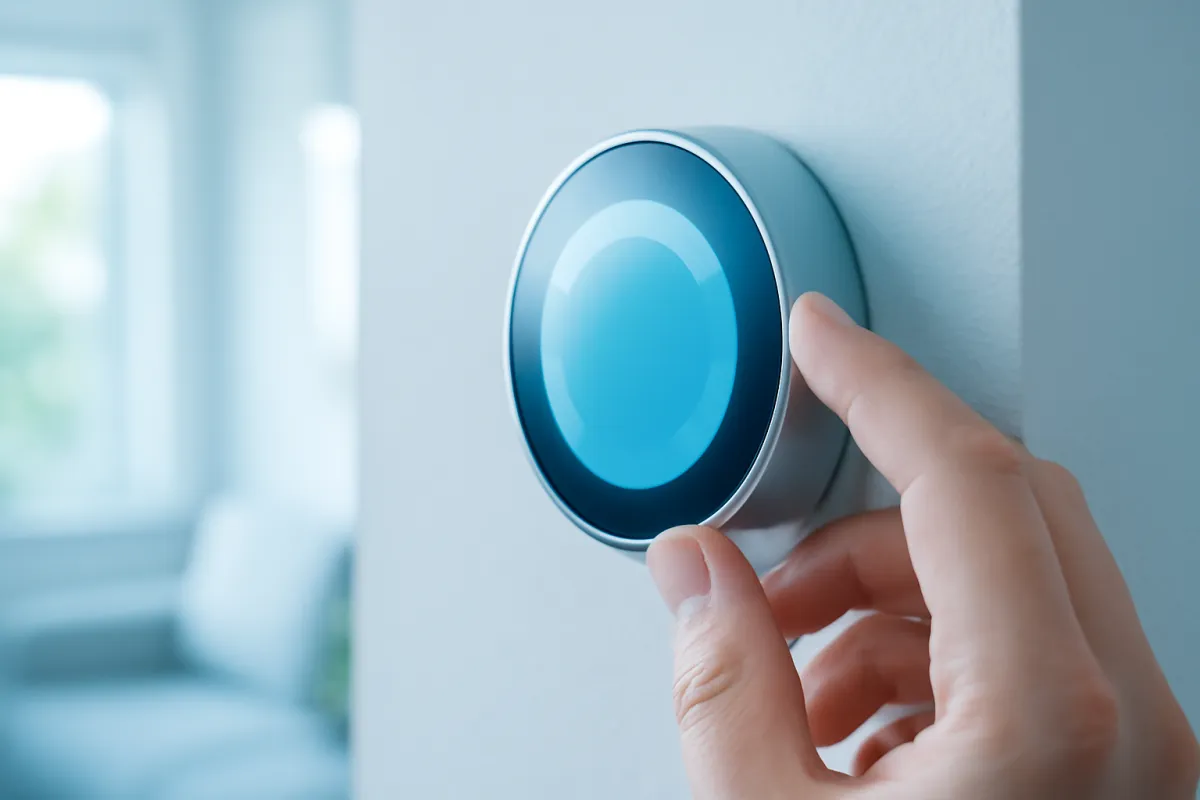
Check the thermostat first. Confirm it has power, which usually means a lit or visible display, confirm it is set to heat rather than cool or off, and confirm the set temperature is actually above the current room temperature. A thermostat accidentally left in cool mode, or with dead batteries on a battery-powered model, produces a furnace that looks completely dead for a reason that has nothing to do with the furnace itself.
Find the furnace’s own power switch. Most furnaces have a dedicated switch that looks exactly like an ordinary household light switch, often mounted on or near the furnace cabinet itself, or sometimes at the top of the basement stairs. It is commonly mistaken for a light switch during other work nearby and left off by accident.
Check the breaker panel. A dedicated circuit feeds the furnace, and a tripped breaker produces the same total silence as a dead switch. Reset it once, firmly, and move on to the next step if it holds.
Total silence: when nothing happens at all
If the thermostat, the furnace switch, and the breaker all check out and the furnace is still completely silent, the fault has moved past the obvious switches and into the furnace’s own control circuit. On most modern furnaces, a control board manages the whole startup sequence, and a failure on that board, or in the low-voltage wiring between the thermostat and the furnace, can produce total silence even with all the switches confirmed on.
This is also the point to check for a second, less visible switch: some furnaces have a door safety switch built into the blower compartment door, which cuts power if the door is not fully seated closed. Confirm the access panel is properly latched, not just resting in place, since a panel that looks closed but is not fully seated can interrupt this switch.
Partial activity: the blower runs but no heat follows
A blower that runs with no heat is a different and more specific symptom. On a gas furnace, this can mean the blower is cycling on a fan-only call while the ignition sequence for actual heat is failing separately, or it can mean the furnace attempted to ignite, failed, and shut the burner down while the blower continues running briefly to clear residual heat, which is normal behavior after a failed start rather than a separate fault.
Listen and look for the ignition attempt itself. Many furnaces have a small viewing window, and you may hear a clicking igniter or see a brief flame that does not sustain. If you can observe an attempt that fails to hold, the fault is most likely at the flame sensor rather than earlier in the sequence, which the next section covers.
Cause one: a clogged filter tripping the limit switch
This is the single most common cause of a furnace that will not start among all the causes in this report, and it is also the cheapest and fastest to fix. The furnace limit switch is a safety device that monitors temperature inside the heat exchanger and shuts the whole unit down if it reads too hot, which happens when airflow through the system is restricted and heat cannot move away from the exchanger fast enough.
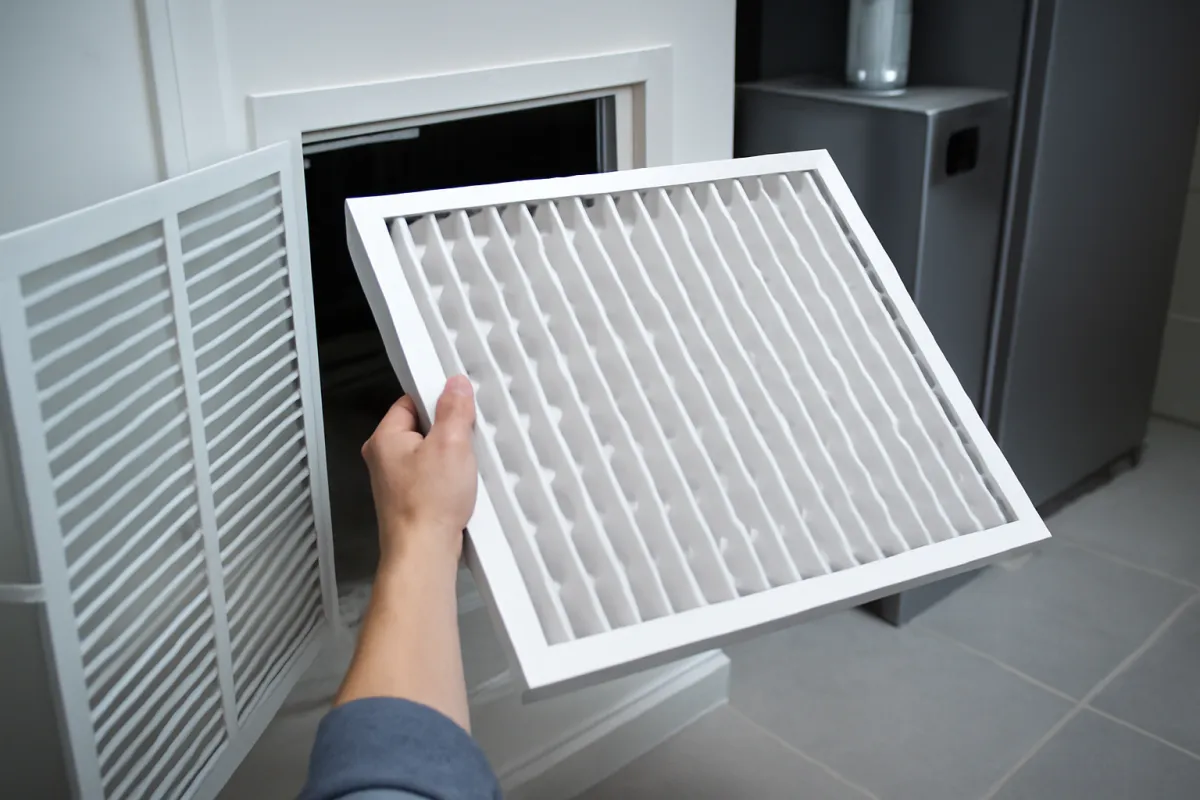
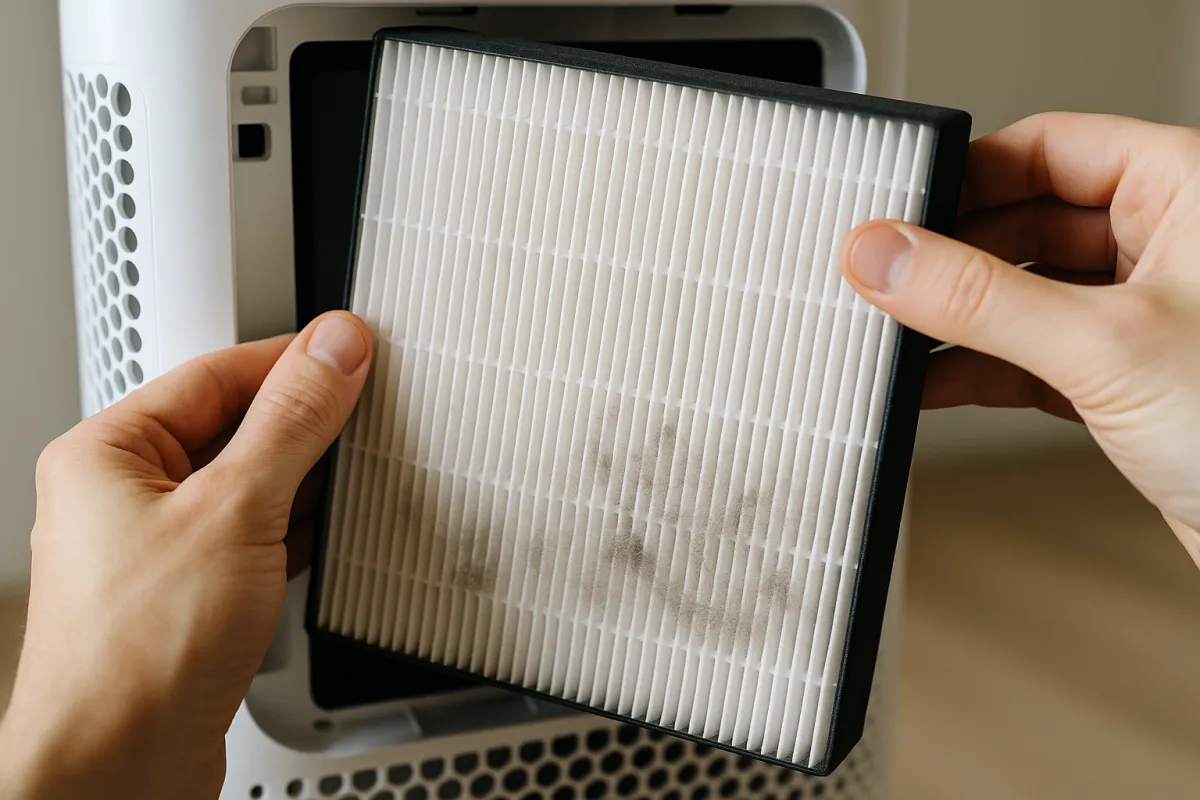
A filter packed with dust and debris is the overwhelming cause of that restriction. The furnace is not malfunctioning in this scenario; it is correctly protecting itself from a condition that, left unaddressed, really could damage the heat exchanger or create a fire risk. Pull the filter and hold it up to a light: if you cannot see light through it clearly, it needs replacing regardless of how long it has been in place. Our furnace filter guide covers the full replacement schedule and how to read a filter’s condition.
Cause two: a dirty or failing flame sensor
If the furnace attempts to ignite, briefly runs, and then shuts itself back off, sometimes repeating this cycle two or three times before giving up entirely, the flame sensor is the leading suspect. This is a thin metal rod positioned near the burner flame, and its job is to confirm to the control board that a flame is actually present once the gas valve opens. If the board does not get that confirmation within a few seconds, it shuts the gas valve again as a safety response, assuming no flame exists even if one briefly did.
The sensor itself does not fail from age so much as from a gradual buildup of carbon on its surface during normal operation, which eventually insulates it enough that it stops reading the flame reliably. Cleaning it with a light abrasive, such as fine sandpaper or steel wool, with the furnace’s power and gas both off, restores a flame sensor to working condition in the large majority of cases, and it is a common do-it-yourself fix for anyone comfortable opening the burner compartment with the unit safely shut down first.
Cause three: the igniter is not lighting the burner at all
If you listen during a start attempt and hear no clicking, ticking, or glowing element at all, meaning the furnace never even attempts to light the burner, the suspect shifts earlier in the sequence to the igniter itself. Older furnaces use a standing pilot light, which can simply blow out or fail to relight; most modern furnaces use either an intermittent spark igniter, which clicks repeatedly trying to produce a spark, or a hot surface igniter, a fragile ceramic element that glows and can crack or burn out over years of use, similar to a light bulb filament.
An igniter that has failed completely produces no attempt at all rather than a failed attempt, which is the distinguishing symptom versus a flame sensor issue. A hot surface igniter in particular is a wear item that most furnaces eventually need replaced at some point in their service life, and it is a routine, moderately priced part for a technician to swap.
Cause four: the condensate line, on high-efficiency furnaces specifically
This cause applies only to high-efficiency condensing furnaces, generally the models with a white plastic exhaust vent rather than a metal flue, and it catches a lot of households off guard because it has nothing to do with gas or ignition at all. These furnaces extract enough heat from combustion gases that water vapor condenses out as part of normal operation, and that condensate, which is mildly acidic, has to drain away through a trap and tubing, often into a floor drain or a small condensate pump.
If that drain line clogs with algae or sediment, freezes in an unconditioned space, or the condensate pump fails, water backs up into a pan with a small float switch, and that switch deliberately prevents the furnace from starting at all, treating a blocked drain as a condition worth stopping for rather than letting water overflow somewhere inside the house. Clearing the line, often with a wet vacuum at the drain termination, or emptying and testing the condensate pump, resolves this quickly and is worth checking before assuming a more complex ignition fault on any high-efficiency model.
What a safety lockout actually means
Many modern furnaces will attempt to start a limited number of times, commonly around three, and then lock out entirely, often signaled by a blinking light visible through a small window on the control board, until the lockout is manually cleared, usually by switching the furnace off at its power switch for about a minute and back on.
A lockout is not itself a separate fault; it is the furnace’s response to one of the earlier causes in this report repeating without resolution. Clearing a lockout without addressing whatever caused the repeated failed starts, most often a flame sensor issue or a clogged filter, usually just produces the same lockout again shortly after. Treat a lockout as a signal to diagnose the underlying cause first, then clear it once, rather than clearing it repeatedly as if that were the fix.
Is it safe to keep resetting a furnace that will not start?
A single reset, after addressing an obvious cause like replacing a clogged filter or resetting one tripped breaker, is reasonable and often all that is needed. Repeatedly resetting a furnace that keeps shutting itself back down is a different situation, because each of those shutdowns is a safety device correctly responding to a real condition, whether that is restricted airflow, a flame sensing failure, or, less commonly, something more serious in the gas or electrical system.
A furnace that will not stay running after one reasonable reset attempt, with the obvious causes checked, has moved past a reset-and-hope situation and needs a technician’s diagnosis. Continuing to force restarts on a furnace that keeps tripping its own safety devices risks turning a simple repair into a more expensive one, or worse, defeating the purpose those devices exist for in the first place.
Repair or replace: the honest math
Once a cause is identified, the decision runs through the same two tests used across every appliance on this site. The first is simply the nature of the fault: a dirty filter, a flame sensor cleaning, or a clogged condensate line are inexpensive fixes regardless of the furnace’s age, because the parts and labor involved are small relative to the whole system. A failed control board, a cracked heat exchanger, or a major electrical fault are a different category, where the repair quote itself becomes meaningful money.
Put your own furnace’s age, a comparable new unit’s price, and your actual repair quote through our cost-per-use calculator for a verdict specific to your system. For that second category, weigh the quote against roughly half the price of a comparable new furnace installed, and factor in age. A furnace is commonly cited as lasting somewhere around 15 to 20 years with reasonable maintenance, so the same repair quote buys far more remaining service on a furnace at year six than on one at year nineteen. Our HVAC system cost guide covers installed replacement pricing by equipment type and size in full, since a precise replacement figure depends heavily on your specific system rather than fitting one illustrative number here.
Fifteen years of one furnace, with one flame sensor repair
Illustrative split of total spend: a $4,500 furnace installed, about $4,500 of gas heating over fifteen years, and one $150 flame sensor service call. Segments sum to 100 percent.
A single sensor cleaning or igniter swap is a rounding error against the lifetime cost of running and owning the furnace. Reserve real worry for the control board and heat exchanger slice of the repair chart below.
Where a no-start furnace call usually comes from
Illustrative share of no-start service calls by cause. Bars scale to the largest slice.
More than two thirds of no-start furnace calls trace to a switch, a filter, or a sensor, each inexpensive to fix. Only the last slice is typically a significant repair bill.
Common mistakes when diagnosing a no-start furnace
A few habits make this diagnosis take longer than it should, and avoiding them saves a cold morning.
Resetting a lockout repeatedly without addressing the cause. Clearing a blinking lockout code and letting the furnace attempt to start again, over and over, without replacing a dirty filter or checking the flame sensor first, usually just reproduces the same lockout within a few minutes each time, and it wastes the window you have before deciding to call a technician.
Assuming total silence means a major failure. The most common causes of complete silence are also the cheapest: a thermostat setting, a bumped switch, or a tripped breaker. Jumping straight to worrying about the control board before checking these is the single most common way people overestimate how serious a no-start call actually is.
Forcing a hot surface igniter test with the power on. Never touch a hot surface igniter directly to check whether it glows while the furnace is powered and attempting to start, since it reaches damaging temperatures quickly and is fragile enough to crack from the oils on a fingertip even when cool. Visual inspection with the furnace off, or a technician’s multimeter test, are the correct ways to assess one.
Skipping the filter because it was replaced recently. A filter that looks new from six feet away can still be wrong for the furnace, too restrictive a rating for the blower’s design, or installed backward against its printed airflow arrow, either of which can trip the same limit switch as an old, dirty filter. Confirm both the condition and the correct orientation before ruling the filter out.
Electric furnaces and heat pumps: does this apply to them too?
This report is written primarily around gas furnaces, since ignition-related causes, the flame sensor, the igniter, and gas-specific safety steps, are the largest and most distinctive category covered here. An electric furnace or a heat pump in heating mode shares some of this report directly and skips the rest entirely.
What carries over fully: the thermostat checks, the furnace’s own power switch, the breaker, a clogged filter tripping a limit switch, and a door safety switch on the blower compartment, since every one of those relates to airflow and basic power rather than combustion. What does not apply at all: the flame sensor, the igniter, and the condensate line discussion, since there is no burner or flame involved in electric resistance heat, and a heat pump’s outdoor unit introduces its own separate set of possible faults, such as a frozen outdoor coil in cold, humid weather, that sit outside the scope of this report. If you have an electric furnace or heat pump and have ruled out power, the thermostat, and the filter, the next step is a technician’s diagnosis of the electrical heating elements or the heat pump’s refrigerant system specifically, rather than anything else covered here.
A worked example: one cold morning, three checks in order
Here is the method compressed into one plausible morning. A household wakes up to a cold house and a thermostat that shows a call for heat but no response from the furnace at all.
The thermostat is checked first: it has power, it is set to heat, and the set temperature is well above the current reading. Confirmed fine. The furnace’s own power switch, mounted beside the unit in the utility closet, is found flipped off, apparently bumped during a shelf installation nearby the previous weekend. Flipping it back on, the blower starts immediately and the furnace runs through a normal ignition sequence, with heat flowing within a couple of minutes.
Total cost: zero dollars, about five minutes, for a symptom that looked at first like a dead furnace on the coldest morning of the year.
A second worked example: the flame sensor fix
A different household has a furnace that attempts to start three separate times over about two minutes, each time running the blower and briefly attempting ignition before shutting back down, and finally locking out with a blinking light visible through the small window on the furnace’s control board.
The filter is checked first, out of habit, and found clean and recently replaced, ruling out the most common cause. Watching through the viewing window during a manually cleared restart attempt, a faint flame is visible for a second or two each time before it cuts out, which points specifically at the flame sensor rather than the igniter, since the igniter is clearly producing a flame, just not one the control board is willing to confirm and sustain.
With the furnace’s power switch off and the gas control knob turned to off, the flame sensor, a thin rod positioned just behind the burner, is located and removed with a wrench. A light coating of gray carbon buildup is visible along its surface, cleaned off with a fine abrasive pad until the metal underneath is bright again. Reinstalled, with the gas and power restored, the furnace starts on the next call for heat and holds a steady flame without any further lockouts.
Total cost: zero dollars, about twenty minutes, for a symptom that looked like a major ignition failure but traced to a part that needed nothing more than cleaning.
Pilot light furnaces: an older design with its own short list
Furnaces installed more than roughly fifteen to twenty years ago, and some furnaces still sold today in certain configurations, use a standing pilot light rather than an electronic igniter, a small continuous flame that lights the main burner directly when the thermostat calls for heat. If your furnace has one, visible as a small viewing window with a permanently lit flame when the system is otherwise idle, a no-start problem often has a different and even simpler first suspect: the pilot light itself may have gone out.
Most pilot-light furnaces have a clearly labeled relighting procedure printed on a plate inside the furnace’s access panel, involving turning the gas control knob to pilot, holding a reset button while lighting the pilot with a long lighter or match, and holding it briefly before releasing to confirm the flame stays lit. If the pilot will not stay lit even after a correct relighting attempt, the likely cause is a worn thermocouple, a small safety sensor that confirms the pilot flame is present and shuts gas flow if it is not, which is an inexpensive and common part for a technician to replace. Never attempt to bypass or hold a thermocouple’s safety function manually to keep gas flowing without a confirmed flame.
What a technician actually checks during a diagnostic visit
Knowing roughly what a paid diagnostic visit covers helps you judge whether a quote is thorough or worth a second opinion. A proper furnace no-start diagnosis typically includes confirming voltage is reaching the furnace and the thermostat’s low-voltage signal is being received correctly, inspecting and testing the flame sensor’s signal strength with a multimeter rather than just a visual check, inspecting the igniter for visible cracks or testing its resistance, checking the condensate system on a high-efficiency unit including the float switch, and reviewing the control board’s fault history, which most modern furnaces log internally and can display through a sequence of blinks.
A technician who diagnoses a no-start furnace without checking most of this list, and simply replaces a part on a guess, is more likely to have you calling again for a different fault shortly after. It is reasonable to ask what was checked as part of a diagnostic fee before agreeing to a recommended repair.
Which fixes are genuinely DIY
Genuinely DIY, no special skill. Checking and resetting the thermostat. Checking the furnace’s power switch and the breaker. Replacing the air filter. Confirming the access panel is fully latched.
DIY with some comfort around appliances. Cleaning a flame sensor, with power and gas confirmed off first. Clearing a condensate line clog at an accessible drain termination. These are common homeowner fixes that an HVAC technician can also do quickly if you prefer not to.
Not DIY for most households. Anything involving the gas valve itself, the igniter’s electrical connections, the control board, or the heat exchanger. These involve gas safety, higher voltage components, or parts that are not designed to be serviced without the right tools and training.
Carbon monoxide: the one risk worth knowing about
A furnace that will not start at all is not producing carbon monoxide, since no combustion is happening, but it is worth understanding this risk while you are already working around a gas appliance. Carbon monoxide is a byproduct of incomplete combustion, produced when a burner is not getting the air or venting it needs to burn cleanly, and it is colorless and odorless, which is exactly why a working carbon monoxide detector near sleeping areas and near the furnace itself matters regardless of whether today’s problem is a no-start call.
If your furnace does eventually start after you address one of the causes in this report, but you notice a persistent odd smell distinct from the brief dusty smell of a furnace’s first run of the season, a yellow or flickering burner flame rather than a steady blue one visible through any viewing window, or soot staining around the furnace’s burner compartment, treat those as reasons to shut the furnace down again and call a technician before continuing to run it, rather than reasons to worry about the no-start symptom specifically. This is a separate, rarer issue from everything else in this report, but it is the one that genuinely warrants erring toward caution rather than troubleshooting further yourself.
When to call an HVAC technician
Call a technician when a furnace will not stay running after one reasonable reset with obvious causes already checked, when you cannot visually confirm whether the igniter is attempting to light at all, when a lockout keeps recurring after the filter has been replaced and the flame sensor cleaned, or when you smell gas at any point, in which case treat it as an emergency rather than a troubleshooting step: leave the area, shut off the gas supply at the main if you can do so safely, and call your gas utility or emergency services from outside.
Expect an illustrative diagnostic visit in the range of $100 to $200 before parts, and ask whether that fee is credited toward the repair if you move forward with the work.
Sounds during a failed start attempt, and what they tell you
Listening carefully during a failed start attempt adds useful diagnostic detail on top of everything already covered. A single loud bang or boom right at ignition, rather than a smooth light-off, suggests gas has been accumulating briefly before ignition catches, often pointing at a dirty burner or an igniter positioned slightly wrong, and is worth having a technician look at even if the furnace does eventually start, since repeated delayed ignition stresses the heat exchanger over time.
A repeating clicking sound with no flame ever appearing points at an igniter that is sparking, on the intermittent spark design, but not successfully lighting the gas, which can mean a closed gas valve somewhere in the line, a gas supply issue, or an igniter positioned too far from the burner to reliably catch the flame. A single dull thud or whoosh followed by the blower kicking on normally is typically just the sound of standard ignition and nothing to be concerned about.
A furnace that hums audibly from the blower motor itself, distinct from any ignition sound, but the blower does not actually spin, points at a seized or failing blower motor rather than anything covered earlier in this report, a separate repair that a technician handles directly. And a rhythmic rattling or squealing that starts only once the blower spins up, rather than during ignition itself, usually points at the blower’s bearings or belt on older designs rather than at any of the ignition causes above, worth mentioning to a technician separately if it persists once the furnace is otherwise starting and running normally.
Preventing the next no-start call
A handful of habits prevent most of what this report describes. Replace the filter on the schedule covered in our furnace filter guide, since a clogged filter is this report’s single most common cause by a wide margin. Have a technician inspect and clean the flame sensor and the burner assembly as part of an annual furnace tune-up, which catches the gradual buildup before it causes a failed start. On a high-efficiency model, periodically check that the condensate line is draining freely, especially heading into the heating season. And fold furnace checks into the same seasonal rhythm as the rest of the home’s appliances, covered in our maintenance plan.
The bottom line
Why is my furnace not turning on has a much more approachable answer than a cold house suggests, and the method above works whether the furnace is six months old or sixteen years old. Total silence points at power: the furnace’s own switch, the breaker, and the thermostat settings, in that order. A furnace that tries and fails points at airflow or ignition: a clogged filter tripping the limit switch, a flame sensor needing a clean, or an igniter that has worn out. On a high-efficiency model specifically, check the condensate line before assuming anything more complex.
Reset a tripped breaker or a lockout once after addressing an obvious cause, but do not keep forcing restarts on a furnace that keeps shutting itself back down, since that is a safety device doing its job. Once the furnace is running again, a steady blue flame and no unusual smell is the sign everything is working as it should. From there the math is familiar: a filter, a sensor cleaning, or an igniter is cheap relative to the system, while a control board or heat exchanger repair is worth weighing against roughly half the price of a comparable new furnace, detailed in full in our HVAC system cost guide. Run your own numbers through our cost-per-use calculator before deciding either way.
These notes are general information about appliance faults, not professional HVAC or gas-safety advice. Costs and percentages here are illustrative planning figures rather than quotes or measured statistics, and your system, your region, and local labor rates will move all of them. Treat any gas smell as an emergency rather than a troubleshooting step, keep hands and tools clear of the gas valve and burner assembly unless you are trained to work on them, and hand anything involving gas lines, the control board, or the heat exchanger to a qualified HVAC technician. Where a manufacturer’s manual contradicts a general principle stated here, follow the manual.
Frequently asked questions
Why does my furnace do nothing at all, not even a blower sound?
Start with power, not gas or ignition, because total silence usually means electricity is not reaching the furnace. Check the furnace's own power switch, which looks like a household light switch and is often mounted on or near the unit itself, sometimes mistaken for a hallway light switch and left off after other work nearby. Check the breaker panel for a tripped circuit. And check the thermostat: confirm it has power, is set to heat, and is set above the current room temperature, since a thermostat quietly left in cool mode or with dead batteries produces exactly this symptom.
Why does my furnace's blower run but no heat comes out?
This points away from power and toward ignition. On a gas furnace, the blower can run on a fan-only setting or as part of a failed start sequence while the burner itself never lights, which means the thermostat and basic electronics are working but something downstream, the igniter, the flame sensor, or the gas valve, is not completing the job. Check whether the furnace is attempting to ignite at all by listening for a clicking igniter or watching for a brief flame through any viewing window, since that tells you whether the fault is early in the sequence or at the flame sensor stage.
What is a furnace limit switch and why does it stop the furnace from starting?
The limit switch is a safety device that shuts the furnace down if the air inside the heat exchanger gets too hot, which typically happens when airflow is restricted and heat cannot escape fast enough. A clogged furnace filter is the most common cause, since a filter packed with dust chokes the air the blower needs to move through the system. The furnace reads this as an overheating risk and shuts itself off before anything is damaged. Replacing a dirty filter resolves the large majority of limit switch shutdowns, and our filter guide covers how often to change one and how to tell when it needs it.
What does it mean when my furnace tries to start but then shuts off?
A furnace that attempts to start, runs briefly, and then shuts down again, sometimes repeating this cycle, usually points at the flame sensor, a thin metal rod near the burner that confirms a flame is actually present. If the sensor is coated with a thin layer of carbon buildup, which happens gradually over normal operation, it can stop reliably detecting the flame even though the burner is lighting correctly, and the control board shuts the gas valve as a safety response, assuming no flame is present. Cleaning the flame sensor with a light abrasive, with power and gas off, is a common DIY fix that an HVAC technician can also do quickly.
Why does my high-efficiency furnace specifically refuse to start?
High-efficiency condensing furnaces add a step that older furnaces do not have: they produce condensate, acidic water that forms as combustion gases cool, and that condensate has to drain away through a trap and tubing to a drain or a pump. If that line is clogged, frozen, or the small float switch in the condensate pan trips because water is not draining, the furnace will not start at all, treating a blocked drain as a safety issue. This is specific to high-efficiency models and is worth checking before assuming a more serious ignition fault, since condensate line clogs are common and inexpensive to clear.
Is it safe to keep resetting a furnace that will not start?
Resetting a breaker once or pressing a reset button once, after confirming an obvious cause like a clogged filter has been addressed, is reasonable. Repeatedly resetting a furnace that keeps shutting itself down, especially a gas furnace, is not, because each shutdown is a safety device doing its job in response to a real condition, whether that is restricted airflow, a flame sensing failure, or something more serious. A furnace that will not stay running after one reasonable reset attempt, with an obvious cause ruled out, needs a technician's diagnosis rather than repeated resets.
How much does it cost to repair a furnace that will not turn on?
There is no single number, and anything quoted without seeing your system is a guess. The useful shape is this: a diagnostic visit from an HVAC technician is commonly cited in illustrative ranges around $100 to $200, a flame sensor cleaning or an igniter replacement typically falls in the low hundreds all in, and a control board replacement is one of the more expensive single-part repairs on a furnace. Compare any repair quote against roughly half the price of a comparable new furnace installed, which our HVAC system cost guide breaks down by equipment type and size.
How old does a furnace have to be before a no-start issue means replacement?
A furnace is commonly cited as lasting somewhere around 15 to 20 years with reasonable maintenance, and age matters most when a repair quote is genuinely significant, such as a control board or heat exchanger issue, rather than for a cheap part like a flame sensor or a filter. On a furnace well past that typical window, a sizable repair quote is worth weighing against replacement using the 50 percent rule, since an aging furnace nearing the end of its life has less remaining service to protect against the cost of the repair.