What's on this page
- Before you start: what to gather
- Step 1: Decide whether you actually need a humidifier
- Step 2: Pick the humidifier type
- Step 3: Size it to your room
- Step 4: Set your target humidity to 30 to 50 percent
- Step 5: Choose the features that matter
- Step 6: Plan cleaning and mold-safe operation
- Step 7: Weigh warm mist versus cool mist safety
- A worked example: humidifying a 300 sq ft bedroom
- Common mistakes when choosing a humidifier
- Troubleshooting: white dust, condensation, and stuffy air
- The humidifier buyer’s checklist
- Evaporative, ultrasonic, warm mist, or whole-house: matching the type
- Do humidifier brands matter?
- The two decisions that carry the choice
- The bottom line
Short answer: Choose a humidifier by first confirming with a cheap hygrometer that the air is genuinely dry, then picking the type: evaporative is forgiving and self-limiting, ultrasonic is silent but can throw mineral dust, and warm mist feels soothing but holds hot water. Size by room volume and how far you sit below target, matching output in gallons per day, aim for 30 to 50 percent humidity, and choose a unit you will actually keep clean.
Dry indoor air is one of those problems that hides in plain sight. It shows up as static shocks off the doorknob, a scratchy throat that eases the moment you step outside, cracked lips, a nosebleed in the depth of winter, or a piano and hardwood floor that quietly gap and crack over a cold season. A humidifier is the appliance that fixes it, by putting moisture back into air that a furnace has wrung dry, but the shelves are full of near-identical units that add the same water in different ways and at very different levels of hassle, so the wrong pick is easy and quietly disappointing.
These notes turn choosing the best humidifier into a repeatable seven-step method you can run on any unit before you spend. You will confirm the air is genuinely dry, pick the type that suits your room, size the output to the space, set a safe humidity target, choose the few features that matter, plan the cleaning, and weigh warm mist against cool mist, in that order, so the decision rests on your room and your household rather than the packaging. A humidifier is the mirror image of a dehumidifier: it adds moisture rather than removing it, so if your problem is a muggy basement, our walkthrough on how to reduce humidity in your home and our steps for choosing a dehumidifier are the tools you want instead. For where a humidifier sits in the wider picture, our note on improving indoor air quality sets the context, and you can sanity-check any unit’s value with the cost-per-use calculator.
Key takeaways
- Confirm the air is genuinely dry first: a humidifier adds moisture, so it is the wrong tool if a room is already at or above a comfortable humidity.
- Pick the type before the model: evaporative is forgiving and self-limiting, ultrasonic is silent but can throw mineral dust, warm mist feels soothing but holds hot water.
- Size by two inputs, room volume and how far you are below target, then match the output in gallons per day to the space rather than guessing.
- Hold humidity in the 30 to 50 percent band: below it the air still feels dry, above it you invite condensation and mold, so more is not better.
- The cleaning routine is the hidden decision: a warm wet tank breeds bacteria and mold, so choose a unit you will actually keep clean.
Before you start: what to gather
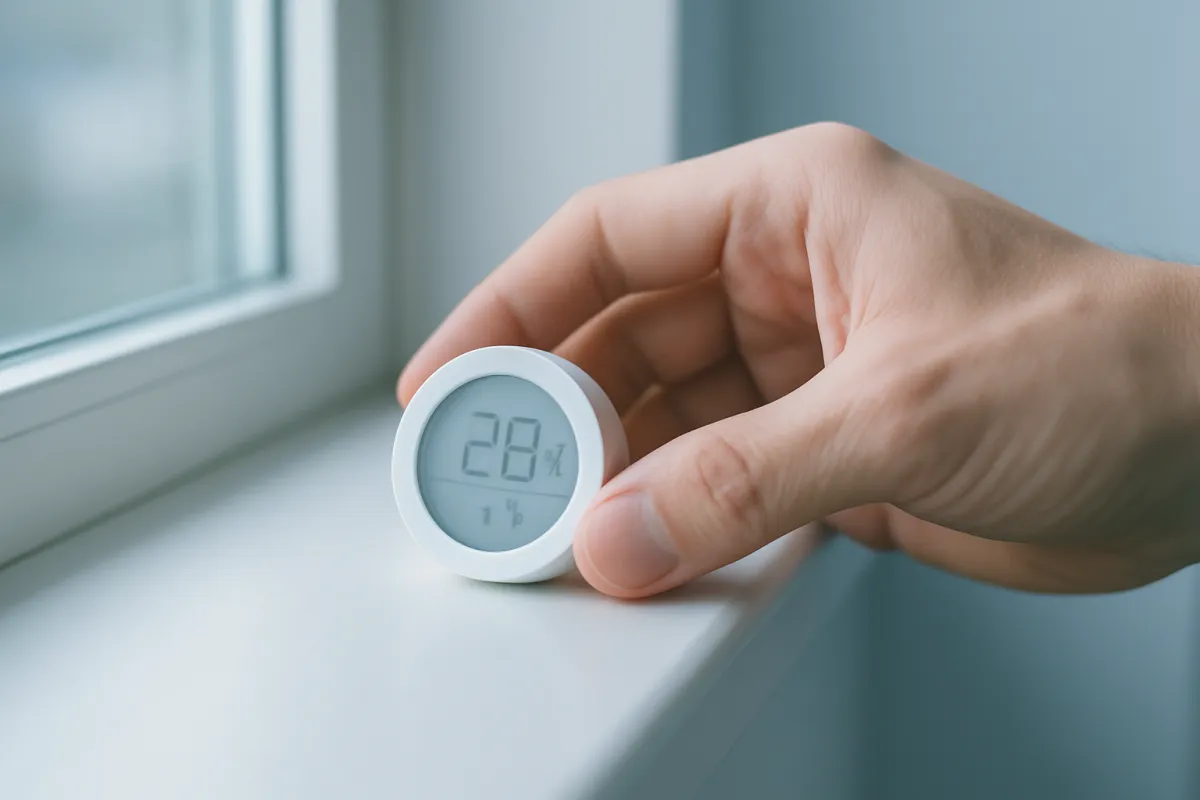
This walkthrough takes about half an hour and needs no tools beyond a tape measure and, ideally, a cheap hygrometer, the little meter that reads a room’s relative humidity. The difficulty is low. The discipline is in doing the steps in order rather than jumping straight to reviews and buying the unit with the nicest photos or the biggest tank number on the box.
Gather three things before you shop:
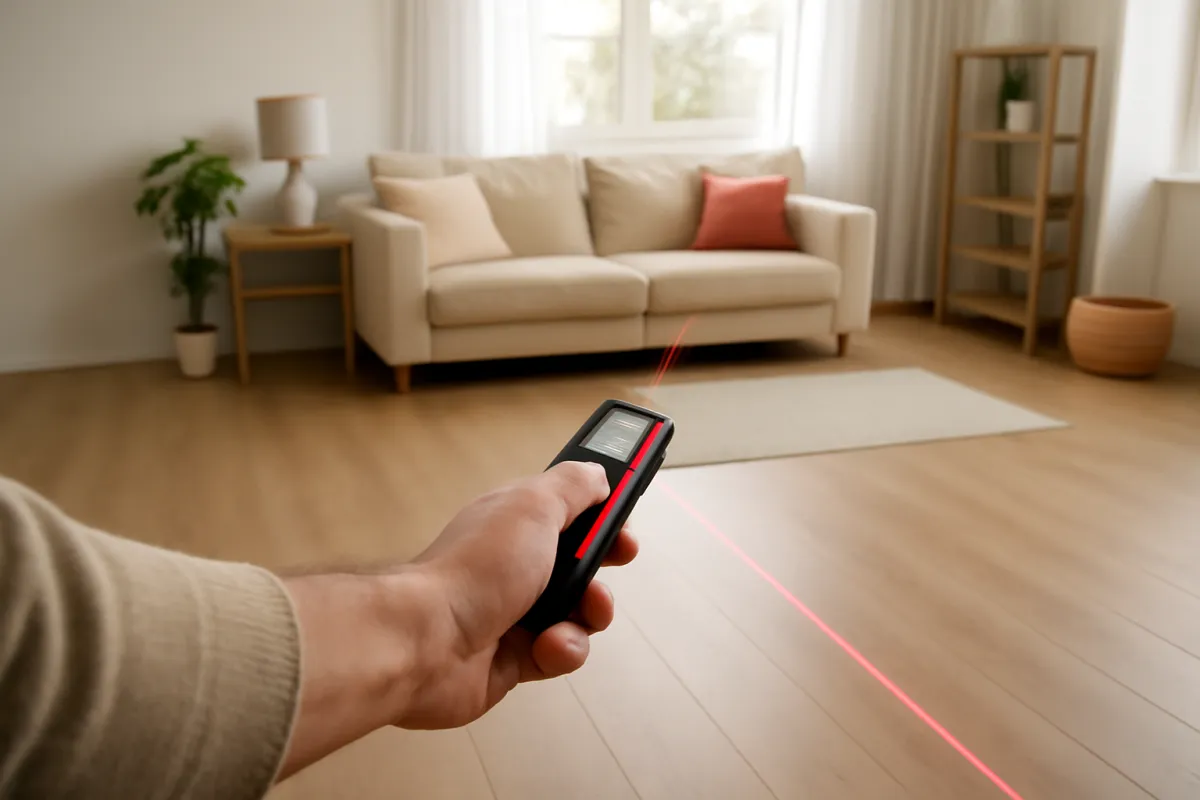
- The room, measured and named. The length and width in feet of the room you actually want to humidify, plus the ceiling height and a plain description of what it is: a bedroom, a nursery, a whole open-plan floor, a dry office. Room volume, which is the floor area times the ceiling height, sets how much output you need, and the type of room shapes the safety and noise trade-offs downstream.
- An honest read of the current humidity. A hygrometer reading is worth far more than a guess here. Winter indoor air in a heated home commonly drifts into the twenties or lower in percent relative humidity, well under the comfortable band, and knowing the actual number tells you how big a gap you are trying to close, which is half the sizing math.
- Your household and your water. Whether small children or pets share the space, which steers the warm-versus-cool-mist safety call, and whether your tap water is hard, which decides whether an ultrasonic unit will dust your furniture with minerals. Both of these change the type you should buy before you look at a single model.
A quick word on posture: every output figure, wattage, and dollar amount in these notes is an illustrative planning number drawn from typical ranges, not a measured result for any specific model, and the goal is to teach you the method rather than point you at a machine. With the room measured and the current humidity read, the seven steps below take you from a shelf of look-alike units to one you can defend on numbers. Keep the cost-per-use calculator handy for the running-cost sanity check at the end.
Step 1: Decide whether you actually need a humidifier
Start before the specs, with the question the box cannot answer for you: is your air genuinely dry, and is a humidifier the right fix? The honest limit of the appliance is that it adds water to the air, so it only helps when the air is short of it. A humidifier is the right answer for the classic dry-air symptoms of a heated home in a cold, dry season: static shocks, chapped skin and lips, a dry or bleeding nose, a scratchy throat that clears outdoors, worsened snoring, and wood furniture, floors, or instruments that gap and crack. It is the wrong answer if your rooms already feel muggy, if windows sweat, or if you smell must, because adding moisture to air that has plenty is how you create condensation and mold.
This is where the hygrometer earns its keep. Put a reading on the room rather than trusting the feeling in your throat. A number down in the twenties or low thirties confirms the air is dry enough to warrant a humidifier and tells you how far you have to climb to reach the comfortable band. A number already in the forties or above says the dryness is somewhere other than humidity, perhaps heating that dries your sinuses locally, and a humidifier will not help and may hurt. And if the complaint behind the purchase is dust, pollen, or pet dander rather than dry air, the fix is filtration rather than moisture, a fork our evidence review are air purifiers worth it walks through in full.
Watch out: the mirror-image mistake to buying a dehumidifier for a leak is buying a humidifier for a room that is not actually dry. If your reading sits at or above the healthy band, stop here; you do not have a humidity problem to solve, and running a humidifier anyway walks you straight into the condensation and mold territory covered in our note on reducing humidity in your home. Confirm the dryness with a number before you spend.
Step 2: Pick the humidifier type
With the dryness confirmed, choose how the unit will add its moisture, because the four common types behave very differently to own even though they all end at the same wetter air. Pick the type that suits your room, your noise tolerance, and your water before you compare any two models, because the type decides most of the ownership experience.
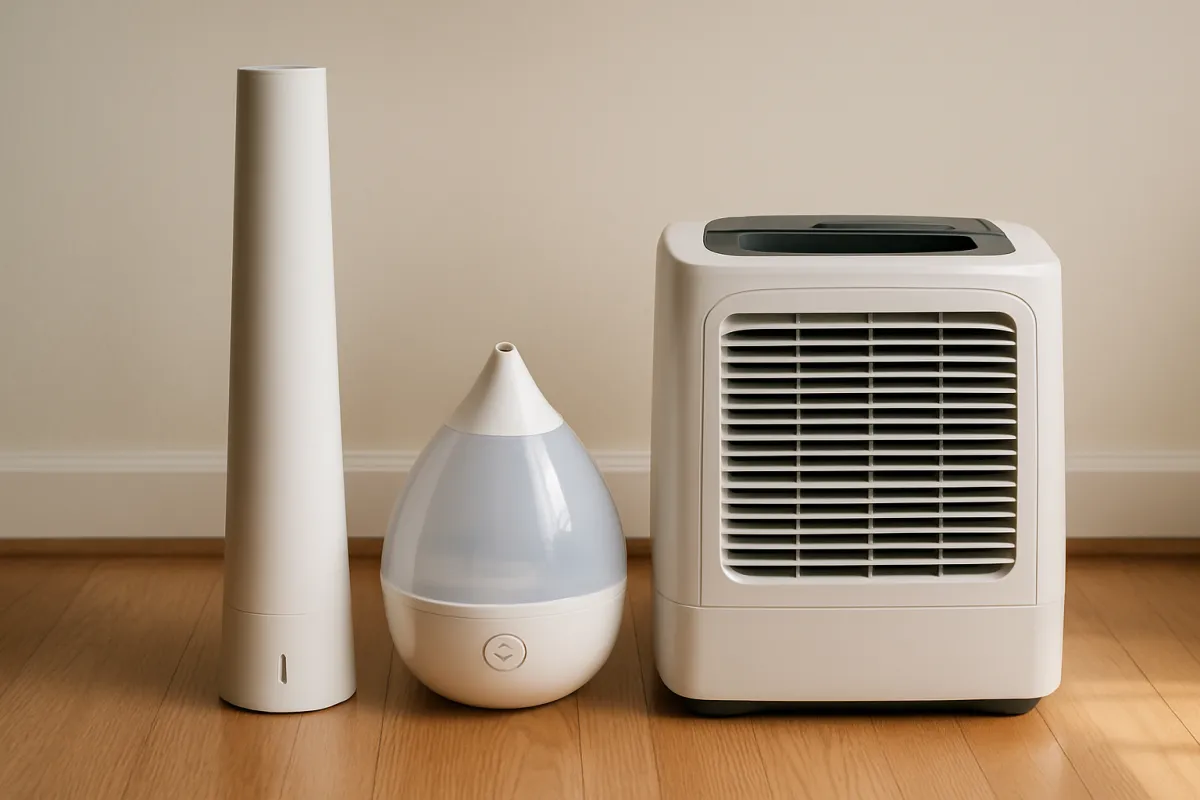
An evaporative humidifier blows room air through a wet wick or filter, so water evaporates the way a wet towel dries. Its great virtue is that it is self-limiting: as the air approaches saturation, evaporation naturally slows, so it is hard to over-humidify a room with one. The trade is a wick you replace periodically and a fan you can hear. An ultrasonic humidifier vibrates a plate at high frequency to launch a fine cool mist directly into the air. It is near silent and has no wick to buy, which many people love, but it does not self-limit, so it leans on a good humidistat, and if you feed it hard tap water it can scatter white mineral dust across nearby surfaces.
A warm mist humidifier boils water and releases a warm vapor. Some find the warmth soothing, it can feel pleasant in winter, and the boiling step kills some waterborne microbes, but it holds hot water and draws far more electricity than the cool types. A whole-house humidifier is a different animal: a unit that ties into your furnace and ductwork to condition the whole home’s air at once, which is the right scope for a large, uniformly dry house but which costs more and usually wants professional installation.
Watch out: do not choose the type on the showroom feel alone. The silent ultrasonic unit is a delight in the store and a chore if your water is hard and it dusts your dresser weekly. The warm mist unit is cozy until you place it in a toddler’s room. Match the type to your water and your household first, then shortlist models within it.
Step 3: Size it to your room
A humidifier that is too small for its room runs flat out and never lifts the humidity to target, while one wildly too large overshoots and fogs the windows, so sizing to the space is the step that decides whether the unit can do its job. Capacity is described two ways on the box, and you want to read both: the output, in gallons of water per day the unit can put into the air, and the coverage, in square feet the maker rates it for. Treat the square-foot rating as a rough guide and the gallon-per-day output as the honest number, because coverage claims are optimistic and say nothing about your ceiling height or how dry you are starting.
Turn your inputs into an output target by reading room volume and your humidity gap together. Volume is floor area times ceiling height, so a 300 square foot bedroom with an eight-foot ceiling is 2,400 cubic feet, and a bigger gap between your current reading and your target pushes the needed output up. As an illustrative guide, a small 150 square foot bedroom often points to a tabletop unit under a gallon a day, a standard 300 square foot bedroom to roughly a gallon and a bit, a 600 square foot living area toward a couple of gallons, and a 1,000 square foot open space into console territory of several gallons a day. The chart below holds the humidity gap fixed and shows how room size alone moves the output you should shop for.
Daily output to shop for, by room size (same humidity gap)
Illustrative gallons-per-day output for a fixed 20-point humidity gap as the room grows. Bars scale with the output figure.
Same humidity gap, four room sizes: the output target climbs with the space. Feed your own room size, ceiling, and humidity gap into the companion tool for the figure that fits your room.
Watch out: size to the room you actually use the unit in, not the whole floor. A single tabletop unit cannot humidify an open-plan main floor, and buying one for that job leaves you disappointed and the air still dry. If the room is large or open, step up to a console unit, run two smaller units, or consider a whole-house system, rather than asking a small tank to do a big room’s work.
Step 4: Set your target humidity to 30 to 50 percent
Sizing tells you how much moisture the unit can add; this step tells you when to stop, and it matters as much as the machine you buy. The comfortable and healthy band for indoor air is a relative humidity of 30 to 50 percent, and a sensible default for most homes is somewhere around 40 to 45 percent. That range is a genuine sweet spot: high enough to quiet the dry-air symptoms of static, chapped skin, and cracking wood, and low enough to stay clear of the condensation, dust mites, and mold that thrive when air gets damp.
The temptation is to think that if some humidity is good, more must be better, and that is the trap. Push a room past 50 percent, especially in cold weather when window glass is chilled, and the moisture condenses on the coldest surfaces, so you trade dry air for wet sills, peeling paint, and the black spotting of early mold. In winter you may even need to sit toward the lower end, around 30 to 35 percent, because outdoor cold makes windows cold enough to sweat at humidity levels that would be perfectly comfortable in milder weather. The goal is to hold the middle, not to chase the top of the band.

Watch out: a humidifier without a way to hold a target will happily blow straight past it, which is why the humidistat in the next step is not a luxury. If you see fog on the windows, streaming glass, or damp patches, your target is set too high or the unit is oversized for the room, so dial the setting down toward the middle of the band and let the air settle rather than running the machine harder.
Step 5: Choose the features that matter
Strip away the marketing and only a short list of features changes how a humidifier actually lives in your home. Buy those first and treat the rest as tie-breakers.
A built-in humidistat is the one that is close to non-negotiable, especially on an ultrasonic unit that cannot self-limit. This is the control that reads the room’s humidity and switches the unit off once the air reaches your target, then back on as it drifts down, so the machine holds the 30 to 50 percent band instead of blowing past it and fogging your windows. A humidifier with only a plain on-off knob asks you to be the humidistat, checking a hygrometer and switching it yourself, which nobody does reliably. On an evaporative unit the self-limiting behavior softens the need, but a humidistat still saves water and runtime.
Tank size and refill design decide how often the appliance interrupts your day. A bigger tank runs longer between fills, which matters most overnight in a bedroom, where you want the unit to last the night rather than run dry at 3 a.m. But a big tank is only a virtue if it is easy to carry to the sink, fill, and slot back without a spill, and a wide-mouth opening you can get a hand and a brush into is worth more than a few extra ounces of capacity, because you have to clean it. A replaceable wick or filter, on evaporative and some other units, is a small recurring cost and chore, so check that the wick is cheap and available before you buy, since an orphaned wick strands the whole machine.
Watch out: do not pay a premium for features that do not change the result. App control, color-changing night lights, aromatherapy trays, and a dozen mist settings are pleasant, but none of them decides whether the unit holds a safe humidity target and stays clean. Buy the humidistat, the right output, and a tank you can scrub first; weigh the smart features last and pay for them only if the price is small.
Step 6: Plan cleaning and mold-safe operation
This is the step buyers skip and regret, because a humidifier is unlike almost any other appliance in one respect: it holds standing water and then sprays that water, or its evaporate, into the air you breathe. A neglected tank grows a film of bacteria and mold in its warm, wet dark, and a humidifier that is not kept clean does not just underperform, it actively worsens your air, which is the opposite of why you bought it. So plan the cleaning routine before you buy, and let it steer which unit you choose.
The routine itself is light but not optional. Empty and rinse the tank and refill with fresh water daily rather than topping up stale water, because standing water is what breeds the film. Every few days to once a week, give the unit a fuller clean: descale the mineral scale that builds up, especially with hard water, and disinfect the tank and any surfaces the water touches, following the maker’s method. Replace evaporative wicks on schedule, because a tired wick harbors growth and chokes output, and when the unit is not in use, empty it and let it dry rather than leaving a full tank to fester.
Watch out: the water you use is part of mold-safe operation, not just a dust question. Distilled or demineralized water starves the scale that both dusts your furniture on an ultrasonic unit and gives mold a foothold, and it is the single easiest upgrade to clean operation. Choose a unit whose tank opens wide enough for your hand and a brush, because a tank you cannot reach into is a tank you will not clean, and an uncleaned humidifier belongs in the same conversation as the air-quality problems in our note on improving indoor air quality, not the solutions.
Step 7: Weigh warm mist versus cool mist safety
The last step is the safety call that should override a preference where the two collide. Warm mist and cool mist both raise humidity effectively, so the decision is not about performance, it is about who is in the room and what the unit is holding.
A cool mist unit, whether evaporative or ultrasonic, uses no heater. That makes it the safer choice around children and pets, because there is no hot water to spill and no steam to burn a curious hand, and it is cheaper to run because it is not boiling anything. This is why a cool mist unit is the common recommendation for a nursery or a child’s bedroom, and it is the sensible default for most rooms. The trade is that cool mist does nothing to warm a room and, on an ultrasonic unit, can spread minerals if your water is hard.
A warm mist unit boils water to release a warm vapor. Some people find the warmth soothing, it can take a slight chill off a room, and the boiling step reduces some of the microbes in the water before it reaches the air. But it holds and heats water to boiling, which is a genuine burn risk if a child or pet can reach or tip it, and it draws far more electricity than a cool unit for the same humidity added. Choose warm mist deliberately, for a room without small children, and place it well out of reach on a stable surface where it cannot be knocked over.
Watch out: never let the soothing feel of warm mist override the safety math in a home with toddlers or pets. A cool mist unit removes the burn risk entirely, and where a warm unit is genuinely wanted, the placement, high, stable, and out of reach, is not optional. When in doubt in a child’s room, choose cool mist.
A worked example: humidifying a 300 sq ft bedroom
Run the whole method on one realistic case. You have a 300 square foot bedroom with an eight-foot ceiling, so 2,400 cubic feet, in a heated home in winter. A hygrometer reads about 25 percent, you keep waking with a dry throat, and there is no small child in the room. What do you buy, and how does it run?
Step 1, need. The 25 percent reading and the dry-throat symptom confirm genuinely dry air, well below the healthy band, so a humidifier is the right tool and the gap to close is real.
Step 2, type. Your tap water is moderately hard and you value a quiet bedroom, so you weigh an evaporative unit, which will not dust the room but has a soft fan hum, against an ultrasonic unit, which is silent but would want distilled water to avoid white dust. You lean evaporative for its forgiving, self-limiting behavior, and note that either works if you commit to distilled water on the ultrasonic.
Step 3, size. Reading 2,400 cubic feet against a roughly 20-point gap to a 45 percent target lands near 1.2 gallons a day on the illustrative math, so you shop for a single-room unit rated around a gallon and a bit a day with headroom, not a tabletop personal unit that would run dry chasing the room.
Step 4, target. You set the humidistat to hold about 45 percent, and note that on the coldest nights you may drop it toward 35 percent if the window starts to sweat.
Step 5, features. You insist on a humidistat, choose a tank large enough to last the night with a wide mouth you can clean, and confirm the replacement wick is cheap and stocked.
Step 6, cleaning. You commit to a daily rinse and refill and a weekly descale and disinfect, and you plan to run distilled water to keep scale and dust down.
Step 7, mist type. With no small child in the room, either mist type is safe, and you pick cool mist for the lower running cost and no burn risk. The whole decision took half an hour and rests on your room and your habits, not the box art. The electricity is minor, a cool unit’s fan and plate draw little, so you spend your attention on the water and the cleaning rather than the running cost, though you can confirm any pricey unit’s value in the cost-per-use calculator.
Where a humidifier parts ways with an appliance like a space heater is the shape of its cost. The electricity is a rounding error on a cool mist unit, but the replaceable wicks or filters and the distilled water are a small recurring spend, so the money over the first year splits differently than you might expect. The chart below shows an illustrative first-year split for a mid-size evaporative unit, so the shape of the spend is visible before you commit.
A humidifier's first-year cost (unit vs consumables vs power)
Illustrative split for a mid-size evaporative unit: about $60 to buy, $25 in wicks and water, $15 in power. Shares sum to 100.
The unit dominates year one, but the wicks and water recur every season while an ultrasonic unit trades the wick for stricter water and cleaning. Figures illustrative.
Common mistakes when choosing a humidifier
Most regretted purchases in this category trace to a short list of avoidable errors. Recognizing them is half the method.
- Adding moisture to air that is not dry. Buying a humidifier on a hunch without a hygrometer reading, then pushing an already-comfortable room into condensation and mold. Confirm the dryness with a number first.
- Overshooting the humidity band. Assuming more moisture is better and running past 50 percent, which fogs windows and grows mold. Hold the 30 to 50 percent middle, and drop lower in cold weather.
- Undersizing for the room. Buying a small tabletop unit for a large or open space, so it runs constantly and never lifts the humidity. Size by room volume and gap, and step up to a console or two units for big rooms.
- Ignoring the water. Running hard tap water through an ultrasonic unit and then blaming the machine for white dust on the furniture. Use distilled or demineralized water, or choose an evaporative unit.
- Skipping the humidistat. Choosing a plain on-off unit and expecting to manage the humidity by hand, which nobody does, so the room swings between too dry and too damp. Insist on a humidistat, especially on an ultrasonic unit.
- Neglecting the cleaning. Buying a unit with a tank you cannot reach into, then letting it grow mold and spray it into the air. Choose a wide-mouth tank you will actually scrub, and rinse it daily.
Troubleshooting: white dust, condensation, and stuffy air
A few situations do not fit the simple one-room recipe, so here is how to handle the common edge cases.
What if my unit leaves white dust everywhere? That is dissolved minerals from hard water, almost always from an ultrasonic unit that flings them airborne with the mist. Switch to distilled or demineralized water, use a demineralization cartridge if the model takes one, or move to an evaporative unit, which leaves the minerals behind on the wick instead of on your furniture.
What if the windows keep fogging up? Your humidity is too high for how cold the glass is, which means the target is set above the room’s real capacity in this weather or the unit is oversized. Lower the humidistat toward the bottom of the band, around 30 to 35 percent in a cold snap, and the condensation should clear. Persistent streaming despite a low setting points to very cold or single-pane windows rather than a humidifier fault.
What if the air still feels dry after the unit runs all night? Confirm two things: that the room is not far larger than the unit’s output can serve, and that the tank is not running dry partway through. If a small unit cannot hold the band in a big room, it is undersized, so step up the output or add a second unit rather than running the small one harder.
What if the humidifier smells musty? That is the tank telling you it is overdue for a clean, or the wick is spent. Stop, empty it, descale and disinfect the tank, replace the wick, and switch to a daily rinse-and-refill habit, because a musty smell means the unit is growing what it will otherwise spray into your air.
The humidifier buyer’s checklist
Run any candidate past these seven checks. Clear all seven and the purchase will almost certainly do real, safe work in your room.
- Dryness confirmed with a number. A hygrometer reading below the healthy band, not just a dry-throat hunch, so you know a humidifier is the right fix.
- Type matched to room, water, and household. Evaporative for forgiving low-fuss humidity, ultrasonic for silence with soft water or distilled fills, warm mist chosen deliberately and never near small children.
- Sized by volume and gap. Output in gallons per day matched to the room’s floor area, ceiling height, and how far you sit below target, with a little headroom.
- Target set inside 30 to 50 percent. A humidistat holding roughly the middle, dropping toward the lower end in cold weather to keep windows dry.
- Humidistat and a cleanable tank confirmed. A real humidistat, a tank large enough for the night with a wide mouth you can scrub, and a wick that is cheap and stocked.
- Cleaning routine planned before purchase. A daily rinse and refill and a weekly descale and disinfect you are willing to keep, ideally on distilled water.
- Mist type chosen for safety. Cool mist as the default, especially in a nursery or child’s room, and any warm unit placed high, stable, and out of reach.
Evaporative, ultrasonic, warm mist, or whole-house: matching the type
The seven steps assume a single-room portable unit, which is what most people need, but the type is itself a choice worth making deliberately, because it follows straight from the room you named in Step 1 and the water and household you gathered up front.
An evaporative unit is the forgiving generalist. Because it self-limits as the air approaches saturation, it is the hardest type to over-humidify with, and it keeps minerals on the wick rather than in the air, so it suits hard-water homes and anyone who wants to think about the humidity as little as possible. The cost is the wick you replace and a fan you can hear at night. An ultrasonic unit is the quiet specialist. Near silent and wick-free, it is a favorite for bedrooms and nurseries where noise matters, but it demands soft or distilled water to avoid dusting the room and a humidistat to avoid overshooting, since it will not stop itself.
A warm mist unit is the cozy option for a room without small children, offering a soothing warm vapor and a slight take-off of winter chill, at the cost of higher electricity and a hot-water burn risk that rules it out of a toddler’s room. A whole-house unit is the infrastructure choice: bolted to your furnace and ductwork, it conditions the whole home’s air at once, which is the right answer for a large house that is uniformly dry, but it costs considerably more, wants professional installation, and is overkill for a single dry bedroom. The deciding question is scope and household: one dry room with children points to a cool mist portable, a whole dry house points to the ducted unit, and your water and noise tolerance break the tie between evaporative and ultrasonic.
Do humidifier brands matter?
Shop for a humidifier and you will meet the same handful of names again and again, and it is tempting to shortcut the decision by picking a brand you trust and buying its most popular model. The method in these notes works precisely because it ignores the badge. A brand does not have an output rating, a humidistat, or a tank you can clean; a specific model does, and two units from the same maker can sit in very different tiers and suit very different rooms. The label on the front tells you far less than the specification inside and the tank you have to scrub every week.
What a strong brand does tend to buy is the boring things that matter over years: replacement wicks and filters that stay available and affordable, controls that behave predictably, and a tank design that is genuinely easy to fill and clean. Those are real conveniences, because a unit whose wick you can no longer buy is one you replace early, and a tank you dread cleaning is one you neglect into a mold problem. But none of them changes whether the model is the right output for your room and holds a safe humidity target, which are the decisions that decide whether you are happy with it.
So use the familiar names as a starting shortlist, not a verdict. Pull two or three popular models in the output your room calls for, then run each one through the seven steps: confirm it suits your water and household, check the output against your room, insist on a humidistat, and, crucially, look hard at how easy the tank is to clean. Whichever badge survives that screen for your room is the right one, and it is often not the most advertised. Buy the humidifier you sized and can keep clean, not the name you recognized.
The two decisions that carry the choice
Step back from the seven steps and notice that two decisions carry most of the outcome: the humidity target and the cleaning. Everything else, the type, the output, the features, changes convenience and comfort at the margins, but a unit run at the wrong humidity or left uncleaned disappoints or even harms no matter how good the rest of the specification reads.
The target is what keeps a humidifier helpful rather than harmful. Held in the 30 to 50 percent band, it quiets the dry-air symptoms you bought it for while staying clear of condensation and mold; pushed past the top of the band, it simply trades one problem for a worse one on your window sills and walls. A humidistat and a hygrometer make holding the middle almost automatic, which is why they matter more than tank lights and mist modes.
The cleaning is what keeps a humidifier from becoming an air-quality liability. A humidifier is a warm wet reservoir that sprays its contents into the air you breathe, so a unit you will not or cannot keep clean is worse than no unit at all. Choose a tank you can reach into, commit to the daily rinse and weekly descale, run distilled water where you can, and the appliance stays on the helping side of that line. Get the target and the cleaning right, and the type, output, and feature steps refine a choice that is already sound rather than rescuing one that is not.
The bottom line
Choosing the best humidifier is a decision made at the shelf and kept at the sink, not a gamble you discover months later. Confirm the air is genuinely dry with a hygrometer, pick the type that suits your room, water, and household, size the output to the space, set a target inside the 30 to 50 percent band, insist on a humidistat and a tank you can clean, plan the daily rinse and weekly descale before you buy, and weigh cool mist against warm mist for safety. Do those seven steps in order and the shelf of look-alike units resolves into one machine that fits your room, holds a safe humidity, and stays clean enough to help rather than harm. The unit that disappoints is the one bought on the box photo and left to fester; the one you will be glad you chose is the one you sized on purpose and keep clean on a schedule.
A note on scope: these notes are a buying method, not a product recommendation or professional advice. Every output figure, wattage, and dollar amount above is an illustrative planning number drawn from typical ranges, not a measured result for any specific model, and real capacities, room conditions, and water quality move enough to change your result meaningfully. None of it is medical or air-quality advice; humidity that eases dry-air symptoms for one household can aggravate allergies or asthma in another, so if anyone in your home has a respiratory condition, discuss humidity targets with a qualified clinician. Confirm any unit’s current output rating, wick availability, and cleaning instructions against the maker’s own figures before it goes in your cart, and keep the tank clean, because an unmaintained humidifier can worsen the very air it is meant to help.
Frequently asked questions
How do I choose the best humidifier?
Work in order rather than shopping on brand. First confirm the air is genuinely dry and a humidifier is the right fix, then pick the type that suits your room and household, size the unit to the space by its output and coverage, and set a safe humidity target in the 30 to 50 percent band. From there, insist on the handful of features that matter, plan the cleaning routine before you buy, and weigh warm mist against cool mist for safety. The best humidifier is not a single model, it is the one that matches your room size, your target humidity, and a cleaning routine you will actually keep, which is what these notes help you find.
What size humidifier do I need?
Size a humidifier by two inputs: the volume of the room, which is its floor area times the ceiling height, and how far your current humidity sits below your target. Both push the daily output up, measured in gallons per day, and the wider the gap and the bigger the room, the more output you need. As an illustrative starting point, a small bedroom near 150 square feet often points to a tabletop unit under a gallon a day, a 300 square foot bedroom toward roughly a gallon and a bit, and an open living space of 1,000 square feet into console territory of several gallons a day. Our companion tool runs your own room size, ceiling, and humidity gap to suggest the output and unit class, so use it for the exact figure.
What is the difference between evaporative and ultrasonic humidifiers?
They add moisture two different ways. An evaporative humidifier blows air through a wet wick or filter, so the water evaporates naturally and the unit self-limits as the air approaches saturation, but it needs a replaceable wick and a fan you can hear. An ultrasonic humidifier vibrates a plate at high frequency to fling a fine cool mist into the room, which is near silent and has no wick to replace, but it can throw white mineral dust if you use hard tap water and it does not self-limit, so it relies on a humidistat to avoid over-humidifying. Neither is universally best: evaporative is forgiving and low-maintenance on humidity, ultrasonic is quiet and filter-free, and the right pick depends on your noise tolerance, your water, and whether you want a wick to buy.
What humidity level should I set a humidifier to?
Aim to hold indoor relative humidity in the 30 to 50 percent band, and treat roughly 40 to 45 percent as a comfortable middle for most homes. Below about 30 percent the air still feels dry, static builds, and skin and sinuses complain, which is the problem you bought the humidifier to solve. Above 50 percent you invite the opposite trouble: condensation on cool windows, damp patches, dust mites, and the conditions mold likes, so more is not better. A hygrometer and a humidistat let the machine hold the middle instead of overshooting, and in cold weather you may need to sit at the lower end of the band to keep windows from streaming.
Is warm mist or cool mist better?
Both raise humidity effectively, so the choice is mostly about safety, noise, and running cost rather than performance. A cool mist unit, whether evaporative or ultrasonic, uses no heater, so it is safer around children and pets, cheaper to run, and cannot cause a steam burn, which is why it is the common recommendation for a nursery or a child's room. A warm mist unit boils water to release a warm vapor, which some people find soothing and which can feel warmer in winter, and the boiling step reduces some waterborne microbes, but it holds hot water and draws far more electricity. For most bedrooms a cool mist unit is the safer default, and where a warm unit is chosen it should sit well out of a child's reach.
Why does my humidifier leave white dust on the furniture?
That white powder is dissolved minerals from hard tap water, and it is almost always an ultrasonic unit's signature, because the vibrating plate flings those minerals into the air along with the mist where they settle as dust. The fix is the water: fill with distilled or demineralized water, or use a demineralization cartridge if the model accepts one, and the dust largely disappears. Evaporative units rarely cause it because the minerals stay behind on the wick rather than going airborne. If white dust bothers you and you are set on hard tap water, an evaporative humidifier sidesteps the problem entirely, which is a genuine reason to prefer one.
How often should I clean a humidifier?
Rinse the tank and refill with fresh water daily, and give the unit a fuller cleaning with a descaling and disinfecting routine every few days to once a week, more often if it runs hard or the water is hard. A humidifier is a warm, wet reservoir, which is exactly what bacteria and mold like, and a neglected tank can spray those contaminants into the air you breathe, which turns a comfort appliance into an air-quality problem. Empty it when not in use rather than leaving standing water, replace evaporative wicks on the maker's schedule, and descale the mineral buildup that otherwise chokes performance. The cleaning routine is not optional maintenance, it is the difference between a humidifier that helps your air and one that harms it.
Do humidifier brands matter?
Less than the specification does. A brand does not have an output rating, a humidistat, or a tank you can clean; a specific model does, and two units from the same maker can sit in very different tiers and suit very different rooms. What a strong brand tends to buy you is availability of replacement wicks and filters, clear controls, and a tank design that is easy to refill and scrub, all of which matter over the life of the unit. None of that changes whether the model is the right output for your room and holds a safe humidity target, which are the decisions that decide whether you are happy with it. Use familiar names as a starting shortlist, then run each candidate through the same checks and let the one that fits your room and cleans easily win.