What's on this page
- Before you start: what to gather
- Watts and BTU: what the numbers actually mean
- Step 1: Size the heater to your room in watts
- Step 2: Pick the heater type that fits how you sit
- Step 3: Demand the safety features that matter
- Step 4: Do the running-cost math before you buy
- Step 5: Plan safe placement and respect the circuit
- Step 6: Set the thermostat and eco mode
- Step 7: Decide when central heat is the better call
- The two things that decide everything
- How your use changes the heater
- A worked example: choosing for a 150 sq ft office
- Common mistakes when choosing a space heater
- Troubleshooting: cold rooms, tripped breakers, and dry air
- The space heater safety checklist
- Space heater safety: the caveats worth repeating
- The bottom line
Short answer: Choose a space heater by sizing it at roughly 10 watts per square foot, then insisting on a tip-over switch, overheat protection, a cool-touch housing, and a recognized certification mark. At equal wattage every electric heater costs the same to run, about $0.24 an hour for a 1,500 watt unit at a typical rate, so type is a comfort choice. Keep it three feet from anything flammable, plugged straight into a wall outlet.
Learning how to choose a space heater looks like a shopping problem and is really a safety and sizing problem wearing a price tag. The heaters that disappoint, or worse, cause a scare, are almost never the ones that lacked a feature. They are the ones that were too small for the room and ran flat out all winter, or the ones bought on price with no tip-over switch, no overheat cutoff, and no certification mark, then set on a rug next to a curtain. Get the sizing and the safety right and almost any reputable unit does its job. Get them wrong and the cheapest heater on the shelf becomes the most expensive mistake in the house.
These notes turn that into a repeatable, seven-step method you can run on any heater before you spend. You will size the watts to your room, pick the type that fits how you actually sit, demand the safety features that matter, do the running-cost math, plan safe placement, set the thermostat and eco mode, and decide honestly when central heat is the better call, in that order. For the money side in full, our companion breakdown of what it costs to run a space heater works the hourly, monthly, and seasonal figures across several rates, and our appliance wattage and running-cost reference puts a heater’s draw next to everything else on your bill. You can size and price your own pick in about a minute with the cost-per-use calculator.
Key takeaways
- Choosing is sizing plus safety: aim for roughly 10 watts per square foot, then insist on a tip-over switch, overheat protection, cool-touch housing, and a recognized certification mark.
- At equal wattage, every electric heater costs the same to run, so type is a comfort choice: ceramic and fan-forced for fast warmth, oil-filled for a steady quiet hold, infrared for warming you directly.
- The whole running-cost formula is watts divided by 1,000, times hours, times your rate. A 1,500 watt unit is about $0.24 an hour at a typical rate.
- Placement is a safety spec, not an afterthought: hard surface, three feet of clearance from anything that burns, and plugged straight into a wall outlet, never a power strip.
- The most avoidable mistake is buying on price and skipping the cutoffs; the priciest is heating a whole house with resistance heat when central heat would win.
Before you start: what to gather
This walkthrough takes about thirty minutes and needs no tools beyond a tape measure and the product listing you are considering. The difficulty is low. The discipline is in doing the steps in order rather than jumping straight to reviews and the lowest price.
Gather four things before you shop:
- Your room dimensions. Length and width in feet for the room you actually want to warm, plus a rough sense of the ceiling height and how well the room is sealed. This is the single input that drives the sizing in Step 1.
- How you use the room. Do you drop in for a couple of hours, or sit in it all day? Is it a bedroom you want held steady overnight, or a desk where you just need your own space warm? This decides the heater type in Step 2.
- Your electricity rate. Pull it off your bill in cents per kilowatt-hour. Without it, no running-cost claim in Step 4 means anything real.
- The candidate heater’s spec sheet. You want its wattage, its listed safety features, whether it has a thermostat, and whether the label shows a recognized safety certification mark. If a listing hides any of these, treat that silence as information too.
A quick word on posture: every wattage, BTU, and dollar figure in this walkthrough is an illustrative planning number drawn from typical ranges, not a quote for any specific model, and the goal is to teach you the method rather than point you at a machine. A space heater is also a genuine fire and burn risk, not a gadget, so the safety steps below are not optional polish. With the room measured and your use named, the seven steps take you from a shelf of near-identical boxes to one heater you can defend on both safety and numbers. Keep the cost-per-use calculator open in another tab. You will feed it real figures at Step 4.
Watts and BTU: what the numbers actually mean
Before the steps, two numbers deserve a plain definition, because the whole sizing decision runs on them. Watts measure how much electricity the heater draws, and for an electric resistance heater that is also, near enough, how much heat it produces, since it turns essentially all the power it pulls into warmth. A 1,500 watt heater draws 1,500 watts and delivers 1,500 watts of heat. That is why wattage is the honest sizing number for a plug-in unit.
BTU, or British thermal units, measure heat itself, and you will see them on gas heaters and in room-heating guidance. The conversion is fixed: one watt is about 3.412 BTU per hour, so a 1,500 watt heater puts out roughly 5,100 BTU per hour. When a guide says a room needs a certain number of BTU, you can divide by 3.412 to get the watts to shop for, or just work in watts from the start for an electric unit. Both describe the same heat, one from the electricity side and one from the warmth side.
The reason this matters is that a heater sized in watts is a heater you can also cost out and safety-check in the same breath. Wattage tells you the heat, the running cost, and the amperage the unit will pull on your circuit, all from one number. Keep the 10-watts-per-square-foot rule of thumb and the 3.412 conversion in mind, and every step that follows becomes arithmetic rather than guesswork.
Step 1: Size the heater to your room in watts
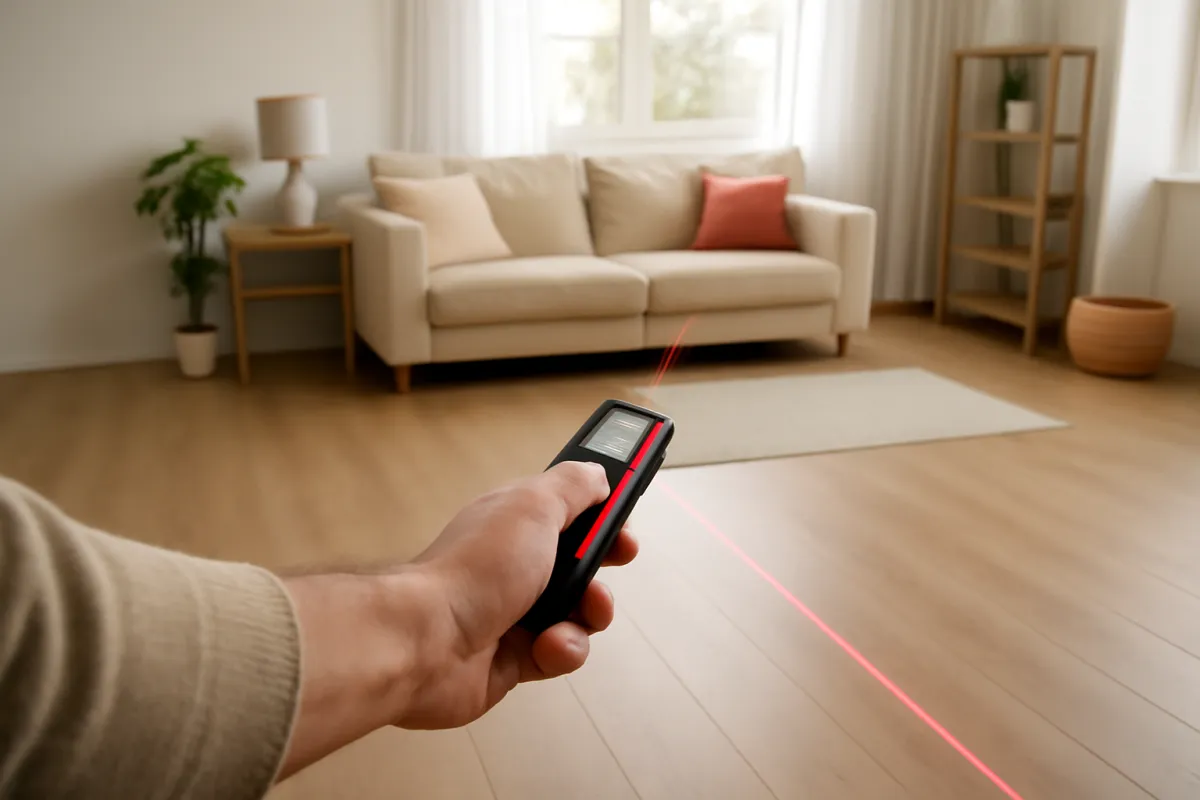
Start with the room, because its size sets the wattage you are shopping for. Measure the length and width in feet and multiply them for the square footage: a room 10 feet by 15 feet is 150 square feet. Then apply the common rule of thumb for electric heating, about 10 watts per square foot for a space with average insulation and standard eight foot ceilings. That points a 150 square foot room at roughly 1,500 watts, a 100 square foot office at about 1,000 watts, and a small 70 square foot nook at around 700 watts. In BTU terms, that 1,500 watt figure is about 5,100 BTU per hour.
The rule is a starting point you then adjust for reality. Bump the wattage up for a drafty room, a poorly insulated wall, a cold climate, or a high or vaulted ceiling that hides a lot of extra air volume. Trim it down for a small, tightly sealed interior room. If you only need to warm yourself at a desk rather than the whole room, a 400 to 750 watt personal heater aimed at you is often plenty, and it costs half or less to run than a full 1,500 watt unit.
The chart below shows the recommended wattage climbing with room size, so you can find your room and read off the number to shop for.
Wattage to shop for by room size (10 watts per square foot)
Rule-of-thumb electric heating wattage for average insulation and standard ceilings. Illustrative.
Adjust up for drafts, cold climates, or high ceilings, and down for a small sealed room. Above 1,500 watts you usually need a 240 volt unit or two heaters. Figures illustrative.
Watch out: a standard 120 volt outlet safely delivers about 1,500 watts and no more, so a room that calls for 2,000 watts is not a single plug-in job. Either step up to a hardwired or 240 volt unit, or warm the space with two right-sized heaters on separate circuits. Chasing a big room with one undersized 1,500 watt heater just leaves it running flat out and never quite catching up, which is both the expensive failure mode and the one that overworks the unit.
Step 2: Pick the heater type that fits how you sit
With the wattage target set, the type is the next choice, and here is the fact that reframes it: at the same wattage, every electric resistance heater costs the same to run, because they all convert electricity to heat at essentially 100 percent. A 1,500 watt ceramic tower and a 1,500 watt oil-filled radiator both draw 1,500 watts and both cost about the same per hour. Type does not change the meter. What it changes is how the warmth feels, how the unit cycles, how safe the surface is to touch, and how quietly it runs. So choose the type by how you use the room, not by a promised efficiency that does not exist.
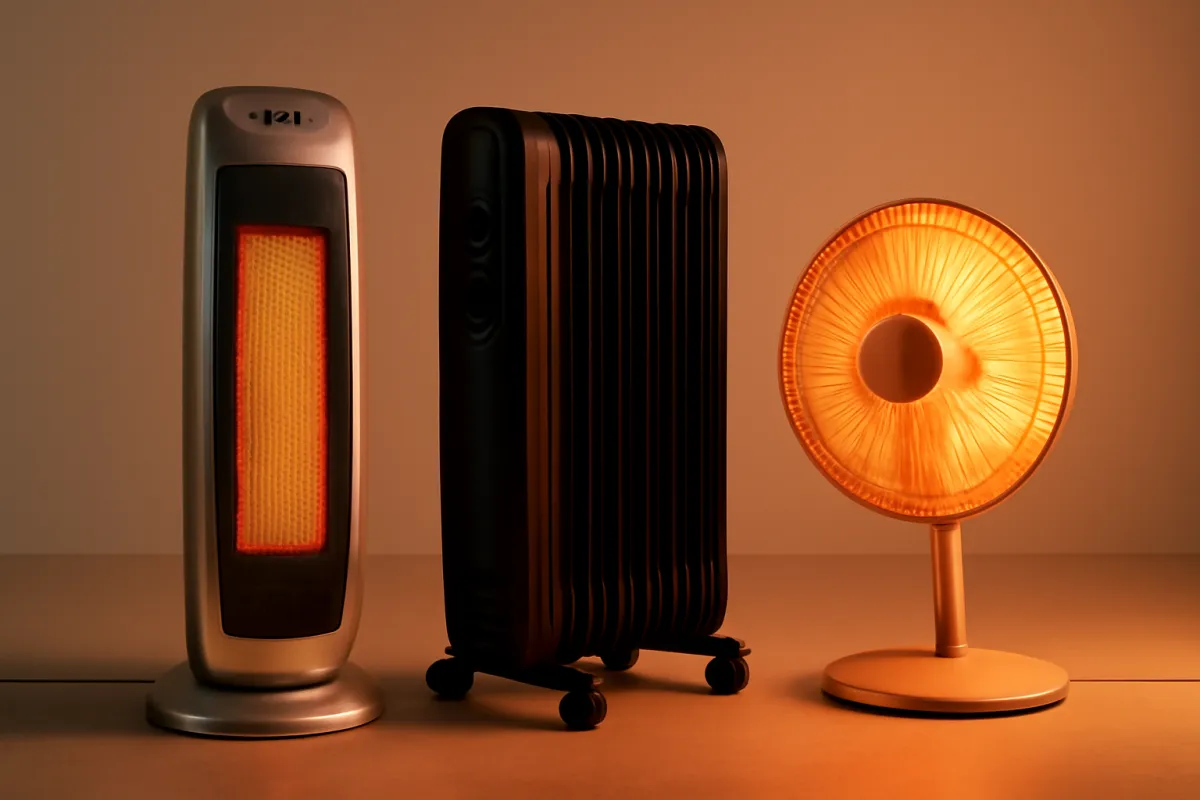
Ceramic and fan-forced heaters push warm air quickly, so a room feels warm within minutes, and they are light and easy to move. The trade-off is that the warmth fades quickly once they cut off, and the fan makes noise. They suit a room you occupy for a few hours and then leave, like a bathroom in the morning or a living room in the evening. Oil-filled radiators heat a column of oil that stays warm and keeps radiating after the element cycles off, so they hold a room steadily and run silently with no fan, which suits a bedroom overnight or a room you want kept even for hours. They are heavy and slow to warm up, but their exterior tends to run cooler, a point that matters in Step 3.
Infrared and quartz heaters warm objects and people directly rather than heating the air, so you can feel warm at a lower setting and in a drafty or open space where heated air would drift away. They are excellent for spot-warming a seat or a workshop corner, but they only warm what is in their line of sight, and some models run with a hot glowing element that needs respectful clearance. Match the type to the job: fast and portable, steady and quiet, or direct and spot-focused.
Watch out: do not pay a premium for a heating technology expecting a lower bill, because the wattage, not the type, sets the cost. The one type-linked saving that is real comes from cycling and comfort: an oil-filled radiator that holds a room and cycles off gently, or an infrared heater that lets you feel warm at a lower setting, can spend fewer minutes at full draw. That is a runtime difference, not an efficiency one. Buy the type whose comfort pattern matches your room, then let the thermostat from Step 6 do the saving.
Step 3: Demand the safety features that matter
A space heater is a large electrical load producing intense heat in a plastic-and-metal box you set on the floor, so the safety features are not upsells. They are the difference between a warm room and a house fire, and this is the step where a low price most often hides a cut corner. Four features carry most of the safety, and a heater missing any of them is a heater to put back on the shelf.
The tip-over switch cuts power the instant the heater is knocked over, which is the failure that turns a heater into an ignition source on a rug or under a curtain. It matters most in homes with children or pets, where a bump is not a rare event. Overheat protection shuts the element off if the internal temperature climbs too high, guarding against a blocked intake, a covered unit, or a fan that has failed. Together these two cutoffs handle the two most common ways a heater goes dangerous, so treat both as mandatory rather than nice to have.
The cool-touch housing keeps the exterior cool enough that a brush against it does not cause a burn, which again matters most around small children and pets and around bedding. Oil-filled radiators and many modern ceramic units do better here than exposed-element or quartz heaters, whose surfaces and elements get genuinely hot. Finally, look for a recognized safety certification mark on the label, which shows the model was tested by an independent laboratory to a recognized safety standard rather than just assembled to a price. If the listing cannot show these features plainly, assume they are absent.

Watch out: the safety features are exactly what a bargain-basement heater omits to hit its price, so a suspiciously cheap unit is often cheap because it skipped the cutoffs, the cool-touch shell, or the certification testing. None of these features is expensive to buy when it is built in, but each one is priceless the one time it is needed. Screen for all four first, before you even look at the type or the styling, and let anything that fails the safety screen drop out of the running entirely.
Step 4: Do the running-cost math before you buy
A heater you can afford to run is one you will actually use well, so price the running cost before you buy, not after the bill lands. The whole formula is short: take the wattage printed on the heater, divide by 1,000 to convert watts into kilowatts, multiply by the hours you run it, then multiply by your electricity rate in dollars per kilowatt-hour. Written out, it is kilowatts times hours times rate equals cost. A 1,500 watt heater is 1.5 kilowatts, so one hour at a typical $0.16 rate costs 1.5 times 0.16, about $0.24. There is no hidden efficiency term, because an electric heater turns essentially all its power into heat.
That linearity is what makes the formula useful. Once you have the hourly cost, every longer period is just multiplication. Run that 1,500 watt heater six hours a day and it costs about $1.44 a day, near $43 across a 30 day month, and roughly $173 over a four month heating season, all illustrative and all at the typical rate. Your own electricity rate is the single biggest variable, so a cheaper rate pulls those numbers down and an expensive one pushes them well up. That is why a blanket claim that space heaters are cheap or expensive is meaningless without a rate attached, and why Step 4 starts with the number off your bill.
The chart below splits the true first-winter cost of a 1,500 watt heater, so the shape of the spend is visible before you commit. The lesson is that the purchase price is the small part, and how you run the heater dwarfs it.
A space heater's first-winter cost (purchase vs electricity)
Illustrative: about $40 to buy, then a season of electricity that depends entirely on how you run it. Shares sum to 100.
The purchase price is the small slice. A thermostat that cycles the heater off can roughly halve the electricity, which is the biggest lever you control. Figures illustrative.
Watch out: the sticker price hides the real number. A $30 heater that you leave running flat out all winter costs many times its purchase price in electricity, while the same heater run on a thermostat for the hours you are in the room costs far less. Judge a heater by its season of running cost, not the small figure on the box, and pair the purchase with the thermostat habit from Step 6. Our full space heater running-cost breakdown works these figures across several rates, and our note on how to lower your electric bill covers the wider habits that compound with this one. Feed your own wattage, hours, and rate into the cost-per-use calculator to see your version.
Step 5: Plan safe placement and respect the circuit
Where you put the heater is a safety spec, not an afterthought, and it is the step people skip precisely because it happens after the purchase. The clearance rule is simple and worth treating as firm: keep at least three feet of open space between the heater and anything that can burn, which means curtains, bedding, upholstered furniture, paper, and clothing. Set the unit on a hard, level, flat surface such as a bare floor or tile, never on a rug, a carpet that can trap heat, or a table it could vibrate off. A heater that can tip, or that sits against fabric, has turned two of the Step 3 safeguards into your last line of defense rather than your first.
The circuit is the other half of safe placement, and it comes straight from the wattage. On a standard 120 volt outlet, a 1,500 watt heater draws about 12.5 amps, because amps equal watts divided by volts. A typical household circuit is rated for 15 amps, so a single 1,500 watt heater already uses most of that circuit’s capacity, leaving little headroom for anything else on the same wires. That thin margin is why the guidance is so specific: plug the heater straight into a wall outlet, never into a power strip, a surge protector, or a thin extension cord, all of which can overheat while carrying 12.5 amps continuously.
Beyond the plug itself, keep other heavy loads off the same circuit. A second heater, a microwave, a hair dryer, or a space heater sharing a breaker with the kitchen can push the combined draw past 15 amps and trip the breaker, or worse, overheat wiring behind the wall. Treat the amperage math as a hard safety limit rather than a guideline, and if you are unsure what shares a circuit, or whether an older circuit can handle a heater at all, ask a qualified electrician before you rely on it. Placement and the plug are where a well-chosen heater either stays safe or quietly becomes a hazard.
Step 6: Set the thermostat and eco mode
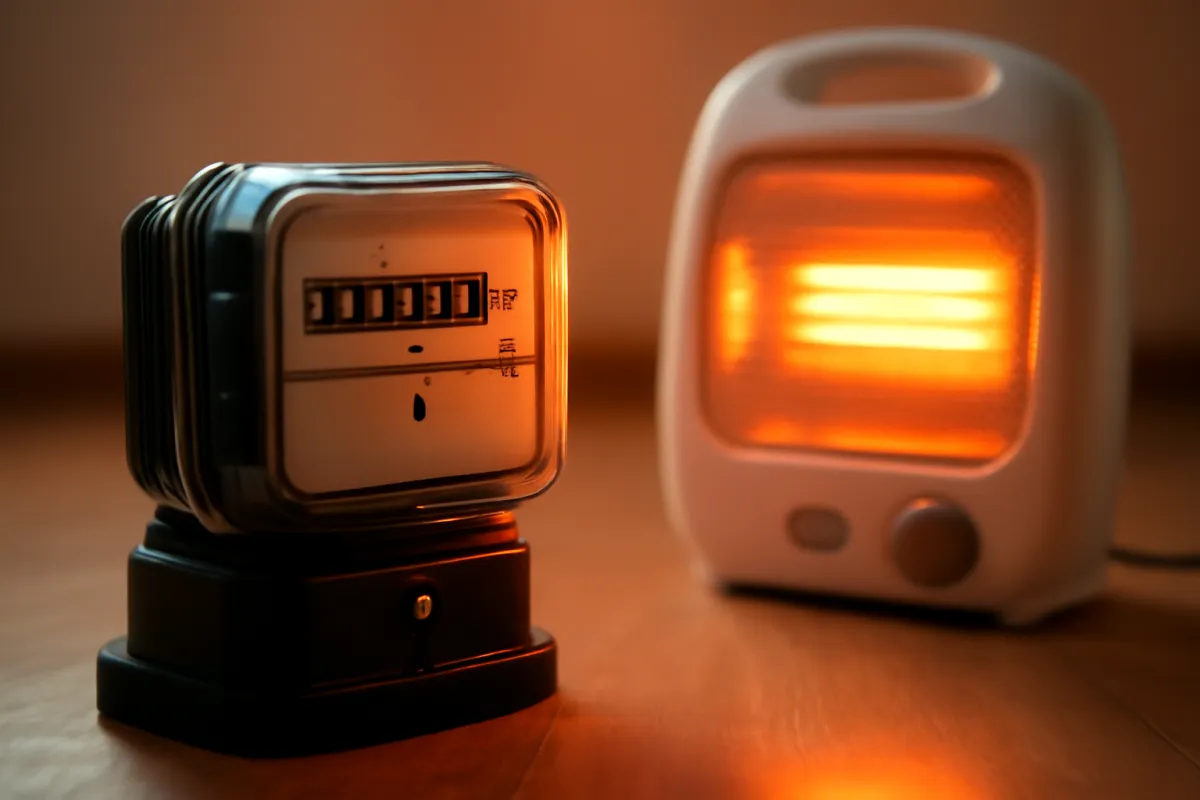
How the heater decides when to draw power matters as much as how long you leave it switched on, and it is the single biggest lever on the running cost from Step 4. A heater with no thermostat, just a high-low switch, draws full wattage the entire time it is on, no matter how warm the room already is. That is the most expensive way to run, because the element never cycles off. A 1,500 watt heater on always-on for six hours uses the full 9 kilowatt-hours regardless of whether the room needed all that heat.
A thermostat changes the arithmetic. Set a target temperature and the heater cycles the element off once the room reaches it, then back on when it drifts down. Because running cost tracks the hours the element actually draws power, a thermostat that cycles the heater off half the time roughly halves the cost of holding a room, which is why the stackbar in Step 4 shows the always-on penalty as nearly as large as the managed cost itself. A thermostat is the single most valuable feature on a space heater and the one worth paying for, so treat an always-on-only unit as a false economy.
Eco mode, or an economy setting, usually caps the heater at a lower wattage or cycles more aggressively around the setpoint, trading a little peak output for fewer full-power minutes. It is not different physics, since it is the same 100 percent conversion spending less time at full draw, but it does the same job as disciplined thermostat use with less thought from you. Set an honest target temperature rather than the maximum, let eco mode or the thermostat cycle the unit, and you keep the monthly figure toward the low end without wearing a sweater. The heater you run on a thermostat for the hours you are present is the one whose cost you actually chose.
Step 7: Decide when central heat is the better call
The last step is the honest one: sometimes the right space heater is no space heater at all. An electric heater is about 100 percent efficient at turning electricity into heat, which sounds like it must be cheap, but efficiency measures how much of the power becomes heat, not how much that heat costs. Electricity is an expensive way to buy raw energy compared with natural gas, and a heat pump can deliver more than one unit of heat per unit of electricity by moving warmth rather than generating it. So a space heater is maximally efficient at converting a relatively costly energy source, which is why heating a whole home with resistance heaters usually loses to a gas furnace or a heat pump.
The comparison flips the moment you stop heating the whole house. Central heat warms every room whether you are in it or not, while a space heater warms exactly one. When you genuinely only need one room warm, paying the space heater’s higher per-unit rate on a small volume can beat paying the central system’s lower rate on the entire house. That is zone heating, and it is the case where a space heater earns its place: turn the whole-home thermostat down several degrees, let the unused rooms go cool, and run the heater in the single room you occupy. The saving is the gap between heating everything and heating only what you use.
The strategy fails the instant you use it wrong. Run a space heater in one room while the central heat still holds the whole house warm and you have simply added a cost, not saved one. So before you buy, decide which case you are in. If you need the whole home comfortable, invest in the central system rather than a fleet of plug-in heaters. If you need one room warm while the rest coasts, a well-chosen space heater on a turned-down thermostat is exactly the right tool. Our guide to choosing energy-efficient appliances covers the whole-home efficiency side of that decision.
The two things that decide everything
Step back from the seven steps and notice that two things carry almost the whole decision: correct sizing and the safety features. Everything else, the type, the styling, the smart controls, changes comfort and convenience, not whether the heater warms your room safely and at a cost you chose. When you understand which specs move the result and which move the price, you can spend confidently and skip the reassurance features that add cost without adding safety or warmth.
Sizing is the performance driver. A heater matched to the room at about 10 watts per square foot reaches a comfortable temperature and then, with a thermostat, cycles off to hold it, spending fewer hours at full draw. An undersized unit runs flat out and never catches up, which is both expensive and hard on the machine, while an oversized one on a 120 volt plug simply is not possible past 1,500 watts. Safety is the gate. A tip-over switch, overheat protection, a cool-touch shell, and a certification mark are what stand between a warm room and a fire, and no amount of styling substitutes for them.
Auto and eco modes deserve a mention because they are the convenience features that pay for themselves. A thermostat or economy setting that ramps the element only when the room needs it saves both power and wear over a unit pinned on one speed, and that is a genuine running-cost feature rather than a gimmick. App control, remote dials, and mood lighting are pleasant, but they do not change the two things that decide whether your room gets warm safely and affordably, so weigh them last and pay for them only if the price is small.
How your use changes the heater
The way you use the room quietly reshapes every step, so it is worth seeing the common cases side by side. For a living room you warm in the evenings, a ceramic or fan-forced heater sized to the room delivers fast warmth for the few hours you are there, then switches off, and a thermostat keeps the cost sensible. Overbuying capacity here is the usual waste, since you do not need to hold the room all day.
For a bedroom you want held steady overnight, an oil-filled radiator suits the job better: it runs silently with no fan, holds warmth as it cycles, and its cooler exterior lowers the burn risk near bedding, though the conservative advice remains to turn a heater off while you sleep rather than run it unattended. For a home office you occupy all working day, size to the room, insist on a thermostat, and be honest about the hours in the running-cost math, because eight or nine hours a day is a real line on the bill that zone heating should be offsetting.
For a desk or a single seat, invert the usual advice and go small: a 400 to 750 watt personal heater or an infrared unit aimed at you warms the person rather than the room, at half the running cost or less, and is often all you need. And for a drafty garage or workshop, an infrared heater that warms objects and people directly beats trying to heat air that leaks away, provided you keep the clearance the hot element demands. Name your use first, and the type and size follow.
A worked example: choosing for a 150 sq ft office
Run the whole method on one realistic case. You want to warm a 150 square foot home office you sit in about six hours a day through the winter, you want it safe with a pet in the house, and you want a heater you can defend on both safety and numbers.
Step 1 and 2, size and type. The room measures 10 by 15 feet, so 150 square feet, with average insulation and an eight foot ceiling. At 10 watts per square foot that points to about 1,500 watts, roughly 5,100 BTU per hour, which a standard 120 volt outlet can just deliver. Because you sit in the room for long stretches and a fan gets tiring, you lean toward an oil-filled radiator for its steady, silent hold, accepting that it warms up slowly.
Step 3 and 5, safety and placement. You confirm the unit has a tip-over switch and overheat protection, a cool-touch housing that matters with the pet, and a recognized certification mark on the label. You plan to set it on the bare floor with three feet of clearance from the desk and the curtains, plugged straight into a wall outlet on a circuit that is not already carrying the office computer and a heater at once.
Step 4 and 6, cost and controls. At 1,500 watts and a typical $0.16 rate, the heater costs about $0.24 an hour, so six hours a day is roughly $1.44, near $43 for a 30 day month, and about $173 across a four month season, illustratively. You insist on a thermostat and set an honest target rather than the maximum, which cycles the element off once the room is warm and can pull that season figure down toward half.
Step 7, the central-heat check. Because you are heating one room while turning the whole-home thermostat down during the workday, the space heater is doing real zone-heating work rather than adding to a house already held warm, so it earns its place. It survives the full screen. Swap your own room, hours, and rate into the cost-per-use calculator to see your version of this example.
Common mistakes when choosing a space heater
Most bad space heater purchases trace to a short list of avoidable errors. Recognizing them is half the method.
- Buying on price and skipping the safety features. The single most dangerous error: a bargain heater that omitted the tip-over switch, overheat cutoff, cool-touch shell, or certification testing to hit its price. The savings vanish the one time a cutoff was needed and missing.
- Undersizing the wattage for the room. Asking a small heater to warm a large or drafty space, so it runs flat out for hours and never catches up. The owner concludes space heaters do not work when the real fault was the size.
- Plugging into a power strip or extension cord. A 1,500 watt heater pulls 12.5 amps continuously, which a thin cord or power strip is not built to carry, so it becomes a fire risk. Wall outlet only, every time.
- Placing it on carpet or against furniture. Setting a heater on a rug, against a curtain, or under a desk crammed with clutter defeats the clearance rule and turns a tip or an overheat into an ignition. Hard surface, three feet clear.
- Buying on the sticker price, not the season. Judging a heater by its low purchase price and never doing the running-cost math, then leaving it on always-on all winter. The electricity dwarfs the purchase, and a thermostat is what controls it.
- Heating a whole house with resistance heaters. Trying to replace central heat with a fleet of plug-in units, which is the expensive case. Space heaters win for one room, not the whole home.
Troubleshooting: cold rooms, tripped breakers, and dry air
A few situations do not fit the simple one-room recipe, so here is how to handle the common edge cases.
What if the room never warms up? The usual cause is an undersized heater, a drafty or poorly sealed room, or high ceilings hiding extra air volume. Recheck the wattage against the 10-watts-per-square-foot rule, bump it up for the drafts, and seal the obvious leaks by shutting the door and drawing the curtains so the heater warms a smaller, contained space. If the room genuinely needs more than 1,500 watts, one plug-in unit will never manage it, so plan for a 240 volt heater or two right-sized units on separate circuits.
What if the breaker keeps tripping? The circuit is overloaded, almost always because the heater shares it with another heavy load or is running through a power strip. Move the heater to a wall outlet on a circuit that is not carrying a microwave, a second heater, or the kitchen, and never chain it through an extension cord. If a lone 1,500 watt heater on its own outlet still trips the breaker, the circuit or the outlet may have a fault, which is a job for a qualified electrician rather than a bigger breaker.
What if the air feels dry or stuffy? Fan-forced and ceramic heaters do not actually remove moisture, but by warming the air they lower its relative humidity, which can feel dry. An oil-filled radiator or an infrared heater that heats more gently tends to feel less parching, and a small humidifier in the room offsets the effect. If the room instead feels stuffy or you notice a faint burning smell on first use, that is usually dust burning off a new element and should pass, but a persistent smell means turn the heater off and check for a blocked vent or a fault.
What if there are children or pets in the room? Prioritize a cool-touch oil-filled unit with a tip-over switch, set it where it cannot be knocked over or reached easily, and never leave it running unattended around them. The tip-over and overheat cutoffs from Step 3 exist precisely for this house, so treat them as non-negotiable rather than optional.
The space heater safety checklist
Run any candidate past these seven checks. Clear all seven and the heater will warm your room safely and at a cost you chose, rather than becoming the risk in the room.
- Sized to the room. About 10 watts per square foot, adjusted up for drafts, cold, and high ceilings, and kept at or below 1,500 watts for a 120 volt outlet.
- Type matched to your use. Ceramic or fan-forced for fast warmth, oil-filled for a steady quiet hold, infrared for direct spot heat, chosen by how you sit in the room.
- Safety cutoffs present. A tip-over switch and overheat protection, both confirmed on the spec sheet, treated as mandatory rather than optional.
- Cool-touch and certified. A housing that stays safe to touch and a recognized safety certification mark on the label, especially with children or pets in the home.
- Thermostat, not always-on. A target-temperature control or eco mode that cycles the element off, which is the biggest lever on the running cost.
- Running cost multiplied out. Watts divided by 1,000, times your honest hours, times your rate, checked across a month and a season with the cost-per-use calculator.
- Placement and circuit planned. Hard surface, three feet of clearance from anything that burns, plugged straight into a wall outlet with nothing else heavy on the circuit.
Space heater safety: the caveats worth repeating
Because a space heater is a genuine fire and burn hazard rather than a gadget, a few safety points are worth stating plainly on their own, separate from the buying steps. Space heaters are involved in a meaningful share of home heating fires and the injuries that come with them, and the common threads are familiar: units placed too close to something that burns, heaters left running unattended or overnight, and cords or plugs overloaded past what they can carry. None of those is about the heater being defective. They are about how it was placed and run, which is exactly what you control.
The conservative habits follow from that. Turn the heater off when you leave the room and when you go to sleep, rather than trusting it to run unattended, because the cutoffs that guard against a tip or an overheat only help if someone is there to notice the room is already off. Keep the three-foot clearance from bedding, curtains, furniture, and clothing at all times, not just when you remember. Plug into a wall outlet, never a power strip or extension cord, and check the plug and cord for warmth or damage now and then, since a hot plug is an early warning. Follow the manufacturer’s instructions for the specific unit, which will always be more precise than any general article.
This is also the honest limit of these notes. The figures here are illustrative planning numbers, and the safety guidance is the widely shared general practice, not a substitute for the maker’s manual or a professional’s judgment about your home’s wiring. If you have any doubt about a circuit’s capacity, an older home’s electrical condition, or whether a particular room can safely run a heater at all, bring in a qualified electrician before you rely on it. A heater chosen well on sizing and features is only as safe as the room and the habits it lands in.
The bottom line
Choosing a space heater well is a safety and sizing decision dressed up as a shopping decision. Size the wattage to the room at about 10 watts per square foot, pick the type that fits how you sit rather than a promised efficiency that does not exist, demand the tip-over switch, overheat protection, cool-touch housing, and certification mark, do the watts-times-hours-times-rate math before you buy, plan safe placement on its own wall outlet, set a thermostat instead of running always-on, and decide honestly whether central heat would do the job better. Do those seven steps in order and the shelf of near-identical boxes resolves into one heater that fits your room, your budget, and your household safely. Illustratively, a right-sized 1,500 watt unit run six hours a day on a thermostat lands near $43 a month at a typical rate, and it warms the one room you use without becoming the risk in it. The heater that disappoints, or frightens, is the one bought on price with the safety features skipped. The one you will be glad you chose is the one you sized on purpose and placed with care.
A note on scope: these notes are a buying and safety method, not a product recommendation or professional advice. Every wattage, BTU, amperage, and dollar amount above is an illustrative planning number drawn from typical ranges, not a measured result for any specific model, and real prices, electricity rates, and room conditions move faster than any article can track. A space heater is a large electrical load with real fire, burn, and circuit-overload risks, so follow the maker’s instructions, keep it clear of anything flammable, plug it straight into a wall outlet, and turn it off when you leave the room or sleep. Nothing here is professional electrical advice, so bring in a qualified electrician if you have any doubt about a circuit’s capacity or an older home’s wiring before you rely on the numbers in this article.
Frequently asked questions
How do I choose a space heater?
Work in order rather than shopping on looks. First size the heater to the room at roughly 10 watts per square foot, so a 150 square foot room points to about a 1,500 watt unit. Then pick the type that suits how you sit, ceramic and fan-forced for fast warmth, oil-filled for a steady hold, infrared for warming you directly. After that, insist on the safety features that matter most, tip-over cutoff, overheat protection, a cool-touch housing, and a recognized safety certification mark, then price the running cost with the watts times hours times rate formula before you commit. Finish by planning safe placement on its own wall outlet and deciding honestly whether central heat would do the job better.
What size space heater do I need for my room?
A common rule of thumb for electric heating is about 10 watts per square foot of room with average insulation and normal ceilings, so a 150 square foot bedroom points to around 1,500 watts and a 100 square foot office to about 1,000 watts. In heat terms that 1,500 watt figure is roughly 5,100 BTU per hour, since one watt is about 3.412 BTU per hour. Bump the number up for a drafty room, a cold climate, or high ceilings, and down for a small, well-sealed space. Remember that a standard 120 volt outlet tops out near 1,500 watts, so a larger room usually needs a 240 volt unit or two heaters rather than one oversized plug-in, all illustrative planning figures.
What is the safest type of space heater?
Safety depends more on the features and how you use it than on the heating technology, but oil-filled radiators and many modern ceramic units run cooler on the outside than exposed-element or quartz heaters, which lowers burn and ignition risk around children and pets. Whatever the type, the features that matter are a tip-over switch that cuts power if the unit falls, overheat protection that shuts it off if it gets too hot, and a cool-touch or cool-to-the-touch housing. A recognized safety certification mark on the label tells you the model was tested to a safety standard. The safest heater is a certified unit with those cutoffs, placed on a hard surface, plugged straight into a wall outlet, and kept well clear of anything that can burn.
Is a ceramic or oil-filled heater better?
Neither is universally better, because they solve different problems, and at the same wattage they cost the same to run since both convert electricity to heat at essentially 100 percent. A ceramic or fan-forced heater warms a room quickly and is light to move, which suits a space you occupy for a few hours and then leave. An oil-filled radiator heats slowly but holds warmth in its column of oil and keeps radiating after the element cycles off, so it suits a room you want held steady for many hours, like a bedroom overnight, and it runs silently with no fan. Choose fast and portable, or steady and quiet, based on how you actually use the room.
How much does it cost to run a space heater?
The whole formula is the heater's wattage divided by 1,000, times the hours you run it, times your electricity rate in dollars per kilowatt-hour. A standard 1,500 watt heater is 1.5 kilowatts, so at a typical rate near $0.16 it costs about $0.24 an hour at full power, roughly $1.44 a day at six hours, and near $43 for a 30 day month at that pace, all illustrative. Your own electricity rate is the biggest variable and can swing that monthly figure well up or down. Our full breakdown of what it costs to run a space heater works the hourly, daily, monthly, and seasonal numbers across several rates.
What safety features should a space heater have?
Four features do most of the safety work. A tip-over switch cuts power the instant the heater is knocked over, which matters most with pets and children. Overheat protection shuts the element off if the internal temperature climbs too high, guarding against a blocked vent or a covered unit. A cool-touch housing keeps the exterior cool enough that a brush against it does not burn. Finally, a recognized safety certification mark on the label shows the model was tested to a safety standard, so treat any of these being absent as a reason to keep shopping.
Can I leave a space heater on all night?
Most safety guidance advises against running a space heater unattended or while you sleep, because the risks that a tip-over or overheat cutoff guards against are exactly the ones you cannot respond to when asleep. If warmth overnight is the goal, an oil-filled radiator with a thermostat, placed well clear of bedding and curtains on a hard floor, is the lower-risk choice, but the conservative move is still to turn the heater off when you go to bed. Always follow the manufacturer's instructions, keep the unit on its own wall outlet, and never drape anything over it. When in doubt, treat a space heater as a device you run while you are awake and in the room.
Is a space heater cheaper than central heating?
It depends entirely on how much of the house you are heating. Warming your whole home with electric space heaters is usually more expensive than a gas furnace or a heat pump, because electric resistance heat costs more per unit of warmth delivered. But heating the single room you occupy with a space heater while you turn the central thermostat down can cost less overall, which is the zone-heating case where a space heater earns its place. Central heat wins for whole-home comfort, and a space heater wins when you genuinely only need one room warm and are disciplined about turning the big system down.