What's on this page
- Why is my furnace blowing cold air? Start with what the blower is actually doing
- Normal cold air versus a real fault
- Before you touch anything: the safety part
- The order to work the causes in, and why it saves money
- Cause one: the thermostat fan setting left on ON
- Cause two: a dirty filter and the overheating it causes
- Cause three: the flame sensor, a very common real culprit
- Cause four: the ignition sequence more broadly
- Cause five: short cycling from overheating elsewhere in the system
- Cause six: a stuck or miswired blower relay
- Cause seven: the control board, the diagnosis of last resort
- Where this fault actually comes from
- Which checks are genuinely DIY
- A worked example: one cold living room, three checks in order
- Duct leaks: the airflow problem outside the cabinet entirely
- Electric furnaces and heat pumps: does this apply to them too?
- High-efficiency furnaces: a wrinkle worth knowing
- Common mistakes when diagnosing cold air from a furnace
- Prevention: the habits that keep this from recurring
- When to call a pro, and what to tell them
- What a technician actually checks during a diagnostic visit
- The bottom line
Short answer: A furnace blowing cold air almost always means the blower is moving air without the burner successfully heating it, and the most common reason is a thermostat fan setting left on ON instead of AUTO. After that, the usual suspects are a dirty filter forcing a safety shutdown, a flame sensor that lets the igniter glow but cuts the gas before the flame holds, or a short ignition lockout. Check the thermostat fan setting first; it resolves a real share of these for free.
A furnace that blows cold air is a different kind of unsettling than one that does nothing at all, because the machine is obviously working. The blower is audible, air is moving out of the vents, and the thermostat display looks normal, yet the air coming out is the same temperature as the room or colder, and a house that should be warming up is not. That combination, clear activity with no result, is what sends people searching this exact phrase, and it points toward a fairly short and fairly cheap list of causes once you separate “the blower is running” from “the burner is heating,” which are two different systems sharing one cabinet.
These notes work the fault the way a technician actually works it: starting with the setting that costs nothing to check, moving through the filter and the ignition sequence, and ending with the parts that genuinely need a meter or a service call. Our furnace filter guide covers the maintenance side of the most common contributing cause here, and our furnace no-start report covers the related but distinct complaint of a furnace that never starts at all.
Key takeaways
- Check the thermostat fan setting first. ON runs the blower continuously regardless of heating; AUTO only runs it while the burner is actively firing, and this single setting resolves a real share of this complaint for free.
- A brief cold blast of ten to thirty seconds at the very start of a cycle is normal on many furnaces. Cold air that continues past that, or returns through the whole cycle, is not.
- A dirty filter is a common hidden cause: restricted airflow overheats the heat exchanger, trips a safety switch, and shuts the burner down while the blower keeps moving air that never got heated.
- A failing flame sensor lets the igniter glow and the burner briefly light, then cuts the gas valve within a second because it cannot confirm the flame, which produces repeated short ignition attempts and intervals of cold blower air.
- None of the common causes here require replacing the furnace. Diagnosing in order, cheapest first, resolves most of this fault for the price of a filter or a sensor.
Why is my furnace blowing cold air? Start with what the blower is actually doing
Before chasing parts, separate two systems that happen to share one cabinet. A furnace has a blower, which moves air through the house, and a burner, which heats that air before the blower pushes it out. Either one can fail independently of the other, and the symptom you are reading, cold air moving, tells you specifically that the blower side is working while the heating side is not keeping up.
That framing rules out an entire category of furnace faults immediately. Anything that stops the blower itself, a bad blower motor or capacitor, produces weak airflow or silence, not a strong flow of cold air. What you are dealing with is a burner that is not lighting, not staying lit, or being deliberately bypassed by a thermostat setting, while a perfectly healthy blower keeps doing its job regardless.
Normal cold air versus a real fault
Not every blast of cool air from a furnace vent is a problem, and telling the two apart up front saves a lot of unnecessary troubleshooting.
Normal: a brief cool blast right at the start of a cycle. Many furnaces start the blower a few seconds before the heat exchanger has fully come up to temperature, as a deliberate design choice, so the first ten to thirty seconds of airflow can feel room-temperature or slightly cool before it warms up. This is expected and not a fault on its own.
Not normal: cold air that continues well past that window. If the blower runs for a full minute or more without the air warming noticeably, the burner either never lit or did not stay lit.
Not normal: cold air that returns repeatedly through a cycle. A furnace that warms up, then blows cold again a few minutes later, then warms again, is short cycling, which points at a different group of causes covered further down.
Not normal: constant cold air with no warm periods at all. This is the pattern most consistent with a thermostat fan setting stuck on ON, covered next, since it describes a blower that simply never stops running independent of the burner’s state.
Before you touch anything: the safety part
A furnace combines a gas burner and a powered blower, and a few rules apply before any troubleshooting below.
If you smell gas at any point, stop everything, do not operate any switch or thermostat, leave the building, and call your gas utility or emergency line from outside. That is never a troubleshooting situation.
Treat repeated ignition attempts with respect. A furnace that tries to light, fails, and tries again several times in a row is working through a safety sequence designed to protect you. Let it finish that sequence or shut it down at the thermostat rather than repeatedly cycling the power to force more attempts.
Electrical work beyond a thermostat setting or a filter change is not a casual weekend job on this appliance. The blower motor circuit and the furnace’s control board carry real current and sit close to the gas valve wiring, and that combination is where professional experience earns its cost.
The order to work the causes in, and why it saves money
The causes below run from the free check to the parts that need a meter, and working them in order avoids paying for a part that the thermostat setting or the filter would have fixed for nothing.
The order used here: the thermostat fan setting, the air filter and airflow restriction, the flame sensor, the ignition sequence more broadly, short cycling from overheating, a stuck or miswired blower relay, and finally the control board. The first two cost nothing and take minutes. Everything from the flame sensor onward benefits from watching the burner through the furnace’s inspection window, which tells you more in thirty seconds than a meter does in ten minutes.
Cause one: the thermostat fan setting left on ON
This is the single most common cause of this exact complaint, and it is also the fastest to check and the easiest to fix.
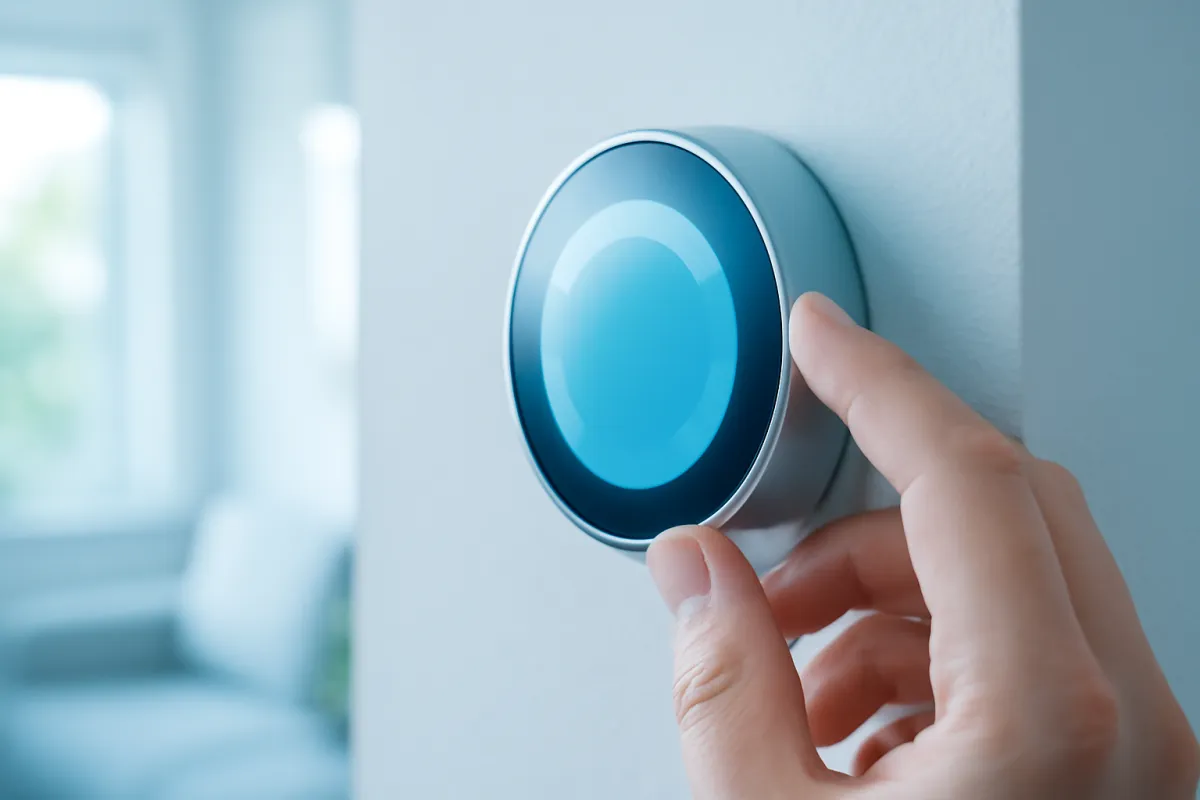
Most thermostats offer a fan mode with two settings. AUTO runs the blower only while the furnace is actively calling for heat, which is the setting that should be in use for normal heating. ON runs the blower continuously, all day, regardless of whether the burner is firing, which some households set deliberately for more even air circulation or to help a whole-house air purifier or humidifier work continuously, often without realising what it does to the furnace’s apparent behaviour in winter.
A thermostat set to fan ON, in a house where the furnace is cycling on and off normally to maintain temperature, produces exactly this complaint: the blower never stops, so between heating cycles it is pushing room-temperature or slightly cooled air through the ducts, which reads as a furnace blowing cold air even though the burner itself is working correctly. Switching the fan setting to AUTO and observing one full cycle is the fastest, free test in this entire report.
Cause two: a dirty filter and the overheating it causes
This is the most common cause once the thermostat setting is ruled out, and like several faults on this site, it produces a symptom that looks unrelated to its actual mechanism.
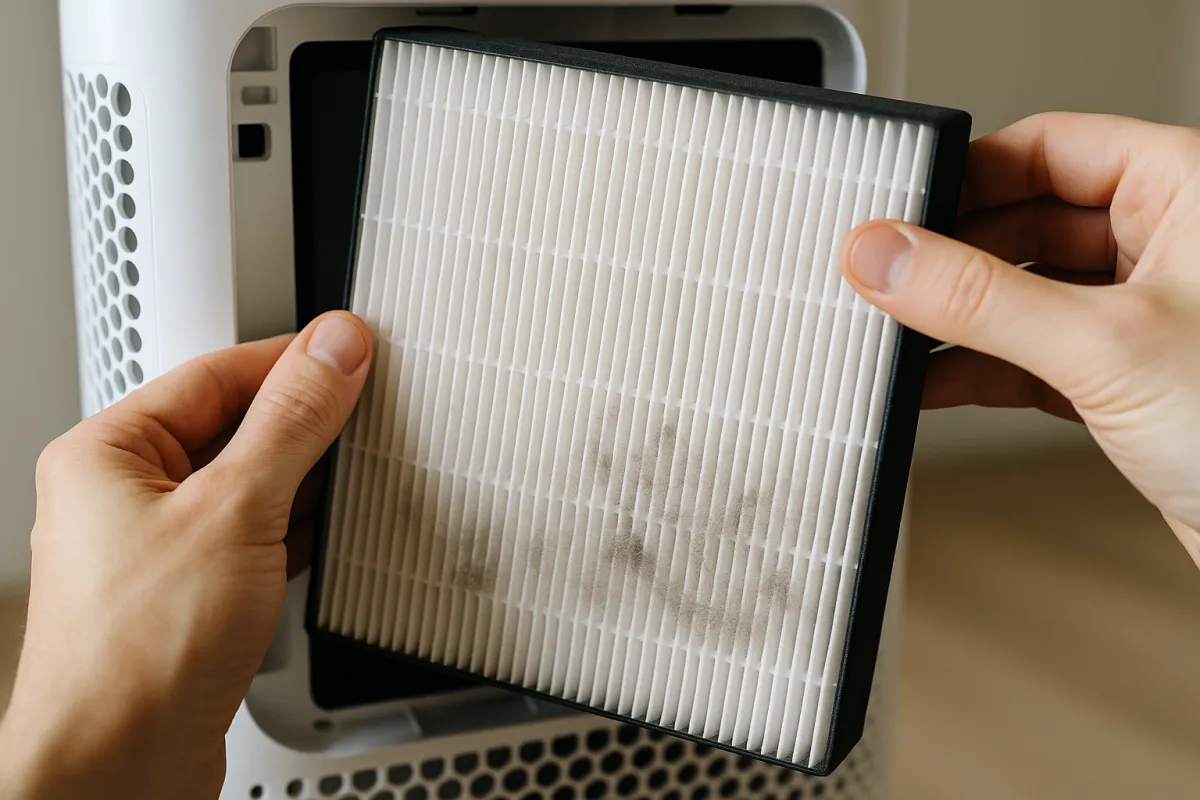
A furnace pulls return air through a filter before pushing it across the heat exchanger and out through the ducts. A badly clogged filter restricts that airflow, and with less air moving across the heat exchanger to carry heat away, the exchanger itself runs hotter than its design allows. A high-limit safety switch is specifically watching for that condition, and when it trips, it shuts the burner off to prevent damage or a cracked heat exchanger, while on many furnace designs the blower keeps running afterward specifically to vent the trapped heat out of the cabinet before everything shuts down completely.
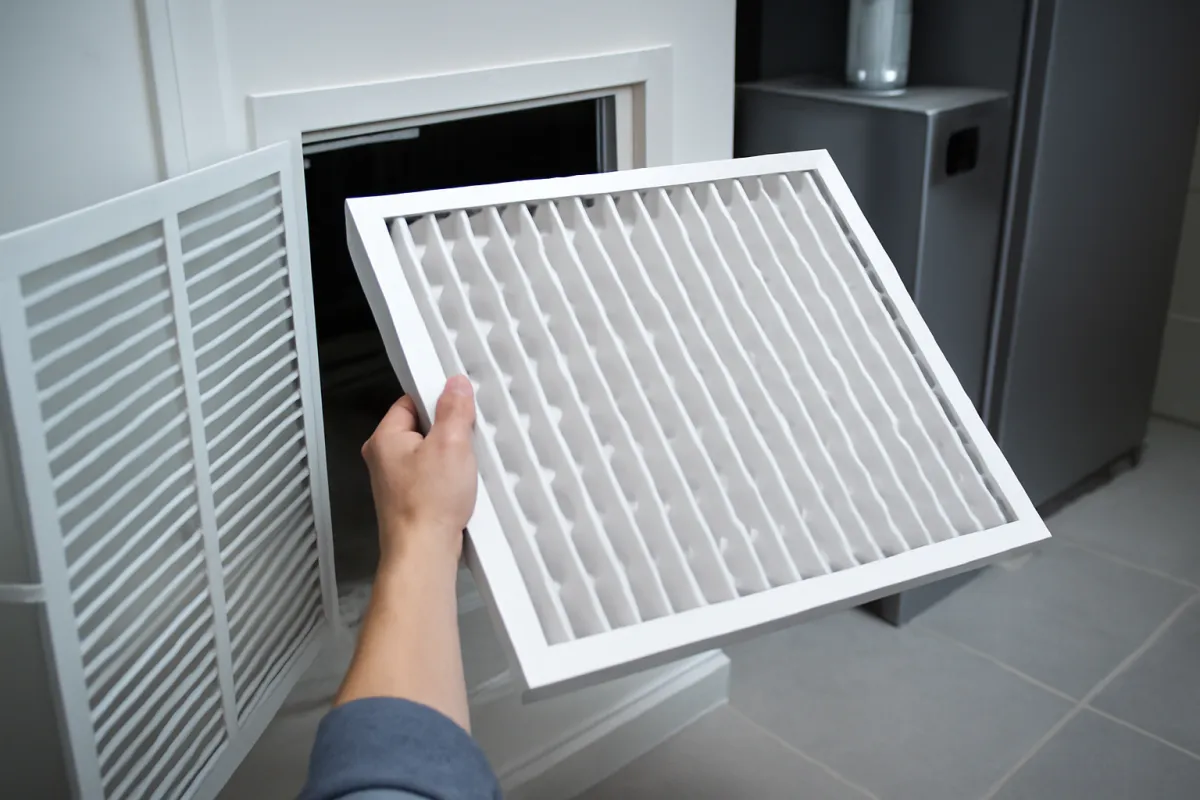
What you feel during that venting period is moving air with no active heat source behind it, which is functionally identical to the symptom in this report even though the underlying cause is a safety system doing exactly its job. Our furnace filter guide covers how often to change it and how to tell a borderline filter from one that has crossed into actually restricting airflow.
Cause three: the flame sensor, a very common real culprit
A flame sensor is a thin metal rod positioned in the burner flame, whose job is to confirm a flame is actually present after the gas valve opens. If the control board does not see the signal that confirms a flame within about two seconds of opening the valve, it shuts the gas valve again as a safety measure, since gas flowing with no flame to burn it is the one scenario a furnace is built never to allow.
A sensor coated in a thin layer of carbon or corrosion, which happens gradually over a season or two of normal operation, reads a weaker signal than it should, and if that signal falls below what the board requires, the board shuts the valve even though a flame genuinely was present for a moment. The result is a repeating pattern: the igniter glows, the burner briefly lights, the flame goes out again within a second or two, and the cycle retries several times before either succeeding on a later attempt or locking out. During every one of those brief, failed lighting attempts, the blower may well be running and moving unheated air, which is exactly this report’s symptom.
Cleaning a flame sensor with a fine abrasive pad or even steel wool, after shutting off power to the furnace, is a commonly cited DIY fix and often resolves this specific cause completely. Locating the sensor varies by furnace model, and the furnace’s own inspection window, if it has one, lets you watch the flame and confirm whether it lights and then dies rather than guessing blind.
Cause four: the ignition sequence more broadly
If the flame sensor and its connections test clean, the fault may sit earlier in the same sequence. A modern gas furnace lights through an ordered chain: the thermostat calls for heat, the inducer motor starts and a pressure switch confirms it is moving air properly, an igniter heats or sparks, the gas valve opens, the burner lights, and the flame sensor confirms it.
Watching the burner through the inspection window tells you which link in that chain is failing. No igniter activity at all points at the igniter itself or at the pressure switch not confirming the inducer is running. An igniter that glows or sparks with no gas following it points at the gas valve or its wiring. Gas that lights and then is extinguished within a second or two, as covered above, points at the flame sensor. Each of these has its own signature, and the inspection window is free information a meter cannot give you as quickly.
Cause five: short cycling from overheating elsewhere in the system
Related to the filter cause above but worth its own section, since a dirty filter is not the only way a furnace overheats and trips its safety switch mid-cycle. Blocked or mostly closed supply vents throughout the house, a return air grille partly blocked by furniture, a failing blower motor that is running slower than it should, and a blower wheel packed with dust from the same debris that clogs the filter can all restrict airflow enough to trip the same high-limit switch.
The pattern this produces is slightly different from the filter case: the furnace runs, warms the air, then stops abruptly and the air cools, then restarts a few minutes later once the switch resets, repeating in a cycle noticeably shorter than normal. If a filter change alone does not resolve a cold-air complaint that follows this short-cycling pattern, walk the house and confirm every supply and return vent is open and unblocked before assuming a part has failed.
Cause six: a stuck or miswired blower relay
Less common, but a real possibility on a furnace where the blower genuinely never stops, even with the thermostat fan setting confirmed on AUTO and the system not actively calling for heat. The blower relay is the control board component that switches power to the blower motor, and a relay whose contacts have welded shut from years of switching a sizable motor load can leave the blower permanently energised regardless of what the thermostat or the board are otherwise telling it to do.
This is a control board level repair rather than a homeowner fix in most cases, and it is worth ruling out the thermostat setting thoroughly first, since a stuck relay and a fan set to ON produce an identical symptom from the user’s chair and only differ once you have independently confirmed the thermostat setting is correct and the blower is still running regardless.
Cause seven: the control board, the diagnosis of last resort
The control board coordinates the entire ignition sequence, reads the pressure switch and the flame sensor, and switches the blower relay. A board with a failing component can produce almost any symptom on this list, which is exactly why it belongs last rather than first. Replacing a board without first ruling out the cheaper, more common causes above is one of the more expensive ways to fail to fix this fault, since a board that was never actually broken gets swapped while the real cause, often a flame sensor or a filter, remains untouched.
A technician reaches this conclusion by process of elimination, the same order used throughout this report, and a board diagnosis is one of the few steps here genuinely worth paying for rather than attempting without experience, given the cost of the part and the risk of a misdiagnosis.
Where this fault actually comes from
Pulling the whole list together shows a pattern common to most appliance faults on this site: the cause people search for the most anxiously is rarely the one that is actually happening.
Where a furnace cold-air complaint usually starts
Illustrative share of cold-air complaints by cause. Bars scale to the largest slice.
Illustrative shares drawn from the shape of the complaint rather than any survey. Half of this chart is resolved by a thermostat setting and a filter change, both free or close to it.
The practical reading of that chart is the order these notes already follow: check the fan setting, check the filter, watch the burner through the inspection window for the ignition and flame sensor signature, then walk the house for blocked vents, and treat the relay and the control board as the last stops rather than the first fear.
Which checks are genuinely DIY
Genuinely do it yourself, no special skill. Checking and correcting the thermostat fan setting. Checking and replacing the air filter. Walking the house to confirm supply and return vents are open and unobstructed. Watching the burner through the inspection window to observe the ignition sequence, which is pure observation and tells a technician more if you do call one.
Do it yourself with patience and research. Cleaning a flame sensor with a fine abrasive pad after the power is switched off, which is a commonly documented, low-risk job on many furnace models once you have located the sensor using your model’s documentation.
Not do it yourself for most households. Diagnosing or replacing the igniter, the pressure switch, the gas valve, the blower relay, or the control board. Anything that requires opening the burner compartment beyond visual inspection through a window. Any gas smell, any suspicion of a cracked heat exchanger, or a burner that lights with an unusual flame colour or produces soot.
A worked example: one cold living room, three checks in order
A household notices the furnace running, air moving from the vents, but the living room staying cool through a whole evening.
Check one, the thermostat. The fan setting is found set to ON, likely changed months earlier to help a portable air purifier circulate air more evenly through the house. It is switched to AUTO.
Check two, observe one cycle. With the fan now on AUTO, the furnace is left to run through a normal heating call. The blower now stops between cycles as expected, but the air during an active cycle is still only lukewarm rather than properly warm.
Check three, the filter. The filter is pulled and found heavily loaded with pet hair and dust, visibly restricting light passing through it. It is replaced with a correctly sized new one.
On the next cycle, the furnace runs through a complete heating call and the air from the vents reaches a normal, clearly warm temperature. Total cost: one filter. Had the filter been clean and the air still lukewarm, watching the burner through the inspection window for the flame-sensor signature described earlier would have been the next step.
Duct leaks: the airflow problem outside the cabinet entirely
Everything above assumes the furnace itself is the whole story, but on some houses warm air genuinely is being produced and then lost before it reaches the room, through gaps and poorly sealed joints in the duct run itself, especially in an unconditioned attic, crawl space, or garage the ducts pass through. This is not technically the furnace blowing cold air, since the air leaves the furnace properly heated, but it produces a nearly identical complaint at the vent: lukewarm or cool air arriving at the room despite the system clearly running.
The distinguishing test is feeling the air close to the furnace’s own supply plenum, if it is accessible, against the air at a distant bedroom vent. Noticeably warmer air near the furnace than at the far vent points at duct losses along the way rather than at anything inside the furnace cabinet, and that is a sealing and insulation job rather than a furnace repair.
Electric furnaces and heat pumps: does this apply to them too?
Most of this report assumes a gas furnace, since the flame sensor, the igniter, and the gas valve sequence are specific to combustion heating. An electric furnace, which heats with resistive elements rather than a burner, cannot have a flame sensor or ignition lockout problem at all, but it shares the thermostat fan setting cause and the filter and airflow causes completely, since those are blower and airflow problems rather than combustion problems. If an electric furnace is blowing cold air, start with the fan setting and the filter exactly as described above, then look toward the heating elements themselves or their sequencer relays, which are a closer cousin to the dryer heating element covered in our dryer heating report than to anything in this furnace-specific list.
A heat pump blowing air that feels cool is frequently not a fault at all, which is worth stating plainly because it drives a meaningful share of this exact search during cold weather. A heat pump moves heat rather than generating it, and the air coming out of the vents on a heat pump system is often only body-temperature or slightly above, noticeably cooler than a gas furnace’s output, even while the system is working completely correctly and the room is genuinely warming over time. Our heat pump running-cost breakdown covers this mechanism directly, including the point at very cold outdoor temperatures where a heat pump’s output drops further and backup resistive heat, if the system has it, takes over.
High-efficiency furnaces: a wrinkle worth knowing
High-efficiency condensing furnaces add one more failure path that does not exist on older, simpler models: a condensate drain line that carries away the water produced when exhaust gases are cooled enough to extract extra heat from them. A blocked or frozen condensate line trips its own safety switch, distinct from the high-limit switch covered above, and stops the burner from lighting at all rather than producing a cold-air symptom with the blower running.
The reason this is worth knowing in a report about cold air rather than one about a furnace that will not start is that the two symptoms can look similar from across the room. If your furnace is a high-efficiency condensing model, identifiable by a second PVC exhaust pipe running outside rather than a traditional metal flue, and the blower seems to run only briefly before the whole system shuts down rather than continuing to blow cold air, the condensate line is worth checking before working through the rest of this list, and our furnace no-start report covers it directly.
Common mistakes when diagnosing cold air from a furnace
Five patterns that send people toward the wrong repair, or toward no repair when one is genuinely needed.
Assuming a part has failed before checking the thermostat. The fan setting is free to check and explains a real share of this exact complaint, and skipping it is the single most common way to buy an unnecessary service call.
Treating a brand new filter purchase as proof the filter was the problem. If the air is still cold after a filter change, the filter may have been a contributing factor without being the whole story, particularly if blocked vents elsewhere in the house are also restricting airflow.
Resetting the system repeatedly instead of watching the burner. Each reset throws away the one piece of free diagnostic information available, which is what the igniter and the flame actually do during the attempt, visible through the inspection window.
Confusing a heat pump’s genuinely cooler output with a fault. The section above covers this directly; a heat pump that is slowly warming the house is not blowing cold air in the sense this report means, even though the vent temperature feels unimpressive by gas furnace standards.
Jumping straight to the control board. It is the most expensive component on this list and the least likely cause, and it belongs at the end of the diagnostic order for exactly that reason.
Prevention: the habits that keep this from recurring
Most of the causes in this report are maintenance items rather than sudden failures, and a short list of habits catches most of them before they produce a cold house.
Replace the filter on a schedule rather than when it visibly fails. Our furnace filter guide sets the interval, and a filter changed on schedule rarely gets dirty enough to trip the high-limit switch at all.
Leave the thermostat fan setting on AUTO unless you have a specific reason for continuous circulation, and if you do want continuous circulation for air quality reasons, know that it will make the vents feel cooler between heating cycles and that this is expected rather than a fault.
Have the flame sensor and burner assembly looked at during an annual service visit, which is also when a technician will typically clean a sensor before it coats heavily enough to cause the ignition failures covered earlier.
Keep furniture and rugs clear of supply and return vents, which prevents the airflow restriction that contributes to both overheating-related short cycling and a general loss of heating performance throughout the house.
When to call a pro, and what to tell them
Call a technician when the fault points at the igniter, the gas valve, the pressure switch, the blower relay, or the control board, none of which are reasonable homeowner repairs for most households. Call one for any gas smell, any suspicion of a cracked heat exchanger, or a flame that looks or smells wrong. And call one when you have worked through the free checks, the thermostat setting, the filter, and the vent walk-through, and still have cold air with no clear cause.
What you tell them changes what the visit costs. Describe exactly when the cold air happens: constantly, only at startup, or in a repeating short-cycle pattern. Mention what you have already ruled out: the fan setting, the filter, and the vents. If you were able to watch the burner through the inspection window, describe what you saw, since the igniter-glow-no-flame versus flame-then-extinguish distinction alone can save a diagnostic visit. And have the model number ready, usually on a plate inside the main access panel.
What a technician actually checks during a diagnostic visit
Knowing what a service visit actually covers helps you judge whether a quote is thorough or rushed. A competent diagnostic for this exact complaint typically starts by confirming the thermostat is calling for heat correctly and the fan setting is not the explanation on its own, then moves to the filter and a visual airflow check, then watches a full ignition attempt through the inspection window or with the burner cover removed, checking the igniter’s glow or spark, the gas valve’s response, and the flame sensor’s signal using a microamp meter rather than guesswork.
If the flame sensor reads within its normal range and the igniter and gas valve both respond correctly, the technician moves to the pressure switch and the inducer motor, confirming the inducer reaches the pressure the switch needs to see before it allows the gas valve to open at all. Only after all of that comes back clean does a competent diagnosis point at the control board, and at that stage it is usually because every other component has already tested good, which is the process of elimination this whole report has walked through in miniature.
Ask whether the visit includes a flame sensor cleaning as standard, since on many service calls this alone resolves the complaint and is cheap enough that most technicians do it before quoting anything more expensive. Ask for the microamp reading if a flame sensor is condemned, since a specific number is a better basis for a second opinion than a verbal “it’s weak.”
The bottom line
Why is my furnace blowing cold air has a cheaper answer than the chill in the room suggests, and it starts with a setting rather than a part. Check the thermostat fan mode first; AUTO rather than ON resolves a genuine share of this complaint for free. If that is not it, the filter is next, since restricted airflow trips a safety switch that shuts the burner down while the blower keeps clearing the trapped heat, which feels identical to a furnace that simply will not heat. From there, watching the burner through the inspection window for the ignition sequence tells you more in thirty seconds than most other troubleshooting steps, and a weak or coated flame sensor is a common, cheap, and often DIY-cleanable cause of the repeated short ignition attempts that leave cold air in the ducts between tries.
Handle the safety part properly: any gas smell means leaving the building and calling your utility, not continuing to troubleshoot, and anything beyond the thermostat, the filter, and visual inspection through the window belongs with a qualified technician. Worked in that order, this fault resolves for the large majority of households without ever reaching a control board or a service call, and the living room that started this whole search is usually a filter or a thermostat setting away from warming up properly again.
A note on scope: these notes describe how gas furnaces commonly produce a cold-air symptom and how to work the fault in a sensible order. They are general information, not professional HVAC, electrical, or gas-fitting advice, and every share, interval, and dollar figure in them is an illustrative planning number rather than a measurement or a quote for any specific system. Any gas smell, suspected carbon monoxide, or a cracked heat exchanger belongs with a licensed technician or your gas utility immediately, not with troubleshooting at home. Where the manufacturer’s manual for your specific furnace contradicts a general principle written here, the manual is the authority and this report is not.
Frequently asked questions
Why does my furnace blow cold air when it first starts?
A short burst of room-temperature or slightly cool air right at startup is normal on many gas furnaces, because the blower can begin moving air a few seconds before the heat exchanger has actually warmed up, and that first breath of air has not picked up any heat yet. The pattern to worry about is different: cold air that continues well past the first thirty seconds, or that returns repeatedly through a full cycle, which points at an ignition or airflow problem rather than this normal startup lag.
Why is my furnace blowing cold air constantly, not just at startup?
Constant cold air almost always means the blower is running without the burner ever successfully lighting, or without staying lit. The three most common reasons are a thermostat fan setting left on ON instead of AUTO, which runs the blower continuously whether or not the burner is firing, a failed or dirty flame sensor that lets the igniter glow but shuts the gas valve down within a second of ignition, and a safety lockout that has stopped the burner from even attempting to light after several failed tries.
What does it mean if my thermostat fan setting is set to ON?
It means the blower runs all the time, independent of whether the furnace is actually calling for heat, which is a legitimate setting for even air circulation but is also the single most common reason people search this exact complaint. Set the fan to AUTO and the blower only runs while the burner is actively heating, which should resolve a constant stream of room-temperature air immediately if this was the cause.
Can a dirty furnace filter cause cold air?
Yes, through overheating rather than directly. A badly clogged filter restricts airflow across the heat exchanger, which lets the exchanger run hotter than it is designed to, which trips the high-limit safety switch and shuts the burner off while the blower, on many designs, keeps running to dissipate the trapped heat. The air you feel in that moment is blower air moving across a heat exchanger that has just been shut down, and it reads as a furnace that stopped heating rather than one protecting itself correctly.
Why does my furnace blow cold air for a few seconds every cycle?
A brief blast of cool air exactly at the start of every heating cycle, lasting ten to thirty seconds, is usually the blower starting slightly ahead of the heat exchanger reaching temperature, which is a deliberate design choice on many furnaces to avoid a longer delay feeling worse. If that cold period is stretching longer than it used to, or the burner takes multiple attempts to light before the air finally warms, that points at a weakening ignition component rather than normal operation.
Is it safe to keep running a furnace that is blowing cold air?
Running the blower alone, moving unheated air, is not dangerous by itself. What is worth stopping and checking rather than ignoring is repeated ignition attempts that never catch, a smell of gas, or a burner that lights with an unusual flame colour, any of which should pause your troubleshooting and involve a technician or your gas utility rather than continuing to reset the system on a loop.
How much does it cost to fix a furnace blowing cold air?
It depends entirely on which cause is behind it. A thermostat setting or a filter change costs nothing beyond the filter itself, illustratively 15 to 30 dollars. A flame sensor, one of the more common paid repairs in this fault, runs illustratively 150 to 250 dollars including labor. A failing inducer motor or control board sits higher, illustratively 300 to 600 dollars. None of those approaches the cost of a new furnace, which is why this fault is usually worth diagnosing rather than replacing the system outright.
Is a furnace blowing cold air the same problem as it not turning on at all?
No, and the distinction matters for where you start looking. A furnace that will not turn on at all is a different report on this site and usually points at the limit switch, the flame sensor, the igniter, or the condensate line on a high-efficiency model, none of which ever gets the blower moving in the first place. A furnace blowing cold air is one where the blower is clearly running, which shifts the likely cause toward the thermostat fan setting, a short ignition failure that stops the burner after the blower has already started, or short cycling from overheating.