What's on this page
- The best dehumidifier for a basement: the short answer
- Why basements are a different humidity problem
- The temperature problem: why a standard unit can fail in a basement
- Compressor versus desiccant: the basement-specific tradeoff
- How to tell which category your basement falls into
- Continuous drainage: why it matters more in a basement
- Why a basement often needs a pump, not just a hose
- Placement: near the problem, not the center of the room
- Capacity and the dampness-level adjustment
- Noise and location considerations in a basement
- Common buying mistakes specific to basements
- Humidity targets: what percentage to aim for in a basement
- Cost to run a basement dehumidifier: compressor vs desiccant
- Signs it is time to size up or add a second unit
- How a basement dehumidifier works alongside your sump pump and HVAC
- A worked example: an unfinished basement with a sump pump
- Maintenance that matters more in a basement
- Long-term moisture control versus a dehumidifier alone
- Insurance, resale, and documenting basement conditions
- Basement dehumidifier basics before you buy
- The bottom line
Short answer: The best dehumidifier for a basement is one built for low-temperature operation, since basements commonly run cooler than the rest of the house and a standard unit can ice over and stop working. A compressor unit rated for low temperatures is the usual pick for most basements; a desiccant unit is worth the typically higher running cost in a genuinely cold space. A continuous drain, ideally with a built-in pump, matters more here than almost anywhere else in the home.
Best dehumidifier for basement searches tend to assume the answer is the same as picking a dehumidifier for any other room, just with a bigger number on the capacity rating. That assumption misses the one condition that actually separates a basement from the rest of the house: temperature. A basement commonly runs several degrees cooler than the living space above it, especially against an exterior foundation wall, and that temperature difference changes which type of dehumidifier actually works well down there, not just how big a unit you need.
This comparison is a gear-recommendation companion to the sizing math already covered in our dehumidifier size and cost guide and the general feature walkthrough in how to choose a dehumidifier, so rather than repeating that square-footage and capacity math here, this piece focuses specifically on what changes once the room is a basement: temperature, drainage access, placement near seepage points, and the compressor-versus-desiccant decision that rarely comes up in a living room buying guide. Every number here is an illustrative planning range, since real humidity levels, basement temperatures, and unit performance vary by home and climate. Set your basement’s size and conditions in the estimator further down to see an illustrative capacity and running-cost picture as you read.
Key takeaways
- Temperature is the feature that separates a basement dehumidifier decision from every other room in the house, since a basement commonly runs cooler and can freeze a standard unit's coil.
- A compressor unit rated for low-temperature operation is the usual default; a desiccant unit is the better fit for a genuinely cold basement.
- A continuous drain, often needing a built-in pump since a basement rarely has a lower gravity drain available, matters more here than in most other rooms.
- Sizing math is covered in our dedicated sizing guide; this comparison focuses on the basement-specific conditions that change which features actually matter.
- Placement near the actual seepage point or sump area, not just the room's geometric center, tends to produce better results in a basement than elsewhere.
The best dehumidifier for a basement: the short answer
If you want one answer before the detail, look for a compressor dehumidifier explicitly rated for low-temperature operation if your basement runs moderately cool, or a desiccant unit if it runs genuinely cold, in both cases paired with a continuous drain option and, if your basement lacks a convenient gravity drain, a built-in condensate pump. Capacity should be sized to your square footage and dampness level using the same math our sizing guide covers, with an upward adjustment if the basement floods occasionally or stays persistently damp rather than just occasionally humid.
The reason this answer differs from a generic room recommendation comes down to one variable: temperature. Every other feature, capacity, drain type, noise level, matters in a basement the same way it matters anywhere else in the house. Temperature does not, because it determines whether the most common and often most affordable dehumidifier type, the compressor unit, will actually work reliably in your specific basement at all.
Why basements are a different humidity problem
A basement’s humidity comes from a mix of sources that a bedroom or living room rarely deals with at the same intensity: moisture migrating through foundation walls and the floor slab, seepage after rain, limited natural ventilation compared to rooms with operable windows, and often direct proximity to the ground, which stays cool and holds moisture more persistently than the air above grade. That combination is why a basement frequently reads as more humid than the rest of the house even when nothing is visibly wrong.
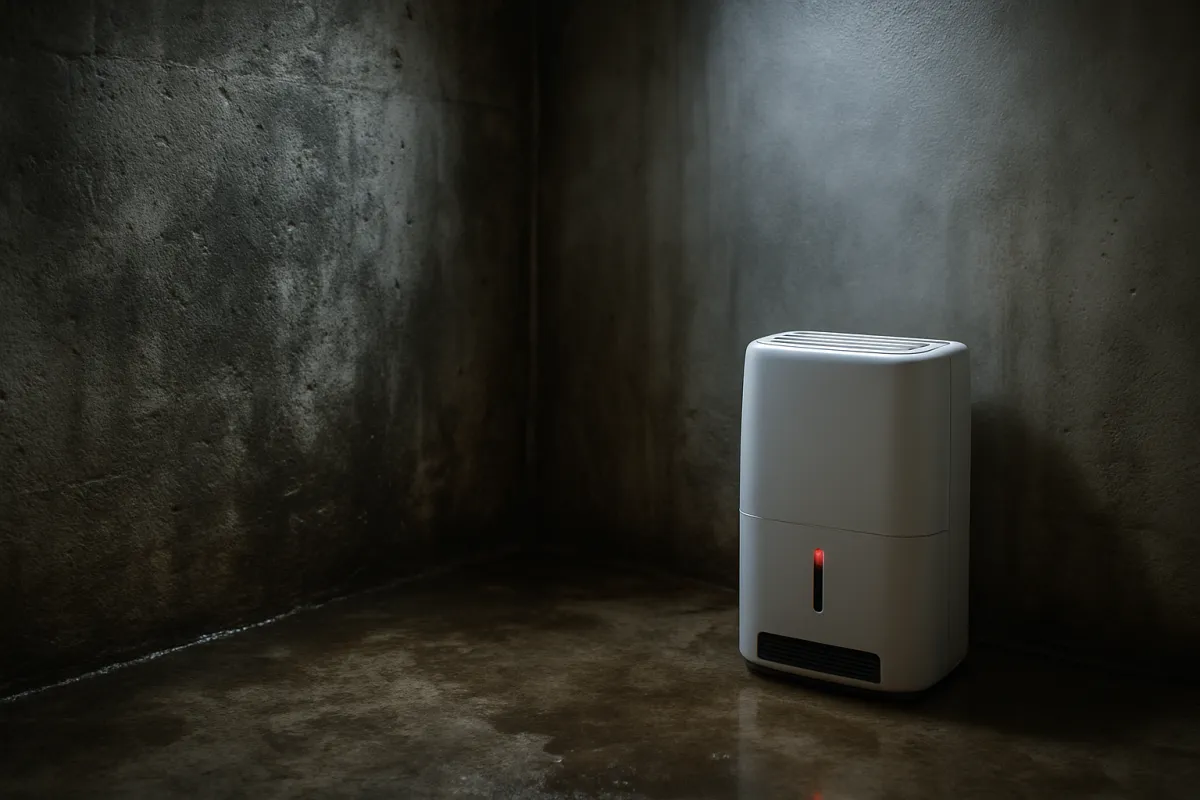
That cooler ambient temperature is also precisely what creates the equipment problem this comparison centers on. The same coolness that makes a basement prone to humidity and condensation on surfaces is the coolness that a standard compressor dehumidifier, designed and rated for typical room temperatures, can struggle to operate in without icing over.
Where a damp basement's moisture typically comes from
An illustrative split of common basement moisture sources. Segments sum to 100 percent. Your own basement's mix depends on its construction, grading, and ventilation.
A dehumidifier addresses all of these at once by drying the air itself, but it cannot fix an active seepage or grading problem, which is why persistent wet basements often need both equipment and a moisture-source fix.
The temperature problem: why a standard unit can fail in a basement
A compressor dehumidifier works by pulling air across a refrigerated coil, condensing moisture out of it the same way a cold glass of water condenses moisture from humid air on its outside. In a room at a typical indoor temperature, that coil stays cold enough to condense moisture but warm enough that the condensation drips off as liquid water. In a cold basement, the coil can drop low enough that the condensation freezes onto it as frost or ice instead of draining away.
Once ice builds up on the coil, airflow becomes restricted, moisture removal drops off, and many units eventually shut down on an internal safety switch rather than continue running in a damaged or inefficient state. This is specifically a cold-temperature failure mode, which is why it shows up disproportionately in basement complaints compared with any other room in a typical home. A dehumidifier explicitly rated for low-temperature operation manages this with a smarter defrost cycle, periodically warming the coil to clear any ice before it accumulates enough to cause a problem, which a basic unit built only for standard room temperatures typically does not do.
Compressor versus desiccant: the basement-specific tradeoff
This is the decision that rarely comes up for a bedroom or living room dehumidifier but matters directly in a basement. A compressor unit, the common type most people picture when they think of a dehumidifier, is generally the more efficient and more affordable option for moisture removal at moderate temperatures, which covers most basements that stay reasonably close to the rest of the house in temperature, even if a bit cooler.
A desiccant dehumidifier works on a completely different principle, passing air over a material that chemically absorbs moisture rather than condensing it on a cold coil, which means it has no coil to freeze and keeps working at consistent efficiency regardless of how cold the room gets. The tradeoff is that a desiccant unit commonly costs more to run for the same moisture removal at moderate temperatures, since its process is generally less energy-efficient than refrigeration-based condensing at those temperatures. The practical rule is straightforward: if your basement runs only mildly cooler than upstairs, a low-temperature-rated compressor unit is usually the better value; if it runs genuinely cold, especially in winter, a desiccant unit’s reliability is worth the higher typical running cost.
How to tell which category your basement falls into
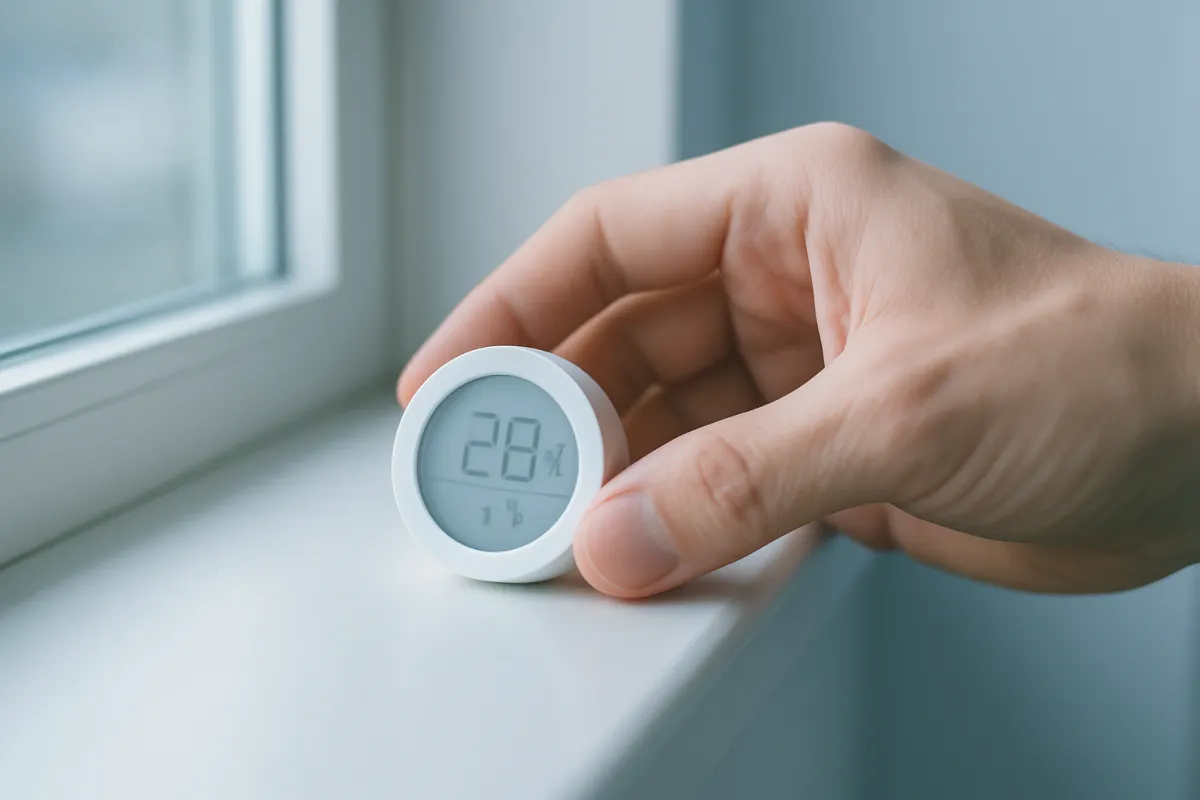
Rather than guessing, the straightforward way to decide between a compressor and desiccant unit is to leave an inexpensive thermometer or combination hygrometer-thermometer in the basement for a few days, ideally spanning both a cold snap and a milder stretch if your climate has real seasonal swings. If the readings stay within a few degrees of the rest of your home’s winter indoor temperature, a low-temperature-rated compressor unit will very likely perform reliably. If the readings regularly drop well below that, especially overnight or during cold weather, a desiccant unit removes the freezing risk entirely rather than hoping a compressor unit’s defrost cycle keeps up.
An unheated or only partially heated basement, one with exposed foundation walls and no finished insulation, is the most likely candidate for the colder category. A finished, insulated basement that is part of the home’s conditioned living space, even if it runs a little cooler than upstairs, is more often a good fit for the more affordable compressor option. If your readings sit right on the edge between the two categories, leaning toward the low-temperature-rated compressor option first is a reasonable, less expensive starting point, since you can always add a desiccant unit later if winter performance still disappoints.
Continuous drainage: why it matters more in a basement
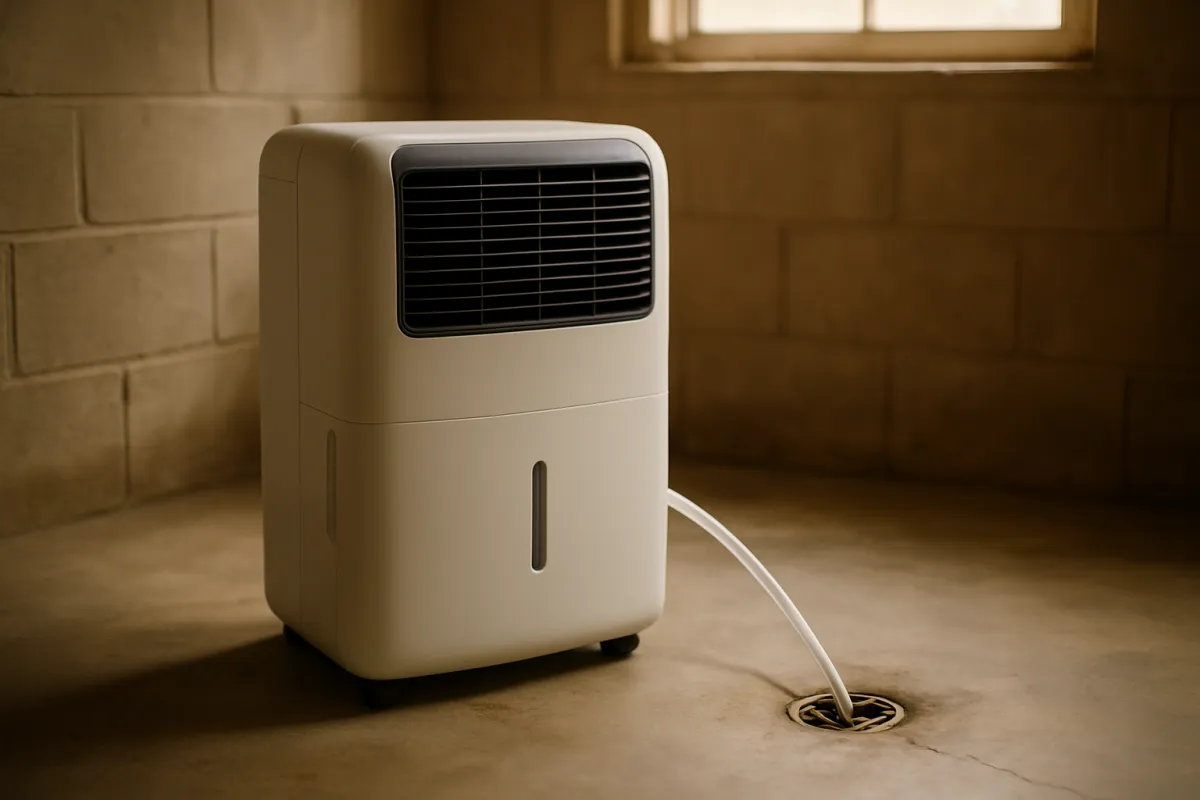
A basement is often the room in a house people check least frequently, especially if it is unfinished storage space rather than a living area, which makes an internal bucket that needs manual emptying a worse fit here than almost anywhere else. A full bucket that goes unnoticed for even a day or two defeats the entire purpose of running the unit, and a bucket that overflows creates exactly the kind of water problem the dehumidifier was bought to prevent.
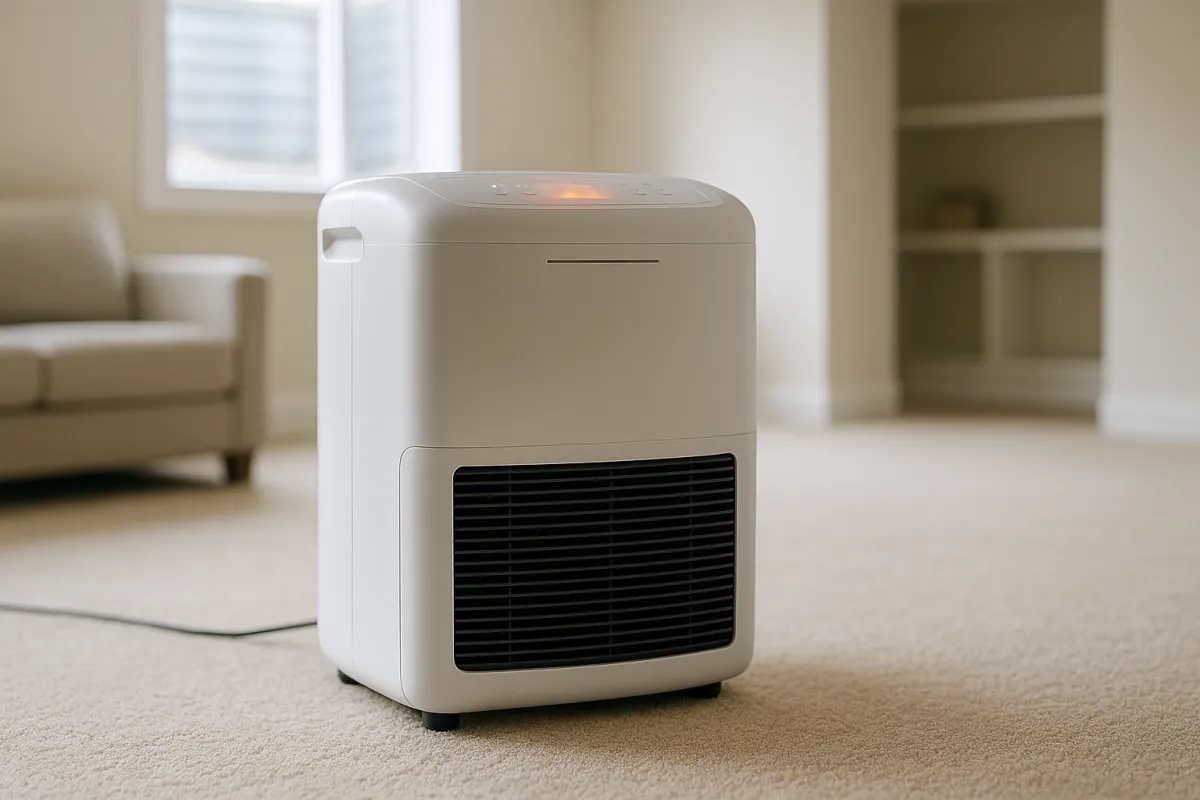
A continuous drain feature, which routes collected water out through a hose rather than into an internal bucket, solves the unattended-space problem directly, provided there is somewhere for that hose to go. That is where the pump question, covered next, becomes relevant specifically in a basement in a way it usually is not upstairs.
Why a basement often needs a pump, not just a hose
A simple gravity-fed continuous drain relies on the unit sitting higher than the drain point it empties into, which works fine on an upper floor with a drain or exterior exit below the unit’s own water outlet. A basement is frequently the lowest point in the entire house, which means there is often no lower point for a gravity hose to drain into at all, short of a floor drain that may not be conveniently located near where the unit needs to sit.
A built-in condensate pump solves this by actively pushing collected water uphill, commonly to a laundry sink, a window, or an exterior wall penetration, rather than relying on gravity. For a basement specifically, this feature is often the difference between a dehumidifier that can genuinely run unattended for days or weeks and one that still needs regular manual attention despite having a continuous-drain hose. If your basement happens to have a floor drain positioned conveniently below where the unit will sit, a pump is unnecessary and a basic gravity hose works fine; otherwise, it is worth prioritizing.
Placement: near the problem, not the center of the room
General dehumidifier placement advice says to keep a unit a few inches away from walls and furniture for airflow and roughly centered in the space. In a basement specifically, it is worth bending that rule toward the actual source of the moisture rather than the room’s geometric center. A corner near a sump pump, a foundation wall with a history of seepage, or a section of the basement with poor air circulation often tests more humid than the rest of the space, and placing the unit there addresses the problem at its source rather than averaging it out across a larger area.
One placement to avoid where possible is directly against a cold exterior wall, since that is often the coldest air pocket in the room and can push a borderline-rated unit closer to the freezing problems discussed earlier. A few feet of clearance from that wall, even while still being reasonably close to the damp area, is a reasonable compromise.
Capacity and the dampness-level adjustment
The square-footage and pint-capacity math for sizing any dehumidifier is covered thoroughly in our dehumidifier size and cost guide, so this comparison will not repeat it. What is worth flagging specifically for a basement is that capacity charts generally assume a moderately damp starting condition, and a basement that is persistently damp, prone to occasional flooding, or has a history of standing water needs a meaningfully larger capacity unit than the same square footage would suggest for an ordinarily humid room.
If your basement has ever had standing water after a heavy rain, or if a hygrometer left in the space consistently reads well above a comfortable indoor humidity target even with windows closed, size up from whatever a basic square-footage chart suggests rather than buying to the minimum. Running a unit below the capacity a genuinely damp basement needs means it runs constantly without ever quite catching up, which both shortens its service life and wastes the electricity it consumes while failing to solve the actual problem.
An open floor plan basement that connects directly to a finished family room without a separating door effectively adds that upstairs-adjacent square footage to the load the unit has to manage, since air moves freely between the two spaces. A basement broken into several small, closed-off rooms, by contrast, may need either a larger single unit with a fan strong enough to pull air from the farthest room, or more realistically, a smaller supplemental unit in the room furthest from wherever the primary unit sits. Neither scenario is captured by a simple single square-footage number, which is another reason to treat any capacity chart as a starting point rather than a guarantee.
Noise and location considerations in a basement
Noise matters less in an unfinished basement used mainly for storage or a furnace and water heater than it does in almost any other room in the house, which gives you more flexibility to prioritize capacity and low-temperature performance over the quietest available model. A finished basement used as a living space, a home office, or a guest bedroom is a different story, and the general noise guidance from our main dehumidifier buying guide applies there the same way it would upstairs.
Ductwork, exposed pipes, and HVAC equipment common in an unfinished basement can also create more ambient background noise than a quiet upstairs room, which further reduces how much a dehumidifier’s own sound output matters in that specific setting. Weigh this against your actual basement’s use, not a blanket assumption either way.
Common buying mistakes specific to basements
A few mistakes come up often enough in basement-specific buying that they are worth naming directly. Buying a unit with no low-temperature rating for a basement that regularly runs cold is the single most common one, leading directly to the icing and shutdown problems covered earlier. Sizing to the square footage alone without accounting for a persistently damp or occasionally flooded basement’s higher moisture load is a close second, leaving the unit perpetually behind the humidity it is trying to control.
Skipping the drain and pump question because an internal bucket seems like it will be fine is a third common mistake, one that tends to surface weeks later as a missed emptying and a water spill rather than at the moment of purchase. Buying based purely on the lowest price without checking whether the specific model is rated for basement-appropriate temperatures is the mistake that ties the others together, since a cheap unit that cannot handle a cold basement’s conditions ends up being the more expensive choice once you account for the one it has to be replaced with.
Humidity targets: what percentage to aim for in a basement
A common general target for indoor relative humidity is somewhere in a comfortable middle range, but a basement is worth setting slightly lower than a living space upstairs, precisely because its cooler surfaces make condensation and mold more likely at the same humidity percentage that would feel fine in a warmer room. Many basement dehumidifiers let you set a target percentage and then cycle on and off automatically to hold it, rather than running constantly, which both saves electricity and reduces wear on the unit.
Aiming for a target in the mid-to-upper forties percent range for an unfinished basement, or a touch lower for a finished basement used as living space, is a reasonable starting point for most households, though your own comfort and any specific mold-sensitivity concerns should take priority over any general number. A hygrometer left in the space, the same inexpensive tool mentioned earlier for checking temperature, is the simplest way to confirm the unit is actually holding your chosen target rather than assuming it from the dial setting alone.
Cost to run a basement dehumidifier: compressor vs desiccant
Running cost is where the compressor-versus-desiccant tradeoff shows up in dollars rather than just mechanism. A compressor unit sized appropriately for a basement that suits it, meaning a moderate rather than genuinely cold temperature, is generally the cheaper of the two to run for a comparable amount of moisture removed. A desiccant unit, chosen for its reliability in a cold basement, commonly costs more per month to run at the same capacity, since its moisture-absorption process is generally less energy-efficient than refrigeration at moderate temperatures.
Illustrative monthly running cost by type and basement condition
Assumes a 12-hour daily run schedule at a notional 16 cents per kilowatt-hour. Bars scale with the dollar figure. Your own cost depends on your unit, hours run, and local rate.
The middle bar is illustrative of a compressor unit running longer and less effectively to compensate for reduced output in the cold, before any icing shutdown; it is not a stable, reliable outcome, just a cost comparison. Your real wattage, hours, and rate will move every bar.
The middle bar deserves a caveat: a compressor unit struggling in a cold basement is not just more expensive to run, it is also the scenario most likely to end in the icing and shutdown problem covered earlier, so that extra cost does not even buy reliable performance the way the desiccant option does. Set your own basement’s conditions in the estimator above for an illustrative version of this comparison tailored to your inputs.
Signs it is time to size up or add a second unit
A handful of signs suggest your current unit, or your planned purchase, needs more capacity than you first assumed. A unit that runs continuously without the humidity reading ever dropping to your target, rather than cycling on and off, is the clearest sign it is undersized for the actual moisture load. A persistent musty smell that does not improve after a reasonable run-in period, continued condensation on cold surfaces like pipes or the foundation wall, or visible new mold growth despite the unit running are all signs the installed capacity is not keeping pace.
A very large or oddly shaped basement, one with multiple rooms or a finished section separated from an unfinished mechanical area, sometimes genuinely needs two smaller units rather than one large one, since a single unit may struggle to pull air effectively from a distant corner or through a doorway. If you are seeing these signs with a unit sized according to a basic square-footage chart, revisit the dampness-level adjustment covered earlier before assuming the unit itself is defective.
How a basement dehumidifier works alongside your sump pump and HVAC
A dehumidifier and a sump pump solve two different problems that often sit in the same basement, and it helps to be clear about which is doing what. A sump pump removes liquid water that has already entered the basement, typically groundwater rising through a basin set into the floor, before it can flood the space. A dehumidifier removes moisture from the air itself, which is a slower, ongoing process rather than an emergency response to standing water. A basement with an active sump pump benefits from a dehumidifier placed nearby specifically because the sump basin and the area around it is often the most consistently humid part of the room, as covered in the placement section above.
Your home’s HVAC system, if ductwork extends into the basement, can also interact with a dehumidifier’s effectiveness, since conditioned air circulating through the space changes both its temperature and, to a lesser extent, its humidity. A basement with active heating or cooling ductwork often runs closer to the rest of the house in temperature, which is a point in favor of a standard low-temperature-rated compressor unit rather than a desiccant model, reinforcing the temperature check described earlier as the starting point for this whole decision.
A worked example: an unfinished basement with a sump pump
Put the pieces together on one illustrative scenario. Picture an unfinished basement used for storage and laundry, with a sump pump in one corner that occasionally runs after heavy rain, and no finished insulation on the foundation walls, which means winter temperatures in the space run noticeably cooler than the rest of the house.
Given the uninsulated walls and the sump pump’s presence, both a cold-temperature signal and a known moisture source, this basement calls for a dehumidifier explicitly rated for low-temperature operation at minimum, with a desiccant unit worth considering if a thermometer check during winter shows temperatures dropping well below the rest of the home’s indoor range. Because the space is rarely checked daily and has no convenient gravity drain below the likely placement spot, a continuous drain with a built-in pump is the practical choice over an internal bucket. Capacity should be sized above the basic square-footage suggestion given the sump pump’s evidence of periodic water intrusion, and the unit should sit near the sump corner rather than the room’s center, since that is where the actual moisture originates.
Every detail in this example is illustrative rather than a measurement of one real basement, and your own basement’s insulation, temperature, drainage situation, and moisture sources will shape which features matter most for your specific space. Use the estimator above with your own basement’s size and conditions to build your version of this picture.
Maintenance that matters more in a basement
A dehumidifier’s air filter needs regular cleaning regardless of where it sits, but a basement’s typically dustier, less-ventilated air, especially near a workshop area or storage boxes, can clog a filter faster than it would in a cleaner upstairs room. Checking the filter on a shorter interval than the manufacturer’s general suggestion is a reasonable basement-specific adjustment. If the unit uses a continuous drain hose, periodically checking that hose for kinks, clogs, or disconnection is worth doing on the same visit, since a basement’s lower foot traffic means a dislodged hose can go unnoticed far longer than it would in a busier room.
For a unit with a pump, listening for the pump cycling normally during a visit, rather than running continuously or not at all, is a simple health check. Our broader whole-home maintenance plan covers general appliance upkeep habits that apply here as well.
A basement unit also tends to collect more surface dust on its housing and intake grille than an upstairs unit in a regularly cleaned living space, since basements see less routine dusting and more airborne particulate from storage boxes, workshop activity, or an attached garage. Wiping down the housing and intake periodically, in addition to the filter itself, keeps airflow unrestricted and helps the unit run at the efficiency its capacity rating assumes.
Long-term moisture control versus a dehumidifier alone
A dehumidifier is a genuinely effective tool for managing ambient air moisture in a basement, but it is worth being honest about what it cannot fix. It does not stop water from actively seeping through a cracked foundation wall, correct poor exterior grading that channels rainwater toward the house, or repair a failed gutter and downspout system that dumps water right next to the foundation. Those are structural and drainage issues that a dehumidifier can mask for a while by drying the air faster than moisture accumulates, but it is treating a symptom rather than the underlying source.
If your basement shows active water intrusion, visible cracks with water staining, or efflorescence, the chalky white mineral deposit that forms as water evaporates through concrete, a dehumidifier is still worth running for day-to-day comfort and mold prevention, but it should be paired with an assessment of the actual water source by a qualified foundation or waterproofing professional rather than treated as the complete solution. For a basement where the only issue is ordinary ambient humidity with no active seepage, a well-chosen dehumidifier using the guidance in this comparison is typically sufficient on its own.
Insurance, resale, and documenting basement conditions
A chronically damp or previously flooded basement can matter beyond day-to-day comfort, since it sometimes comes up during a home sale or an insurance conversation. Keeping a simple record, a few photos and a log of hygrometer readings over time, that shows the basement has been actively managed with appropriate equipment can be useful if questions ever come up about past moisture issues, though this is a minor, practical reason compared with the main goal of protecting stored belongings, indoor air quality, and the structure itself from ongoing dampness.
Addressing a documented mold or moisture history proactively, including running the right type of equipment for your basement’s actual conditions as this comparison covers, is generally viewed more favorably than an undocumented space with no evidence either way, though specific requirements vary by insurer and by local real estate practice, so treat this as a general observation rather than guidance on any specific policy or transaction. If moisture concerns are part of a larger home sale or insurance conversation, a licensed inspector’s written assessment carries more weight than a homeowner’s own log, and the dehumidifier record is best treated as supporting context rather than a substitute for that professional opinion.
Basement dehumidifier basics before you buy
Before comparing specific models, it helps to settle the basement-specific basics plainly.
Temperature. Check your basement’s actual winter temperature before buying. This single factor determines whether a standard compressor unit will work reliably or whether you need a low-temperature-rated compressor model or a desiccant unit instead.
Drainage. Identify whether your basement has a gravity-accessible drain below where the unit will sit. If not, prioritize a built-in pump over a basic continuous-drain hose.
Moisture source. A sump pump, a history of seepage, or any evidence of past flooding should push your capacity choice above a basic square-footage estimate.
Placement. Favor the actual damp area or seepage point over the room’s geometric center, while avoiding direct placement against the coldest exterior wall.
For the general sizing math and standard feature checklist that applies to any room, see our dehumidifier size and cost guide and how to choose a dehumidifier. If your space is a crawl space rather than a walkable basement, our crawl space dehumidifier guide covers the different equipment and sizing considerations that apply there instead.
The bottom line
The best dehumidifier for a basement is not a bigger version of the best dehumidifier for any other room, it is one chosen with your basement’s actual temperature and drainage situation in mind. A low-temperature-rated compressor unit covers most basements that stay reasonably close to the rest of the house in temperature, while a genuinely cold basement calls for a desiccant unit despite its typically higher running cost. A continuous drain, often paired with a built-in pump given how rarely a basement has a convenient gravity drain, matters more here than almost anywhere else in the home, and placement near the actual moisture source beats centering the unit in the room. Use the cost-per-use calculator and the estimator on this page to frame the running-cost side of your decision, and lean on our dedicated sizing guide for the capacity math this comparison intentionally left to that piece.
A note on scope: this comparison exists to help you choose the right dehumidifier category and features for a basement specifically, not to recommend a specific brand or model or promise any exact humidity result. Every number above is an illustrative planning figure rather than a measured result for your home, and real performance depends on your basement’s actual temperature, moisture sources, insulation, and square footage, so confirm a specific model’s low-temperature rating and capacity against your own conditions before buying. If your basement shows signs of significant mold growth, structural water intrusion, or a persistent musty odor that a dehumidifier alone does not resolve, that points toward a moisture or foundation issue worth having assessed by a qualified professional rather than one a dehumidifier can fix on its own.
Frequently asked questions
What features matter most in a basement dehumidifier?
The single most important feature is low-temperature operation, since a basement commonly runs cooler than the rest of the house, especially in winter, and a dehumidifier not designed for that range can struggle or shut down. Beyond that, a continuous drain option matters more in a basement than almost anywhere else in the home, since an unattended basement is where a full internal bucket is most likely to go unnoticed until it overflows. A built-in or connectable humidistat that lets the unit cycle on and off automatically at a target humidity level, rather than running constantly, is the third feature worth prioritizing, since a basement often needs to run for long, unsupervised stretches.
What size dehumidifier do I need for a basement?
Sizing a basement dehumidifier starts with square footage, but a damp or visibly wet basement needs more capacity than the same square footage would suggest in a drier space, because capacity ratings assume a moderate starting dampness level rather than a genuinely wet one. A small basement with mild dampness can often work with a smaller-capacity unit, while a larger basement, one with standing dampness, or one that floods occasionally needs a notably larger capacity unit to keep up. Our dedicated sizing breakdown covers the square-footage and dampness-level math in full detail; this comparison focuses specifically on what changes about that general sizing advice once the room in question is a basement rather than a living space.
Should I get a compressor or desiccant dehumidifier for a basement?
For most basements, a compressor dehumidifier is still the common default because it generally removes more moisture per dollar of electricity at the humidity and temperature ranges a basement typically sits in. The exception is a genuinely cold basement, one that regularly sits well below a comfortable indoor temperature, where a compressor unit's moisture-removal capacity drops off and can struggle or ice over, and a desiccant unit, which uses a moisture-absorbing material instead of refrigeration, keeps working efficiently regardless of temperature. If your basement stays reasonably close to the rest of the house in temperature, a compressor unit built for low-temperature operation is usually the better value; if it runs genuinely cold, a desiccant unit is worth the typically higher running cost for the reliability.
Why does my basement dehumidifier freeze up or stop working?
A standard compressor dehumidifier pulls moisture out of the air by passing it over a refrigerated coil, and in a cold basement that coil can drop below freezing, causing the condensation on it to turn to frost or ice instead of draining away as water. Once enough ice builds up, airflow is blocked and the unit stops removing moisture effectively or shuts off on a safety switch entirely. This is specifically a cold-temperature problem, which is why a basement, more than almost any other room in a home, is where this complaint shows up most often. The fix is either a dehumidifier specifically rated for low-temperature operation, which manages its defrost cycle differently, or in a genuinely cold space, a desiccant unit that has no refrigerant coil to freeze in the first place.
Where should I put a dehumidifier in a basement?
Central placement away from walls, with a few inches of clearance on all sides for airflow, is the general rule for any dehumidifier, and it applies in a basement the same way it does elsewhere. In a basement specifically, placing the unit near the area that actually feels or tests the most humid, often near a sump pump, a foundation wall prone to seepage, or a corner with poor airflow, rather than simply centering it in the room's geometry, tends to produce better results. Avoid placing it directly against a cold exterior wall if possible, since that is often the coldest air in the room and can push a borderline unit toward the freezing issues described above.
Do I need a dehumidifier with a pump for a basement?
Not necessarily, but it solves a real problem specific to basements more often than it does elsewhere in the home. A basement is frequently the one room in a house without a convenient gravity drain at a lower level than the unit itself, since it is already the lowest point in the house, which makes simple gravity-fed continuous draining to a nearby drain less likely to work the way it would on an upper floor. A built-in condensate pump actively pushes collected water uphill to a sink, a window, or an exterior exit point, which is often the only practical way to run a basement dehumidifier continuously without manually emptying a bucket. If your basement has a floor drain at a level the unit can gravity-drain into, a pump is unnecessary; if not, it is often the deciding feature.
How is a basement different from a crawl space for dehumidifier purposes?
A basement is generally a taller, walkable, often at least partly finished or usable space, while a crawl space is a low, unwalkable area beneath a home that typically cannot fit a standard upright dehumidifier and often needs a compact, specifically designed unit along with vapor barrier considerations that rarely apply the same way in a basement. The humidity sources can also differ: a basement's dampness often comes from a mix of ambient air moisture, foundation seepage, and limited ventilation, while a crawl space is frequently driven more directly by ground moisture through exposed soil. If your space is a crawl space rather than a basement, our dedicated crawl space dehumidifier guide covers the sizing and equipment differences specific to that situation.
Can I just run a basement dehumidifier seasonally, or does it need to run year round?
It depends on your climate and how your basement is used, but many basements see their worst humidity during the warm, humid months when outdoor moisture is highest, and some households run their unit seasonally rather than year round to save on electricity. A finished basement used as living space, or one with any history of mold, musty odor, or visible dampness, generally benefits from more consistent monitoring, if not necessarily constant running, since humidity can creep back up quickly once a unit is turned off. A hygrometer left in the space is the simplest way to decide for your specific basement rather than guessing from a general seasonal rule.