What's on this page
- Chest freezer vs upright freezer: the short answer
- How the two designs actually differ
- Efficiency: why chest generally wins
- Organization: why upright generally wins
- Making a chest freezer actually navigable
- Footprint: floor space versus vertical space
- Running cost: the dollar version of the efficiency gap
- Upfront cost: chest typically costs less
- Defrost type: manual versus frost-free
- Reliability and what can go wrong with each type
- Sizing: matching capacity to how you actually use it
- Climate and placement: garage, basement, or indoor space
- Noise: which type runs quieter
- Safety features worth checking on either type
- Resale and secondhand market considerations
- Common mistakes when choosing between the two
- When a chest freezer is the clear choice
- When an upright freezer is the clear choice
- A worked example: a family stocking up for winter
- Maintenance: what each type actually needs
- Standalone freezer versus relying on your refrigerator-freezer
- Chest and upright freezer basics before you buy
- The bottom line
Short answer: A chest freezer is generally more energy efficient and better suited to an unheated garage, because its top-opening lid keeps cold air from spilling out and it typically carries more insulation. An upright freezer is generally easier to organize, since shelves and door bins keep items visible and accessible, and it uses less floor space for the same capacity. Efficiency favors chest, convenience favors upright.
Chest freezer vs upright freezer is a genuine tradeoff rather than a contest with an obvious winner, which is why so many households end up debating it even after they have already decided they need more freezer capacity. A chest freezer wins on running cost and, often, on price for the same capacity, but asks you to dig for items and manage your own organization system. An upright freezer wins on day-to-day convenience and floor footprint, but costs more to run and, for a frost-free model, costs more to buy as well.
This comparison lines the two up directly on efficiency, organization, footprint, cost, and the situations where one clearly beats the other. Every number here is an illustrative planning range rather than a guarantee for any specific model, since real performance varies by brand, size, insulation quality, and where the unit sits. Set your household size and usage pattern in the estimator further down to see an illustrative capacity and running-cost comparison between the two types as you read.
Key takeaways
- A chest freezer's top-opening lid keeps cold, dense air from spilling out, which is the main reason it is generally more energy efficient than a comparable upright model.
- An upright freezer's shelves and door bins make items visible and accessible, which a chest freezer's top-down, stack-everything design does not offer without a deliberate organization system.
- Chest freezers typically cost less to buy for the same capacity and are often the more forgiving choice for an unheated garage.
- Upright freezers use less floor space for the same storage volume, which matters in a tight garage, basement, or utility room.
- Frost-free convenience, common on upright models, trades some of that efficiency gap away in exchange for not having to manually defrost the unit.
Chest freezer vs upright freezer: the short answer
If you want one answer before the detail, a chest freezer is the generally stronger choice on running cost, upfront price for the same capacity, and tolerance for a cold garage, while an upright freezer is the generally stronger choice on everyday organization, visibility, and floor footprint. Neither wins across every category, which is exactly why this remains a genuine decision rather than a settled recommendation.
The single structural fact that explains most of the other differences is which direction the door opens. A chest freezer opens from the top, so cold, dense air has nowhere to fall out to when the lid lifts. An upright freezer opens from the front like a refrigerator, so every time the door swings open, the cold air pooled inside spills out onto the floor and warmer room air rises in to take its place. That one difference drives the efficiency gap, and most of the organization gap traces back to the same top-down versus front-facing geometry.
How the two designs actually differ
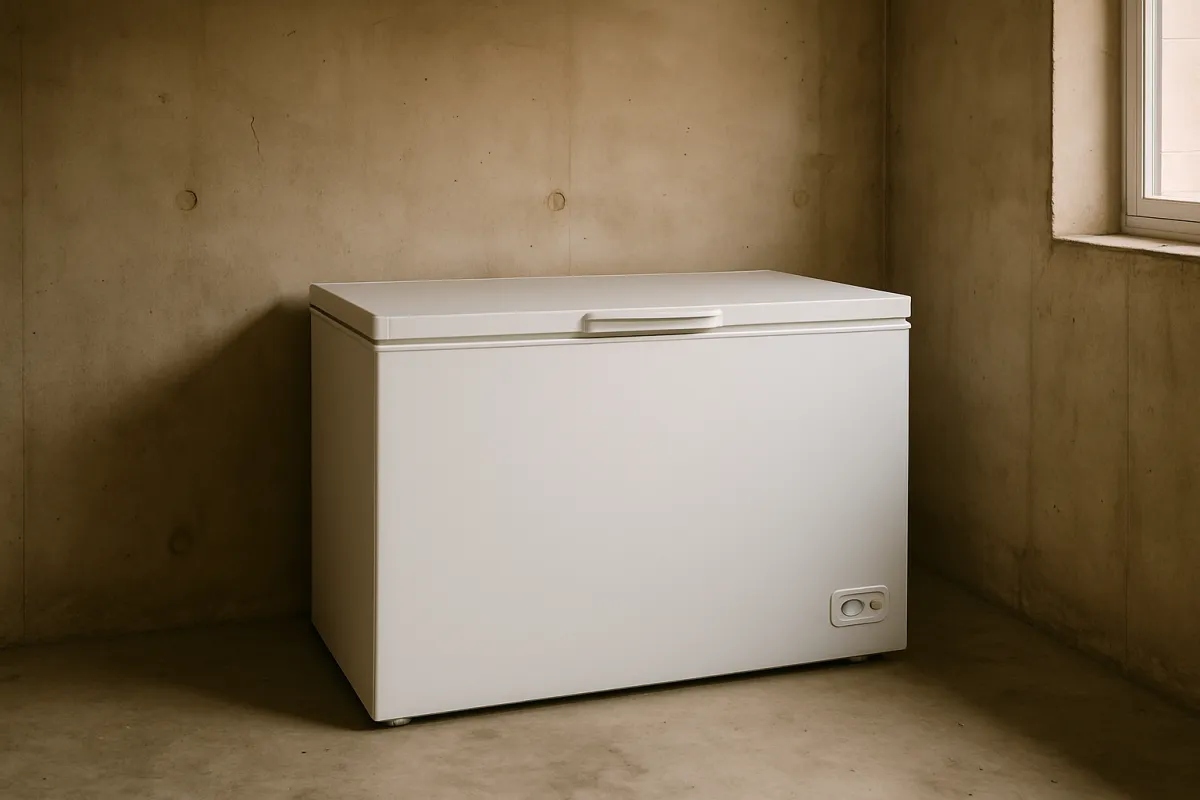
Beyond the door orientation, the two types differ in a few other structural ways that shape the rest of this comparison. A chest freezer is typically a simple insulated box with a single internal compartment, sometimes with a removable basket or divider, and the compressor and condenser coil usually sit underneath or to one side of the box rather than taking up visible interior space. An upright freezer is built more like a refrigerator’s freezer section, with shelves, door bins, and sometimes drawers, and its compressor typically sits at the back or bottom behind a visible grille.
That shelving and compartmentalization is a meaningful design cost for an upright freezer, since every shelf and door bin is a gap in the insulated envelope and a seam where cold can potentially leak, which a chest freezer’s simpler single-compartment box largely avoids. The upright design pays for its organizational convenience with slightly more places for efficiency to leak out, on top of the door-opening physics already covered.
Efficiency: why chest generally wins
Efficiency is the category where the gap between these two types is most consistent and most explainable by basic physics rather than brand quality. Cold air is denser than warm air, so it settles toward the bottom of any space, the same principle that makes a basement colder than an attic. In a chest freezer, that dense cold air sits at the bottom of the box, below the lid, so even with the lid open it mostly stays put rather than pouring out. In an upright freezer, the entire cold air column is behind a door that opens vertically, so every opening lets that whole column spill directly onto the floor.
Illustrative relative energy use for a similar storage capacity
A relative index with chest freezer set as the baseline. Higher means more electricity used for comparable capacity. Your actual unit varies by brand, insulation, and defrost type.
An illustrative relative index, not a specific efficiency rating for any model. The frost-free upright carries the extra electricity load of its automatic defrost heater and fan on top of the basic door-opening penalty.
Manufactured insulation differences compound the gap further: a chest freezer typically has more insulation thickness relative to its overall size than an upright model, partly because its simpler box shape makes thicker walls easier to engineer without sacrificing much usable interior space. Together, the door physics and the insulation difference are why a chest freezer commonly uses meaningfully less electricity than an upright model of similar storage capacity.
Where a chest freezer's efficiency advantage comes from
An illustrative breakdown of the factors behind the efficiency gap versus a comparable upright. Segments sum to 100 percent.
An illustrative attribution of the efficiency gap, not a measured engineering breakdown for any specific pair of models. The door-opening physics is the single largest factor, which is why the gap holds fairly consistently across brands.
Organization: why upright generally wins
Organization is where the efficiency advantage gets paid back. An upright freezer’s shelves and door bins mean items sit at eye level or close to it, visible and reachable without digging, the same way a refrigerator works. You can see at a glance what is on each shelf, grab what you need, and close the door, which keeps both the shopping and the cooking side of using a freezer simple.
A chest freezer has no shelves by default, which means items get stacked on top of each other, and anything on the bottom is both out of sight and physically buried under everything added since. Without a deliberate system, a chest freezer genuinely becomes a place where food gets forgotten, sometimes for months, until it is freezer-burned or simply unidentifiable. This is not a minor inconvenience, it is the single most common complaint about chest freezer ownership, and it is worth taking seriously before assuming the efficiency advantage settles the decision on its own.
Making a chest freezer actually navigable
Because organization is the real weak point of a chest freezer, it is worth covering the practical fixes directly rather than treating disorganization as inevitable. Wire baskets that hang from the freezer’s rim are the most common tool, creating a shallow, visible top layer for frequently used items while bulkier or longer-term items go underneath. Stackable, labeled bins achieve a similar effect without relying on the freezer’s own hardware, letting you lift out an entire category, vegetables, meat, or baked goods, as one unit rather than digging loose items out individually.
A written or digital inventory list, updated every time something goes in or comes out, solves the deeper problem that even a well-organized chest freezer still hides labels from a top-down view once items are stacked. Keeping that list on the freezer lid itself or on a nearby wall, rather than in a phone app you have to remember to open, tends to actually get used consistently, which is the only way any organization system genuinely prevents the forgotten-food problem this freezer type is known for.
Footprint: floor space versus vertical space
Physical footprint is a straightforward tradeoff between two dimensions. An upright freezer uses vertical space efficiently, the same way a refrigerator does, which means it needs a relatively small floor area for a given storage capacity, an advantage in a garage, basement, or utility room where floor space is the limiting factor. A chest freezer spreads its capacity horizontally across a single layer, so it needs considerably more floor area for the same volume, though it saves on front clearance since you only need room to lift the lid straight up rather than swing a door open.

If your available space is a narrow but tall closet or a corner with limited floor area, upright is the natural fit. If you have a wide, low-ceilinged space like a garage corner or a basement alcove, a chest freezer’s horizontal footprint often fits more naturally, and it avoids the door-swing clearance an upright needs on at least one side.
Running cost: the dollar version of the efficiency gap
Lower electricity use translates directly into lower running cost, and because a chest freezer commonly runs for years continuously rather than cycling on and off like a seasonally used appliance, even a modest efficiency difference compounds into a meaningful dollar gap over a typical ownership period. Our appliance wattage and running-cost reference walks through the general formula for converting any appliance’s nameplate wattage into a cost per hour, day, or month, which applies directly to either freezer type once you know its wattage and how often the compressor actually runs rather than idles.
Our broader cost to run a freezer breakdown covers freezer running cost in more general depth across sizes and types; this comparison focuses specifically on the chest-versus-upright efficiency gap that feeds into that broader running-cost picture. Set your own household size and freezer type preference in the estimator above for an illustrative running-cost comparison between the two.
Upfront cost: chest typically costs less
For a comparable storage capacity, a chest freezer typically costs less to buy than an upright model, largely because its simpler single-compartment construction, with no shelving, door bins, or drawer hardware, needs less manufacturing complexity. A frost-free upright freezer, which adds a defrost heater, timer, and internal fan on top of the basic upright design, typically costs the most of the three common configurations, chest, manual-defrost upright, and frost-free upright, for a comparable capacity.
Combined with the generally lower running cost discussed above, a chest freezer’s total cost of ownership over a multi-year period usually comes out ahead of a comparable upright, sometimes by a meaningful margin once the electricity difference compounds across several years. That said, the organizational cost, in forgotten food, extra time spent searching, and occasional freezer-burned waste, is real even if it does not show up on a utility bill, and it is worth weighing honestly rather than dismissing in favor of the purely financial comparison.
Defrost type: manual versus frost-free
Most chest freezers sold today are manual defrost, meaning frost gradually builds up on the interior walls and needs to be cleared periodically, while most uprights are available in either manual or frost-free configurations. Frost-free uses a periodic heating element to melt accumulated frost automatically, draining the resulting water away, which means you never have to empty the freezer and manually chip away at buildup, a genuinely appreciated convenience for a unit that holds months of food.
The tradeoff is the chart shown earlier: the defrost heater and the fan that frost-free operation requires use meaningfully more electricity than a manual-defrost unit of the same capacity, on top of the baseline upright-versus-chest gap. A manual-defrost chest freezer sits at the efficient end of this spectrum, and a frost-free upright sits at the other end, with a manual-defrost upright in between. If running cost matters more to you than defrost convenience, a manual chest freezer is the clear pick; if the opposite is true, frost-free upright trades dollars for convenience deliberately.
Reliability and what can go wrong with each type
Both types use the same basic refrigeration components, a compressor, a condenser coil, and an evaporator, so the core reliability profile is similar between them. A manual-defrost unit, whether chest or upright, has fewer electronic and moving parts overall, since it lacks the defrost timer, heater, and fan a frost-free model needs, which generally gives it fewer components that can fail over the unit’s lifetime. A frost-free upright’s additional components are convenient but are also additional things that can eventually need repair or replacement.
A chest freezer’s lid seal is typically a simple gasket running around a flat opening, which tends to be straightforward to inspect and replace if it degrades. An upright’s door seal works the same way but around a taller, sometimes slightly more complex opening with shelving brackets nearby. Neither difference is usually decisive on its own, but a household prioritizing the fewest possible points of failure, particularly for a backup unit in a garage that goes unchecked for stretches, often leans toward a manual-defrost chest freezer for that reason specifically.
Sizing: matching capacity to how you actually use it
Freezer capacity is commonly discussed as cubic feet, and a rough illustrative starting point sometimes cited is a notional amount of space per household member for a family eating a typical mix of fresh and frozen food, though this is a loose planning heuristic rather than a precise formula. A household that buys meat in bulk, processes a garden harvest, hunts, or stocks up heavily during sales needs considerably more capacity than headcount alone would suggest, regardless of which type you choose.
The more useful sizing approach is to think concretely about what you actually plan to store rather than working backward from a household-size formula. A deep freezer meant mainly as overflow for sale items and a few bulk purchases needs far less capacity than one meant to hold a whole butchered animal or a full season’s garden harvest. Oversizing either type wastes money both upfront and in running cost, since a larger unit generally uses more electricity even when partially empty, so size to your real plans rather than the biggest unit that fits the space.
Climate and placement: garage, basement, or indoor space
Where the freezer will actually sit matters for both types, but it matters somewhat more for a chest freezer’s practical advantage in an unheated space. A chest freezer’s typically heavier insulation and, for manual-defrost models, simpler electronics make it generally more tolerant of a cold garage’s temperature swings than an upright, particularly a frost-free upright whose defrost cycle and electronics can behave less predictably in extreme ambient cold. That said, always check a specific model’s manufacturer guidance on ambient operating temperature range, since an unrated unit run in a genuinely extreme environment can affect both performance and warranty coverage regardless of type.
An indoor, climate-controlled location, a basement, a finished garage, or a utility room that stays within a moderate temperature range, works well for either type without the garage-specific caveats, which shifts the decision back toward the organization-versus-efficiency tradeoff as the primary consideration rather than climate tolerance.
Noise: which type runs quieter
Noise is a smaller consideration than efficiency or organization for most buyers, but it is worth a brief mention since the two designs differ slightly here too. A chest freezer’s compressor typically sits beneath or beside the insulated box, often somewhat isolated from the room by the unit’s own mass and placement, which tends to produce a steady, low hum that many people find easy to tune out, especially in a garage or basement where some ambient noise is already expected. An upright freezer’s compressor, usually at the back or bottom behind a grille, can be slightly more noticeable depending on the model, and a frost-free unit’s internal fan adds a continuous low fan noise on top of the compressor cycling.
For a freezer living in a garage, basement, or utility room away from living and sleeping areas, this difference rarely matters in practice. It becomes more relevant only if you are placing either type in or near a finished living space, a less common scenario for a dedicated freezer but not an unheard-of one in a smaller home without garage or basement storage, such as a laundry room adjacent to a home office.
Safety features worth checking on either type
A few safety-related features are worth checking regardless of which type you choose. A power-loss or temperature alarm, which alerts you if the unit stops running or the interior temperature rises above a safe threshold, is valuable on either type given how much food value sits inside a full freezer, and it is particularly useful on a chest freezer kept in a garage or basement that is not checked daily. An interior light helps with navigation on either type, though it matters more for a chest freezer’s top-down digging than for an upright’s shelf-level visibility.
A latch or lock is worth considering specifically on a chest freezer if young children have access to the space it sits in, since the lid’s horizontal opening and depth have historically been flagged as a safety consideration for small children, and many manufacturers address this with a lid latch or safety lock as a standard or optional feature. An upright’s vertical door, opening and closing like a refrigerator, does not carry the same specific concern, though basic childproofing awareness is reasonable for either type in a household with young children, and keeping any freezer, old or new, properly secured when stored or awaiting disposal is a widely recommended precaution.
Resale and secondhand market considerations
Both types hold up reasonably well on the secondhand market if properly maintained, since a working freezer, chest or upright, is a straightforward, easily tested appliance that secondhand buyers readily understand. A manual-defrost chest freezer, with its simpler mechanical design and fewer electronic components, is often perceived as a lower-risk secondhand purchase, since there is less that can be subtly malfunctioning in ways a quick test at pickup would not reveal. A frost-free upright’s additional electronics, a defrost timer, heater, and fan, give a secondhand buyer more components to verify are functioning correctly, though a unit that is cooling properly at the time of purchase is a reasonable sign those components are working.
If you are buying secondhand rather than new, running either type for a day or two before loading it with food, and confirming the interior temperature actually reaches a safe frozen range, is a sensible check regardless of type, since a compressor that runs but cannot maintain temperature is a common and otherwise hard-to-spot secondhand freezer problem. Asking the seller how the unit was used, as a primary freezer running continuously or as occasional backup storage, can also hint at its remaining service life, since continuous years-long use generally puts more cumulative wear on a compressor than intermittent seasonal use does.
Common mistakes when choosing between the two
A handful of decision mistakes come up often enough to name directly. Choosing based on price alone without factoring in the running-cost difference over several years of ownership is the most common, since the cheaper upfront option, particularly a frost-free upright, can end up costing more in total once electricity is added across a multi-year ownership period. Underestimating the organizational commitment a chest freezer requires is a close second, with many buyers assuming they will naturally stay organized and then finding the bottom of the freezer effectively becomes a lost-and-found for forgotten food within the first year.
Sizing to a generic household formula without thinking through actual planned use, covered earlier in the sizing section, is a third common mistake that applies to both types equally, and it tends to produce either a unit that is cramped within the first year or one that sits mostly empty while still drawing a full load of electricity. Finally, placing a unit in an unheated or extreme-temperature space without checking the manufacturer’s rated operating range, whether it is a chest freezer in a very cold garage or an upright in a hot, poorly ventilated shed, can lead to performance problems or voided warranty coverage that a few minutes of checking the spec sheet would have avoided.
When a chest freezer is the clear choice
A chest freezer comes out ahead when running cost and upfront price matter most, when the freezer will live in an unheated garage or similar space, when you have floor space to spare but want to minimize front clearance needs, and when you are willing to commit to an organization system, baskets, bins, or an inventory list, to avoid the out-of-sight problem. A household using a chest freezer mainly for bulk, infrequently accessed storage rather than everyday grab-and-go items tends to be the best fit, since the accessibility downside matters less when items are not being retrieved daily.
When an upright freezer is the clear choice
An upright freezer comes out ahead when floor space is the binding constraint, when everyday visibility and easy access matter more than squeezing out the lowest possible running cost, and when the convenience of frost-free operation is worth its electricity premium to you. A household that uses its freezer more like an extension of the refrigerator, frequently grabbing individual items rather than storing in bulk for months at a time, tends to get more day-to-day value from an upright’s shelved, visible layout than from a chest freezer’s efficient but harder-to-navigate design.
A worked example: a family stocking up for winter
Put the comparison to work on one concrete scenario. Picture a family of four with a detached, unheated garage, planning to buy a quarter of beef for the winter along with a steady stream of sale-priced meat and a modest vegetable garden’s worth of produce to freeze. Floor space in the garage corner they have in mind is generous, roughly a few feet in each direction, but front clearance for a swinging door is tight against a nearby workbench.
Given the unheated garage, the efficiency priority, and the tight door clearance, a chest freezer is the stronger fit here on nearly every count that matters to this household: better tolerance for the garage’s temperature swings, lower running cost for a unit that will run continuously for years, and no door-swing clearance needed against the workbench. The family commits to hanging wire baskets for frequently used cuts and keeping a written inventory taped to the lid to manage the one real downside, since the bulk, infrequent-access nature of a quarter of beef and a season’s produce suits a chest freezer’s storage style better than an upright’s everyday-access design anyway.
Every detail in this example is illustrative rather than a measurement of one real household, and your own garage conditions, storage plans, and space constraints will shape which type actually fits best. Use the estimator above with your own household size and usage pattern to build your version of this comparison.
Maintenance: what each type actually needs
Both types need their condenser coil, typically underneath a chest freezer or behind a grille on an upright, kept free of dust buildup, since a dusty coil forces the compressor to work harder for the same cooling, quietly raising running cost on either type over time. A manual-defrost unit of either type needs periodic defrosting once interior frost reaches a noticeable thickness, commonly cited as around a quarter inch, since thick frost insulates the interior walls and makes the compressor work harder, undermining the very efficiency advantage a chest freezer is chosen for in the first place.
Checking the door or lid seal periodically for gaps, cracks, or a weak closure, on either type, catches a slow efficiency leak before it becomes a noticeable one on the electricity bill. Our broader whole-home maintenance plan covers general appliance upkeep habits that extend naturally to either freezer type.
Leveling the unit is a smaller but often overlooked step worth checking at setup and again periodically, since an unlevel chest freezer can cause the lid to not seal evenly along one edge, and an unlevel upright can put uneven stress on the door hinge over time, both of which quietly reduce efficiency in a way that is easy to miss unless you specifically check it with a level or a simple visual inspection of the seal’s contact along its full length.
Standalone freezer versus relying on your refrigerator-freezer
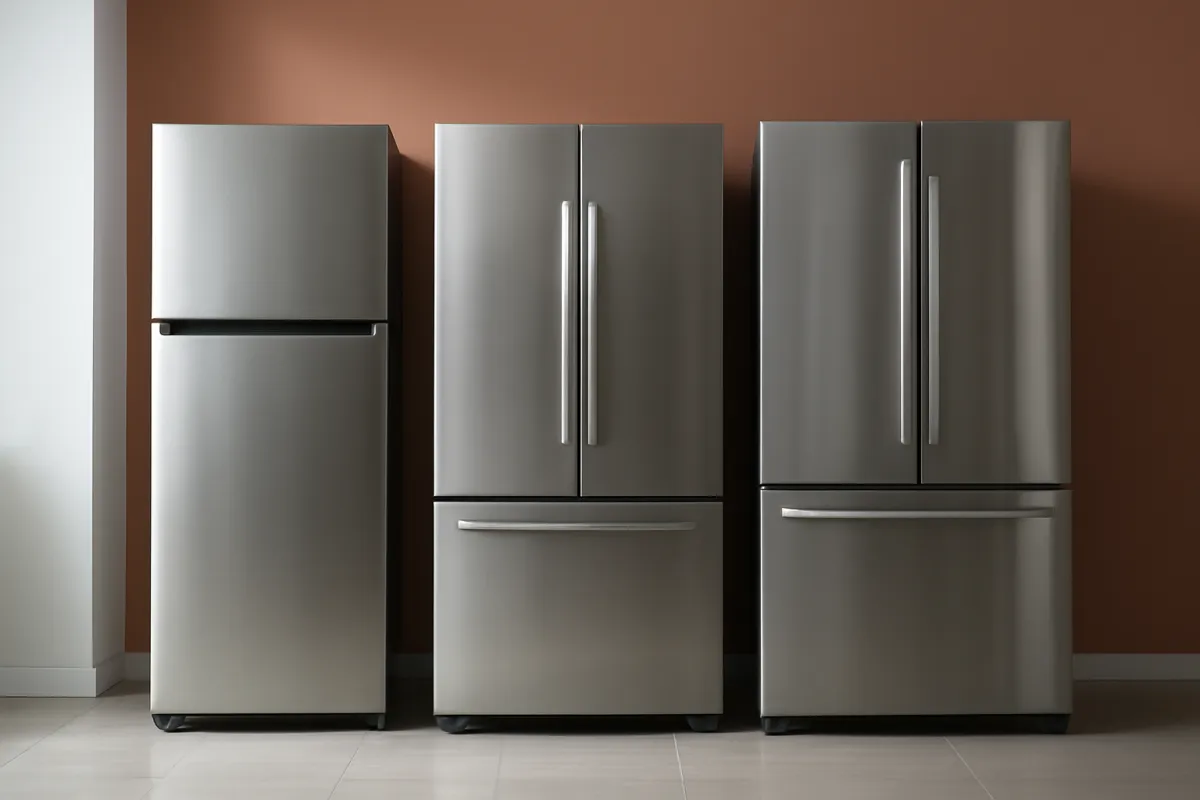
Before committing to either type, it is worth confirming a standalone freezer is actually the right move rather than simply needing more capacity in the freezer compartment your refrigerator already has. A refrigerator’s built-in freezer section, whether top-mount, bottom-mount, or a French-door side column, is sized for everyday short-term storage and typically cannot hold more than a few weeks of food for an average household, which is exactly the gap a standalone chest or upright freezer is meant to fill.
If your actual need is simply a slightly larger everyday freezer rather than bulk long-term storage, upgrading to a refrigerator with a larger freezer compartment might address the problem more simply than adding an entirely separate appliance, along with its own electricity draw and floor space requirement. If your need is genuinely bulk storage, a side of meat, a garden’s worth of produce, or stocking up during sales, a dedicated standalone unit in either the chest or upright configuration this comparison covers is the appropriate answer, and the decision becomes the one this article focuses on. Our how to choose a refrigerator guide covers the refrigerator-freezer side of that fork in more depth if you are still weighing whether a standalone unit is genuinely necessary for your household.
Chest and upright freezer basics before you buy
Before comparing specific models, it helps to settle the basics that apply to either type.
Capacity planning. Think in terms of what you actually plan to store, bulk meat, garden produce, or simple overflow, rather than a generic per-person formula, and size to that real plan.
Defrost type. Manual defrost is the more efficient and typically cheaper option; frost-free trades some of that efficiency and price for genuine day-to-day convenience.
Placement environment. An unheated garage favors a chest freezer’s typically heavier insulation and simpler electronics; an indoor, climate-controlled space works well for either type.
Organization commitment. A chest freezer’s efficiency advantage comes with a real organizational cost that a basket, bin, or inventory system can manage but not eliminate entirely.
For the broader running-cost math across freezer sizes generally, see our cost to run a freezer breakdown, and for general energy-efficient appliance shopping habits that apply beyond this one category, see our how to choose energy-efficient appliances guide.
The bottom line
Chest freezer vs upright freezer comes down to a straightforward tradeoff: chest wins on running cost, upfront price, and tolerance for a cold garage, because its top-opening design keeps cold air from spilling out and it typically carries more insulation; upright wins on everyday organization, visibility, and floor footprint, because its shelved, front-opening design mirrors a refrigerator’s convenience. Neither is the universally correct choice, and the right pick depends on whether you value lower bills and garage tolerance more than easy daily access and a smaller floor footprint. Use the cost-per-use calculator and the estimator on this page to frame the running-cost side of your own decision, and if you land on chest, commit to an organization system from day one rather than discovering the forgotten-food problem the hard way.
A note on scope: this comparison exists to help you weigh chest freezer vs upright freezer for your own household and space, not to recommend a specific brand or model or promise any exact efficiency, capacity, or running cost. Every number and relative comparison above is an illustrative planning figure rather than a measured test result, and real performance varies by manufacturer, insulation quality, defrost type, and where the unit is placed, so check a specific model’s own published energy rating before buying. Nothing here is a substitute for checking a specific unit’s manufacturer guidance on ambient operating temperature before placing it in an unheated garage or similar space.
Frequently asked questions
Is a chest freezer or upright freezer more efficient?
A chest freezer is generally more energy efficient than a comparable upright model, commonly by a meaningful margin for the same storage volume, for two structural reasons. Cold air is denser than warm air and sinks, so every time an upright's door swings open, the cold air inside spills out onto the floor and warm room air rises in to replace it, while a chest freezer's top-opening lid traps the cold air inside since it has nowhere to fall out to. A chest freezer also typically has more insulation thickness relative to its size and fewer seams and seals where cold can leak out. The tradeoff for that efficiency is organization and accessibility, which the rest of this comparison covers.
Why do upright freezers use more electricity than chest freezers?
The main reason is the door-opening physics described above: cold air is denser and sinks, so an upright freezer's front-opening door lets accumulated cold air fall out every time it opens, which the compressor then has to work to replace. A chest freezer's top-opening lid keeps the cold air layer sitting at the bottom of the box even when open, since it has nowhere to spill to against gravity. Upright models, especially frost-free versions with an automatic defrost heater and internal fan, also commonly use more electricity for defrost cycling itself, which a manual-defrost chest freezer typically does not have.
How much freezer space do I actually need?
A commonly cited starting point is a notional amount of cubic feet per household member for a family that eats a mix of fresh and frozen food, with more needed for a household that buys meat in bulk, gardens and freezes produce, or hunts and processes its own game. That is a rough planning starting point rather than a precise formula, since actual usage varies enormously by household habits. The more useful approach is to think about what you actually plan to store, a side of beef, a garden's worth of vegetables, or simply extra freezer backup for sale items, and size toward that specific use rather than guessing from household size alone.
Can I organize a chest freezer without losing items at the bottom?
Yes, with deliberate effort, though it takes more active management than an upright's shelving does automatically. Wire storage baskets that hang from the rim, stackable labeled bins, and a loose zone system, assigning general areas of the freezer to meat, vegetables, and so on, are the common tools for keeping a chest freezer navigable. Keeping an inventory list on or near the freezer, updated as items go in and come out, solves the out-of-sight problem more reliably than any physical organization system alone, since a chest freezer's top-down view makes labels on buried items hard to read without digging. Without some system, a chest freezer genuinely does become a place where food gets forgotten and eventually wasted.
Does a chest freezer or upright freezer take up more space?
An upright freezer generally has a smaller floor footprint for the same storage capacity, since it uses vertical space the way a refrigerator does, which matters in a smaller garage, basement, or utility room where floor area is limited. A chest freezer spreads its capacity horizontally, needing more floor space for the same volume, but it does not need clearance in front for a swinging door the way an upright does, only room to lift the lid straight up. If floor space is the binding constraint, upright generally wins; if you have floor space but a low ceiling or a tight side clearance, chest can be the better physical fit.
Is a chest freezer or upright freezer better for a garage?
A chest freezer is often the more forgiving choice for an unheated garage, because its denser cold-air retention and typically heavier insulation make it somewhat more tolerant of ambient temperature swings than an upright model, and manual-defrost chest freezers in particular have fewer electronic components that can struggle in extreme cold or heat. That said, check that any specific model you are considering is rated for garage or unheated-space use, since very low or very high ambient temperatures can affect compressor operation and warranty coverage on either type if the manufacturer does not list that environment as supported.
How often should I defrost a chest or upright freezer?
A manual-defrost chest freezer, the most common type for this category, typically needs defrosting when interior frost buildup reaches a noticeable thickness, commonly a a quarter inch or more, since thick frost acts as insulation that makes the compressor work harder for the same cooling, which is the opposite of what you want from an efficiency standpoint. A frost-free upright freezer handles this automatically with a periodic heating cycle, trading that convenience for the extra electricity the defrost heater itself uses. Checking a manual-defrost unit's frost buildup every few months and scheduling a defrost when it becomes noticeable keeps the efficiency advantage of that design intact.