What's on this page
- Two machines, two different jobs
- What they cost to buy
- The running costs the box never mentions
- The battery: both machines’ hidden clock
- Cleaning ability, floor by floor
- The time math robots trade on
- Cost per use: running the numbers
- Where the five-year money goes
- Pets change the rankings
- Mopping combos and other feature traps
- The case for owning both
- How to choose in ten minutes
- Noise, filtration, and apartment realities
- The third option nobody advertises: the corded upright
- Maintenance habits that double a vacuum’s life
- One home, three setups: a worked example
- Common vacuum-buying mistakes
- The consumables calendar: what you actually rebuy, and when
- Cordless runtime, dustbin size, and the specs that decide daily friction
- Buying scenarios: matching the small fleet to four common homes
- When to repair, when to replace: the end-of-life math
- Shark, Dyson, and the big vacuum brands
- The bottom line
Short answer: A robot vacuum wins on cost per use because it cleans daily without your time, spreading its price across hundreds of sessions a year, while a cordless stick wins on control, with more suction for stairs, spills, edges, and thick carpet. Hard floors and open layouts favor the robot; stairs, clutter, and plush carpet favor cordless. Both carry running costs the box ignores, and for many homes two mid-range machines beat one flagship.
Vacuum shopping has quietly become a two-party system: the robot that cleans while you live your life, and the cordless stick that cleans exactly what you point it at. The marketing treats them as rivals, which produces the wrong question. They are different tools with different economics, and the BenchNest way to compare them is the same way we compare everything: what does each actually cost per cleaning it delivers, and which cleanings does your home actually need?
This breakdown runs that comparison end to end: purchase tiers, the consumables and battery costs that never make the box, honest cleaning ability by floor type, the time value that robots trade on, and the combined setups that often beat either machine alone. Run your own numbers as you go with our cost-per-use calculator.
Key takeaways
- Robots win on frequency: cleaning daily without your time, they spread their cost across hundreds of sessions a year, driving cost per use very low.
- Cordless wins on control: more suction, stairs, spills, edges, and thick carpet, the cleanings a robot cannot reach or cannot do well.
- Both carry running costs the box ignores: filters, brushes, bags for self-empty docks, and an eventual battery. Budget them or the math flatters the wrong machine.
- Floor plan decides more than specs: hard floors and open layouts favor robots; stairs, clutter, and plush carpet favor cordless.
- For many homes, two mid-range machines beat one flagship at the same total price, covering each other's blind spots completely.
Two machines, two different jobs
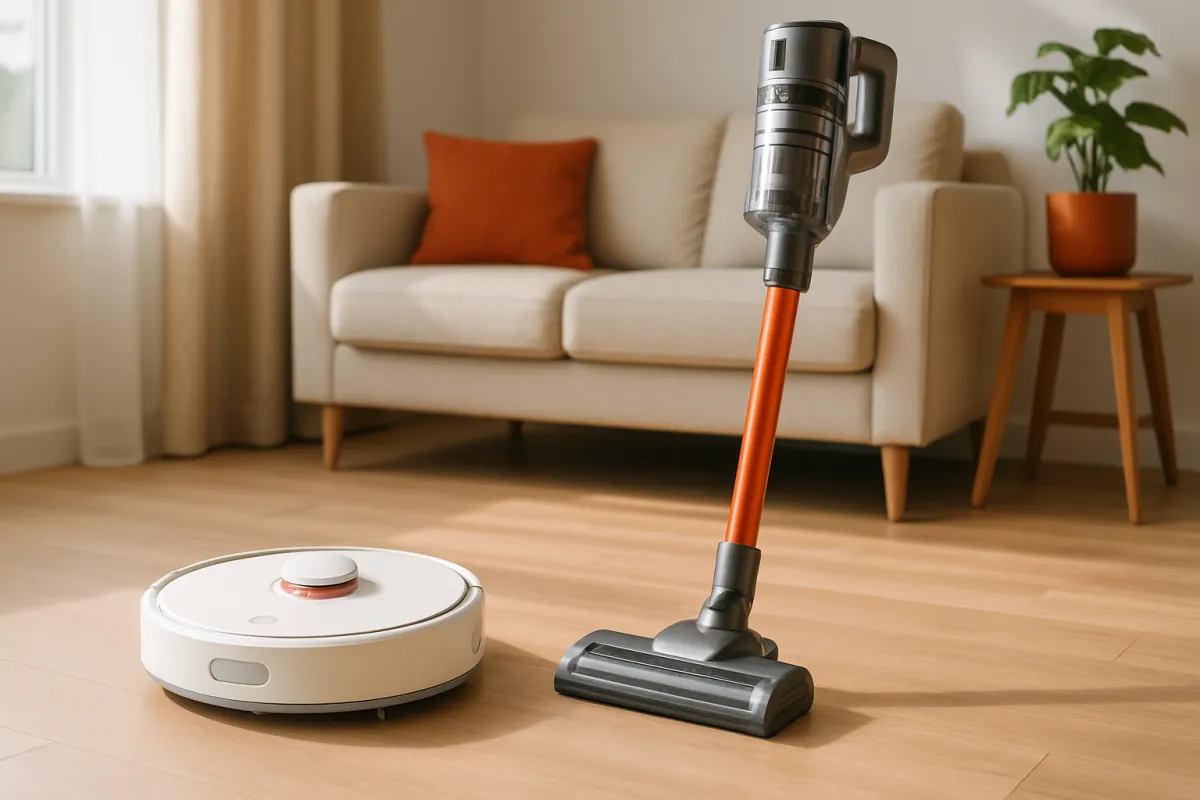
Start by naming what each machine is actually for, because the confusion begins when buyers expect one to do the other’s job. A robot vacuum is a frequency machine. Its suction is modest, its navigation imperfect, but it runs while you are at work, every day if you like, and floors that get a decent pass daily stay cleaner than floors that get a great pass weekly. Its product is not a spotless floor; it is a floor that never gets bad.
A cordless stick is a control machine. It has meaningfully more suction, a human brain steering it into corners, under furniture edges, up the stairs, and straight at the spill that just happened. Its product is targeted, on-demand cleaning at a depth the robot cannot match, at the price of your minutes every time. Framed this way, the choice stops being a spec war and becomes a question about your home: which job does your floor plan and lifestyle need more, relentless maintenance or capable intervention? Everything that follows hangs off that distinction.
What they cost to buy
Both categories span wide price ranges, and the tiers map to real capability differences. These are typical illustrative ranges rather than any model’s price.
| Tier | Robot vacuum | Cordless stick | What the step up buys |
|---|---|---|---|
| Budget | $150 to $300 | $100 to $250 | Basic cleaning, shorter runtimes, simpler navigation or fewer attachments |
| Mid-range | $300 to $600 | $250 to $450 | Better navigation and suction, self-empty options, stronger motors, better filtration |
| Flagship | $600 to $1,200+ | $450 to $900 | Advanced mapping, mopping combos, maximum suction, premium build |
Two patterns matter. First, the mid-range is where value concentrates in both categories: budget robots navigate poorly enough to frustrate, and budget cordless models often lack the power that justifies the category, while flagships charge steeply for refinements. Second, the price overlap is the strategic insight this article returns to: the cost of one flagship in either category roughly equals a mid-range robot plus a mid-range cordless, a pairing that covers every job in the house. Hold that thought for the combined-setup section.
The running costs the box never mentions
Purchase price is the visible number; ownership adds a stream of small costs that differ meaningfully between the two categories. Robots are the hungrier machines: side brushes wear and need replacing a few times a year, brush rolls and filters on a slower schedule, and self-empty docks consume proprietary bags month after month. A sensible budget for an actively used robot runs a modest double-digit to low-triple-digit figure per year in consumables, more with heavy pet hair.
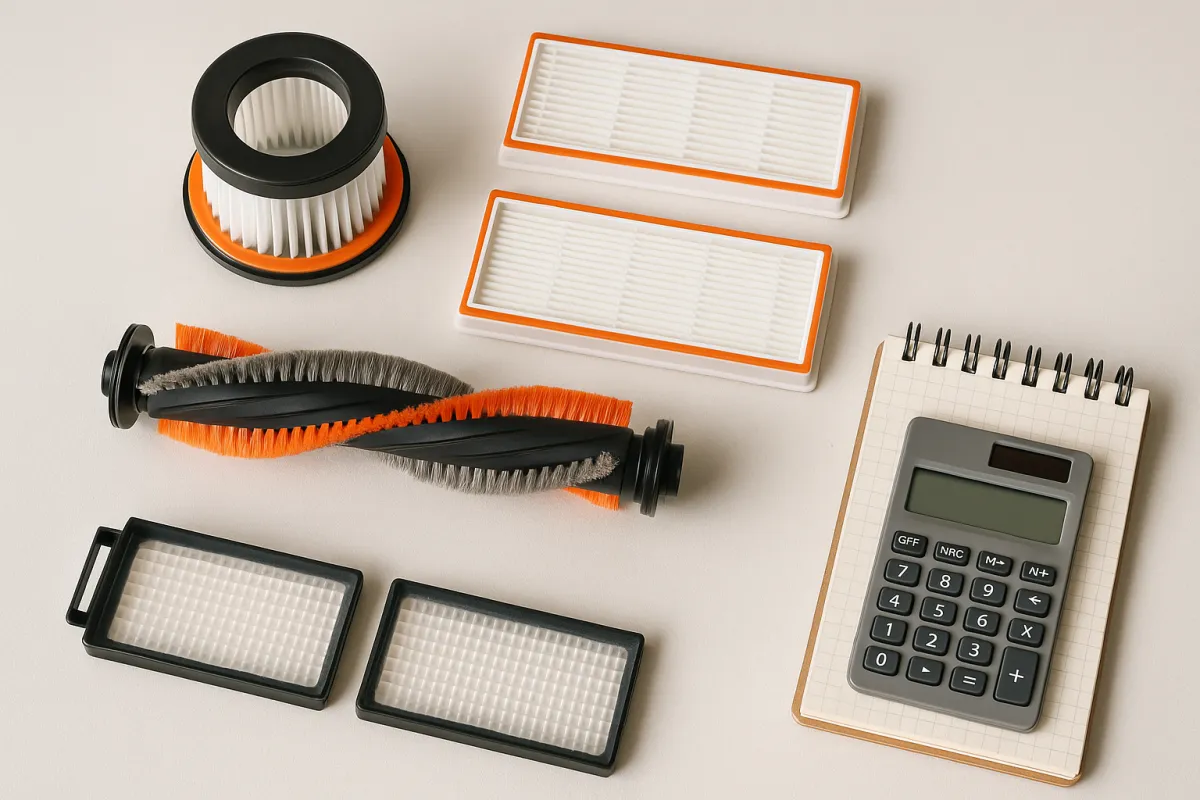
Cordless sticks run leaner, filters to wash or replace, an occasional brush roll, no bags on most designs, but they share the category’s biggest deferred cost: the battery, covered next. Electricity, for both, is a rounding error. The reason to take these small numbers seriously is the lesson that runs through every BenchNest cost breakdown: over a five-plus-year life, running costs routinely rival a meaningful fraction of the purchase price, and they differ enough between models to flip close decisions. Check the price and availability of a model’s consumables before buying it; a bargain machine with captive, costly parts is a subscription in disguise.
The battery: both machines’ hidden clock
Every cordless machine, robotic or handheld, lives on a lithium battery, and that battery is a consumable with a long fuse. Charge cycles wear it down: runtimes shorten gradually, until the machine that once did the whole house needs a mid-clean recharge. A robot cycling daily accumulates cycles fastest in calendar terms; a cordless used a few times weekly ages slower, though its owners notice fading runtime more, because they hold the machine while it dies.
Plan around three facts. First, expect a few strong years from either category before decline is noticeable, and treat one battery replacement as a normal event in a long ownership rather than a failure. Second, replacement economics vary wildly: some machines take affordable, easily sourced packs, others demand proprietary batteries priced at a painful share of a new machine, and some budget models offer no realistic replacement at all, making the battery’s death the machine’s. Third, this is a spec you can shop: replaceable battery design, replacement price, and availability are checkable before purchase and belong on the shortlist criteria. The greenest and cheapest vacuum is the one whose battery you can renew instead of the one you must landfill.
Cleaning ability, floor by floor
Specs abstract; floors decide. On hard floors, tile, wood, laminate, both categories perform well, and the robot’s daily frequency usually leaves hard-floor homes visibly cleaner overall than weekly human sessions ever did. This is the robot’s home turf, and largely hard-floored, open-layout homes are where owners rave.
On low and medium carpet, a good robot does honest maintenance work, lifting surface debris and keeping pile presentable, while a good cordless digs deeper per pass. The practical pattern for carpeted homes is robot-for-upkeep plus something stronger for periodic deep passes. On plush, thick carpet, the gap becomes a gulf: robots lose suction effectiveness and sometimes mobility, and the cordless, or even a corded upright for the truly carpet-committed, is doing the real cleaning. Then come the robot’s hard nos: stairs are entirely the cordless’s job, cluttered floors turn robots into complaint generators, and the spill that just happened will not wait for a scheduled run. Map your own home against this list honestly, because a robot bought for a house it cannot navigate becomes the most expensive doorstop in the category.
The time math robots trade on
The robot’s real product is your hours, so price them. A home vacuumed twice weekly by hand, at twenty-odd minutes a session, spends roughly thirty-plus hours a year pushing a vacuum. A robot absorbs most of that, converting it to a minute of bin-emptying here and a rescue-from-a-charging-cable there. Whether that trade is worth hundreds of dollars is not a spec question; it is a question about how much your hours are worth and how reliably you would actually do that vacuuming.
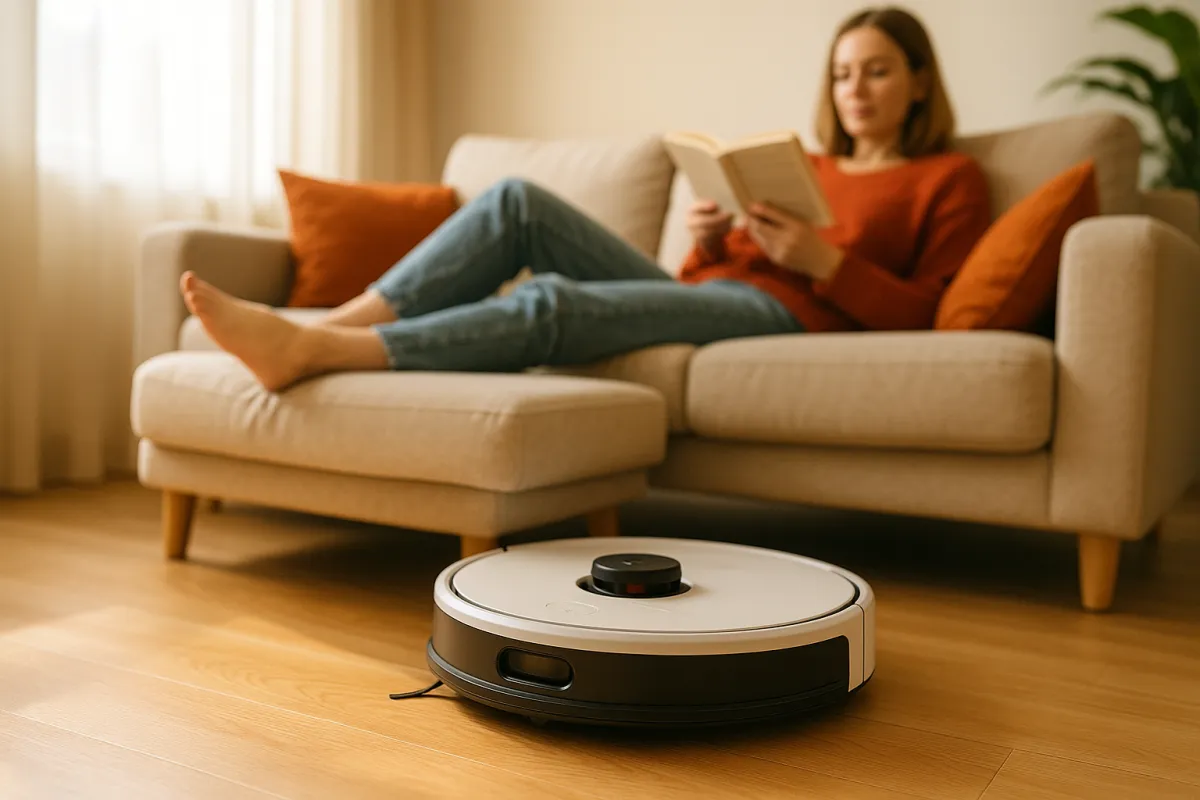
The honest second half: the robot does not eliminate labor, it shrinks and reshapes it. Someone still empties or maintains it, clears the floor of cables and socks, and occasionally retrieves it from under the bed. And the skipped-chore effect cuts both ways: households that were never going to vacuum twice weekly do not save those hours, they gain cleanliness they were not producing before, which is a different, arguably better, benefit. Either way, the time value is real and belongs in the ledger next to the consumables, not as marketing fluff but as the robot’s core line item.
Cost per use: running the numbers
Now the BenchNest math. Cost per use is purchase price plus lifetime running costs, divided by the number of cleaning sessions delivered. Frequency dominates this fraction, which produces the comparison’s most counterintuitive result: the more expensive robot often posts the lower cost per session, because it cleans daily.
Cost per cleaning session over five years
Purchase plus consumables and one battery, divided by sessions. Illustrative.
Frequency, not price tag, drives the ranking: machines that clean often amortize fast. A session is not a fixed unit of clean, though, one cordless deep pass outworks one robot pass, so read this beside the quality question, not instead of it.
Two honest caveats keep the chart useful. Sessions are not equal: a robot pass is lighter work than a determined cordless pass, so the robot’s cheap sessions buy maintenance, not depth. And the frequency assumptions are the whole game: a robot that ends up parked because your floors defeat it delivers few sessions at terrible cost, while a cordless that genuinely gets used twice weekly beats a robot that does not fit the house. Cost per use rewards the machine your household will actually run, which is the least glamorous and most reliable finding in all of gear testing.
Where the five-year money goes
Zoom out to total cost of ownership and the two categories divide their spending differently.
Five-year cost of ownership, robot with self-empty dock
Approximate split for an actively used mid-range robot. Illustrative.
A cordless shifts the mix toward purchase (fewer consumables, no bags) but keeps the battery slice. For the robot above, just over two-fifths of true cost arrives after the checkout page, and even the leaner cordless mix leaves roughly a third arriving late, which is exactly the share casual comparisons ignore.
The planning consequence is straightforward: compare machines on their five-year totals, not their price tags. A model a little pricier upfront with cheap, available consumables and a replaceable battery routinely beats a discount machine with captive parts. The manufacturer’s accessories page, read before purchase, predicts your ownership costs better than any review headline.
Pets change the rankings
Shedding animals stress every assumption above, in both directions. Pet hair is the strongest argument for a robot’s frequency: daily collection prevents the drifts that weekly cleaning allows, and pet owners are the category’s most devoted converts. It is also the strongest stress on the robot’s running costs, bins fill faster, making self-empty docks near-essential, brushes tangle and wear sooner, and filters load up quickly, so the consumables budget climbs.
On the cordless side, pet homes should prioritize anti-tangle brush designs and strong filtration, and expect the same accelerated consumable schedule. Allergy households have an extra reason to care about filtration quality and sealed designs in either category, the same logic that runs through our air purifier breakdown: capturing fine particles only helps if the machine does not leak them back out. The net effect of pets on this comparison: they push harder toward the two-machine setup, a self-empty robot for relentless collection plus a capable cordless for upholstery, stairs, and the spots the robot misses, and they raise the running-cost line for whatever you buy.
Mopping combos and other feature traps
The robot aisle overflows with add-ons, and a cost-per-use lens sorts them quickly. Mopping combo robots promise two chores in one; in practice, entry-level mopping, a damp pad dragged behind, adds little cleaning for real added cost and maintenance, while genuinely capable mopping systems live in the flagship tier at flagship prices. Buy the combo only if hard-floor mopping is a real, frequent chore in your home and you are buying the tier where mopping actually works.
Smart features follow the same rule: mapping that lets you clean specific rooms, no-go zones that protect the robot from problem areas, and scheduling are genuinely useful and now common in the mid-range; camera-based extras, voice assistants, and app bells beyond that rarely change cleaning outcomes. On the cordless side, the feature traps are attachment sprawl, three tools do most homes’ work, and display screens that add price without suction. The discipline is the same one that runs this whole breakdown: pay for what changes the cleaning your home needs, and let the rest stay on the shelf.
The case for owning both
Here is where the price-overlap observation pays off. A mid-range robot plus a mid-range cordless typically totals about the price of one flagship from either category, and the pairing covers the full cleaning problem: the robot supplies daily maintenance across the open floors, and the cordless supplies stairs, spills, edges, upholstery, and the periodic deep pass the robot cannot deliver. Each machine’s blind spot is the other’s specialty; neither needs to be exceptional because neither works alone.
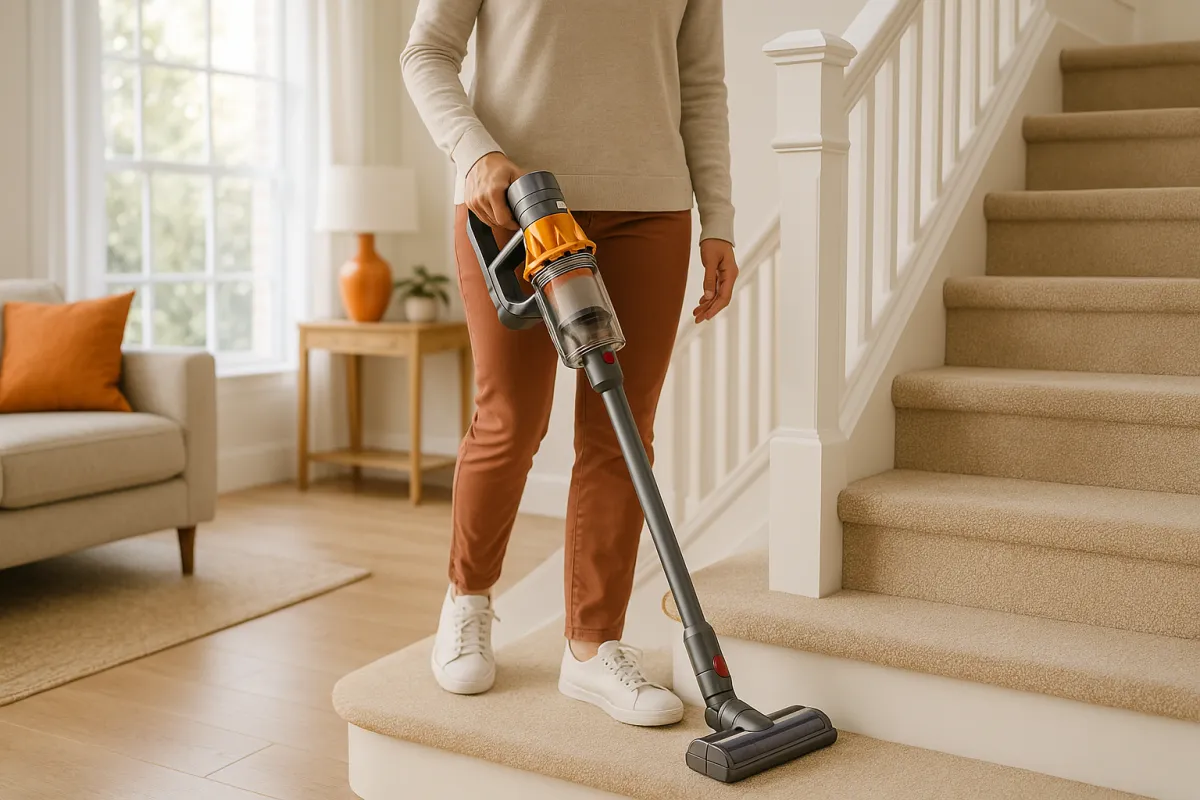
The two-machine setup is not for everyone: small apartments, minimal floors, or tight budgets are single-machine territory, and the right single machine falls straight out of the floor-by-floor section. But for the family home with mixed flooring, stairs, and a pet, the pairing is usually the best value in the entire category, and it beats the common alternative, one very expensive flagship asked to do everything, on both coverage and total cost. Distribute your budget across the jobs, not into one badge.
How to choose in ten minutes
Compress everything above into a decision you can run tonight. Walk your home first: count the floor types, the stairs, the clutter level, and the pets, and note who actually vacuums now and how often, honestly. If your floors are mostly hard, reasonably clear, and vacuuming keeps not happening, the robot is your machine, mid-range, self-empty if pets, with mapping. If your home is stairs and plush carpet, or your cleaning is reactive, spills, visitors, project messes, the cordless is your machine, mid-range, anti-tangle if pets, with a battery you can replace.
If your home is both, and most family homes are, price the two-machine setup against the flagship you were eyeing and watch it win. Then, whichever way you land, run the five-year check before checkout: consumables priced and available, battery replaceable at sane cost, and the cost-per-use math run at the frequency you will honestly sustain. Ten minutes, and you have out-analyzed the aisle.
Noise, filtration, and apartment realities
Two specs that rarely headline reviews decide daily happiness, especially in smaller spaces. Noise first: robots run long, so their moderate drone is either irrelevant, because you schedule runs for empty hours, or maddening, because you work from home and the robot chose your call for its patrol. Cordless machines are louder but brief, a targeted burst instead of an hour of hum. Apartment dwellers and home workers should weight this honestly: the robot’s best trick, cleaning while you are out, only works if you are actually out, and scheduling around your own presence is a small ongoing tax the brochure never mentions.
Filtration second: any vacuum that captures fine dust and then leaks it through unsealed seams is doing half a job, and for allergy households it is doing harm politely. Sealed systems with quality filtration exist in both categories, generally from the mid-range up, and the spec to look for is a sealed design, not just a filter acronym on the box. Washable filters trim running costs; either way, a clogged filter is the most common reason a healthy vacuum “loses suction,” which the maintenance section returns to.
A small apartment note on the other side of the ledger: in genuinely small homes, a cordless cleans the whole place in minutes, eroding the robot’s time advantage to nearly nothing, which is why studio dwellers are the one group for whom the robot is most often the wrong first machine.
The third option nobody advertises: the corded upright
An honest comparison admits the category both contenders quietly replaced. The corded upright or canister vacuum still exists, still costs less per unit of suction than anything cordless, and still deep-cleans thick carpet better than either machine on this bench. No battery to age, no runtime clock, decades-old designs with cheap parts: on pure cleaning per dollar, the corded machine remains the value king, which is exactly why carpet-heavy, budget-focused households should not let the cordless marketing wave them past it.
Its losses are convenience losses: the cord dance around furniture and outlets, the weight hauled up and down stairs, the closet footprint, and above all the friction that, in real households, quietly reduces how often the cleaning actually happens, a decline in frequency that the cost-per-use lens correctly and mercilessly punishes. The synthesis is the same one running through this entire comparison: match the machine to the cleaning your home actually needs. A plush-carpeted house that deep-cleans weekly may be best served by a corded upright plus a robot for maintenance, skipping the cordless entirely, while a hard-floor apartment inverts the logic. The corded option earns its place on the shortlist any time deep carpet work is a real, recurring job, and it frees budget for frequency elsewhere.
Maintenance habits that double a vacuum’s life
Whichever machines you buy, a few minutes of routine care decide whether they retire early or serve for many years, and the habits are the same across categories. Empty bins before they are packed full, overfilled bins choke airflow and strain motors. Wash or replace filters on schedule, since a loaded filter is the number-one cause of the “it lost suction” complaint that sends healthy machines to landfills. Cut the hair out of brush rolls with the seam-ripper or scissors every machine’s manual suggests and every owner ignores; a wrapped brush cleans poorly and burns motor bearings.
Battery care adds a category-specific layer: lithium packs age fastest when stored at full charge in hot places or run flat repeatedly, so parking a cordless off the charger once topped, and keeping robots’ docks out of hot garages, buys real calendar life. Robots add sensor and wheel care, a monthly wipe of the cliff sensors and a de-hairing of the wheels keeps navigation crisp. None of this takes ten minutes a month, and the payoff is the difference between the five-year cost-per-use math this article runs and a three-year forced replacement that wrecks it. The cheapest vacuum upgrade on the market is maintaining the one you already own.
One home, three setups: a worked example
Make it concrete with a typical family home: three bedrooms upstairs, hard floors and a rug downstairs, one enthusiastic shedding dog, two adults who honestly vacuum about once a week when life cooperates. Setup one, the flagship cordless alone: roughly $700, superb targeted cleaning, but floors between sessions accumulate dog hair, and the once-a-week reality means the house looks its best one day in seven. Cost per session lands high because sessions stay rare.
Setup two, the flagship robot alone: roughly $1,000 with a self-empty dock, and downstairs stays impressively hair-free on a daily schedule, but the stairs and the upstairs rugs wait for a machine that cannot reach or barely handles them, and the spill-of-the-week still summons a dustpan. Coverage gaps persist at flagship price.
Setup three, the pairing this breakdown keeps pointing at: a $450 mid-range self-empty robot patrolling downstairs daily, plus a $300 mid-range anti-tangle cordless for stairs, bedrooms, car seats, and disasters. Total outlay sits between the two flagships; coverage is complete; the robot’s daily sessions crush the cost-per-use math while the cordless handles everything with edges. Five years on, even after brushes, bags, and one battery each, the pairing’s per-clean cost undercuts either solo flagship, and the house simply stays cleaner. The specific numbers are illustrative; the shape of the result is the single most repeatable finding in the entire category, across every home we have run it for.
Common vacuum-buying mistakes
The same errors surface in every comment section.
- Buying a robot for a home it cannot navigate. Clutter, cables, thresholds, and plush carpet defeat robots; the floor plan is the spec that matters most.
- Expecting robot passes to equal deep cleaning. Frequency is the robot’s gift; depth stays human.
- Ignoring consumables and the battery. A third or more of true cost arrives after purchase; captive parts make it worse.
- Paying flagship prices for one machine when two mid-rangers cover more. Coverage beats prestige.
- Buying mopping combos below the tier where mopping works. Entry-level pads add cost, not clean.
- Sizing to the showroom, not the household. The machine you will actually run at your honest frequency is the one with the winning cost per use.
Every one traces to comparing machines against each other instead of against your home, which is the reversal this breakdown exists to make. The pattern is worth naming because it generalizes: the aisle frames every purchase as a war between products, and the winning move, here and across every category we test, is to reframe it as a match between a job and a tool. Homes do not need the best vacuum on the market; they need the right small fleet for their own particular mess, bought at honest five-year prices and maintained for the long haul. Get that frame right and the specific brand decisions become almost boringly easy.
The consumables calendar: what you actually rebuy, and when
The running-cost line becomes concrete once you put the consumables on a calendar, so here is the typical rebuy schedule for each machine, in illustrative terms. A robot vacuum works through side brushes every few months, a brush roll and a filter once or twice a year, and, on a self-empty model, a proprietary dust bag every month or two. Stack those on an actively used robot and the yearly consumables spend lands in the modest double digits to low triple digits, climbing with heavy pet hair. A cordless runs leaner: a washable filter to rinse or replace, an occasional brush roll, and rarely a bag, so its yearly consumables are usually a smaller figure, with the battery the one big deferred cost it shares with the robot.
The reason to write this schedule down before buying, rather than discovering it later, is that the parts prices are checkable and they differ enough between models to swing the five-year total. Two robots at the same shelf price can carry very different bag and filter economics behind them, exactly the razor-and-blades pattern this bench keeps flagging. A machine with cheap, widely stocked consumables quietly beats a rival with captive, pricey ones over a long ownership, even if the second looked identical on the shelf.
Set the schedule against your own home and the abstract “budget for consumables” advice turns into a real number. A pet household on daily robot runs fills bins and loads filters fast, so it sits at the high end of every interval and leans harder on the self-empty dock. A hard-floored apartment with a cordless used twice a week sits at the low end, rebuying almost nothing between batteries. Price your own intervals, add the eventual battery, and the cost-per-use math stops being a guess and becomes the arithmetic that actually decides which machine is cheaper to live with.
Cordless runtime, dustbin size, and the specs that decide daily friction
Two unglamorous cordless specs decide whether a machine gets used or abandoned, and neither headlines a review. Runtime is the first. A cordless rated for a long session on its lowest setting often lasts only a fraction of that on the high-power mode carpet actually needs, so the honest question is not the maximum runtime but the runtime at the power you will really use. A machine that dies halfway through the house on high quietly trains you to stop mid clean, which the cost-per-use math punishes by shrinking the sessions delivered. Buy enough runtime for your real floor area at real power, or accept a swappable second battery as part of the purchase.
Dustbin size is the second. A small bin on a cordless means stopping to empty mid clean, and on a robot it means either a self-empty dock or a daily bin ritual. Bigger bins reduce interruptions, which sounds trivial until you notice that friction, not economics, is what parks most machines in a closet. A shedding-pet home fills any bin fast, which is exactly why the pet section pushed toward self-empty docks and anti-tangle brushes.
The pattern holds across every machine on this bench: the spec that decides ownership is rarely the one on the front of the box. Runtime at working power, bin capacity, and how fiddly the maintenance feels together predict whether a vacuum stays in the rotation or becomes the most expensive item in the hall closet. Weigh those before you weigh suction claims, because a powerful vacuum you stop using cleans nothing.
Buying scenarios: matching the small fleet to four common homes
Put the whole comparison to work on four homes, with illustrative budgets to show the shape of each answer.
The studio apartment, hard floors, no pets, one occupant: a single mid-range cordless around $300 cleans the whole place in minutes, and the robot’s time advantage nearly vanishes in a space this small. One machine, one decision, done.
The hard-floored condo, open plan, a cat: a mid-range self-empty robot near $450 patrolling daily is the star here, since daily collection beats the drifting hair a weekly clean allows, and a cheap handheld cordless covers the sofa and the one flight of stairs. The robot does the heavy lifting for pennies a session.
The three-bedroom family house, mixed floors, stairs, a dog: the pairing this breakdown keeps landing on, a mid-range self-empty robot downstairs plus a mid-range anti-tangle cordless for stairs and bedrooms, total around $750, coverage complete, cost per clean low because the robot runs daily.
The plush-carpet house that deep-cleans weekly: skip the cordless marketing and pair a corded upright, the value king on deep carpet, with a cheap robot for hard-floor maintenance. The deepest clean per dollar with frequency covered on the side.
Notice the method never changes: list the cleaning jobs the home generates in a week, then buy the cheapest reliable combination that covers the list. The homes differ; the discipline does not.
When to repair, when to replace: the end-of-life math
Every vacuum reaches a decision point, usually when the battery fades or a motor weakens, and the cost-per-use lens answers it cleanly. Price the repair, price a comparable new machine, and check how many good years the repair realistically buys. A $60 battery that restores a $400 cordless to full runtime for two or three more years is an easy yes, since the cost per remaining clean stays low. A proprietary pack priced at half a new machine, fitted to a unit already showing motor wear, is usually a no.
The parts that fail on a schedule are predictable: batteries fade with cycles, brush rolls and belts wear, filters clog, and on robots the wheels and sensors age. Most of these are cheap, user-replaceable consumables that extend a machine’s life for a fraction of replacement cost, which is exactly why the maintenance section treats them as routine rather than terminal. The genuinely terminal failures are a dead motor, a cracked chassis, or a battery with no available replacement, and only the last of those is avoidable at purchase, by checking parts availability before you buy.
The honest rule: repair while the machine still fits your home and the fix costs a small share of replacement, and retire it when the repair approaches half a new machine or the unit no longer suits your floors. Running a five-year machine to seven with one battery and a fresh brush roll is often the cheapest clean floor available, which is the least glamorous and most reliable verdict on this whole bench.
Shark, Dyson, and the big vacuum brands
Walk into the category and a few names dominate the shortlist: Shark and Dyson across both robot and cordless, plus the familiar robot and stick-vacuum makers filling every tier. A brand is a useful starting point and a poor stopping point, because the same logic that runs through this whole breakdown applies to the badge too. A maker does not have a cost per use; a specific model at your honest cleaning frequency does. The popular Shark cordless vacuum, the flagship Dyson cordless, and the well-known robot lines each span budget to flagship pricing, so the name narrows the field without deciding the winner.
What a strong brand genuinely buys is parts you can still find in five years: batteries, brush rolls, filters, and dock bags in stock, which is exactly the running-cost lever this report keeps flagging. A machine whose battery you can renew outlives one whose proprietary pack has been discontinued, and the established brands tend to keep those parts flowing longer. That is a real reason to lean toward a known name, but it is a durability argument, not a cleaning one.
So treat the brands as your shortlist and then apply the method: match the machine to the jobs your home actually generates, price the consumables and the eventual battery, and run the five-year cost per use at the frequency you will really sustain. Whether it is a Shark, a Dyson, or a maker you had not heard of, the machine that wins is the one sized to your floors with parts you can buy, not the one with the loudest marketing. Jobs first, brands second.
The bottom line
Robot versus cordless is a false duel: one machine sells you frequency, the other control, and your floors, stairs, pets, and honesty about who actually vacuums decide which your home needs, or whether it needs a modest dose of both. The comparison also rewards a habit worth keeping for every gear decision on this site: ignore the category war the marketing wants you to join, and instead list the actual cleaning jobs your home generates in a week, then buy the cheapest reliable combination of machines that covers the list. Jobs first, machines second, badges never.
Whatever you choose, buy it on five-year math, purchase plus consumables plus a battery, spread across the sessions you will really run, and check the parts pages before the checkout page. Do that, and the cheapest clean floor you have ever owned will be the one you barely think about, which is, by every BenchNest measure, exactly what winning looks like.
File this breakdown under education, not shopping instructions. The prices, lifespans, and running costs above are benchmark illustrations chosen to make the planning math legible, never measurements of a particular machine, and manufacturers move those numbers with every product cycle. We offer no professional advice here, only a method. Check the current listings, consumable prices, and battery terms for any vacuum on your shortlist before the money leaves your account.
Frequently asked questions
Is a robot vacuum or a cordless vacuum better?
They solve different problems, which is why the comparison confuses people. A robot excels at frequent maintenance cleaning, running daily without your time or attention, so floors stay consistently decent. A cordless excels at on-demand, targeted cleaning with more power and control, stairs, spills, edges, and proper deep passes. Homes with mostly hard floors and busy schedules lean robot; homes with stairs, thick carpet, or heavy shedding lean cordless; many end up happiest with a modest version of both.
Are robot vacuums actually worth the money?
For the right home, yes, and the value is mostly time. A robot that runs daily replaces the routine vacuuming you would otherwise do or skip, and the cost per cleaning session drops very low precisely because it cleans so often. It is least worth it in homes it navigates poorly, cluttered floors, thresholds, lots of cables, or where deep carpet cleaning is the real need, since maintenance passes are its strength and deep suction is not.
What are the hidden costs of robot vacuums?
Consumables and the battery. Robots eat through side brushes, brush rolls, and filters on a schedule, self-empty models add proprietary dust bags, and the battery, cycled daily, eventually fades and costs real money to replace. Budgeting a modest yearly consumables spend, plus a battery somewhere in the machine's mid-life, is realistic. None of it is ruinous; all of it belongs in the cost-per-use math before you buy.
How long do vacuum batteries last?
Both types run on lithium batteries that fade with charge cycles. A robot cycling daily typically needs a battery sooner in calendar terms than a cordless used a few times a week, though usage patterns vary widely. Expect a few years of strong service from either, plan for one battery replacement in a long ownership, and check replacement price and availability before buying, because a cheap machine with an expensive or unavailable battery is a short-lived machine.
Do robot vacuums work on carpet?
On low and medium pile, modern robots do respectable maintenance cleaning, keeping surface debris under control between deeper sessions. On thick, plush carpet their limits show: less suction than a good cordless, and some models struggle to traverse it at all. Carpet-heavy homes should treat the robot as a supplement to a stronger vacuum rather than a replacement, or choose a cordless first.
Is a self-empty dock worth it?
It removes the robot's most frequent chore, emptying a small bin after nearly every run, and replaces it with a bag change every month or two, which is exactly the hands-off experience robot buyers want. The costs are a higher purchase price and ongoing proprietary bags. For shedding pets or daily runs, most owners consider it worth it; for light-duty use, the basic dock and a ten-second bin empty save real money.
What actually decides vacuum cost per use?
Three inputs: what you paid, what it costs to run, consumables, bags, electricity, an eventual battery, and how many cleaning sessions it actually delivers before retirement. Frequency dominates: a robot that runs daily spreads its cost across so many sessions that its cost per use is often lower than a cheaper machine used weekly. The machine you actually use is nearly always the better value, which is the honest heart of this comparison.
What is the best vacuum for pet hair?
There is no single best vacuum for pet hair, but the features that handle shedding are consistent across machines. Look for strong, sealed suction, an anti-tangle brush roll so hair does not wrap and choke the motor, and quality filtration so fine dander is trapped rather than blown back into the room. For a shedding home, many owners land on a pairing: a self-empty robot to collect the daily drift of hair before it piles up, plus a capable anti-tangle cordless for stairs, upholstery, and the spots the robot misses. Expect pet hair to load filters and fill bins faster, so plan on a heavier consumables schedule whichever machine you choose, and price the replacement brush rolls and filters before you buy.
Should I buy both a robot and a cordless vacuum?
For many homes the two-machine setup is genuinely optimal rather than indulgent: a mid-range robot handles the daily maintenance, and a mid-range cordless handles stairs, spills, edges, and periodic deep passes. Two mid-range machines often cost about the same as one flagship and cover each other's blind spots completely. The trap to avoid is buying two flagships, which doubles spend without doubling coverage.