What's on this page
- Why is my dryer not spinning? Start with what you actually hear
- Before you open anything: the safety rules for this job
- The order to work the causes in, and why it saves money
- Cause one: the door switch, the fastest free check
- Cause two: a broken or thrown drive belt, the most common real answer
- How to check the belt without fully disassembling the machine
- Cause three: the idler pulley and lost belt tension
- Cause four: the drum support rollers and bearings
- Cause five: the drive motor itself
- Cause six: the motor’s thermal overload protector and why it trips
- Cause seven: the start switch or start capacitor on older machines
- Cause eight: a belt safety switch cutting the motor
- Cause nine: a seized drum or a foreign object jammed in the works
- Cause ten: overloading and what too much weight does to a worn belt
- Gas and electric dryers: does the drive system differ?
- Where dryer spinning faults actually come from
- Which repairs are genuinely DIY
- Repair or replace: the honest math
- A worked example: one humming machine, three suspects
- Prevention: the habits that keep belts and rollers alive
- When to call a pro, and what to tell them
- The bottom line
Short answer: The most common reason a dryer's drum stops turning is a broken, thrown, or badly worn drive belt, especially when the motor keeps running and you can hear it humming with nothing moving. A seized idler pulley or worn drum support rollers produce a similar symptom through resistance rather than a missing connection. The ten minute test that separates most of these causes: unplug the dryer and turn the drum by hand.
A dryer that stops spinning is a different kind of confusing than one that stops heating, because the first thing most people notice is sound rather than a symptom. The panel lights up, the timer counts down, and somewhere inside the cabinet the motor is clearly doing something, but the drum sits still or barely moves while a load of clothes goes nowhere. That gap between an obviously running machine and an obviously stuck drum is the whole story of this fault, and it points almost entirely at the mechanical connection between the motor and the drum rather than at electronics.
These notes work the fault the way a bench actually works it, from the most common and cheapest cause down to the rarest and most expensive, with the sound and feel that separates each cause from its neighbours. Our dryer vent cleaning walkthrough and our dryer heating report cover the other common dryer complaint, a machine that spins fine but will not get hot, which is a completely different set of parts from the ones in this report. Our dryer running-cost breakdown prices the machine once it is working again.
Key takeaways
- A broken or thrown drive belt is the single most common cause, and the classic tell is a motor that hums audibly while the drum sits completely still.
- Unplug the machine and turn the drum by hand. A belt in good condition resists that motion; a broken belt lets the drum spin almost freely.
- Intermittent spinning, where the drum starts and then stops partway through a cycle, points at a different group of causes than a drum that never turns at all: a failing motor overload, a slipping stretched belt, or rollers binding as they heat up.
- Belts, idler pulleys, and drum support rollers are among the cheapest parts in the whole machine, which is why this fault is usually worth repairing rather than replacing the dryer.
- Unplug the machine at the wall, or kill the breaker, before any panel comes off or the drum is pulled, the same rule that applies to every other dryer repair.
Why is my dryer not spinning? Start with what you actually hear
Before opening anything, spend two minutes listening, because the sound the machine makes while it is failing to spin narrows the list faster than any visual inspection does.
A clear hum with no movement at all. The motor is energised and trying to turn, and the sound is steady rather than straining. This is the classic belt-gone signature, because the motor is spinning freely with nothing resisting it.
A strained or groaning sound, sometimes with slow or jerky movement. The motor is working against real resistance. This points more at a seized or binding roller, a jammed idler pulley, or a drum rubbing against its felt seal than at a missing belt.
Total silence, nothing at all. No hum, no motor sound, no movement. This points away from the belt and the drum hardware entirely and toward power delivery, the door switch, or a dead motor, covered in their own sections below.
Starts normally, then stops partway through a cycle. The drum spins for a while and then quits, sometimes with the motor still audible and sometimes not. This intermittent pattern has its own section further down, because it points at a different group of causes than a drum that never turns from the first second.
Before you open anything: the safety rules for this job
Read this even if you skip everything else, because the drum work in this fault, unlike a simple fuse swap, usually means putting your hands inside a cabinet with the top and front panels removed.
Kill the power properly. Pull the plug from the wall before any panel comes off. If the outlet is behind the machine and unreachable, switch off the dryer’s breaker at the panel and tell the household you have done it.
Support the drum before you free it. On machines where the belt comes off by lifting the drum out, an unsupported drum can shift or drop as the last support comes free. Know where your hands and anything else valuable are before that happens.
Mind the belt tension spring and the idler arm. Some idler pulley assemblies are spring loaded and release with real force when a retaining clip or screw comes out. Treat anything under visible spring tension with the same respect you would a coiled spring anywhere else in the house.
On a gas dryer, this fault rarely touches the gas side at all, since the drive system is identical between gas and electric models and only the heat source differs. You can work through everything in this report on a gas machine without going near the burner assembly.
The order to work the causes in, and why it saves money
The causes below run from most likely and cheapest to least likely and most involved, and working them out of order is how a fifteen dollar belt turns into a needless motor replacement.
The order used here: the door switch, the drive belt, the idler pulley, the drum support rollers, the drive motor and its thermal protector, the start switch or capacitor on older machines, a belt safety switch, and finally a seized drum or a foreign object. Everything up to the motor can usually be diagnosed with a flashlight and your own hands turning the drum. The motor itself is the point where a meter becomes genuinely useful.
One shortcut applies immediately: if the fault appeared right after moving the machine, an unusually heavy or bulky load, or a loud bang or snapping sound from inside the cabinet, start with the belt. A snapping sound during a cycle is very often the belt itself failing in real time.
Cause one: the door switch, the fastest free check
Before anything mechanical, confirm the machine is actually being told to run. Every dryer has a door switch that cuts power to the motor, and sometimes the heating circuit, the instant the door is not firmly latched, as a basic safety measure against a spinning drum with the door open.
A door that looks closed but is not fully latched, a door switch plunger that has become dirty or slightly misaligned, or a door seal that has swollen and is holding the door a few millimetres proud of fully shut can all produce a machine that appears to start, since the drum light and display may still work, while the motor circuit stays open. Push the door firmly until you hear or feel the latch seat, and if the machine then runs normally, you have found a free fix rather than a mechanical fault at all.
Cause two: a broken or thrown drive belt, the most common real answer
This is the cause that explains the largest share of this fault by a wide margin, and it produces the single most recognisable symptom in the whole category: a motor that hums steadily while the drum sits completely still.
A dryer’s drive belt is a long loop, usually ribbed on the inside, that wraps around a small pulley on the motor shaft, around an idler pulley that keeps it tensioned, and around the full circumference of the drum itself. The motor turns its small pulley at high speed, and the belt’s grip on the much larger drum circumference converts that into the slow, steady rotation you see through the door. Decades of heat cycling, flexing around three or four pulleys, and ordinary rubber or fabric fatigue eventually crack, fray, or snap the belt, and once it lets go the motor spins its own pulley with nothing attached to the drum at all, which is exactly why it hums without resistance.
How to check the belt without fully disassembling the machine
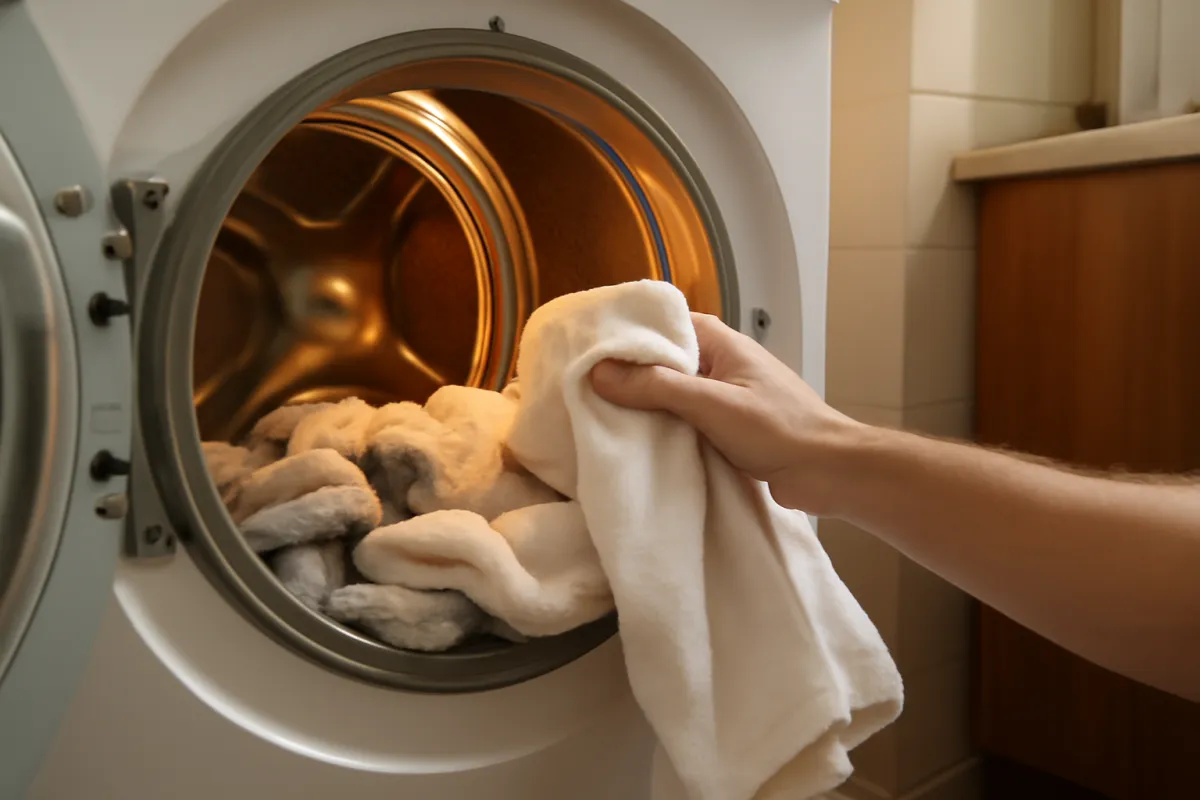
A full confirmation without removing a single panel: unplug the dryer, open the door, and reach in to turn the drum by hand. A healthy belt resists that rotation with genuine, springy tension, since you are turning the motor’s pulley through it. A broken or fully thrown belt lets the drum spin with almost no resistance at all, often with a slightly loose, hollow feel, as though the drum is not connected to anything.
A second confirmation, once the top or front panel is off: look for the belt itself. A snapped belt usually hangs loose or has come away from one or more of its pulleys entirely. A belt that has merely slipped off its idler or motor pulley, without breaking, will often be visible lying inside the cabinet near where it should be running, in otherwise good condition, which is the cheapest possible version of this fault since it only needs re-routing rather than a new part.
Cause three: the idler pulley and lost belt tension
The idler pulley is a small, spring-loaded wheel that rides against the belt specifically to keep it taut against the motor and drum pulleys. When it seizes, when its spring weakens, or when its bracket bends, the belt loses tension and can slip under load or jump off its track entirely, producing a symptom that looks like a belt failure even when the belt itself is intact.
The tell that separates a bad idler from a bad belt is tension rather than presence. A belt that is physically there, unbroken, but very loose or easily pushed well out of its normal path by a finger, points at the idler rather than the belt. Replacing an idler pulley is usually done at the same time as a belt replacement anyway, since both are inexpensive and reached through the same panel, and fitting a new belt against a worn idler is a common way to end up doing this job twice.
Cause four: the drum support rollers and bearings
Most dryer drums do not run directly on metal or plastic rails. They rest on a small number of support rollers, typically two to four, mounted on short shafts with their own bearings, positioned to carry the drum’s weight while it rotates and to let it spin freely.
When a roller’s bearing wears out or dries of lubricant, it stops spinning freely and starts dragging, which the motor has to fight against through the belt. A roller in the early stages of failure produces a thumping, squealing, or rhythmic noise that rises and falls with the drum’s rotation, and the drum itself may still turn, just with far more resistance and far more noise than normal. A roller that fails completely can seize solid, which puts enough extra load on the belt and motor that the belt can slip, stretch, or eventually snap from the added strain, making a roller problem a common hidden cause behind what first looks like a straightforward belt failure.

Cause five: the drive motor itself
The motor is both the least common cause on this list and the one people fear first, which is worth correcting before you spend money on one.
A genuinely dead motor produces total silence: no hum, no vibration, nothing when the dryer is started on a normal cycle with the door closed. That silence, combined with confirmed power at the outlet and a door switch that tests fine, is the pattern that actually points at the motor itself rather than at the belt, pulley, or rollers, all of which still let the motor run and hum even while the drum stays still.
Motors in dryers are generally reliable, simple, brushed or induction designs, and they tend to fail from age, from a bearing inside the motor itself wearing out, or from repeatedly being asked to work against a seized roller or jammed belt until something inside gives up. A motor that has been straining against mechanical resistance for weeks is a motor whose failure was caused by something else on this list, which is the reason working causes in order matters: fixing a seized roller after a motor replacement, rather than before it, can mean the new motor fails the same way the old one did.
Cause six: the motor’s thermal overload protector and why it trips
Many dryer motors have a built-in thermal overload protector, a small safety device that cuts power to the motor if it overheats, typically from running against too much resistance for too long. This produces a specific and often confusing symptom: the dryer runs and spins normally for a while, then the motor stops, sometimes with the drum light and timer still active.
A protector that trips and then resets once the motor cools is usually trying to tell you about a mechanical problem elsewhere, most often a dragging roller or an over-tight or misrouted belt, rather than failing on its own. A protector that has stopped resetting at all, so the motor never restarts even after sitting unplugged for a while, points at the motor itself needing replacement, since the protector is a one-way safety device in some designs once it has failed. Either way, this symptom belongs in the intermittent-spinning category from earlier and is worth cross-referencing with the roller and belt sections above before assuming the motor needs to be replaced.
Cause seven: the start switch or start capacitor on older machines
Some older dryer motors, particularly single-phase induction motors of a certain age and design, use a separate start switch or a start capacitor to give the motor the extra push it needs to begin spinning from a standstill. A failure here produces a motor that hums audibly, exactly like a broken belt, but is in fact trying and failing to start turning its own pulley at all, which a belt check from the previous sections will quickly rule out, since the belt in this scenario is entirely intact and simply not being driven.
This component is uncommon on newer machines, most of which use simpler permanent split capacitor or electronically commutated motor designs that do not need a separate starting mechanism, so this cause mostly applies to dryers well past a decade old. If your belt and idler check out fine and the hum persists with zero drum movement on an older machine, this is the next suspect, and it is usually a job for a technician given the parts involved sit close to live motor windings.
Cause eight: a belt safety switch cutting the motor
A number of dryer designs include a small belt safety switch, sometimes built into the idler arm assembly, whose entire job is to cut power to the motor the instant the belt goes slack or breaks. The logic is sound: without the belt’s resistance, an unloaded motor can spin dangerously fast, so the switch shuts it down rather than letting it run free.
On a machine with this feature, a broken belt produces silence rather than a hum, since the motor never gets the chance to spin unloaded at all. This is worth knowing before total silence sends you straight to the motor or the power supply, since on these specific designs silence is exactly what a snapped belt looks like. Check your model’s service documentation, often available free from the manufacturer by model number, to confirm whether your dryer has this feature before ruling the belt out based on sound alone.
Cause nine: a seized drum or a foreign object jammed in the works
Less common, but worth a specific look before reaching for a part number. Something that has worked its way past the lint screen and down into the gap between the drum and the cabinet, a coin, an underwire, a pen, or a sock bunched tightly enough, can jam against a roller or wedge between the drum and the felt seal hard enough to stop rotation entirely.
The tell is usually a distinct grinding, scraping, or metallic sound rather than a clean hum, and sometimes a smell of hot rubber or plastic if the object is being dragged against something. With the machine unplugged and a panel removed, a visual inspection around the drum’s edges and the felt seal at the front and back will usually turn up the culprit, and removing it alone can resolve the entire fault for free.
Cause ten: overloading and what too much weight does to a worn belt
Overloading rarely breaks a dryer outright on its own, but it is the accelerant behind a meaningful share of the failures above. A belt, a set of rollers, and a motor are all sized with some margin for a normally sized, normally wet load, and asking them to repeatedly move a heavier, wetter mass than that shortens the working life of all three.
The practical sign that overloading is contributing is a machine that has started struggling, groaning, or occasionally stalling specifically on large loads, like a full set of bedding or a stack of heavy towels, while handling smaller loads without issue. That pattern suggests the belt, roller, or motor is near the end of its working life and the heavier loads are simply the ones pushing it past the edge first, rather than overloading being a fault in its own right.
Gas and electric dryers: does the drive system differ?
Worth stating plainly because it is a common point of confusion. The drive system, the motor, belt, idler pulley, and drum support rollers, is essentially identical between gas and electric dryers, since both designs need the same mechanical arrangement to turn the same kind of drum. Only the heat source differs: an electric dryer heats with a resistive element, a gas dryer with a burner and igniter sequence covered in our dryer heating report.
That means every cause in this report, the belt, the idler, the rollers, the motor, and its thermal overload, applies equally to a gas dryer that has stopped spinning, and none of it requires going anywhere near the gas supply or the burner assembly. If your gas dryer heats fine but will not spin, or spins fine but will not heat, you are dealing with two genuinely separate systems sharing one cabinet, and diagnosing them separately is the fastest route to the right part.
Where dryer spinning faults actually come from
Pulling the whole list together shows the same pattern every mechanical appliance fault on this site shows: the frequent causes are the cheap ones.
Where a dryer spinning fault usually starts
Illustrative share of not-spinning complaints by cause. Bars scale to the largest slice.
Illustrative shares drawn from the shape of the complaint rather than any survey. More than half of these faults trace back to the belt and the rollers it depends on, both inexpensive parts reached through the same two panels.
The practical reading is the order these notes already follow: check the door latch, turn the drum by hand to test the belt, look at the rollers and idler if the belt itself is intact, and treat the motor as the diagnosis of last resort rather than the first fear. Someone who works it top to bottom resolves most of these for the price of a belt and a roller kit.
Which repairs are genuinely DIY
Genuinely do it yourself, no special skill. Checking and firmly reseating the door latch. Turning the drum by hand to test belt tension. A visual check for a jammed object around the drum edges and felt seals with the machine unplugged and a panel removed. Reducing load size on a machine showing early strain signs.
Do it yourself with patience and research. Replacing a drive belt and idler pulley together, which on many machines means removing the top and front panels, supporting the drum, and routing a new belt per your model’s diagram. Replacing drum support rollers, a similar level of access. These are inexpensive parts and a well documented job on most common models, but budget a genuine afternoon the first time.
Not do it yourself for most households. Diagnosing or replacing a start capacitor or start switch near live motor windings. Replacing the drive motor itself, particularly on designs where the drum has to come fully out to reach it. Anything where you find scorching, a burning smell, or exposed wiring.
Repair or replace: the honest math
Run the same two tests this site applies to every appliance, then let a third factor specific to dryers break the tie.
The first is the 50 percent test: if a repair quote exceeds roughly half the price of a comparable new machine, replacement usually wins. The second is age weighting against the commonly cited planning window for a dryer, which sits near 13 years. The third factor, specific to dryers, is that there is very little expensive inside one: a drum, rollers, a belt, a motor, a blower, a heat source and a couple of thermostats is close to the whole machine, which is why dryers are recorded as among the longest-lived appliances in our appliance lifespan reference.
Run an illustrative case. A nine-year-old electric dryer develops the hum-with-no-spin symptom, the drum turns freely by hand confirming a broken belt, and a technician quotes 150 dollars for a new belt, idler pulley, and roller set replaced together, which is common practice since all three wear at a similar rate. A comparable new machine would run about 700 dollars. That is roughly 21 percent of replacement on a machine with about four typical years left, working out to around 38 dollars a year of repair against about 54 dollars a year for a new one. Repair wins clearly. Put your own quote, price, and years into our cost-per-use calculator above rather than guessing.
Thirteen years of one electric dryer, with one mid-life belt and roller repair
Illustrative split of total spend: a $700 machine, about $1,560 of electricity across 13 years, and one $150 belt and roller repair. Segments sum to 100 percent.
Belt and roller repairs land even smaller on the lifetime chart than a heating-element repair, because the parts involved cost less and the labor is comparable, which is the strongest argument for repairing rather than replacing a dryer over a spinning fault.
A worked example: one humming machine, three suspects
Run one illustrative scenario end to end, because this is the shape most of these complaints actually take.
A household starts a normal load and notices after a few minutes that nothing is tumbling, though the machine is clearly running and making a steady hum. The dryer is nine years old, electric, and has shown no prior issues.
Suspect one, the door latch. The door is opened and firmly re-closed until the latch audibly seats, then the dryer is restarted. The hum and the lack of movement persist, which removes the door switch from the list.
Suspect two, the belt. The dryer is unplugged and the drum is turned by hand through the open door. It spins with almost no resistance at all, a hollow, disconnected feeling very different from the firm tension a healthy belt provides. That is close to a confirmed diagnosis already.
Suspect three, confirmation. The top panel is lifted and the front panel released. The belt is found snapped clean through near one seam, lying loose inside the cabinet, with both pulleys and the rollers otherwise in good visible condition.
A new belt is fitted following the routing diagram on a sticker inside the cabinet, and since the idler pulley and rollers are being inspected anyway, the idler is given a quick spin test by hand and found to move freely with good spring tension, so it is left in place. The dryer runs and tumbles normally on the next cycle. Total parts cost: one belt.

Prevention: the habits that keep belts and rollers alive
Most of the causes above are wear items rather than sudden failures, and a few habits meaningfully extend how long they last.
Avoid consistently overloading the machine. The overloading section above explains the mechanism: more mass and more friction, cycle after cycle, is what wears a belt, a set of rollers, and a motor out faster than their rated life.
Keep the lint path clear. Our dryer vent cleaning walkthrough is written for the heating side of the machine, but a restricted vent also runs the motor and drum longer per load than necessary, which is extra wear on every mechanical part covered in this report for no benefit.
Listen for early noise. A new squeal, thump, or grinding sound that was not there a month ago is almost always a roller or idler in the early stages of failure, and catching it before it seizes and strains the belt and motor is both cheaper and less disruptive than waiting for a full stoppage.
Do not force a jammed or struggling machine. Repeatedly restarting a dryer that is groaning or stalling on a heavy load, hoping it works through it, is one of the more common ways a worn roller turns into a snapped belt and a straining motor in the same afternoon.
When to call a pro, and what to tell them
Call a technician when the symptoms point at the motor itself, particularly total silence with confirmed power and a good door switch. Call one when a start capacitor or start switch is suspected on an older machine, since that work sits close to live motor windings. Call one if you are not confident supporting a drum safely while a belt or roller job is done, since an unsupported drum can shift. And call one when you have worked the free checks, the door latch and the hand-turn belt test, found nothing conclusive, and would rather buy an hour of expertise than another evening of guessing.
What you tell them changes what the visit costs. Describe the exact sound, a clean hum, a strained groan, or total silence, since that alone narrows their diagnosis significantly. Mention whether the fault is constant or started partway through a cycle. List what you have already checked: the door latch and the hand-turn belt test. And have the model number from the plate, usually inside the door opening or on the back panel, ready, since belts and rollers are both model specific parts.
The bottom line
Why is my dryer not spinning usually comes down to one connection breaking rather than one component dying: the drive belt that links a perfectly good motor to a perfectly good drum. A hum with no movement at all is that connection’s signature, and the unplugged hand-turn test confirms it in under a minute without a single panel coming off. If the belt turns out to be intact, work outward to the idler pulley and the drum support rollers, both of which produce a similar symptom through resistance rather than absence, and only then consider the motor, which fails far less often than people assume.
Handle the mechanical safety part properly: unplug at the wall or kill the breaker before any panel comes off, and support the drum before the last thing holding it in place is removed. Then let the arithmetic close it out. Belts, pulleys, and rollers are inexpensive parts in a long-lived appliance, so a repair quote under half the price of a comparable new machine on a unit still inside its typical service window is almost always worth taking, and the humming machine that started this whole search is very often a fifteen minute fix away from tumbling normally again.
A note on scope: these notes describe how clothes dryer drive systems commonly fail and how to work the fault in a sensible order. They are general information, not professional repair or electrical advice, and every dollar figure, share, and interval in them is an illustrative planning number rather than a quote, a measurement, or a statistic about any brand or model. Disconnect the machine at the outlet or the breaker before removing any panel, and support the drum before freeing it from its last mounting point. Anything involving live motor windings, a start capacitor, or visible wiring damage belongs with a qualified technician rather than with an article. Where the manufacturer’s manual for your specific machine contradicts a general principle written here, the manual is the authority and this report is not.
Frequently asked questions
Why is my dryer humming but the drum will not turn?
A hum with no movement is the classic signature of a broken or thrown drive belt on a motor that is still trying to run. The motor itself is fine and spinning its pulley, but with nothing connecting that pulley to the drum, there is no load for it to turn against and it just hums. A seized drum support roller or a jammed idler pulley can produce the same sound, since the motor is working against resistance it cannot overcome rather than against nothing, so the belt is the first suspect but not the only one.
What is the most common cause of a dryer not spinning?
A broken, slipped, or thrown drive belt, by a wide margin. The belt is a long loop of reinforced rubber or fabric cord that wraps around the motor's pulley, an idler pulley, and the drum itself, and after years of heat and flexing it is the part most likely to fail. It is also one of the cheaper parts in the whole machine, which is the useful part of this particular bad news.
How do I know if my dryer belt is broken?
The clearest test is the one in this report's step by step section: with the machine unplugged, reach in and turn the drum by hand. A healthy belt resists that motion with real tension and the drum turns smoothly against it. A broken belt lets the drum spin freely with almost no resistance at all, as though nothing inside is connected to it. A visual check after removing the front or top panel will usually show the belt hanging loose, snapped, or missing entirely from its pulleys.
Can I replace a dryer belt myself?
On many machines this is a genuinely approachable repair, since a belt is an inexpensive part and the job is mechanical rather than electrical once the machine is unplugged. It does usually mean removing the top and front panels and supporting the drum while the old belt comes off and the new one threads around the motor pulley, the idler, and the drum in the correct routing, which your model's belt routing diagram, often printed on a sticker inside the cabinet, shows exactly. Photograph the old belt's path before removing it even when a diagram exists.
Why does my dryer start then stop spinning partway through a cycle?
That pattern points away from a fully broken belt, since a snapped belt stops the drum immediately and for the whole cycle rather than partway through. Intermittent spinning more often points at a drive motor with a failing thermal overload protector that trips once the motor warms up, a belt that has stretched and is slipping rather than snapped, or a drum roller that is binding more as it heats up. Each has its own test covered further down, but the intermittent pattern itself is the clue that narrows the list.
Is a dryer that will not spin dangerous to leave running?
It is not the same fire risk as restricted airflow, but it is not harmless either. A machine where the drum has stopped turning but the heating element is still cycling on can scorch the clothes sitting against the drum wall and, on some designs, continue heating an increasingly hot, stationary load. If you notice the drum has stopped turning partway through a cycle, switch the dryer off rather than letting it run out the clock.
Is it worth repairing a dryer that will not spin?
Usually yes, for the same reason that applies to every other common dryer fault: the parts involved, a belt, a pulley, a set of rollers, are among the cheapest in the appliance. Apply the same two tests used on every appliance here: if a quote exceeds roughly half the price of a comparable new machine, lean toward replacing, and tighten that threshold once the dryer is past its commonly cited planning window near 13 years. An illustrative 150 dollar belt and roller repair on a machine that would cost about 700 dollars to replace is an easy call toward repair.
Can overloading the dryer break the belt?
It can accelerate a belt that is already near the end of its life, since a bigger, heavier load asks the motor and the belt to move more mass against more friction from the drum rollers and the felt seals. A belt in good condition is not going to snap from one oversized load of towels, but a habit of consistently overloading the machine shortens the service life of the belt, the rollers, and the motor together, which is the same physics behind most mechanical wear in this appliance.